Orange Almond Cake Infused with Sage
This orange almond cake infused with sage is a moist, naturally gluten-free dessert made with just six simple ingredients: almond flour, eggs, sugar, whole oranges, water, and a handful of fresh sage leaves. The almond flour gives it a fine, tender crumb, the orange zest folds bright citrus through the batter, and a warm sage-infused syrup soaks into the sponge after baking to keep it soft for days. It is flourless, so the batter comes together in one bowl and the syrup in a small saucepan, with no special baking skills required.
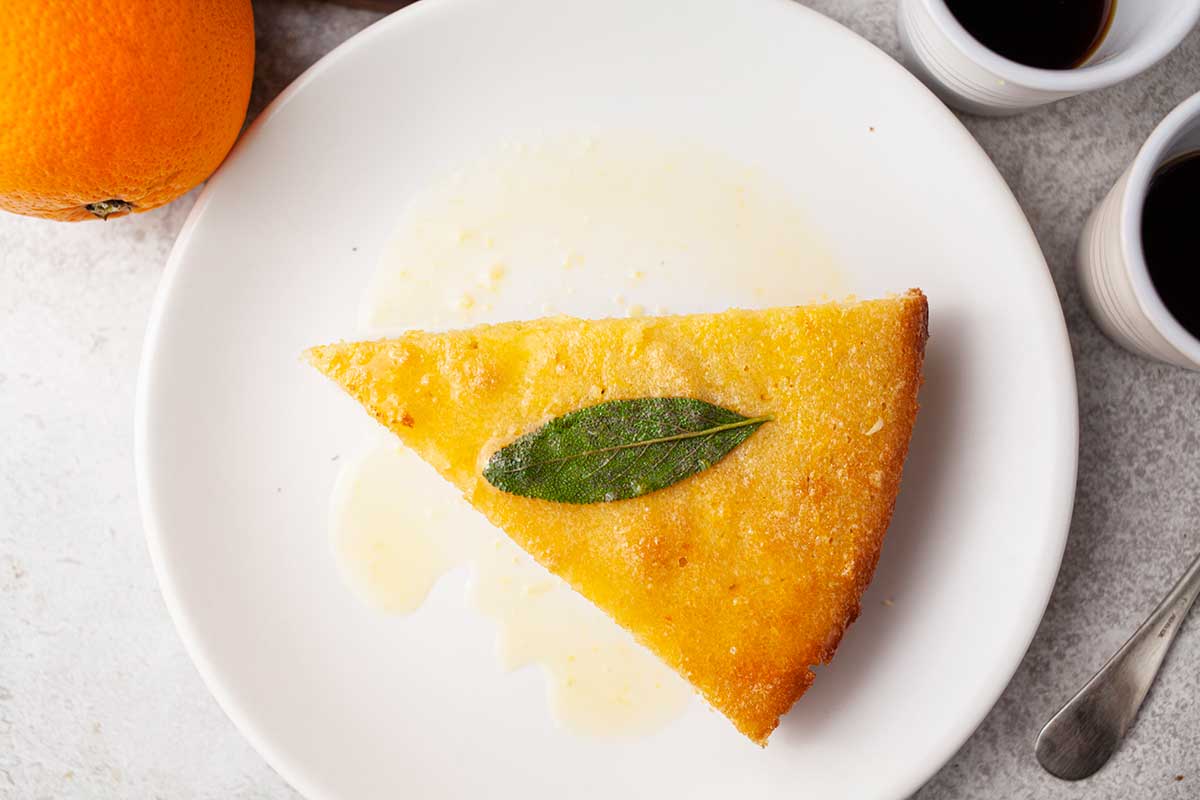
If you love citrus desserts that taste fresh rather than heavy, this is the cake to bookmark. The sweet-sour balance of orange against the earthy, slightly savory note of sage makes it feel a little more grown-up than a plain sponge, and it looks impressive with nothing more than a few sage leaves and orange slices on top.
The Six Ingredients That Make It Work
The star of this cake is almond flour, which replaces wheat flour entirely. It adds richness, a delicate nutty flavor, and a naturally moist texture, and it is what makes this cake gluten-free from the start. Here is what each ingredient brings to the table:
- Almond flour (300 g): the base of the cake, giving structure without any wheat and a tender, close crumb.
- Eggs (6): five are separated into whites and yolks, plus one whole egg goes in with the yolks. The whipped whites are what lift and lighten the batter, so there is no need for baking powder.
- White sugar (300 g): 250 g goes into the batter and 50 g into the syrup, so the sweetness is split between the cake and the soak.
- Oranges (3, untreated): you use both the zest, which flavors the batter, and the juice, which forms the base of the syrup. Choose unwaxed, organic oranges since the peel goes into the cake.
- Sage leaves (10 to 15): steeped in the hot syrup to add a warm, herbal note that plays beautifully against the citrus.
- Water (50 ml): loosens the syrup so it pours evenly and soaks all the way through the cake.
A Cake You Can Make Your Own
Although oranges are my favorite citrus fruits, this recipe is extremely versatile and you can make it with other acidic fruits as well. Lemons, blood oranges, mandarins, or even grapefruit all work in the same zest-and-syrup method, so it is easy to adapt to whatever is in your fruit bowl. If I want to take it somewhere completely different, I would combine it with pineapple and mint, to transform an ordinary dessert into an explosion of flavors and freshness. I chose to decorate it simply, with sage leaves, but you can also try other decoration options, from candied citrus peel to a light dusting of powdered sugar.
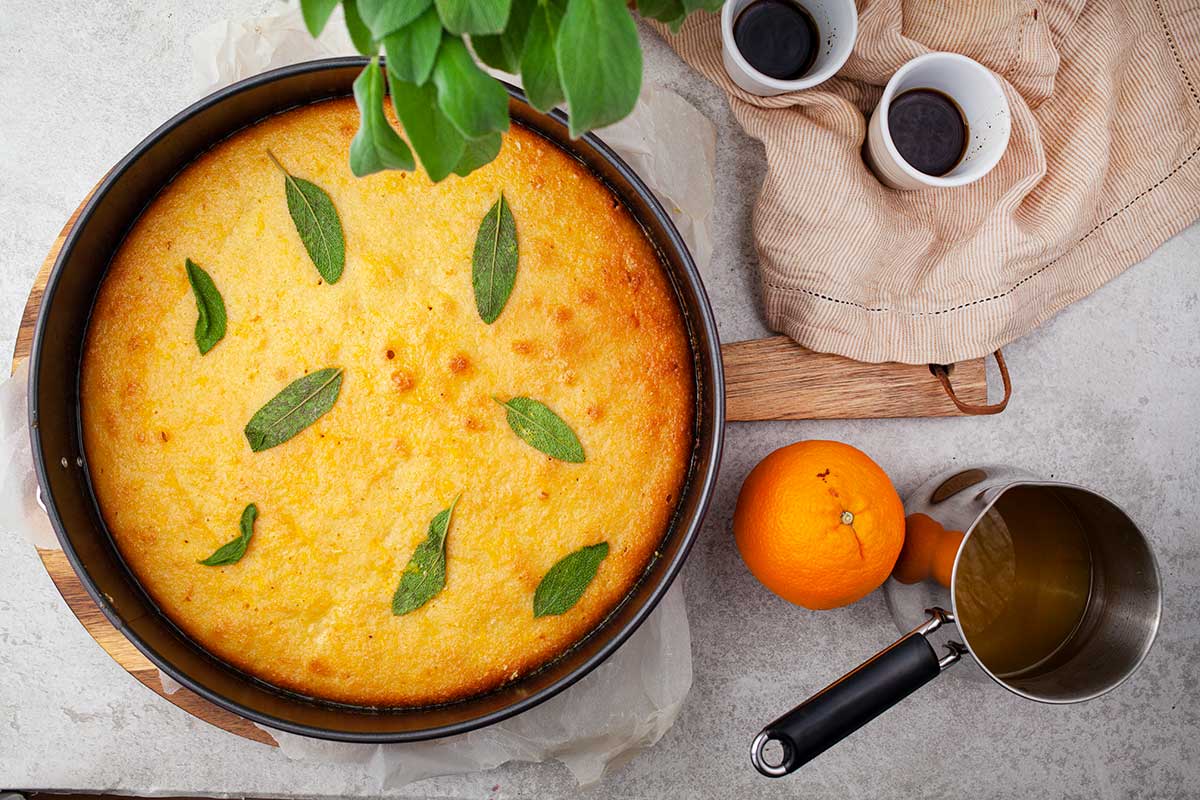
Tips for a Light, Moist Almond Cake
Because this cake relies on whipped egg whites instead of a raising agent, a few small habits make all the difference between a dense bake and a fluffy one:
- Whip the whites to stiff peaks. They should hold their shape when you lift the whisk. This trapped air is the only lift the cake gets.
- Fold, do not stir. Add the whites to the yolk mixture bit by bit and fold gently with a spatula so you keep as much air as possible. Working the batter too hard will deflate it.
- Bake at a steady 170 C. The cake is ready when it turns golden around the edges, usually around 45 minutes. A toothpick inserted in the center should come out with only a few moist crumbs.
- Soak while warm. Pierce the cake all over with a toothpick as soon as it comes out of the oven, then pour the syrup over so it drinks it in evenly.
Why the Sage-Orange Syrup Matters
The syrup is what turns a simple almond sponge into something memorable. Bringing the orange juice, sugar, and water to a gentle boil dissolves the sugar and concentrates the citrus, while steeping the sage leaves off the heat infuses the liquid with a soft, aromatic warmth and no bitterness. Pouring it over the still-warm cake lets the sponge absorb the syrup right down to the base, which is exactly why this cake stays moist and often tastes even better a day later.
Serving, Storing, and More Naturally Gluten-Free Ideas
Serve this cake at room temperature, decorated with fresh sage leaves and thin orange slices. It is lovely on its own with coffee or tea, and a spoonful of whipped cream or a scoop of vanilla ice cream turns it into a proper dessert. Because there is no wheat in it, it fits naturally into a gluten-free diet plan, and if you are curious about the reasoning behind that, this explainer on what gluten is and why some people avoid it is a good place to start.
To store it, keep the cake covered at room temperature for up to two days, or refrigerate it for up to five, letting slices come back to room temperature before serving so the crumb softens again. If you are building a menu of flourless treats, these raw almond chocolate truffles lean on the same nutty richness, while a crustless pumpkin pie with coconut gives you another naturally gluten-free dessert for the table.
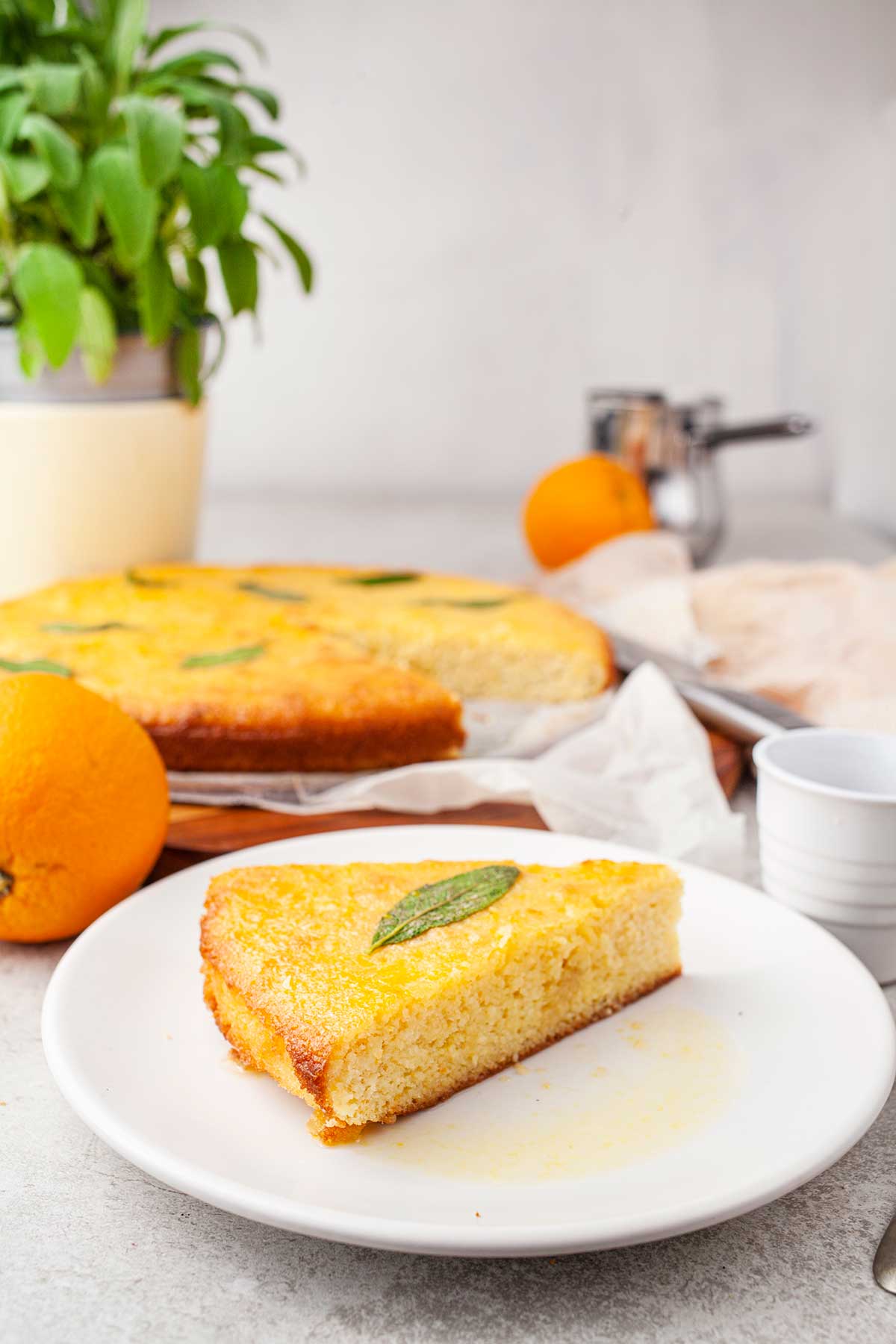
If you bake this orange almond cake, I would love to know how it turned out. Leave a star rating and a comment below telling me which citrus you used and whether you kept the sage or swapped in a twist of your own.
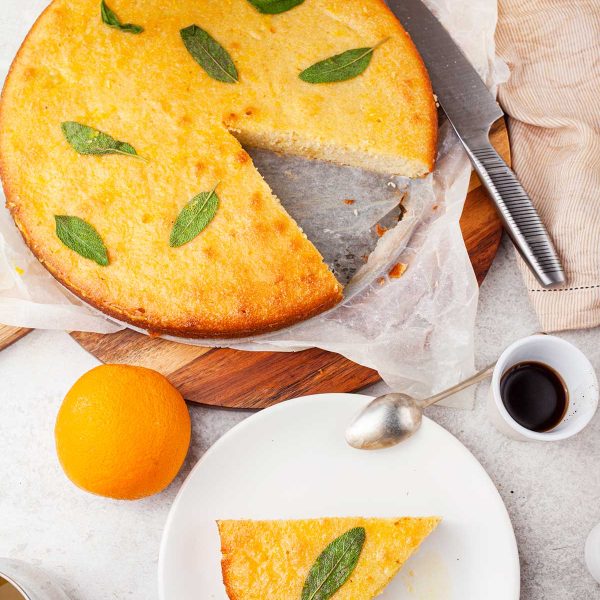
Orange Almond Cake
Ingredients
- 6 eggs
- 300 g white sugar
- 3 oranges untreated / unwaxed (used for the zest)
- 300 g almond flour
- 10-15 sage leaves
- 50 ml water
Instructions
- Line a cake tin with baking paper.
- Heat the oven to 170°C.
- Separate 5 of the eggs, putting the whites and the yolks into two different bowls.
- To the bowl with the yolks, add the whole 6th egg, 250 g of the sugar and the grated zest of all 3 oranges. Beat until the sugar dissolves and the mixture becomes foamy.
- Add the almond flour and fold it in with a spatula until you get a dense, crumbly batter.
- Whisk the egg whites separately until they form stiff peaks.
- Gently fold the whipped whites into the yolk mixture a little at a time, mixing well but gently until fully incorporated and keeping it as fluffy as possible. Transfer the batter to the lined cake tin and bake for 45 minutes, or until golden around the edges.
- Meanwhile, prepare the syrup.
- In a saucepan, combine the remaining 50 g of sugar, the juice of all 3 oranges and the water.
- Bring to a boil over low heat, then remove from the heat and stir well to dissolve the sugar. Add the sage leaves and let the syrup infuse until the cake is ready to come out of the oven.
- As soon as the cake comes out of the oven, prick it all over with a toothpick while it is still warm. Pour the infused syrup over the top and set aside until it cools completely.
- Decorate with sage leaves and/or orange slices.
Notes
Frequently Asked Questions
Yes. It is made entirely with almond flour instead of wheat flour, so it contains no gluten. The other ingredients (eggs, sugar, oranges, sage, and water) are naturally gluten-free too, which makes it a good fit for anyone avoiding wheat.
You can. The sage is steeped in the syrup for a warm, herbal aroma, but the cake still works beautifully without it. Leave it out for a pure orange flavor, or swap in a few sprigs of thyme, rosemary, or fresh mint for a different aromatic note.
The recipe uses both parts of the orange for maximum flavor. The grated zest goes into the batter to perfume the crumb, while the juice forms the base of the soaking syrup. Because the peel is used, pick untreated, unwaxed, or organic oranges.
Absolutely. This recipe is very versatile and works with other acidic fruits. Lemons, blood oranges, mandarins, or grapefruit can all be used with the same zest-in-the-batter and juice-in-the-syrup method, so you can adapt it to whatever citrus you have on hand.
The key is the syrup. Pierce the cake all over with a toothpick while it is still warm from the oven, then pour the orange-sage syrup over the whole surface so it soaks all the way through. Whipping the egg whites to stiff peaks and folding them in gently also keeps the crumb light.
Keep it covered at room temperature for up to two days, or refrigerate it for up to five days. Thanks to the syrup soak, it stays moist and often tastes even better the day after baking. Let refrigerated slices return to room temperature before serving so the crumb softens.