Parsley Pesto Pasta with Toasted Sesame (Nut-Free, Vegan)
This parsley pesto pasta tosses fusilli with a bright green pesto made from a big bunch of flat-leaf parsley, garlic, lemon, sesame oil and toasted sesame seeds instead of pine nuts. That makes it a nut-free, vegan pesto that still tastes rich and nutty, and the whole dinner is on the table in about 25 minutes, with the pesto blitzed while the pasta cooks.
Parsley is the one herb I never run out of. In summer it takes over a corner of my garden, and in winter a fat bunch costs less than a coffee, while basil sits in the shop looking sad and overpriced. This pesto started as a way to rescue a bunch going limp in my fridge, and it stayed because I honestly like it more than many basil pestos: it is fresher, a little peppery, and the toasted sesame gives it that round, savory depth you would expect from pine nuts and Parmesan.
Parsley Pesto vs. Basil Pesto: What Changes
A parsley pesto sauce is made exactly like the classic, but it tastes different, and that is the point:
- Flavor. Parsley is green, clean and slightly peppery, with none of basil’s sweet, anise notes. Garlic and lemon come through more clearly, so the pesto tastes lighter.
- Color. Parsley is sturdier than basil and does not bruise and blacken as quickly, so the pesto stays green longer, especially if you keep it away from heat.
- Price and season. Basil is a summer herb. Parsley is cheap and good all year, which makes this my winter pesto.
- Uses. Anything you do with basil pesto works here: pasta, sandwiches, roasted potatoes, a spoonful in soup, a drizzle over eggs or grilled vegetables.
A Pesto Without Pine Nuts (or Any Nuts)
Pine nuts are expensive and they are a no-go in a nut-free kitchen, so this recipe uses toasted sesame seeds. Toasting matters: raw sesame tastes flat, while two or three minutes in a dry skillet turn it golden, nutty and almost buttery. Together with a couple of spoons of nutritional yeast, it gives the pesto the savory, cheesy roundness that Parmesan usually brings, and the whole thing stays vegan.
Sesame seeds are small and tend to dodge the blades of a food processor, so grind them first, with the garlic and salt, before the parsley goes in. If your machine still leaves lots of whole seeds, add a tablespoon of tahini; it makes the pesto creamier and keeps the sesame flavor. Sesame is a common allergen, so if that is the issue, swap in sunflower or pumpkin seeds. If nuts are fine in your house, parsley pesto with walnuts or almonds is just as good; use the same amount and toast them too.
How to Make Parsley Pesto in a Food Processor
It takes about five minutes, but a few details decide whether it comes out bright and fresh or dull and bitter:
- Dry the parsley well. Wet leaves make a watery, pale pesto. Wash the bunch, then spin it in a salad spinner or roll it in a clean towel.
- Use the leaves and the thin stems. The tender upper stems have lots of flavor and blend in easily. Cut off the thick lower stems; they are stringy and make the pesto bitter.
- Grind the sesame and garlic first. Pulse them with the salt for 20 to 30 seconds, until the seeds are roughly ground, then add the parsley.
- Pour in the oil while the motor runs, then stop as soon as the pesto is fairly smooth. I use cold-pressed sesame oil, which is mild and nutty; toasted sesame oil is much stronger, so if that is all you have, use half of it and make up the rest with a neutral oil. With only 3 1/2 tablespoons of oil the pesto is thick, and that is fine: the pasta water loosens it later.
- Taste before it meets the pasta. It should be a little too salty and too lemony on its own, because the pasta will soften it.
No food processor? Chop the parsley and garlic very finely on a board, crush the toasted sesame in a mortar or a spice grinder, and stir everything together with the oil and lemon. The pesto is more rustic, a bit like a herb salsa, and just as tasty.
How to Toss Fusilli with Pesto So It Clings
Fusilli is the best pesto pasta shape I know, because the sauce gets trapped in the spirals instead of sliding to the bottom of the bowl. Penne, farfalle, gemelli or spaghetti work too, and so does gluten-free pasta. Three things make the difference:
- Save the pasta water. The starchy cooking water turns the pesto into a silky sauce that coats every piece. Without it, the pesto stays in clumps and the pasta tastes dry.
- Toss it off the heat. Put the drained pasta back in the warm pot, but with the burner off. Direct heat dulls the parsley and makes the raw garlic taste harsh.
- Cook the pasta al dente. It keeps absorbing the sauce for a few minutes, so slightly firm pasta ends up just right. If you want the details, here is my guide to cooking pasta al dente.
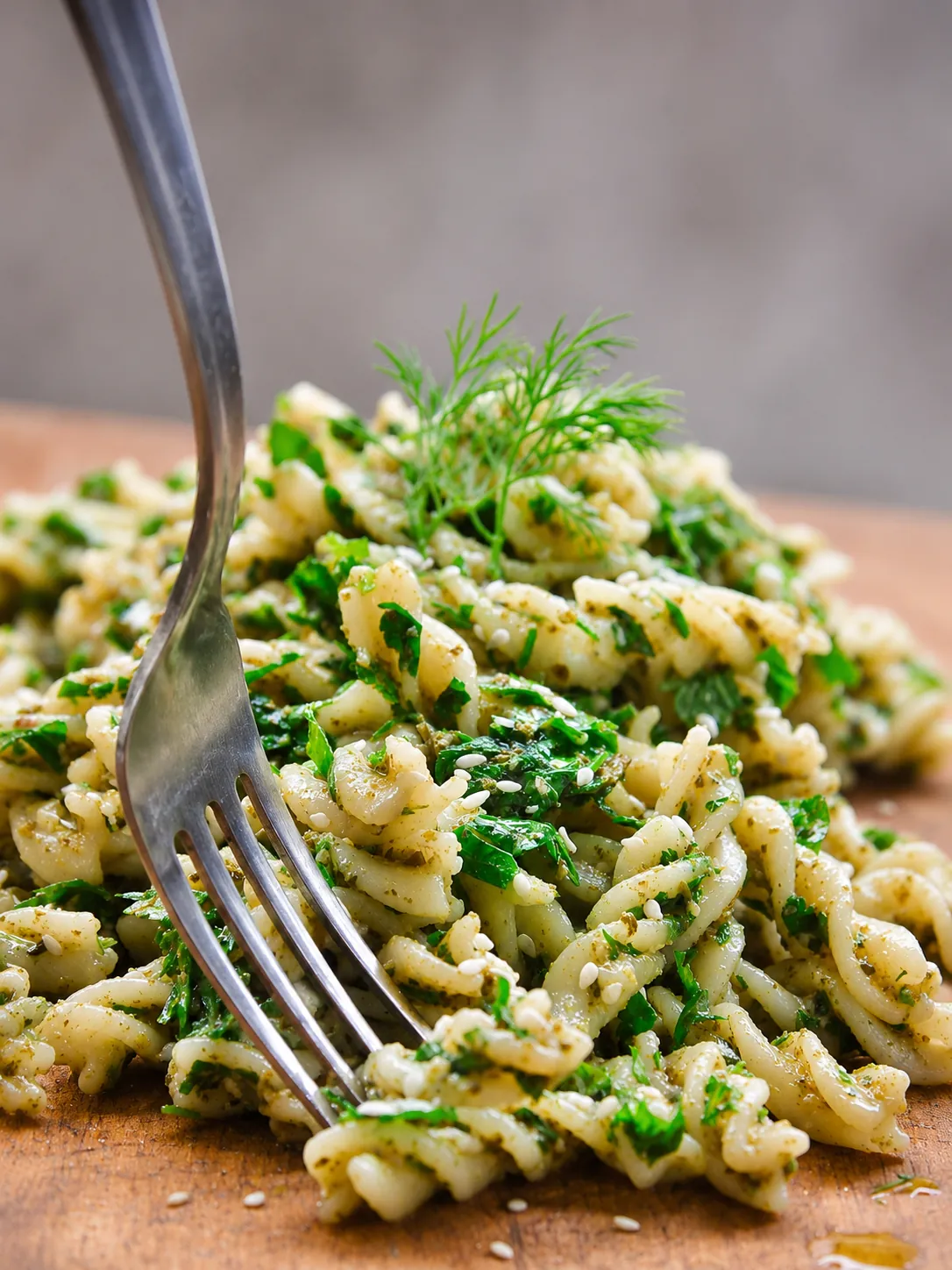
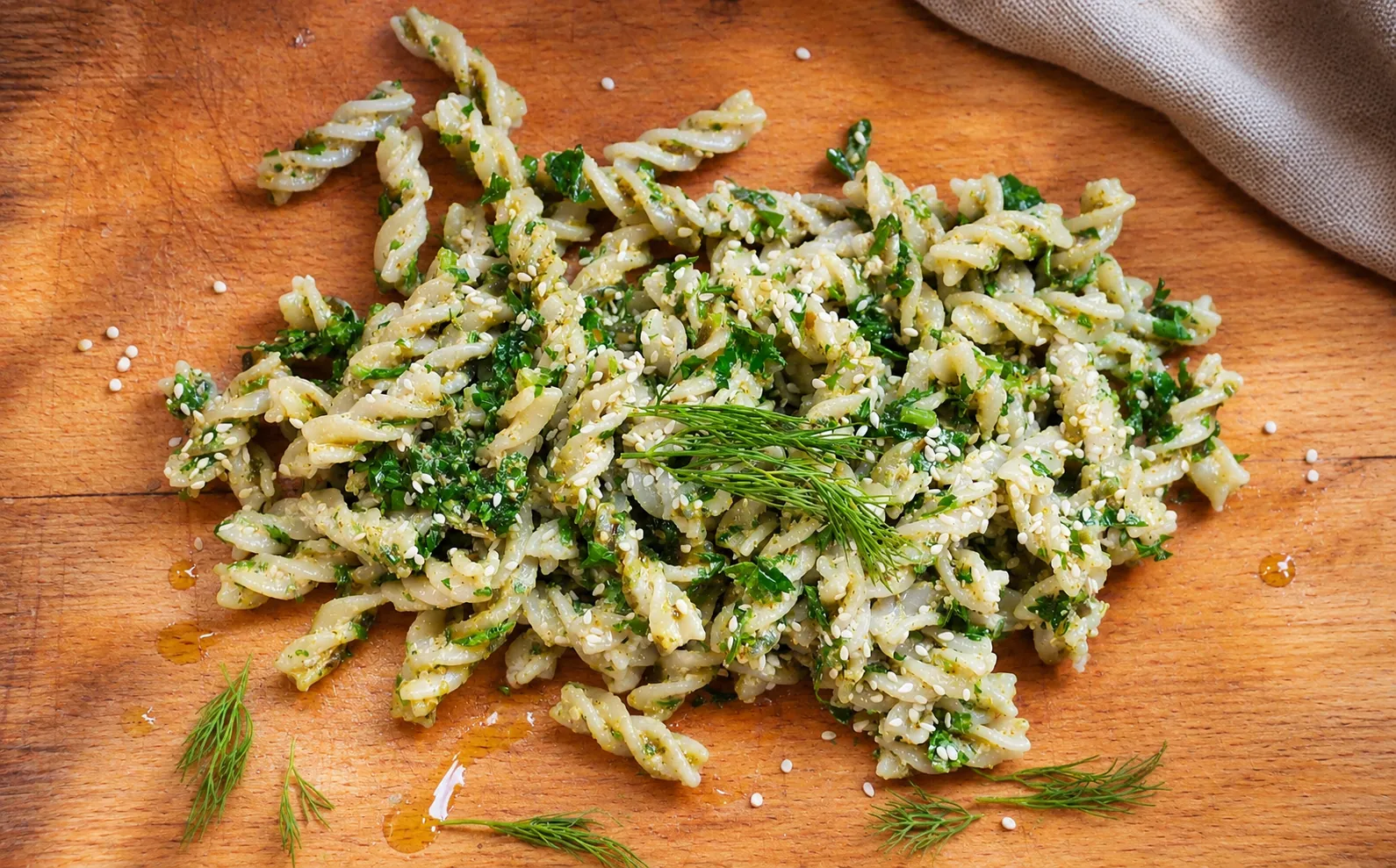
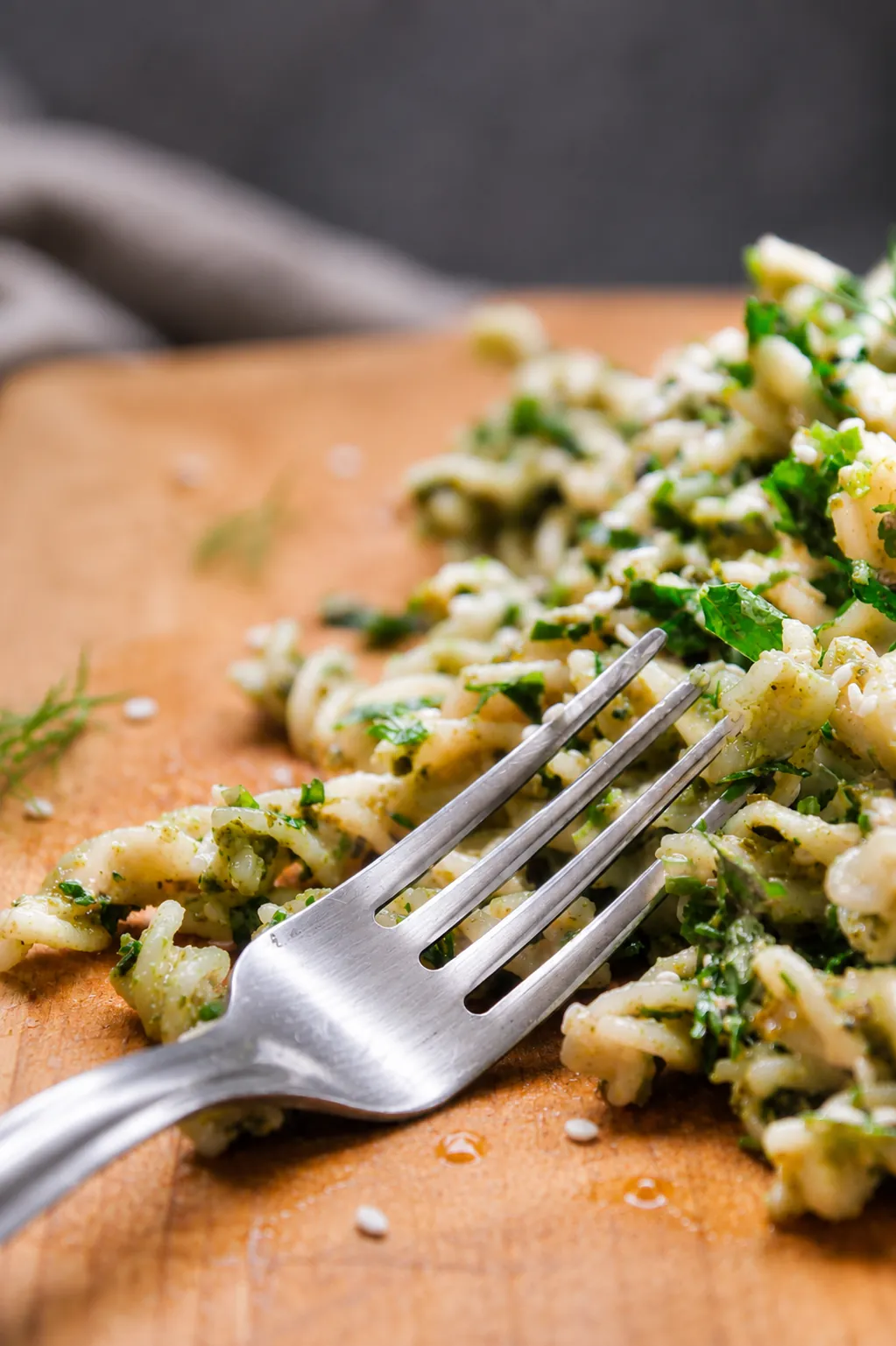
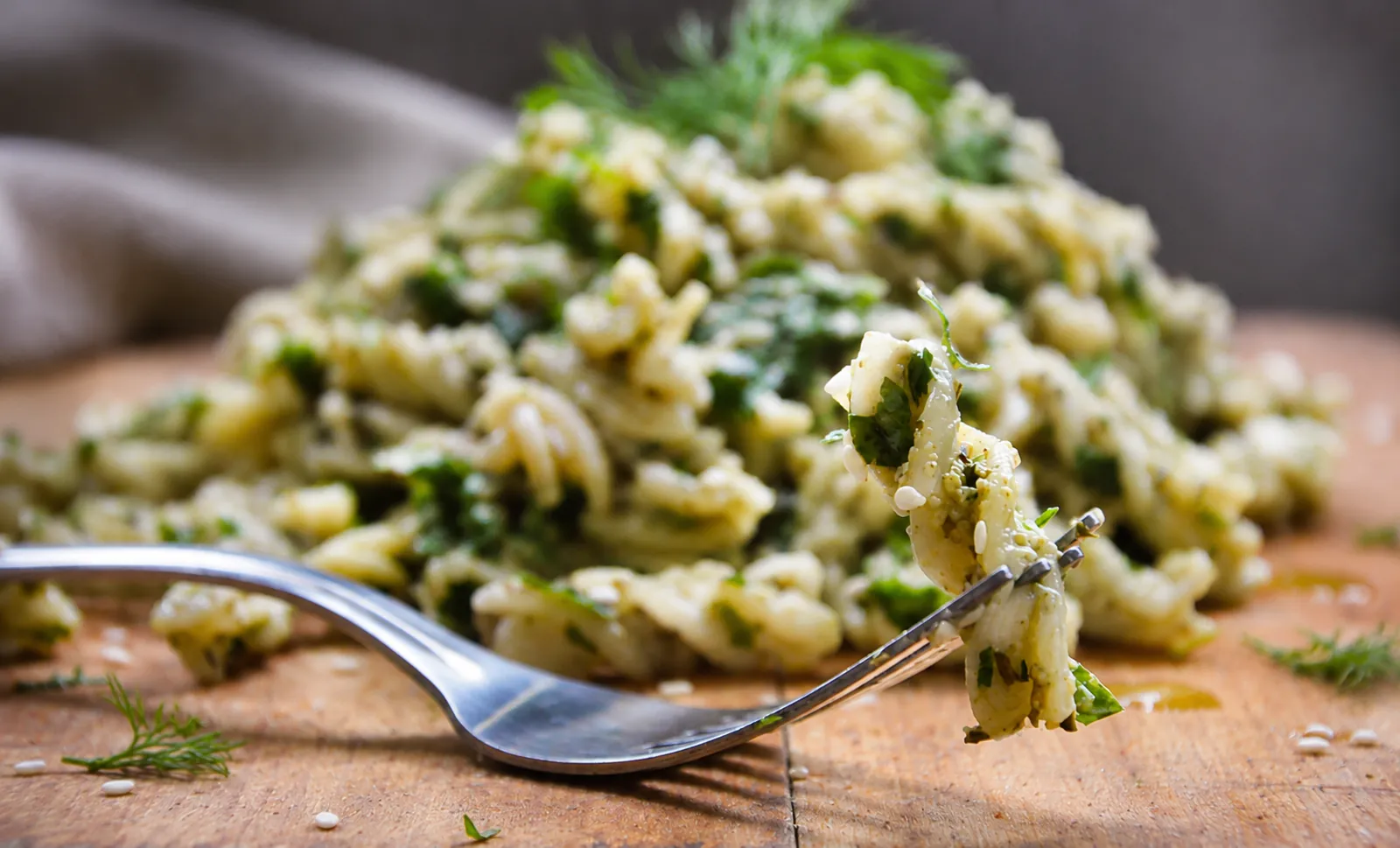
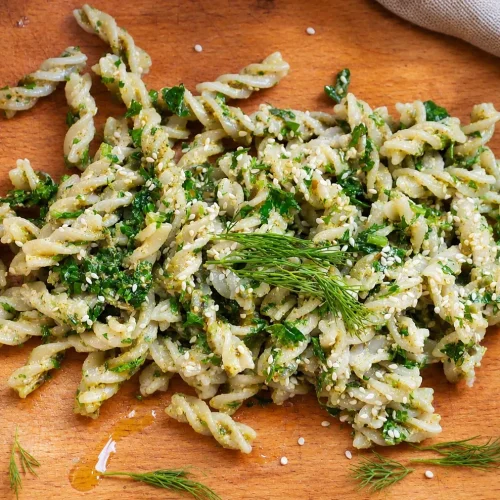
Right before serving, I stir in a handful of chopped parsley. It is not strictly necessary, but those fresh green bits next to the smooth pesto make the dish taste brighter, and they are what you see in the photos.
Ways to Change It Up
- Add dill. Swap a quarter of the parsley for fresh dill. It is the combination I grew up with, and it goes beautifully with lemon.
- Make it more filling. Toss in a can of drained white beans or chickpeas, or serve the pasta with roasted vegetables or crispy tofu.
- Add greens. A handful of baby spinach or arugula blends right into the pesto.
- Add heat and zest. A pinch of chili flakes and the grated zest of half a lemon wake everything up.
- Make it cheesy (not vegan). If you eat dairy, replace the nutritional yeast with 1/3 cup (30 g) of finely grated vegetarian hard cheese.
Make Ahead, Storage and Freezing
Pesto in the fridge: spoon it into a small jar, smooth the top and cover it with a thin layer of sesame oil, then close the lid. It keeps for up to 4 days. If you make it ahead, add the lemon juice only on the day you use it, because acid slowly turns the green olive-brown.
Freezer: parsley pesto freezes really well. Spoon it into an ice cube tray, freeze, then move the cubes to a freezer bag for up to 3 months. A cube or two is enough for one portion of pasta, a bowl of soup or a tray of roasted potatoes.
Leftover pasta: keeps for 2 days in a closed container in the fridge. I like it cold, as a parsley pesto pasta salad, with a splash of lemon juice and a little more sesame oil to loosen it.
Looking for more pesto ideas? Try my lemony pesto farfalle, the pasta with arugula pesto and capers, or these recipes with pesto that go way beyond pasta. For more weeknight dinners, here are my favorite vegan pasta recipes.
Parsley Pesto Pasta with Toasted Sesame
Equipment
- Large pot
- Food processor
- Small skillet
Ingredients
Pasta
- 14 oz fusilli or other short pasta
- Salt for the pasta water
- ½ cup pasta cooking water reserved
Parsley pesto
- ¼ cup white sesame seeds
- 2 cloves garlic
- 3 cups flat-leaf parsley fresh, leaves and tender stems, packed
- 2 tbsp nutritional yeast 10 g
- 3 ½ tbsp cold-pressed sesame oil
- 2 tbsp lemon juice 30 ml
- ¾ tsp salt fine
- ¼ tsp black pepper ground
To serve
- ½ cup parsley fresh, roughly chopped
- 1 tbsp white sesame seeds 9 g
- sprigs dill Fresh, to garnish
- Sesame oil for drizzling
Instructions
- Bring a large pot of water to a boil and salt it generously. Cook the fusilli until al dente, following the time on the package (usually 10 to 12 minutes). Before draining, scoop out 1/2 cup (120 ml) of the cooking water.
- While the water heats, toast all the sesame seeds (for the pesto and for serving) in a dry skillet over medium heat, stirring often, for 2 to 3 minutes, until golden and fragrant. Tip them onto a plate right away and set 1 tablespoon aside for serving.
- Put the remaining toasted sesame seeds, the garlic and the 3/4 teaspoon of salt in a food processor and pulse for 20 to 30 seconds, until the seeds are roughly ground.
- Add the packed parsley, nutritional yeast, lemon juice and pepper and pulse to chop. With the motor running, pour in the sesame oil in a thin stream. Scrape down the sides and blend briefly, until you have a thick, fairly smooth pesto. Taste and add more salt or lemon if needed.
- Drain the pasta and return it to the warm pot, off the heat. Add the pesto and 3 to 4 tablespoons of the reserved cooking water and toss until every spiral is coated and glossy, adding more water a splash at a time if it looks dry.
- Stir in the chopped parsley. Serve right away, sprinkled with the reserved sesame seeds, a few dill sprigs and a drizzle of sesame oil.
Notes
Parsley Pesto Questions
Yes. Parsley makes a fresher, slightly peppery pesto that holds its green color longer than basil. Use the same method as for basil pesto, with the leaves and the thin upper stems, and add a little lemon juice to balance it.
Toasted sesame seeds, like in this recipe, which keep the pesto nut-free and inexpensive. Sunflower seeds, pumpkin seeds, walnuts, almonds and cashews all work in the same amount; toast them first for the best flavor.
Usually because of the thick lower stems, too much raw garlic, or toasted sesame oil, which is much stronger than cold-pressed. Use only the leaves and tender stems, choose a mild sesame oil, and balance a bitter batch with a little more lemon juice, nutritional yeast and salt.
Flat-leaf (Italian) parsley has more flavor and blends more smoothly, so it is my first choice. Curly parsley works too; the pesto is a little milder and you may need a splash more oil.
Dry the leaves well, toss the pesto with the pasta off the heat, and store it under a thin layer of sesame oil. If you make it ahead, add the lemon juice just before serving, because acid slowly dulls the color.
Yes. Freeze it in an ice cube tray, then keep the cubes in a freezer bag for up to 3 months. Thaw them in the fridge or drop them straight into hot pasta with a splash of the cooking water.
Yes. The pesto has no cheese: the savory flavor comes from toasted sesame seeds, nutritional yeast, garlic and sesame oil, so the whole dish is vegan and dairy-free. Just use egg-free pasta, which most dried fusilli is.