
Vegan Christmas Pudding
This vegan Christmas pudding is a rich, steamed fruit dessert packed with cranberries, sultanas, raisins, dried tropical fruit and warm spices, all soaked in orange juice and orange liquor and held together with almond and coconut flour instead of eggs, suet or dairy. It is the plant-based version of the traditional British holiday pudding, and it delivers the same deep, boozy, spiced flavor with a moist, tender crumb. Make it a few weeks ahead, keep it in the fridge, and warm it up on the day for the easiest showstopper on your Christmas table.
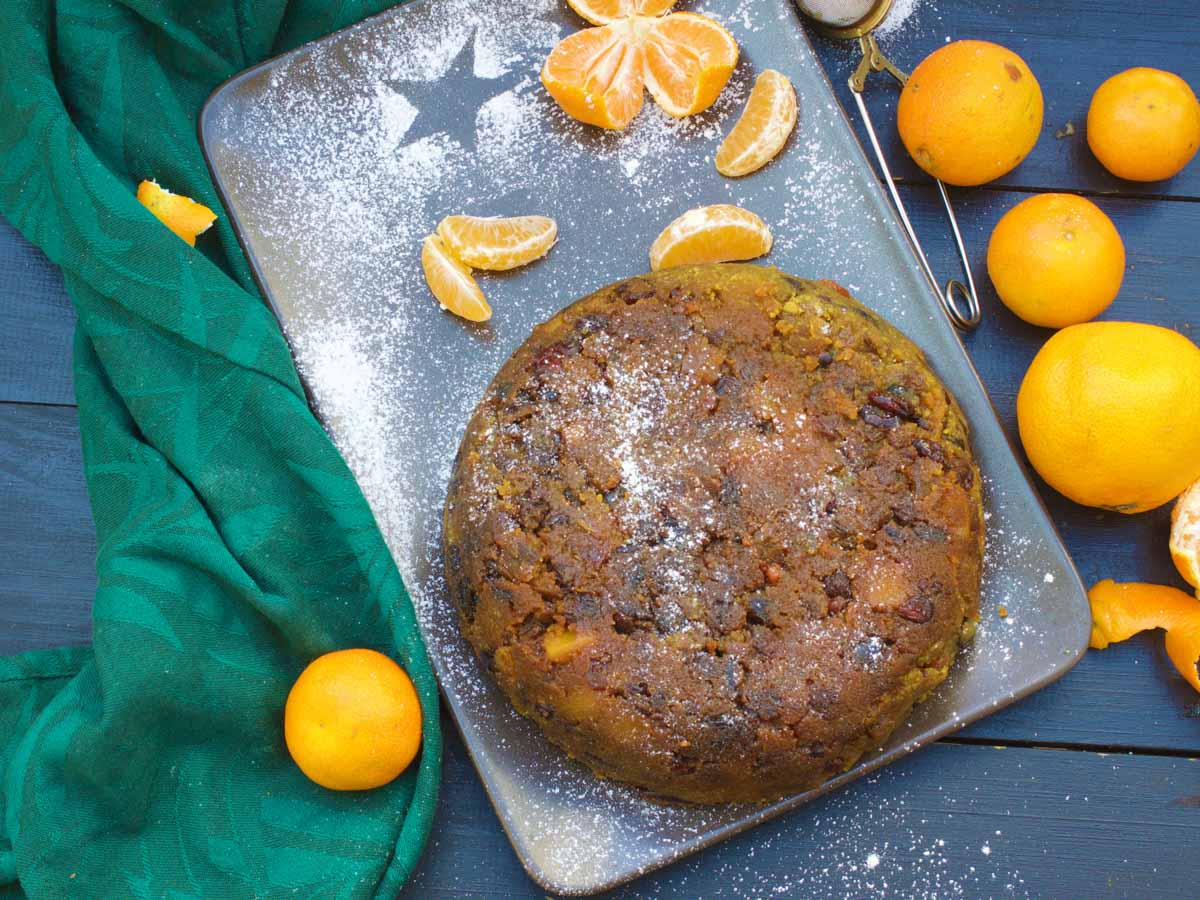
A little history behind the pudding
If you are British, you know this for sure: no Christmas is complete without a big, delicious piece of Christmas pudding. It originates from medieval England and, as its name suggests, it is traditionally served as part of the Christmas dinner in the UK, Ireland and other countries. Written information about the dish dates back only to the 17th century or later, and the first time it was called a Christmas pudding was even later, in Eliza Acton’s 1845 cookbook, Modern Cookery for Private Families.
There are plenty of stories woven around this dessert. One of them tells us of King George I, sometimes known as the Pudding King, his first Christmas in England and the huge royal feast that celebrated it. Modern versions of Christmas pudding even include chocolate, which I totally agree with. This recipe keeps things fully plant-based without losing any of that old-fashioned, festive richness.
What goes into a vegan Christmas pudding
The magic of this pudding is in the fruit. You are working with a generous mix of cranberries, sultanas and raisins, plus chopped dried mango, pineapple and apricot for a brighter, more tropical note than a classic pudding usually has. Pecans add a buttery crunch, and a couple of chopped Medjool dates bring natural caramel sweetness and help bind everything.
The soaking liquid is where the flavor deepens: orange juice, orange zest and a splash of orange liquor plump the fruit and carry the citrus through the whole pudding. For the base, dairy-free butter and brown sugar are creamed together, then apple puree keeps everything moist. Instead of regular flour, this recipe uses almond flour and coconut flour, which makes it naturally gluten-free while still giving structure. Cinnamon, ginger, nutmeg, allspice and vanilla round it out with that unmistakable Christmas warmth.
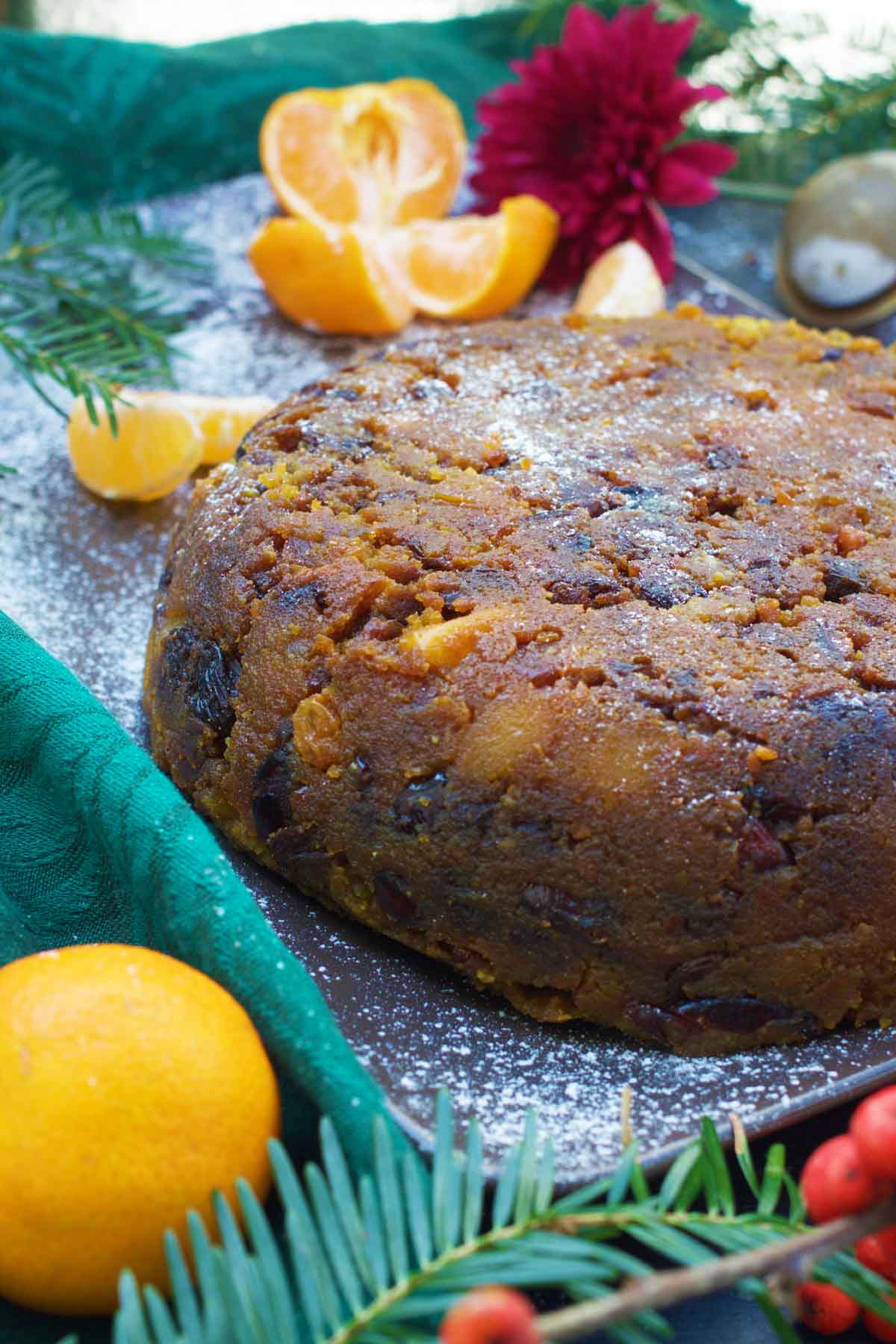
My best tip for the deepest flavor
One tip I can give you from the start is to use only the best and freshest fruits, nuts and spices, and to steam the pudding for as long as possible. It makes a huge difference to the overall taste and color of your dessert. Cheap, old dried fruit tastes flat and can turn the pudding grey, while good-quality fruit stays plump and jewel-toned.
Do not rush the two-hour soak either. Letting the fruit sit in the orange juice and liquor softens it fully and infuses it right through, so every bite is juicy rather than chewy. If you have the time, an overnight soak is even better.
Why steaming works better than baking
A Christmas pudding is steamed, not baked, and there is a good reason for it. The gentle, moist heat of the steam cooks the dense fruit mixture slowly and evenly without drying it out or forming a hard crust, which is exactly what gives the pudding its famously moist, almost sticky texture. Baking this heavy batter in a dry oven would scorch the outside long before the middle set.
This is also why the water level matters so much. Keep the water coming up to about two-thirds of the bowl and top it up every 30 minutes so the pan never runs dry. Fold your parchment cover up and away from the water so no moisture seeps in and makes the top soggy. The pudding is done after three to four hours of steaming, when a cake skewer pushed into the center comes out cleanly.
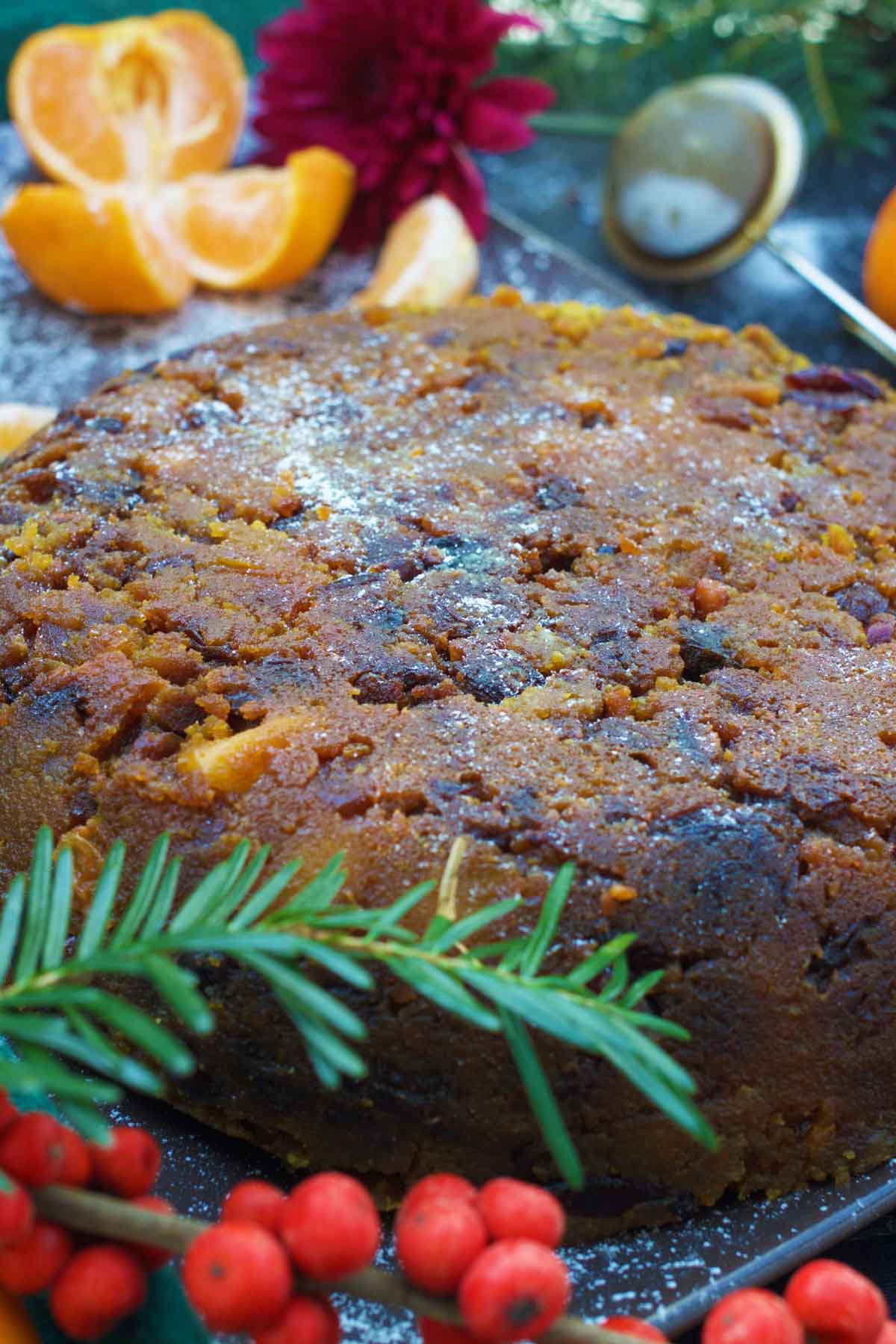
Make-ahead and storage
This is a wonderful dessert to prepare in advance, which is exactly what makes it so practical for a busy holiday. Once the pudding has steamed and cooled, wrap it well and keep it in the fridge for two to four weeks. The resting time actually helps the flavors mellow and marry, so a pudding made a couple of weeks early often tastes better than one made the same day. When you are ready to serve, simply warm it through before bringing it to the table.
If you enjoy this kind of old-fashioned, spoonable dessert, you will find a few more on the blog. Try the cozy semolina pudding with blueberry jam or the autumnal quince pudding with raisins and walnuts. And if you are planning a fully plant-based holiday spread, my collection of vegan Christmas cookies and the wider vegan diet section have plenty more ideas.
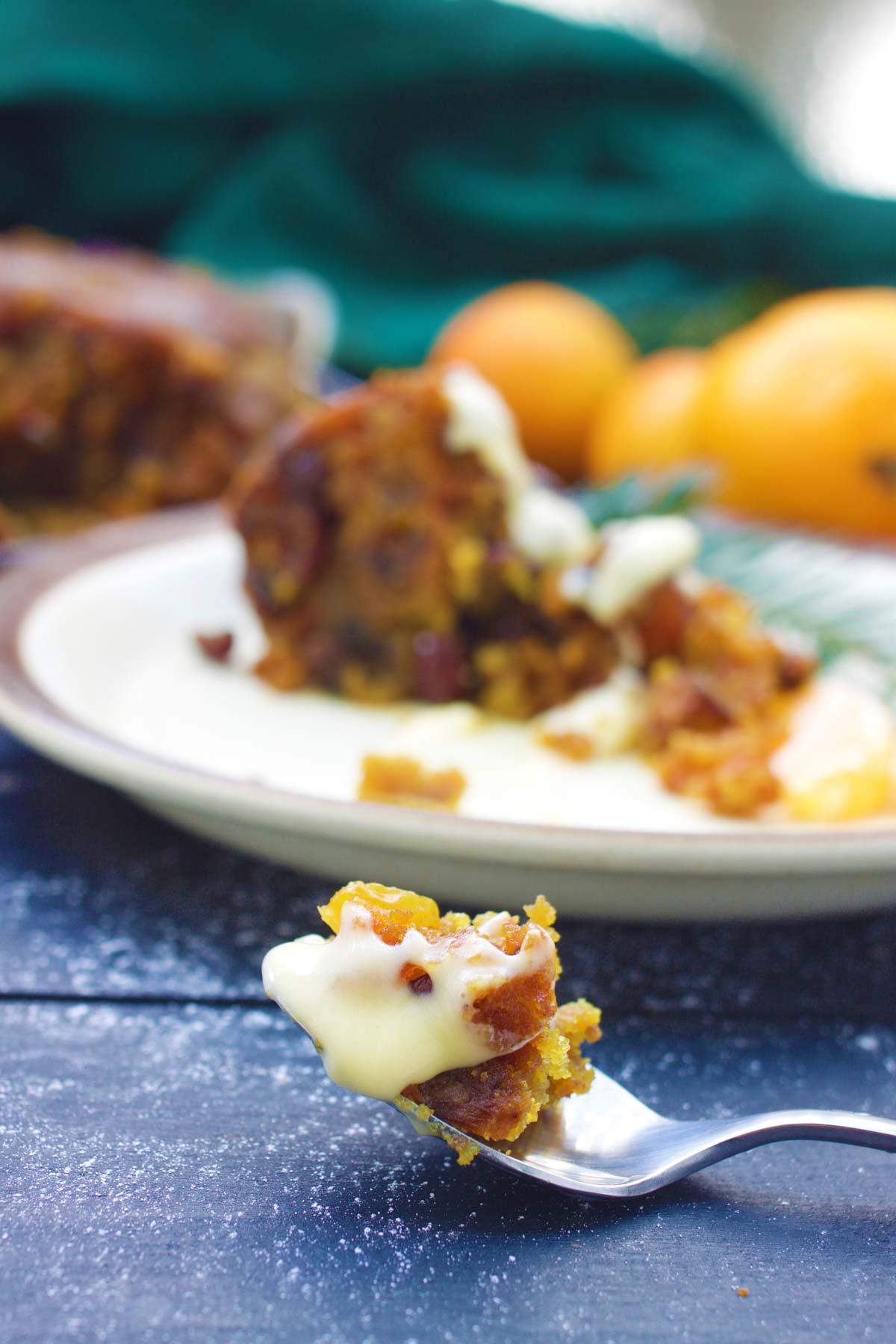
How to serve it
Warm and glossy, this pudding is happiest served in generous slices straight after the main meal. A drizzle of dairy-free custard, a scoop of vegan vanilla ice cream, or a simple pour of warm plant milk all work beautifully against its dense, spiced fruit. If you like a little theater, the orange liquor in the recipe means it takes well to being gently flamed at the table, the traditional flourish for a British Christmas pudding.
Round out the dessert table with something lighter alongside it, like a batch of vegan whole grain cookies, so guests can pick between rich and simple.
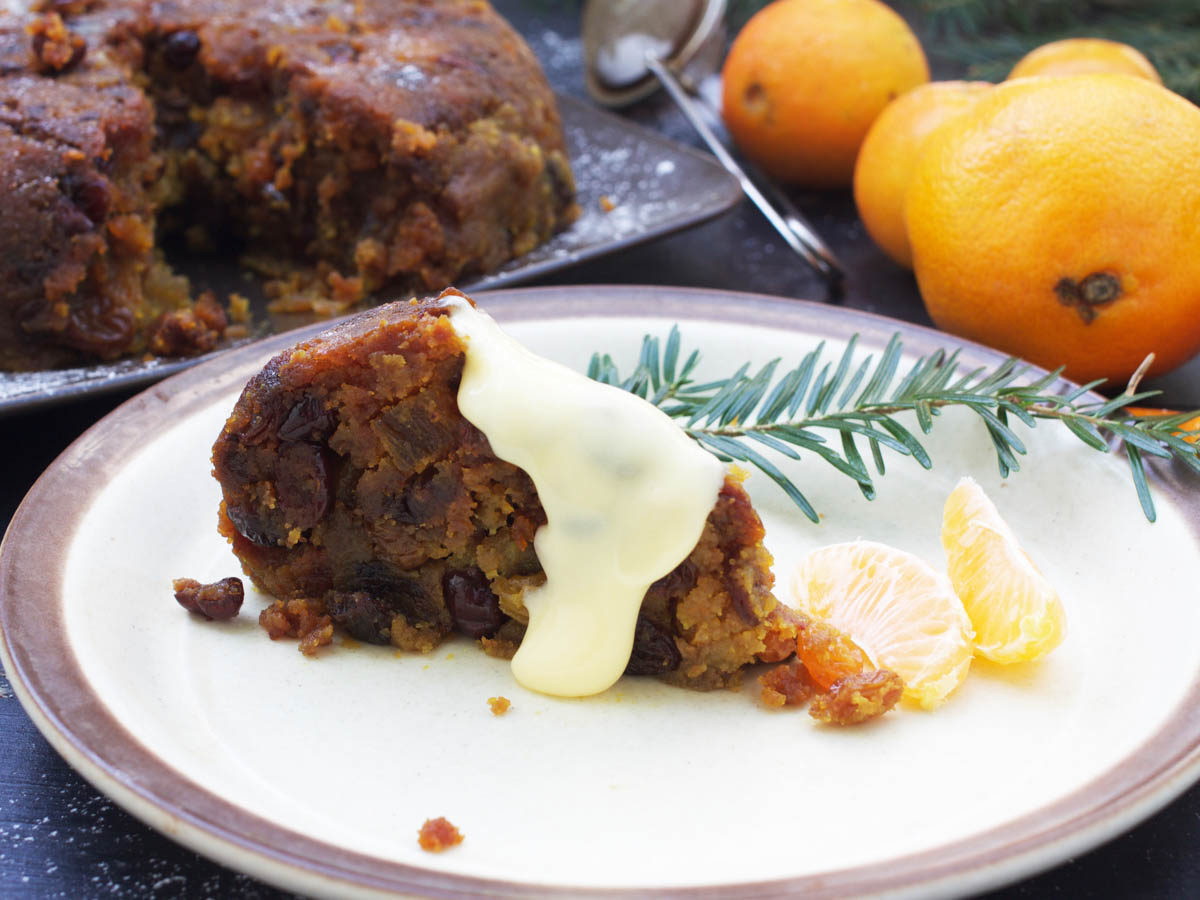
If you make this vegan Christmas pudding, I would love to know how long you steamed yours and whether you flamed it at the table. Please rate the recipe below and leave a comment with your fruit and spice tweaks, so other readers can make their pudding merry too.
Summarise & Save This Recipe
★ Add us as a trusted Google source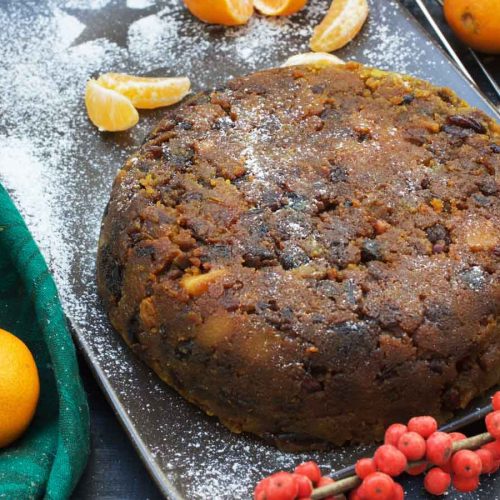
Vegan Christmas Pudding
Ingredients
- ½ cup cranberries
- ½ cup sultanas
- ½ cup raisins
- ¼ cup mango dried, chopped
- ¼ cup pineapple dried, chopped
- ¼ cup apricot dried, chopped
- ¼ cup pecans chopped
- 2 Tbsp Medjool dates pitted and chopped
- ½ cup orange juice
- 2 Tbsp orange liqueur
- 3 tsp orange zest
- ½ cup dairy-free butter
- ¼ cup brown sugar
- ½ cup apple puree
- 1 cup almond flour
- ½ cup coconut flour
- ½ tsp cinnamon
- 1 tsp vanilla extract
- ½ tsp ginger ground
- ¼ tsp nutmeg ground
- ¼ tsp allspice
- 1 Tbsp coconut oil for greasing the bowl
Instructions
- Combine the cranberries, sultanas, raisins, mango, pineapple, apricot, pecans, dates, orange zest, orange juice and orange liqueur in a bowl, then leave the mixture to stand for 2 hours so the fruit softens.
- Beat together the dairy-free butter and brown sugar until creamy.
- Stir in the soaked fruit mixture and all the remaining ingredients, except the coconut oil, which is for greasing the bowl.
- Grease the pudding bowl with the coconut oil.
- Pour in the mixture and smooth the top.
- Place a circle of baking paper on top of the mixture, then cover the top of the pudding bowl with parchment paper and tie it on with string.
- Fold the paper up at the edges so that it does not touch the water.
- Place the pudding bowl in a large pan.
- Add enough water to come two-thirds of the way up the side of the bowl.
- Steam the pudding for three to four hours, checking the water level every 30 minutes and topping it up as needed.
- The pudding is done when a cake skewer inserted into the centre comes out clean.
- Let it cool, then wrap it well and keep it in the fridge for 2 to 4 weeks.
- Warm the pudding through before serving.
Notes
Frequently Asked Questions
Yes, it is fully vegan. It uses dairy-free butter instead of regular butter, and it contains no eggs, milk, suet or honey. Structure comes from almond flour, coconut flour and apple puree rather than animal products, so it stays plant-based from start to finish.
Yes. Instead of wheat flour, the recipe uses almond flour and coconut flour, which makes it naturally gluten-free. Just double-check that your dried fruit, dairy-free butter and orange liquor are certified gluten-free if you are cooking for someone with celiac disease.
Steaming surrounds the dense fruit batter with gentle, moist heat so it cooks slowly and evenly without drying out or forming a hard crust. That is what gives the pudding its signature moist, sticky texture. Baking this heavy mixture in a dry oven would scorch the outside long before the center set.
You can make it two to four weeks ahead. Once it has steamed and cooled, wrap it well and store it in the fridge, then warm it through before serving. The resting time actually improves the flavor, as the spices and fruit mellow and marry together.
Yes. The orange liquor adds depth, but you can leave it out and replace it with extra orange juice for soaking the fruit. The pudding will be a little less boozy but still rich, citrusy and full of flavor.
The pudding needs to steam for three to four hours. It is ready when a cake skewer pushed into the center comes out cleanly. Remember to check the water level in the pan every 30 minutes and top it up so it never runs dry.


Looks soo delicious 😋
Thank you! 🙂