
Vegan Churros with Chocolate Sauce and Dulce de Leche
These vegan churros are crisp-edged, fluffy-centered ribbons of fried dough, rolled in cinnamon sugar and served with chocolate sauce and vegan dulce de leche. They are the classic Spanish street-food treat made entirely without eggs or dairy, and the dough comes together with pantry basics in about 20 minutes plus a short rest. This is an occasional indulgence, not a health food, but it is one worth making a couple of times a year.
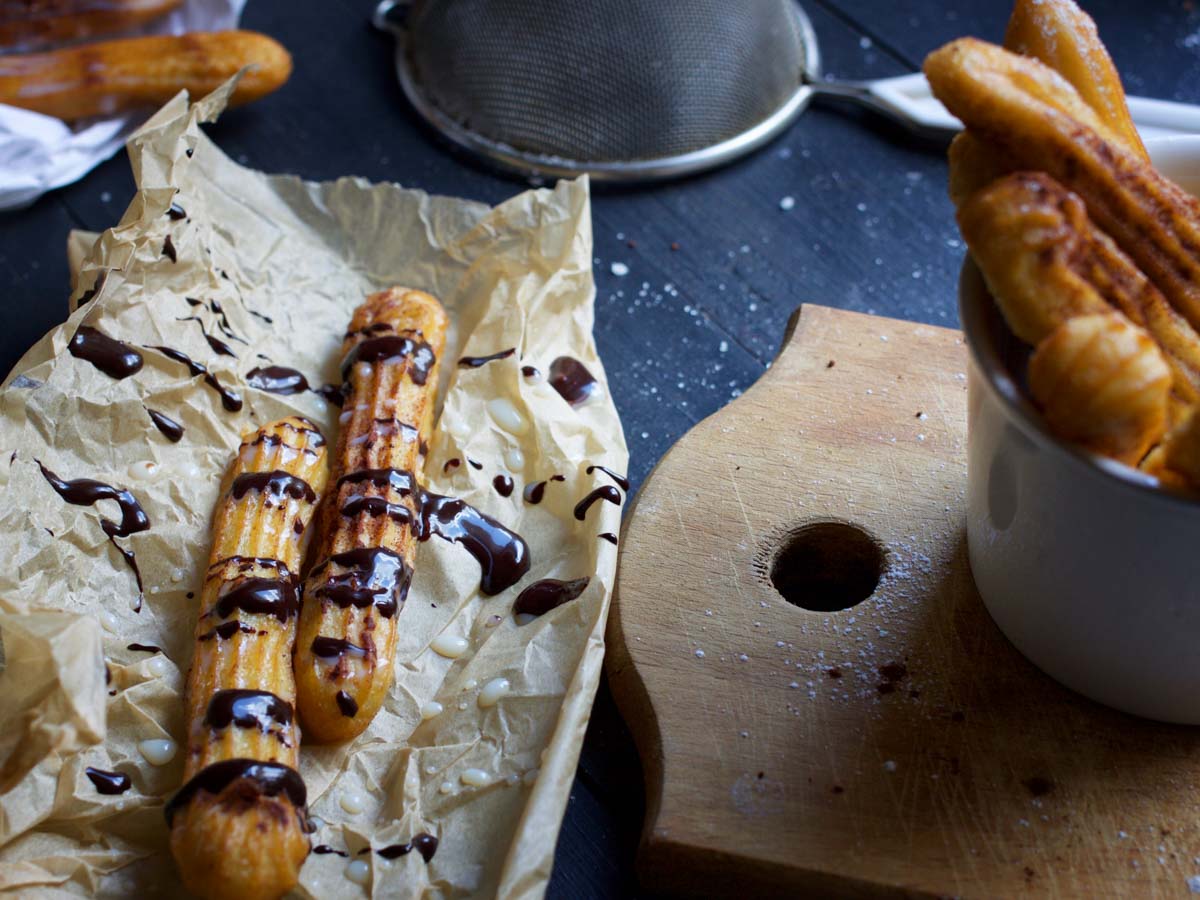
I couldn’t have missed the world-renowned Spanish churros recipe as part of my Spanish recipes-testing journey, so here it is! And a thank you to Mari (see the comment below) for letting me know the difference between Spanish and Mexican churros. This vegan version keeps everything I love about the original, just without the eggs or butter.
What churros actually are
Churros are fried dough with a soft, pastry-like consistency, very similar to the choux used in French choux à la crème or in Romanian donuts. They are traditional in Portugal and Spain but popular all over the world, and they are most often sold by street-food vendors, hot from the fryer and dusted with sugar. The signature ridged shape comes from piping the dough through a star tip, which is what gives churros their crisp exterior and tender inside.
The ingredients you’ll need
The dough is short and simple: water, a little melted coconut oil, vanilla extract, flour, baking powder, and a pinch of salt. That is it for the batter. The coconut oil replaces the butter used in traditional churros and keeps everything plant-based while still adding richness. You’ll also need a good amount of neutral oil for deep frying, plus powdered sugar and cinnamon for the classic coating. Because the ingredient list is so short, use the freshest baking powder you have — it is what gives the churros their light, airy interior.
Tips for churros that fry up crisp
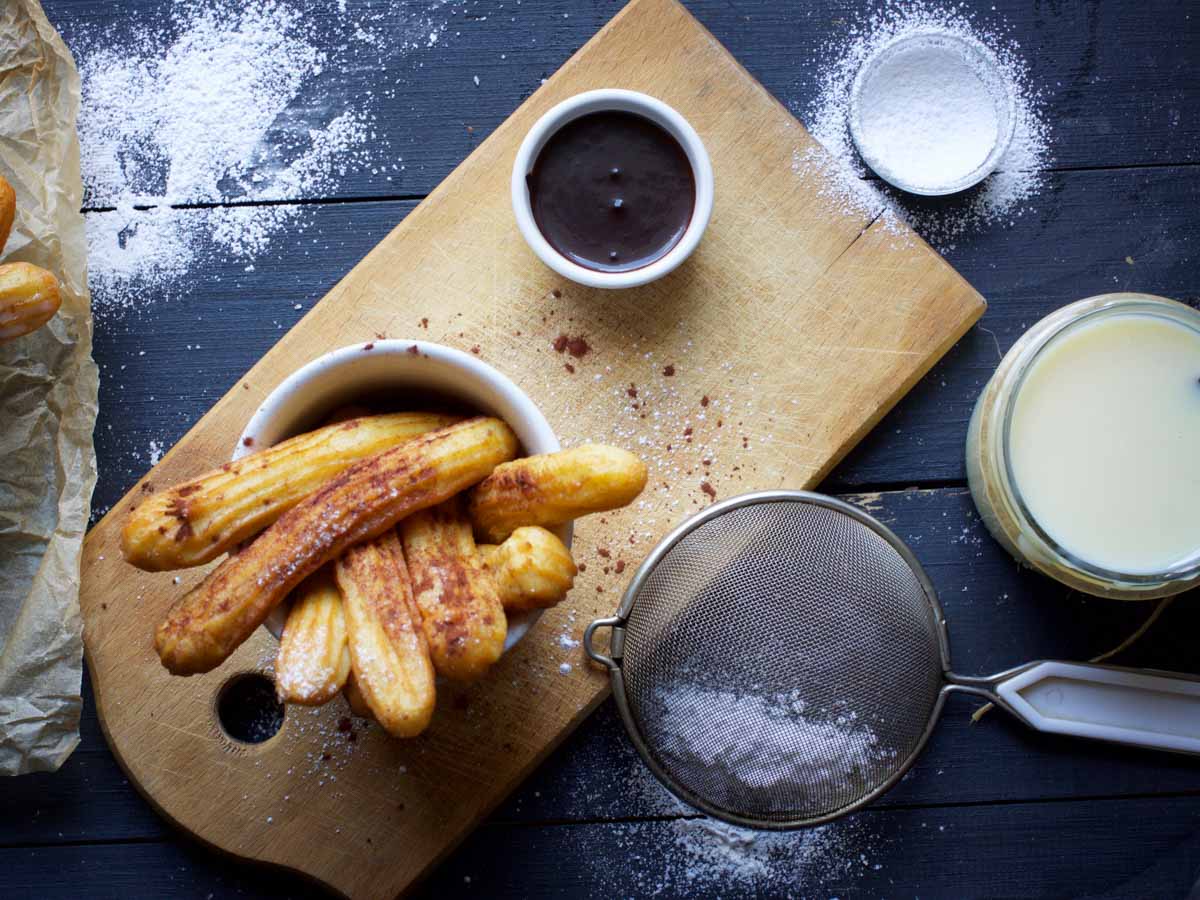
A few small things make the difference between soggy churros and properly crisp ones. First, mix the hot liquid into the dry ingredients quickly so you get a smooth, sticky, soft dough with no lumps, then let it rest for the full 15 minutes — this relaxes the flour and makes the dough easier to pipe. Second, watch your oil temperature: aim for 190C. Too cool and the churros absorb oil and turn greasy; too hot and the outside browns before the inside cooks through. If you don’t have a thermometer, drop in a small piece of dough — it should sizzle steadily and rise to the surface within a few seconds. Pipe in long ribbons, fry in small batches so the oil temperature stays stable, and pull them out when they are deep golden, about a minute each.
Why coconut oil in the dough works
Traditional churro dough leans on butter for fat and flavor, and coconut oil is a smart swap because it is solid at cool temperatures and melts cleanly into the hot water, distributing evenly through the batter. That fat coats the flour and keeps the interior tender rather than tough, which is why you don’t want to skip it. Adding the melted oil off the heat, right after the water boils, means it blends in without the mixture cooling too much before the flour goes in.
What to serve with vegan churros
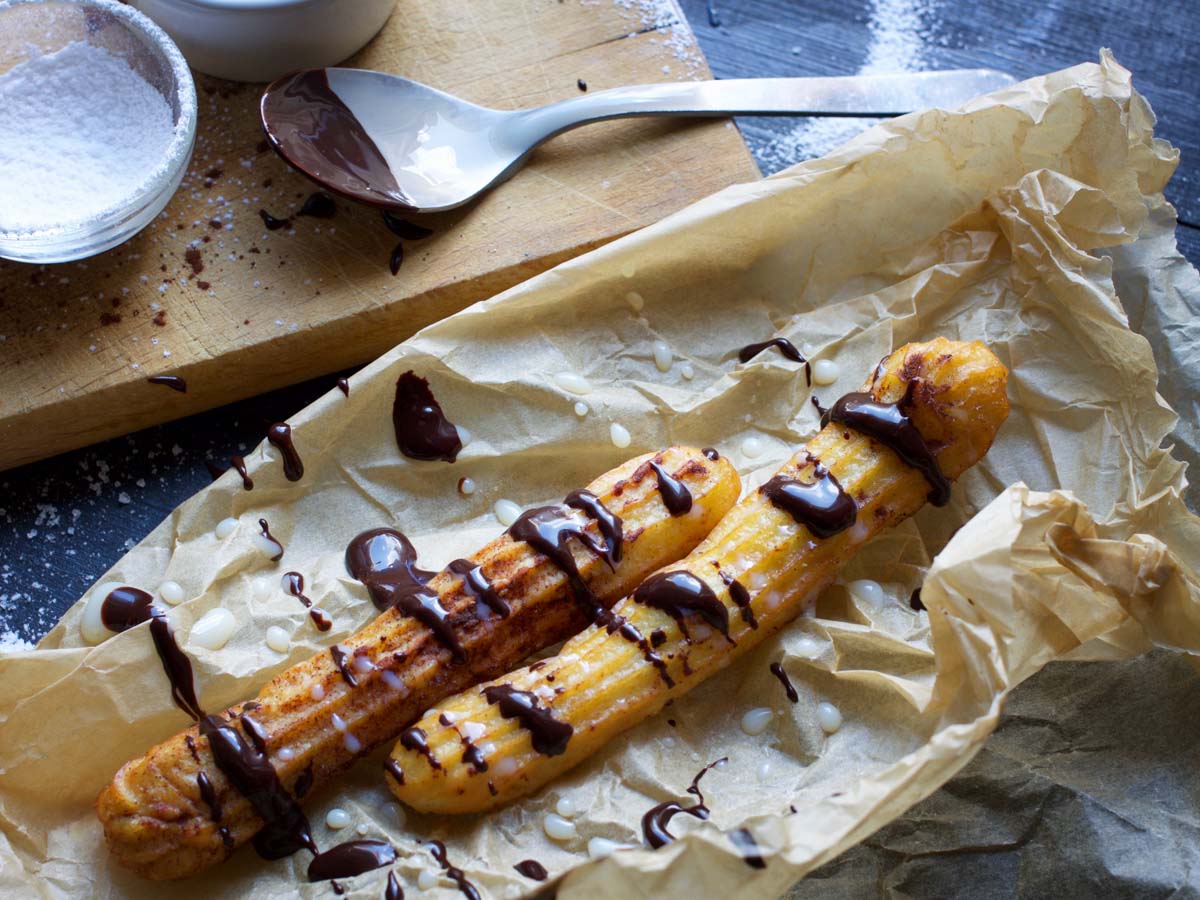
Churros are made for dipping. The two classics here are a warm chocolate sauce and a spoonful of vegan dulce de leche, and having both on the table lets everyone choose their favorite. If you want to build a whole Spanish-inspired spread, serve a batch of these for dessert after a plate of vegan tapas. They also make a lovely sweet ending alongside other treats from the blog, like these vegan whole grain cookies when you want a mix of things to nibble on.
Storing and making ahead
Churros are at their absolute best eaten within minutes of frying, while the outside is still crisp and the inside is warm and soft. They don’t keep well once cooled, so I recommend making them fresh rather than storing them. If you do have leftovers, keep them in an airtight container at room temperature for up to a day and reheat in a hot oven or air fryer for a few minutes to bring back some of the crunch — never the microwave, which turns them chewy. The dough itself can be mixed, rested, and piped just before frying, so you can prep it a short while ahead if you’re serving guests.
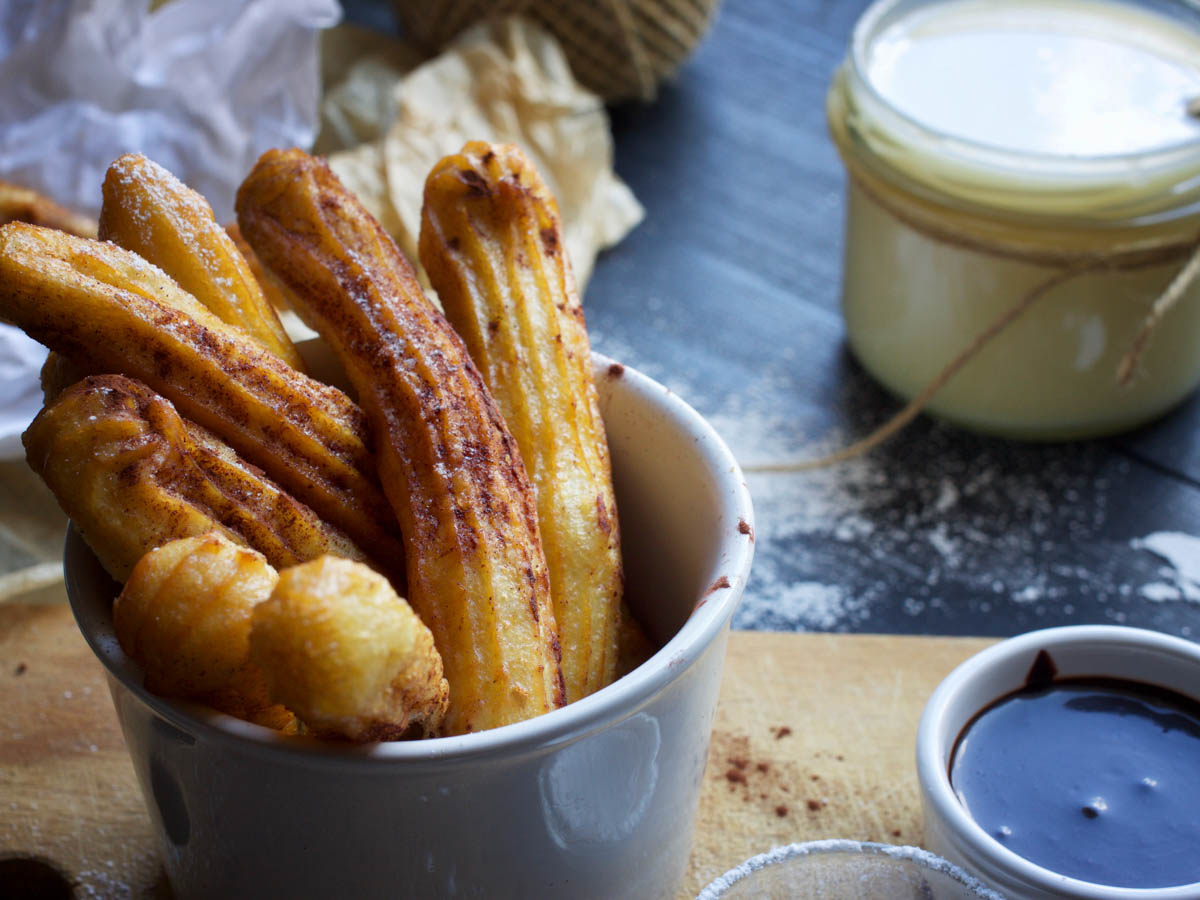
If you make these vegan churros, I’d love to know how they turned out — did you go for the chocolate sauce, the dulce de leche, or both? Give them a try, leave a star rating, and drop a comment below with how the frying went for you. And remember: everything in moderation!
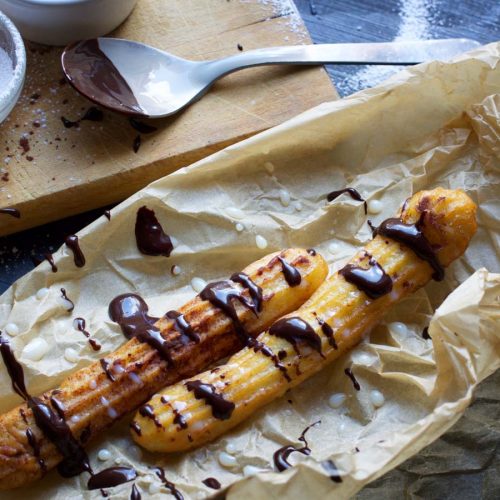
Vegan Churros with Chocolate Sauce and Dulce de Leche
Ingredients
- 250 ml water
- 1 Tbsp coconut oil melted
- 1 tsp vanilla extract
- 150 g flour
- 1 tsp baking powder
- 1 pinch salt
- 2-3 cups oil for deep frying
- 2 Tbsp powdered sugar
- 1 tsp cinnamon
Instructions
- Bring the water to a boil in a large pot.
- Remove from heat and stir in the melted coconut oil and the vanilla extract.
- In another bowl, combine the sifted flour, baking powder, and salt.
- Pour the liquid into the dry ingredients and mix quickly to a soft, sticky dough.
- Let the dough rest for 15 minutes.
- Combine the powdered sugar and cinnamon in a small bowl.
- Fill a piping bag with the churros dough.
- Heat the oil in a wok to 190°C (375°F).
- Pipe the dough into the hot oil in long strips and fry for about a minute, until golden.
- Lift them out with a slotted spoon and let them drain on paper towels, then sprinkle with the cinnamon sugar. Fry the rest of the dough in batches.
- Serve warm, with the chocolate sauce and vegan dulce de leche.
Notes
Frequently Asked Questions
Yes. The dough is made with water, coconut oil, vanilla, flour, baking powder, and salt, with no eggs, butter, or dairy. They are rolled in cinnamon sugar and served with chocolate sauce and vegan dulce de leche, so the whole dessert stays plant-based.
Yes. A piping bag fitted with a star tip works perfectly and gives you the classic ridged shape that helps churros crisp up. Fill the bag with the rested dough and squeeze out long ribbons straight into the hot oil.
Heat the oil to about 190C. If it is too cool the churros soak up oil and turn greasy, and if it is too hot the outside browns before the inside cooks. Without a thermometer, drop in a small piece of dough — it should sizzle steadily and float up within a few seconds.
This almost always comes down to oil temperature or overcrowding. If the oil is below 190C the dough absorbs it, and adding too many churros at once cools the oil down fast. Fry in small batches, keep the temperature steady, and drain the churros on paper towels straight out of the fryer.
The two classics are warm chocolate sauce and vegan dulce de leche for dipping. Churros are best eaten hot and fresh, dusted in cinnamon sugar, and they make a great dessert after a spread of vegan tapas.
Churros are best fried and eaten right away while they are crisp, so they don’t store well. You can mix, rest, and pipe the dough a short while before frying if you’re serving guests. Any leftovers keep for up to a day in an airtight container and reheat best in a hot oven or air fryer, never the microwave.


Mexican traditional recipe of churros has no eggs or butter neither 🙂 but cinnamon is a must!
Spanish churros (like from Spain) never use butter and eggs so the recipes you saw that are vegan but not marked as vegan are the traditional Spanish recipes. Eggs and sometimes butter are used to make Mexican churros. Cinnamon is also not traditional on Spanish churros but, again, common in Mexican recipes. Dulce de leche is not Spanish nor is it popular in Spain (as it says in your dulce de leche post) but some Latin American versions of churros use it. Recipes can change and adapt a lot throughout the world. Be careful not to confuse one country’s version with another’s when you talk about the “traditional” or “original” recipe.
Hi, Mari! Thank you for the clarifications. I found the reference to Spain in an article, though I can’t seem to find it know. Should have checked that info. I will add the corrections in the article and thanks again for letting me know this. 🙂 I love learning new things about other countries’ cuisines. 🙂
Just made your vegan dulce de leche and can’t wait to try these too!
Let me know how they turn out!