
Vegan Tapas
A vegan tapas party is a spread of small Spanish-style plates served together so everyone can graze. I build mine around veganized classics like patatas bravas, croquetas, empanadas and tortilla, then round it out with marinated olives, garlic, sundried tomatoes, dips, sliced bread and vegan cheese. Pour Rioja and Sherry, and you have a full meal in shareable bites.
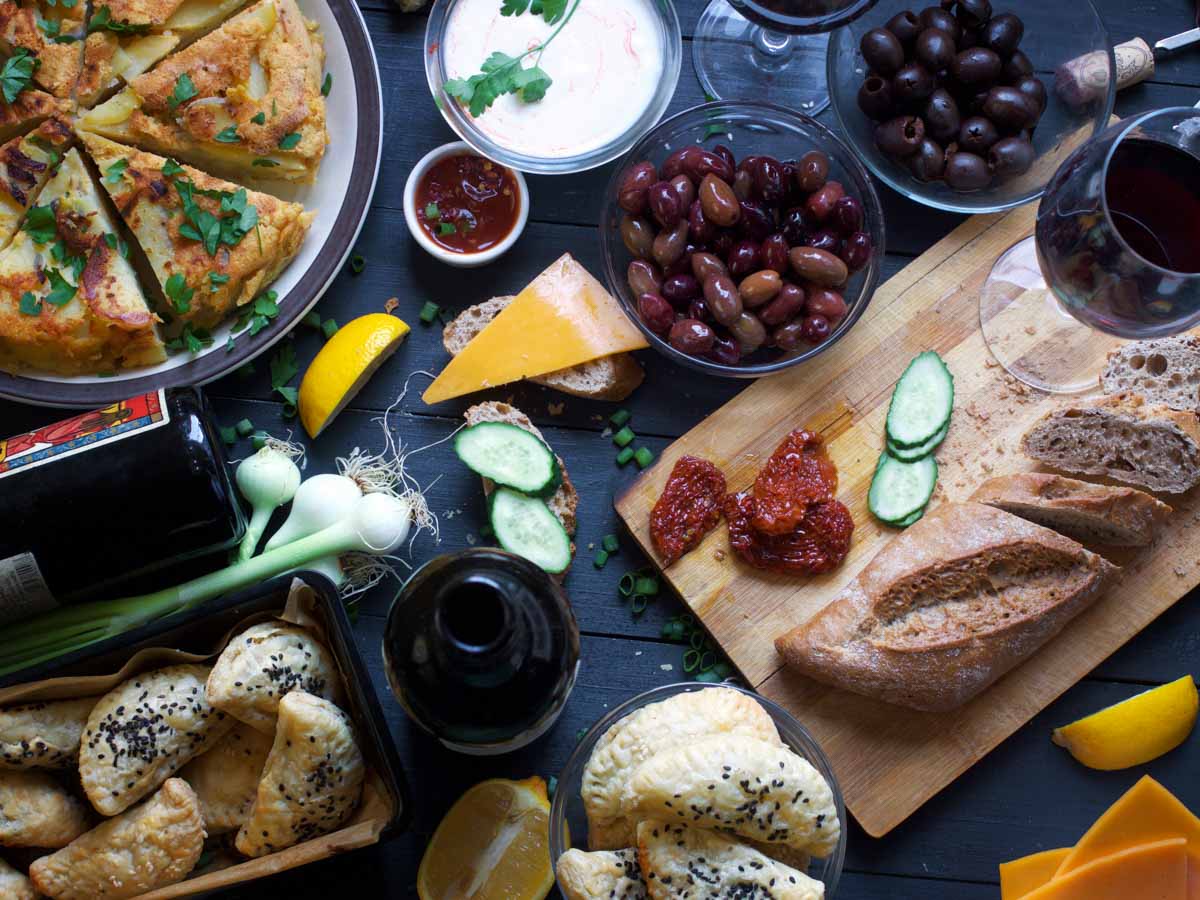
I decided to make a vegan tapas spread, so I veganized some of the most popular tapas recipes, like patatas bravas, croquetas, empanadas, tortilla and more. The idea behind tapas has always pulled me in: instead of one big plate, you set out lots of little ones and let people build their own bites. It turns dinner into something social, where the table itself is the centerpiece and nobody is stuck eating the same thing.
I also added some complementary ingredients to complete the menu, like vegan sauces and dips, marinated olives and garlic, sundried tomatoes and fresh veggies. That mix of warm, cooked plates next to cold, briny, fresh ones is what makes a tapas table feel abundant without much last-minute work. Most of it can be marinated, baked or assembled ahead, so when guests arrive I am pouring wine, not panicking in the kitchen.
This Recipe Works If You Need
- A shareable, graze-style menu for a party or game night where people serve themselves
- A fully plant-based Spanish spread that still feels festive and traditional
- A mostly make-ahead meal so you are not chained to the stove when guests arrive
- A flexible table you can scale up or down depending on how many people show up
- A way to use up bread, olives, sundried tomatoes and odds and ends as a real meal
Why You’ll Love This Recipe
- It is built for sharing. Tapas means small portions meant to be combined, so a handful of dishes turns into a generous spread without any single recipe being a lot of work.
- It is fully vegan. Every classic here is veganized, from the egg-free tortilla to the dairy-free croquetas and the vegan cheese on the board, so the whole table is plant-based.
- Most of it is make-ahead. Olives and garlic marinate for days, empanadas and tortilla reheat well, and dips hold in the fridge, so you assemble rather than cook at the last minute.
- It balances hot and cold. Warm baked plates sit next to briny olives, fresh cucumber and tomato, which keeps every bite interesting and stops the table from feeling heavy.
- The wine pairings are built in. Rioja stands up to the heavier empanadas, cheese and tortilla, while Sherry plays beautifully with olives, tomatoes, bread and fresh veggies.
- It is endlessly flexible. Swap in whatever recipes and toppings you like, and the format still works for two people or twelve.
Ingredient Notes
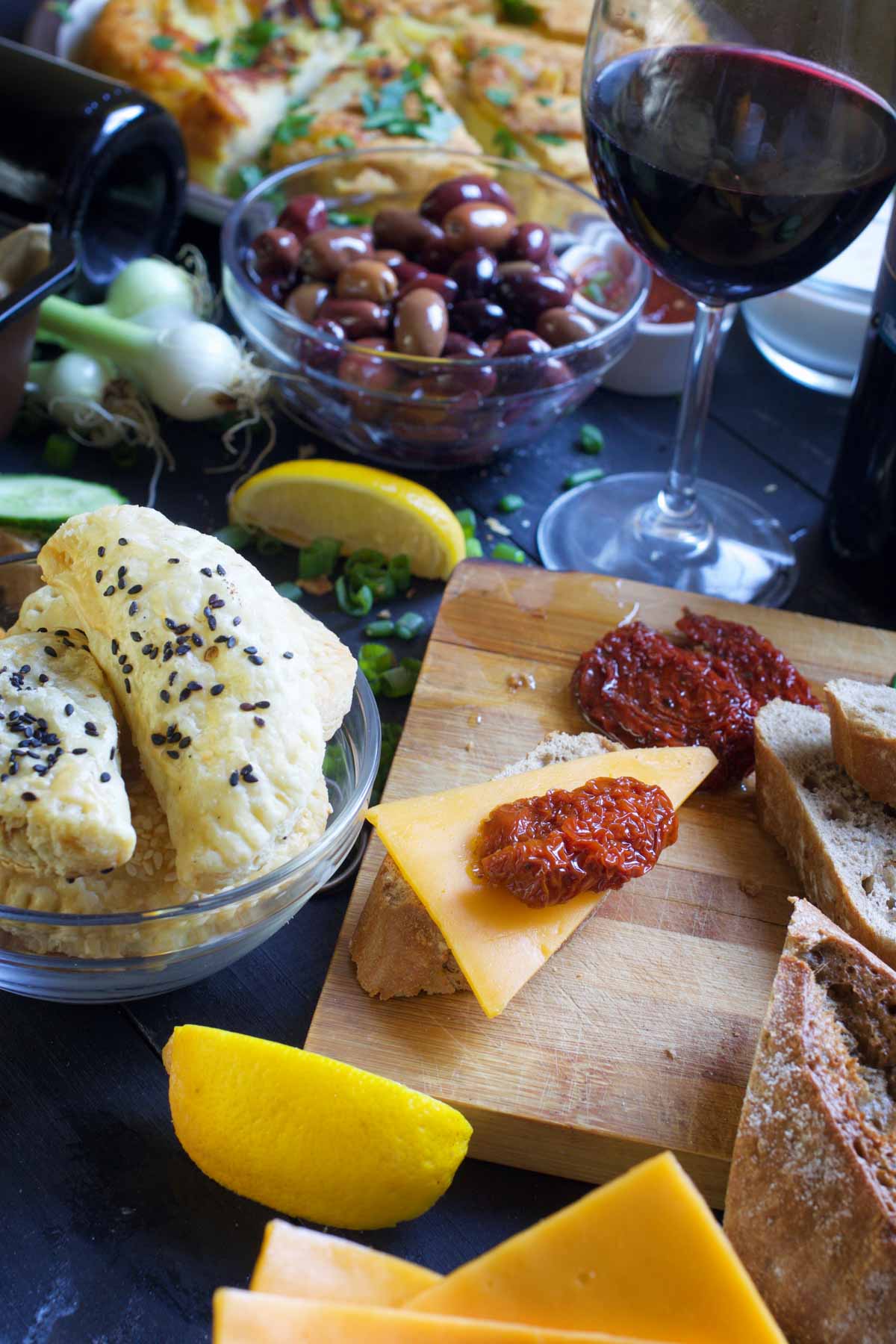
Marinated olives (black with chili and garlic, Kalamata with rosemary) are the easiest high-impact item on the table. Buy whole, unpitted olives in brine rather than the pre-sliced canned kind; they keep a meatier bite and soak up marinade better. Warm your olive oil gently with the chili, garlic or rosemary so the aromatics infuse without frying, then let the olives sit at least a few hours. The longer they marinate, the deeper the flavor.
Garlic marinated in olive oil and herbs turns sharp raw cloves into something mellow and spreadable. For safety, use the marinated garlic within a few days and keep it refrigerated, since garlic in oil should never be stored at room temperature for long. Look for firm, heavy heads with tight skins and no green sprouts, which signal age and bitterness.
Sundried tomatoes bring concentrated, almost candy-like umami that anchors the cold side of the board. The oil-packed kind are softer and ready to eat; if you buy the dry kind, soak them in warm water until pliable first. Their packing oil is a bonus, drizzle it over bread or into a dip rather than tossing it.
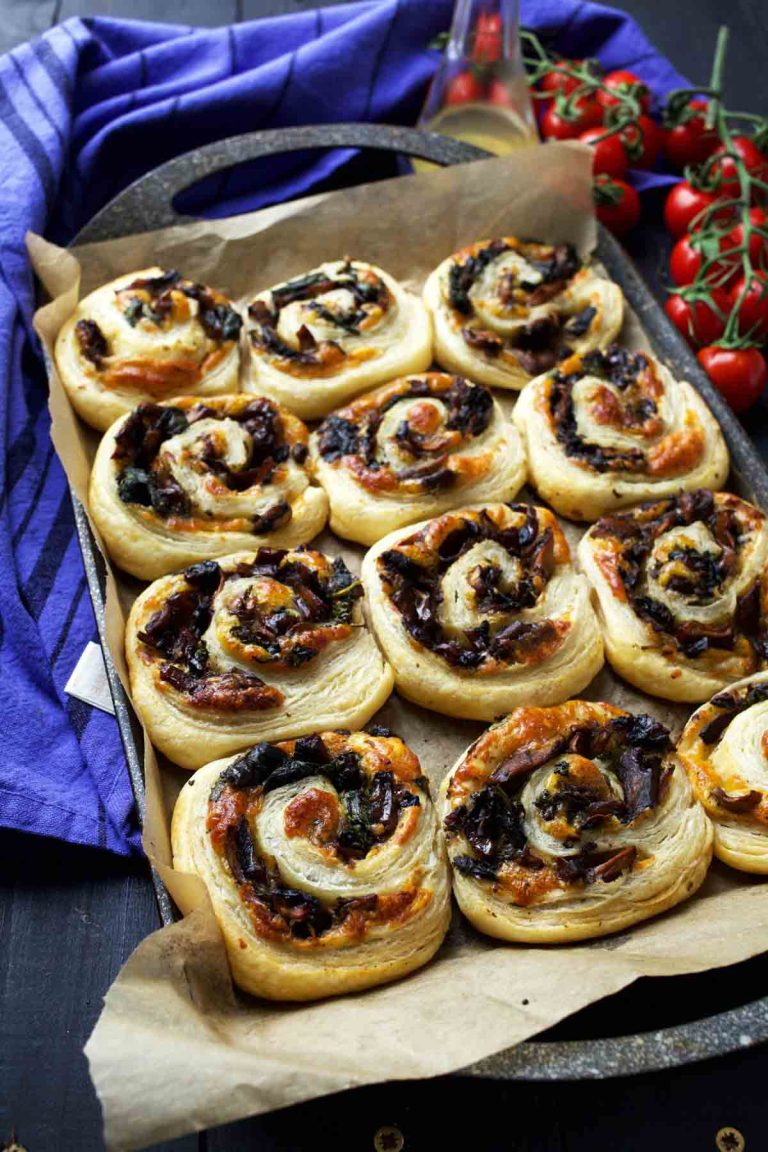
Mushroom empanadas and chickpea Spanish tortilla are the warm, hearty centerpieces. The empanadas give you a savory, flaky bite, while a chickpea-flour tortilla mimics the set, custardy texture of the classic egg version without any eggs. Both reheat well, so they are the dishes I lean on to make the table feel like a proper meal rather than just a snack board.
Vegan yogurt dip and tomato chili dip give the table its cool-and-spicy contrast. The yogurt dip soothes the heat from the chili olives and tomato dip, so I always set both out together. Use a thick, unsweetened plant yogurt as the base; thin, sweetened versions will turn the dip runny and throw off the savory balance.
Sliced bread, sliced vegan cheese and fresh veggies (green onions, cucumbers) are the building blocks that let guests assemble their own bites. Go for a sturdy, crusty bread that holds up to dips and toppings rather than soft sandwich slices. The cucumbers and green onions add crunch and freshness that cut through the richer, oilier plates.
Sherry and Rioja are the traditional pours. Rioja, a heavier red sometimes called a winter wine, stands up to the empanadas, cheese and tortilla. Sherry, lighter and often dry, is the one I reach for alongside olives, tomatoes, fresh veggies and bread.
Tips
- Marinate ahead and taste as you go. Olives and garlic need time, so start them a day or two early. You know the olives are ready when the oil smells loudly of garlic and chili and the brine sharpness has softened.
- Serve warm plates warm and cold plates cold. The most common tapas mistake is letting empanadas and tortilla go lukewarm on the table. Bake or reheat them last and bring them out in batches so each round is fresh and the pastry stays crisp.
- Balance the board by texture, not just flavor. Aim for something crunchy, something creamy, something briny and something warm in every cluster. That contrast is what keeps people reaching back for more.
- Match the wine to the plate. Pour Rioja next to the heavier empanadas, cheese and tortilla, and Sherry next to the olives, tomatoes, bread and fresh veggies, so each pairing actually lands.
- Do not overcrowd a single platter. Spread items across a few small dishes instead of one big one. It looks more abundant, keeps flavors from bleeding together, and makes it easy to refill one thing at a time.
Substitutions and Variations
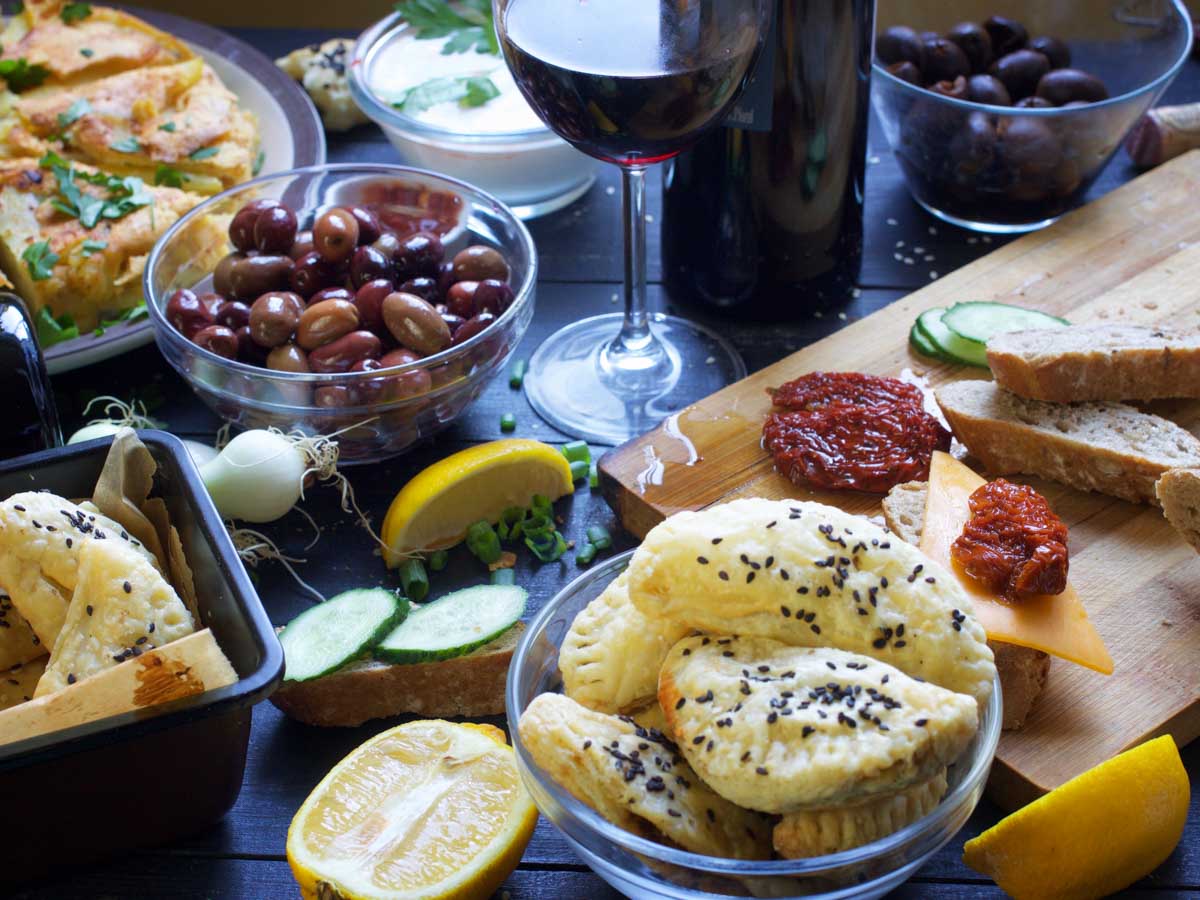
- Swap the hot plates. If you do not want empanadas and tortilla, fold in patatas bravas or croquetas instead. The format does not care which warm dishes you choose, as long as you have a couple of hearty ones.
- Change up the olives and pickles. Use green olives, marinated artichokes, roasted red peppers or pickled vegetables in place of, or alongside, the black and Kalamata olives for a different briny note.
- Adjust the heat. Skip the chili in the olives and lean on the tomato chili dip for spice, or do the reverse, so you can dial the table up or down for your guests.
- Vary the dips. Beyond the yogurt and tomato chili dips, a romesco-style red pepper sauce or a simple white bean spread both fit right into a Spanish-leaning vegan spread.
Storage and Make Ahead
This menu is built for getting ahead. Marinated olives and garlic actually improve after a day or two in the fridge, and both dips keep for several days in airtight containers. The warm components hold up well too: bake the vegan empanadas and the vegan tortilla in advance, refrigerate them, then reheat in the oven so the pastry crisps back up rather than going soggy in the microwave.
If you want to add more hot plates, patatas bravas are best fried or roasted just before serving, while the components themselves can be prepped earlier in the day. Store cut fresh veggies separately so they stay crisp, slice bread close to serving time, and keep the dips and any extra vegan sauces chilled until the table is set. Assemble everything at the last moment, pour the wine, and let guests build their own plates.
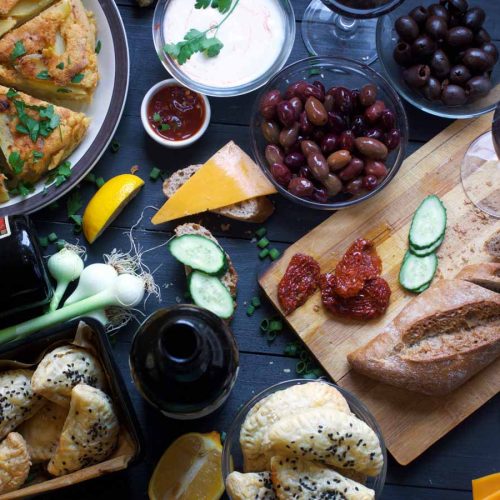
Vegan Tapas
Ingredients
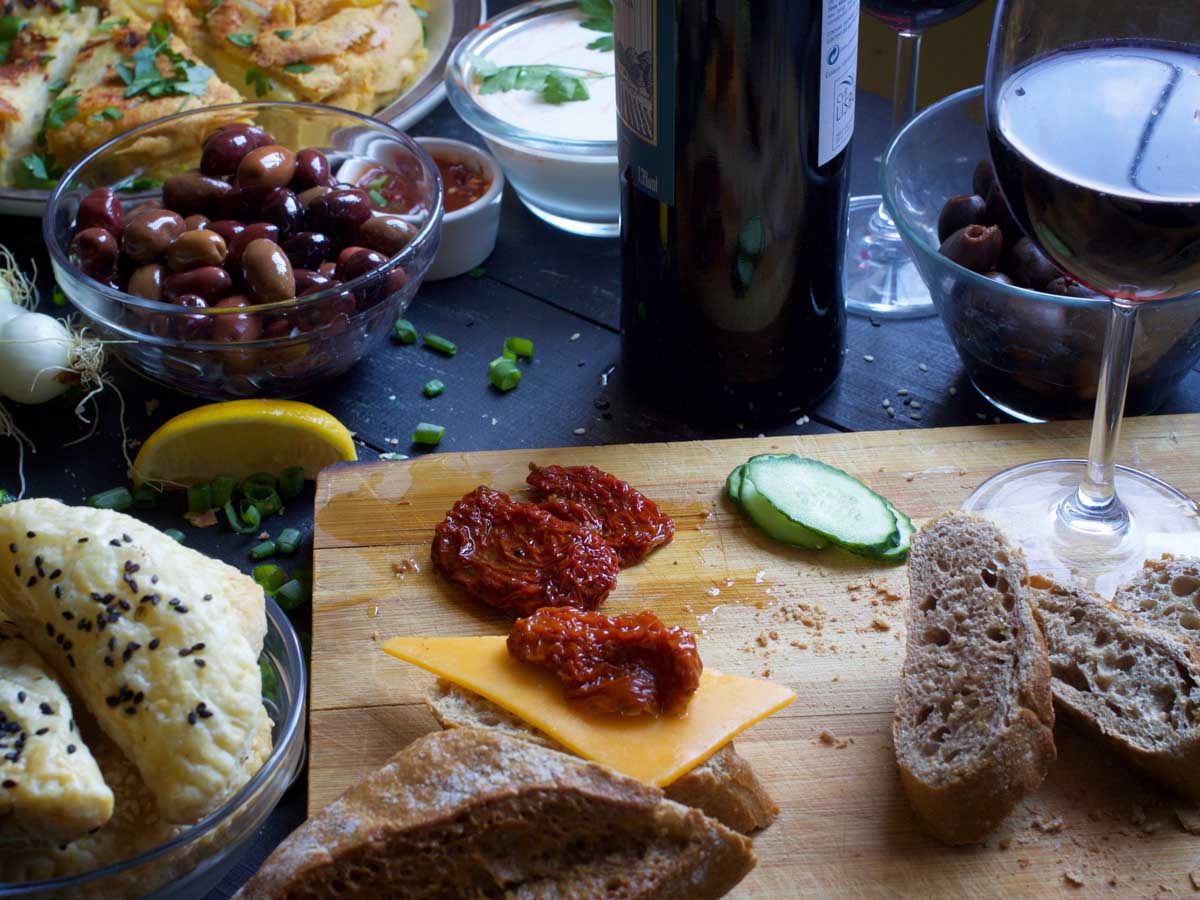
- black olives marinated with hot chili and garlic
- Kalamata olives marinated with fresh rosemary
- garlic marinated in olive oil and herbs
- sundried tomatoes
- mushroom empanadas see recipe linked in the post
- chickpea Spanish tortilla see recipe linked in the post
Other ingredients for the tapas table:
- lemon
- vegan yogurt dip
- tomato chili dip
- sliced bread
- sliced vegan cheese
- fresh veggies: green onions and sliced cucumbers
Wines for the tapas:
- Sherry and Rioja wines for serving
Instructions
- Check out the component recipes in the links mentioned in the post, or above in the ingredients.
- Assemble the tapas table using the rest of the suggested foods and ingredients.
- Rioja wine goes well with Spanish food. It is also called winter wine, so it pairs nicely with heartier tapas like empanadas, cheese, and tortilla.
- Sherry wine goes perfectly with olives, tomatoes, fresh veggies, and bread.
Notes
Frequently Asked Questions
Tapas are small Spanish plates meant to be shared, traditionally served before or instead of a main course. A vegan tapas spread veganizes those classics, so instead of meat and cheese you get plant-based versions like a chickpea tortilla, mushroom empanadas, dairy-free croquetas, marinated olives, dips and sliced vegan cheese, all served together as a grazing meal.
A good spread mixes warm and cold plates. On the warm side, set out mushroom empanadas and a chickpea Spanish tortilla, plus optional patatas bravas or croquetas. On the cold side, add marinated black and Kalamata olives, garlic in herbed oil, sundried tomatoes, a vegan yogurt dip and a tomato chili dip, sliced bread, sliced vegan cheese, and fresh veggies like cucumbers and green onions.
Rioja and Sherry are the traditional pours. Rioja is a heavier red, sometimes called a winter wine, so it pairs well with the richer plates like empanadas, vegan cheese and tortilla. Sherry is lighter and works beautifully alongside olives, tomatoes, fresh veggies and bread. Setting out both lets each plate find its match.
Yes, and that is part of why this menu works so well for parties. Marinated olives and garlic improve after a day or two in the fridge, and the dips keep for several days in airtight containers. Empanadas and tortilla can be baked in advance and reheated in the oven, so on the day itself you are mostly assembling rather than cooking.
Tapas are small portions, so plan on guests trying a little of everything rather than a full serving of one thing. As a rough guide, aim for four to six different dishes for a small group and add more variety as the guest count grows. Because the format is meant to be combined into a full meal, it is easy to scale up by adding plates rather than making any single recipe bigger.
Not as written, since it includes sliced bread, empanada pastry and possibly the croquetas. You can make most of the table gluten-free by skipping the bread and pastry-based plates and leaning on the naturally gluten-free items: marinated olives, garlic, sundried tomatoes, the chickpea tortilla, fresh veggies and the dips. Always check that your vegan cheese and packaged ingredients are certified gluten-free.


Super delicious and I loved the informative article. Keep up with the challenges!
Thanks! 😀