
Vegan Scones
These vegan scones are a light, lightly sweetened tea-time pastry made without any eggs, dairy butter, or milk. You mix a simple dough of flour, vegan butter, almond milk, coconut sugar, and raisins, cut it into rounds, and bake until golden — about 20 minutes from bowl to oven. They are the perfect answer when you want something sweet to go with your afternoon tea, without reaching for anything complicated.
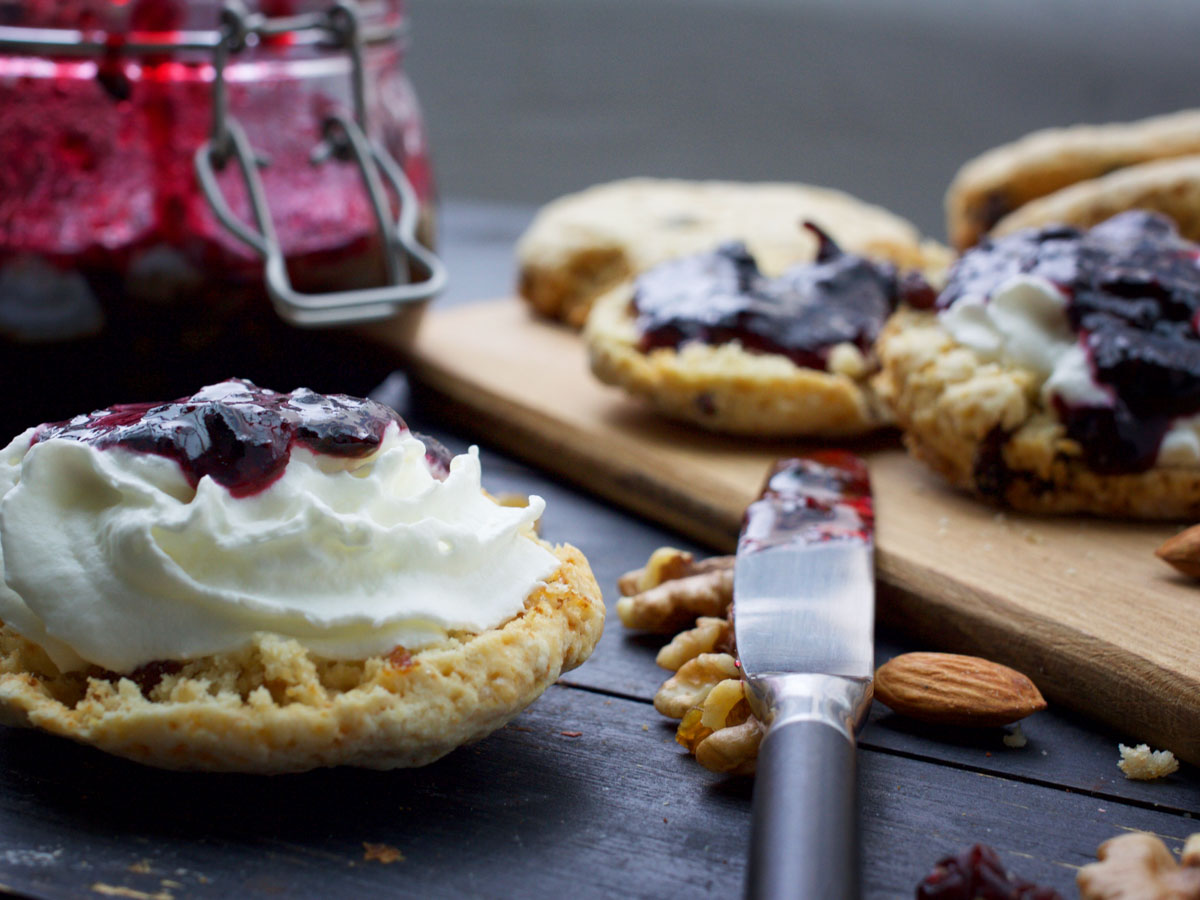
It is no secret the British love their tea, and the archetypal British way of life dictates that a good cup should be accompanied by some form of snack. The scone belongs to the “cream tea” tradition — usually served between breakfast and lunch, decorated with jam and cream. In order to help you enjoy that ritual without any animal products, I present to you today this amazing recipe for vegan scones.
What goes into these vegan scones
The ingredient list is short and pantry-friendly, and each one earns its place:
- All-purpose flour — the structure of the scone. Spoon it into the cup and level it off rather than scooping, so you do not pack in extra flour and end up with a dry crumb.
- Vegan butter — keep it cold. Cold fat is what gives scones their tender, slightly flaky texture as it melts and creates little pockets of steam in the oven.
- Almond milk — brings the dough together. Any unsweetened plant milk (soy, oat) works here if that is what you have.
- Coconut sugar — a gentle, low-key sweetness. Scones are meant to be only lightly sweet, since jam and cream do the rest.
- Raisins — the classic sweet studding. Fold them in at the end so they distribute without being crushed.
- Baking powder, salt, and vanilla — lift, balance, and warmth. The pinch of salt is small but important; it keeps the scone from tasting flat.
The secret is in the mixing (and not overdoing it)
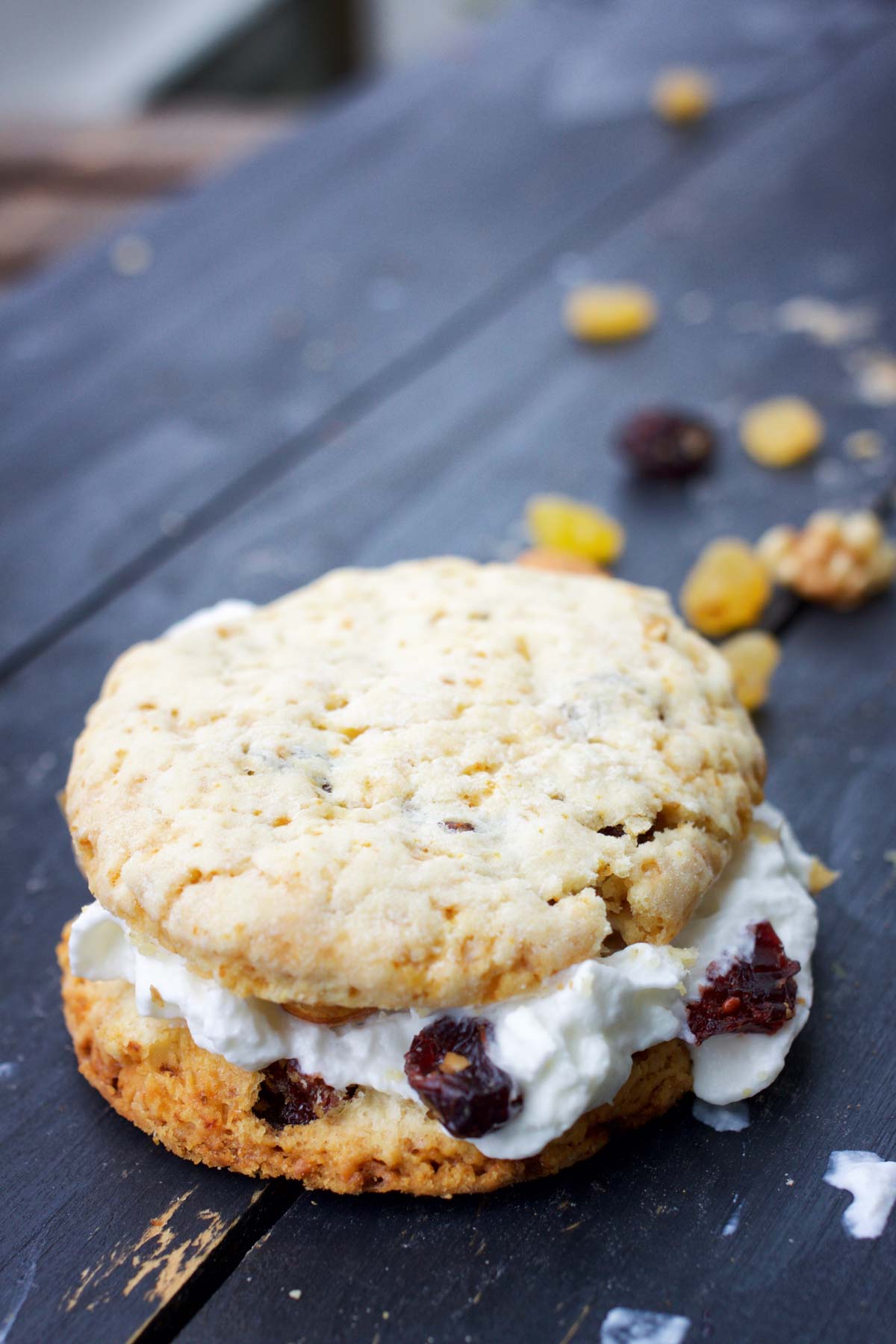
If there is one step that decides whether your scones come out tender or tough, it is the mixing. Combine your dry ingredients in one bowl and your wet ones (minus the raisins) in another, then bring the two together with your hands just until the dough holds. Add the raisins as you go. The moment there are no dry streaks left, stop.
Overworking the dough develops the gluten in the flour, and too much gluten turns a soft, crumbly scone into a dense, chewy one. Handling the dough as little as possible, and keeping the vegan butter cold, is what gives you that light, short texture scones are loved for. Think of it as coaxing the dough together rather than kneading it.
Shaping and baking
Turn the dough out onto a lightly floured surface and flatten it into a thick layer — do not roll it too thin, or the scones will not rise tall. Use a deep cookie cutter to cut out four scones, then gather the scraps, press them back together, and cut four more, for eight in total. Press the cutter straight down without twisting; twisting seals the edges and can stop the scones from rising evenly.
Brush the tops with a little more vegan butter or plant milk for color, then bake at 200C for about 20 minutes. You are looking for a lightly golden top and a set, firm feel. If the bottoms brown faster than the tops in your oven, move the tray up a rack for the last few minutes.
How to serve them
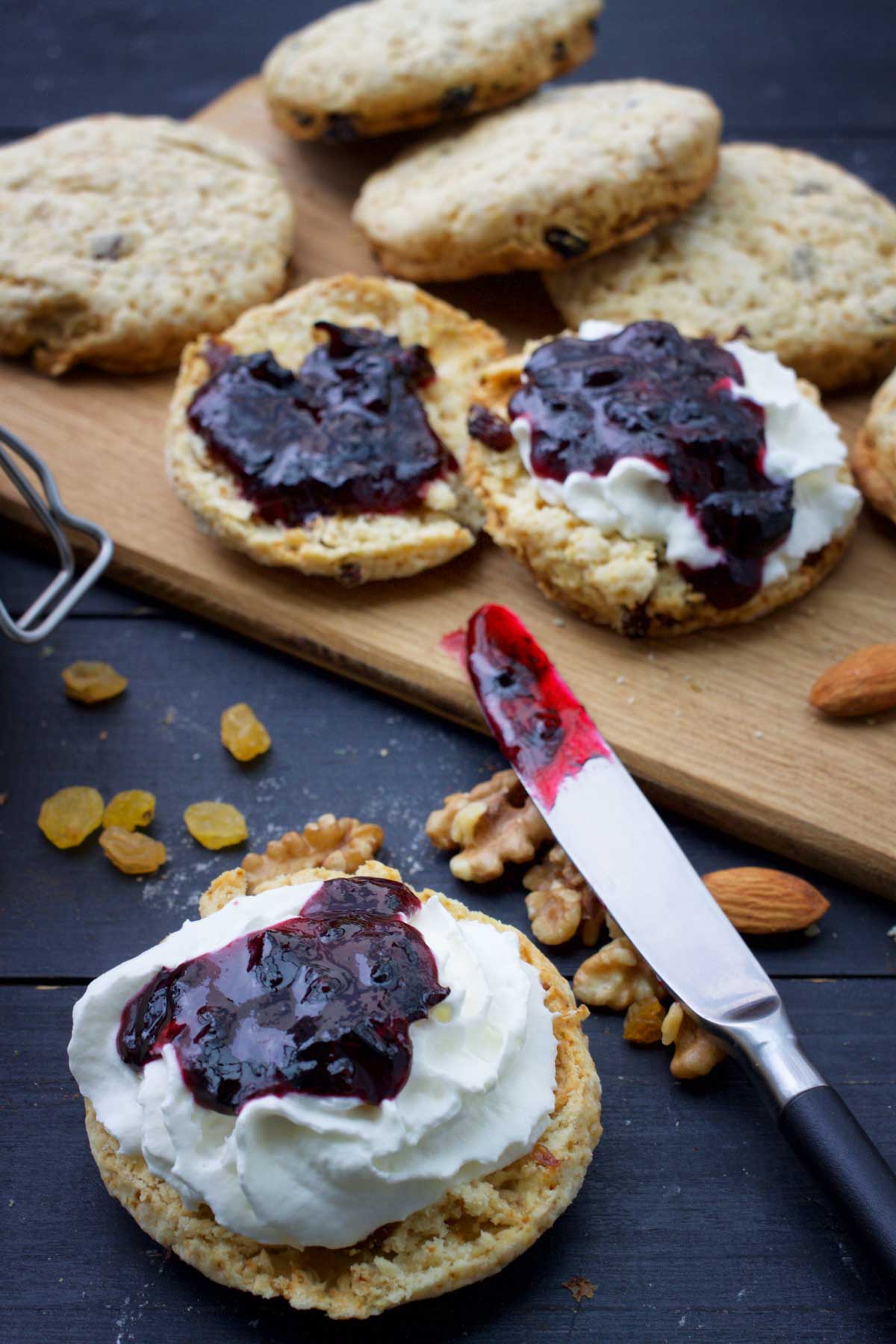
The classic way is warm from the oven, split in half, and topped with vegan whipped cream and black currant jam. A pot of tea is the obvious companion, but they are just as happy alongside a morning coffee. If you are building a fuller vegan brunch spread, they sit nicely next to something like my gluten-free vegan pancakes, and they fit right into the wider world of comforting American-inspired baking. For another sweet, tea-friendly bite from the blog, my vegan whole-grain cookies make a lovely pairing on the same plate.
Make-ahead and storage
Scones are at their absolute best the day they are baked, while the outside is still a little crisp and the inside soft. That said, they keep for two to three days in an airtight container at room temperature. To bring back that fresh-from-the-oven quality, warm them for a few minutes in the oven or toaster before serving.
They also freeze well. Once completely cool, freeze the baked scones in a sealed bag for up to two months, then reheat straight from frozen in a warm oven. This makes them a handy thing to have on standby, much like a batch of these whole-grain cookies tucked away for when a sweet craving hits. If you like planning your baking around the week ahead, they slot easily into a vegan meal plan as a weekend treat.
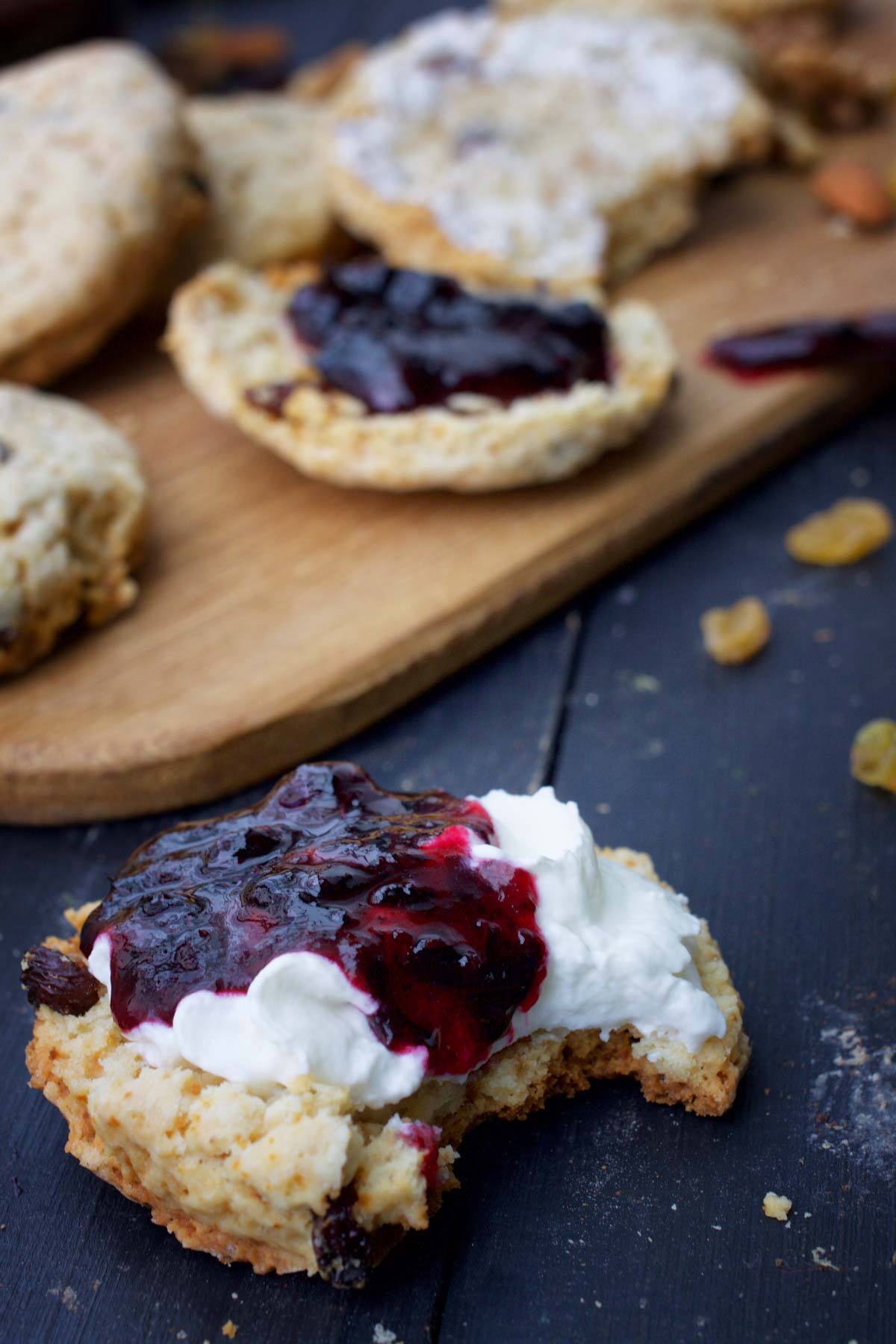
If you bake a batch of these vegan scones, I would love to know whether you went classic with raisins and jam or made them your own with a different mix-in. Leave a star rating and drop a comment below to tell me how they turned out and what you served alongside your cup of tea.
Summarise & Save This Recipe
★ Add us as a trusted Google source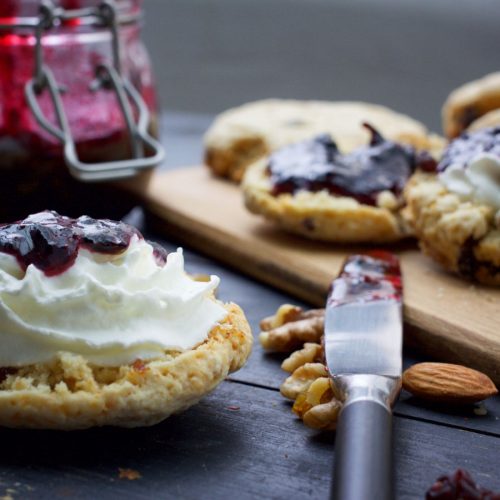
Vegan Scones
Ingredients
Dry ingredients:
- 2 cups all-purpose flour
- ½ tsp baking powder
- 2 Tbsp coconut sugar
- ½ tsp salt
Wet ingredients:
- 2 Tbsp vegan butter
- ½ cup almond milk
- ½ tsp vanilla extract
- 2 Tbsp raisins
Instructions
- Preheat the oven to 200C.
- Grease a baking tray with a little vegan butter.
- In a large mixing bowl, combine all the dry ingredients.
- In another bowl, combine the wet ingredients, except for the raisins.
- Add the wet ingredients to the dry ones, add the raisins and mix the dough with your hands just enough to incorporate. Do not over-mix.
- On a flour-dusted surface, lay out the dough and flatten it into a thick layer.
- Use a deep cookie cutter to cut out 4 scones.
- Lay the cut scones on the tray, then gather and re-roll the remaining dough and cut 4 more scones with the same cutter.
- Brush the scones with a little more vegan butter or almond milk.
- Bake for about 20 minutes, until the scones turn lightly golden.
- Serve with vegan whipped cream and blackcurrant jam.
Notes
Frequently Asked Questions
Yes. This recipe uses vegan butter, almond milk, and coconut sugar in place of the usual dairy butter, milk, and refined sugar, and there are no eggs. Every ingredient is plant-based, so the scones are fully vegan while keeping the classic tender, lightly sweet texture.
The most common cause is overmixing. Working the dough too much develops gluten in the flour, which makes scones dense and chewy instead of light. Mix with your hands only until the dough just comes together, and keep the vegan butter cold so the texture stays short and tender.
Yes. Any unsweetened plant milk works well here, including soy or oat milk. Use whatever you have on hand; the small amount in this recipe is there to bring the dough together, so the flavor difference will be minimal.
The raisins are the classic sweet studding, but you can swap them for currants, chopped dried cranberries, or chopped dates. Fold your chosen mix-in at the end, just as you would the raisins, so they distribute evenly without being crushed.
Keep them in an airtight container at room temperature for two to three days. They freeze well too: cool them completely, freeze in a sealed bag for up to two months, and reheat straight from frozen in a warm oven. A short warm-up in the oven or toaster brings back the fresh-baked feel.
The classic pairing is vegan whipped cream and black currant jam, split and spread over a warm scone, with a pot of tea alongside. They also work with coffee and fit naturally into a vegan brunch spread next to pancakes or cookies.




It came out very well with oat milk, vanilla sugar and no raisins! I added blueberry instead
Happy to hear this! Glad you liked it! 😀
The best dessert ever! 🙂 THanks for the vegan version, I’ve been looking for a good one for a long long time!
Wow! Thanks! 😀 <3