
Vegetarian Cacciatore
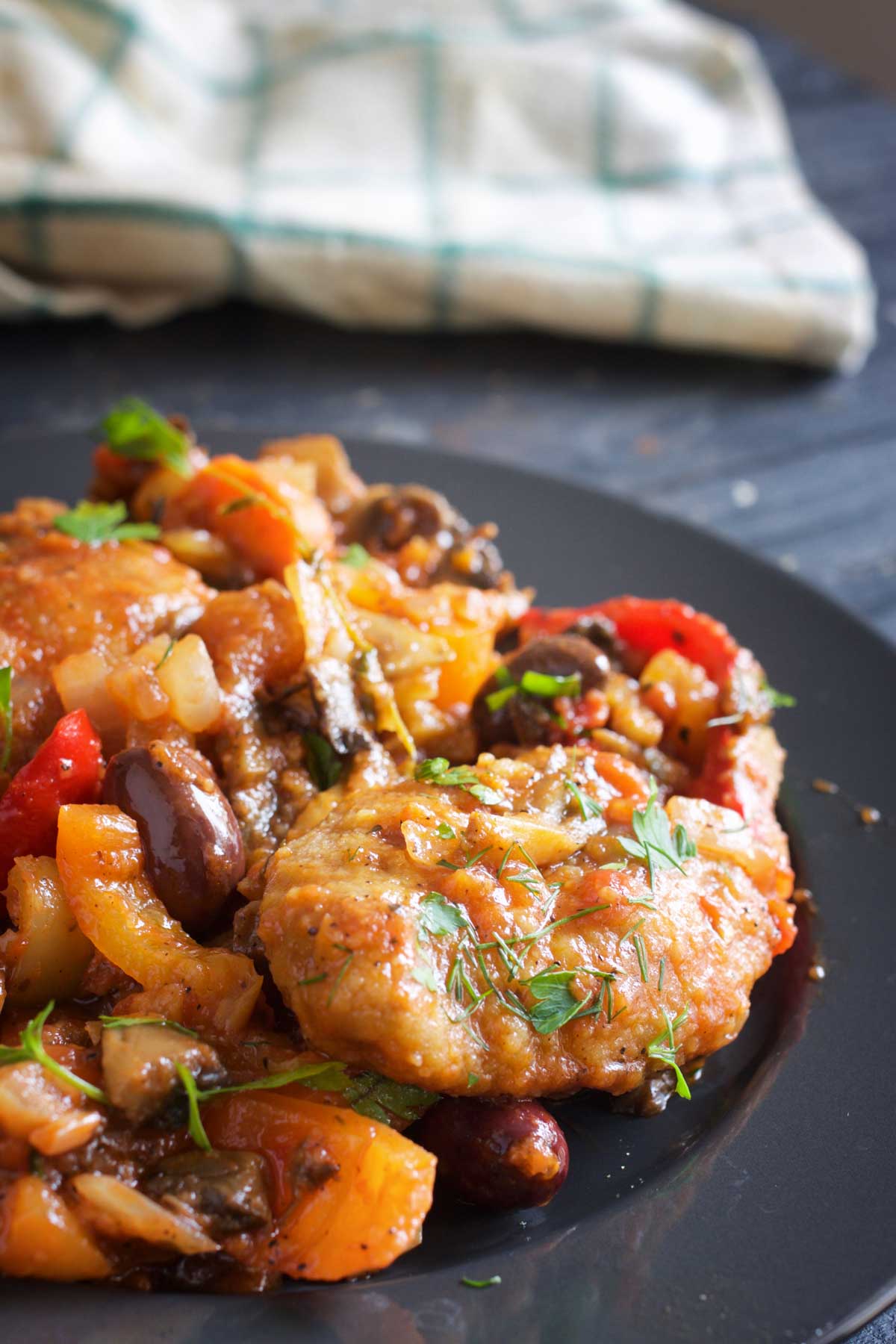
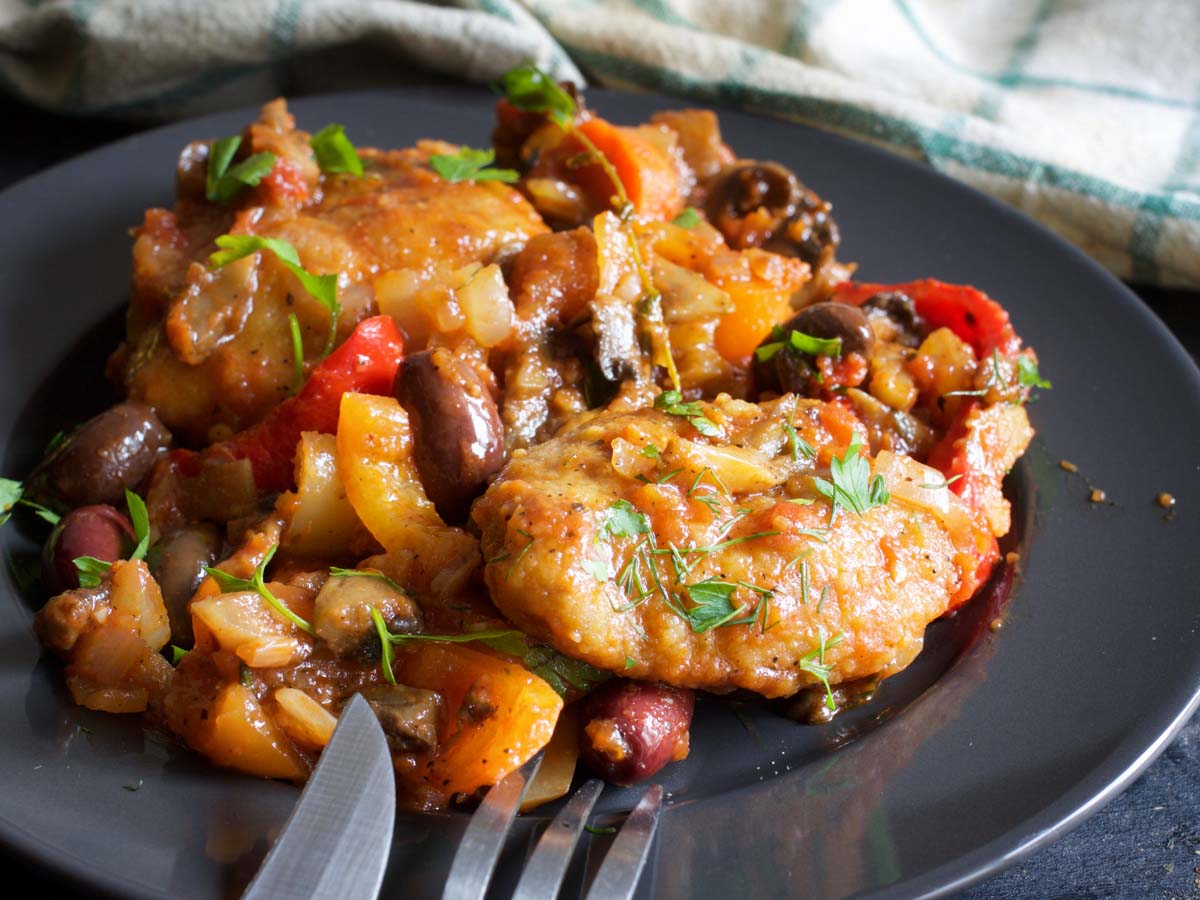
Vegetarian cacciatore is a vegan take on the classic Italian “hunter-style” stew, swapping chicken for textured soy protein slices simmered with mushrooms, onions, peppers, olives and red wine in a herby tomato sauce. The TSP is soaked in spiced broth, then pan-seared for a crispy “skin” so the dish looks and tastes like the real deal.
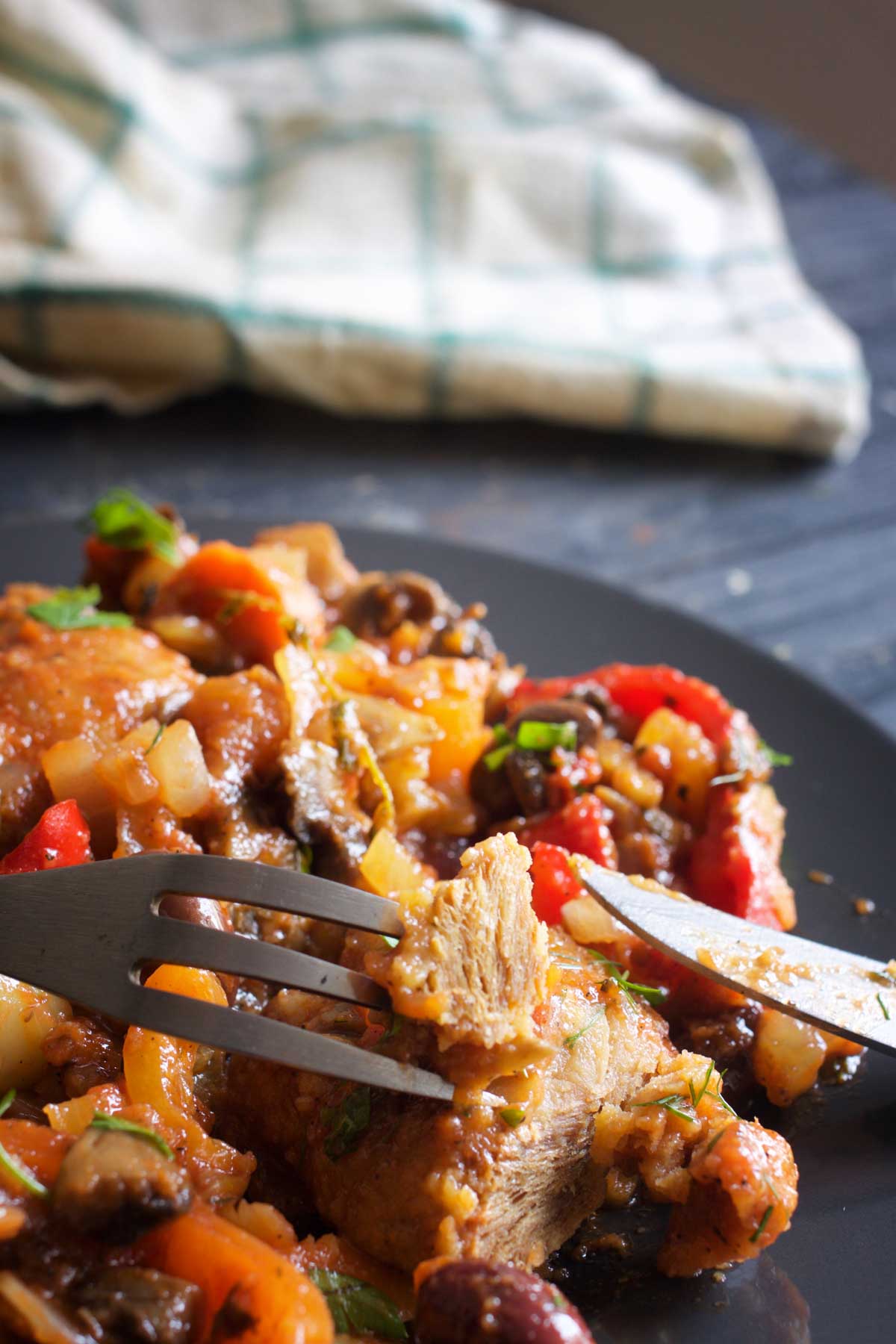
I used textured soy protein slices to make this vegetarian cacciatore, and just look at the photos — you cannot even tell it is vegan. To make TSP taste better, I let the slices soak in a spiced water and veggie broth mix for an hour, then pan-seared them for that slightly-crispy “skin” you get on a hunter-style chicken stew. That one extra step is what sells the illusion.
The rest of the recipe is just like the traditional Italian dish. I used mushrooms, onions, peppers and other veggies, plus some olives and red wine. The sauce is simply bursting with appetizing fragrances and the texture does not disappoint. I bet you could trick an omni into believing this is made with meat. Hope you will give this recipe a try and let me know how it turned out.

This Recipe Works If You Need
- A meat-free version of a classic Italian comfort dish that still feels hearty and satisfying.
- A plant-based main that can fool meat-eaters at the table — great for a mixed crowd.
- A make-ahead stew where the flavors deepen overnight in the fridge.
- A cozy, one-pot dinner for cold-weather nights when you want something rich and warming.
- A way to use textured soy protein in a recipe where it actually shines instead of tasting like filler.
Why You’ll Love This Recipe
- It tastes like the real deal. Soaking the TSP in spiced broth and searing it gives a savory, meaty bite that holds up against the traditional version.
- The sauce does the heavy lifting. Tomatoes, herbs, olives and a splash of red wine build the deep, fragrant base that defines a true cacciatore.
- It is fully plant-based. No chicken, no dairy, no eggs — just vegetables, soy protein and good technique.
- It is forgiving and flexible. Cacciatore is a rustic stew by nature, so you can lean on what you have in the fridge.
- It reheats beautifully. Like most stews, it tastes even better the next day once the flavors settle.
Ingredient Notes
Textured soy protein (TSP) slices are the stand-in for chicken here, and they are the make-or-break ingredient. Buy the larger sliced or chunked form rather than fine granules — you want pieces big enough to read as meat on the plate. TSP is bland and spongy straight from the bag, so never skip the soak: an hour in spiced water and veggie broth lets it drink up flavor all the way through, and the pan-sear afterward gives it that slightly-crispy “skin” that makes the whole dish convincing.
Mushrooms bring the deep, savory umami that a meatless stew leans on. Pick firm, dry caps with no slimy spots, and resist the urge to wash them under running water — they soak it up like a sponge and steam instead of browning. Give them room in the pan so they sear rather than stew, which is where their flavor really concentrates.
Onions and bell peppers are the aromatic backbone of any hunter-style dish. Cook the onion low and slow until soft and sweet before the tomatoes go in, and choose firm, glossy peppers with taut skin. Red and yellow peppers bring more sweetness than green, which balances the acidity of the tomato sauce.
Olives add the briny, salty pop that keeps a rich tomato stew from tasting flat. Reach for whole olives you pit yourself or good-quality jarred ones in brine rather than the pre-sliced canned kind — they hold their texture and taste far less tinny in the finished sauce.
Red wine is what gives cacciatore its grown-up depth. Use a dry red you would actually drink, and let it bubble for a few minutes after pouring so the raw alcohol cooks off and leaves behind just the rounded, fruity backbone of the sauce.
Tips
- Do not rush the TSP soak. The single biggest mistake is dropping dry soy protein straight into the sauce. Give it the full hour in spiced broth so it is flavored from the inside out, not just coated on the surface.
- Sear before you simmer. Pan-searing the soaked slices builds the crispy edges and browned, savory notes that no amount of simmering can create later. You know they are ready when the edges turn golden and pull away cleanly from the pan.
- Let the sauce reduce. A watery cacciatore is an under-cooked one. Simmer uncovered until the sauce coats the back of a spoon and the aroma turns deep and jammy rather than sharp.
- Taste and adjust the salt last. Olives and broth both carry salt, so season at the end once everything has melded — it is much easier to add than to fix an over-salted pot.
Substitutions and Variations
- Swap the protein. If you do not have TSP, large oyster or king oyster mushrooms, seitan strips or firm pressed tofu all take well to the same spiced-broth soak and sear.
- Skip the wine. Leave out the red wine and add an extra splash of veggie broth with a squeeze of lemon or a little balsamic for depth without the alcohol.
- Change the olives. Black olives give a milder, fruitier note while green olives bring more bite — use whichever you prefer, or stir in a spoon of capers for extra brininess.
- Add more vegetables. Cacciatore is a rustic, forgiving stew, so carrots, celery or zucchini all slot in naturally alongside the mushrooms and peppers.
Storage and Make Ahead
Like most stews, this vegetarian cacciatore is a brilliant make-ahead dish — the flavors deepen as it sits, so it often tastes even better on day two. Store leftovers in an airtight container in the fridge for up to 4 days, and reheat gently on the stovetop with a splash of broth or water to loosen the sauce. It also freezes well for up to 3 months; thaw overnight in the fridge before reheating. Serve it over polenta, rice or crusty bread, or alongside something equally comforting like this Hungarian vegetarian paprikash or a hearty vegetarian Irish stew when you are feeding a crowd. For more rustic, meat-free mains in the same spirit, take a look at this vegetarian cassoulet.

Vegetarian Cacciatore (Vegan)
Ingredients
For the “chicken”:
- 3.5 oz textured soy protein slices
- 1 cup vegetable broth
- 1 cup hot water
- ½ tsp salt
- ½ tsp ground pepper
- ½ tsp smoked paprika
- ½ tsp garlic powder
- ½ tsp onion powder
- ¼ tsp chili powder
- ½ tsp coriander
- ½ tsp mustard powder
- 1 tsp brown sugar
- ⅓ tsp cumin powder
For the cacciatore sauce:
- 1 Tbsp olive oil
- 1 onion sliced
- 6 cloves garlic minced
- 1 yellow bell pepper sliced
- 1 red bell pepper sliced
- 1 carrot peeled and sliced
- 2 cups mushrooms sliced
- 1 handful pitted kalamata olives
- 1 Tbsp basil leaves chopped
- 1 tsp dried oregano
- ½ cup red wine
- 2 cups crushed tomatoes
- 1 Tbsp tomato paste
- ½ tsp chili powder
- salt and pepper to taste
Instructions
- For the vegan “chicken”:
- In a medium pot, combine the hot water with the spices and vegetable broth. Soak the textured soy protein slices in this liquid for at least 1 hour, until fully softened and plump.
- In a nonstick pan over medium heat, cook the soaked slices on both sides, 3 to 5 minutes each, until lightly golden and crisp at the edges. Set them aside.
- Make the cacciatore sauce:
- Heat the olive oil in a large skillet over medium heat.
- Add the onion and cook for a few minutes, until translucent. Add the garlic and saute for a minute more, until fragrant.
- Add the mushrooms, carrot, and bell peppers and cook for about 10 minutes, until softened and the mushrooms release their moisture.
- Add the soy protein slices, red wine, basil, oregano, and olives. Let everything simmer for a few minutes, stirring to combine. Stir in the crushed tomatoes, chili powder, salt, pepper, and tomato paste. Cook for about 5 minutes, stirring occasionally, until the sauce thickens and the flavors meld. Top with some fresh herbs and serve.
Notes
Frequently Asked Questions
Cacciatore means “hunter” in Italian, and the dish is a rustic stew cooked hunter-style with herbs, onions, tomatoes, bell peppers and wine. This vegetarian (vegan) version replaces the traditional chicken with textured soy protein slices, simmered with mushrooms, peppers, olives and red wine in a herby tomato sauce.
Soak the TSP slices in a spiced water and veggie broth mix for about an hour so they absorb flavor all the way through, then pan-sear them before adding them to the sauce. The searing creates a slightly-crispy “skin” and savory browned edges that read as meat on the plate.
Yes. It uses textured soy protein in place of chicken and contains no meat, dairy or eggs. The richness comes from mushrooms, tomatoes, olives and red wine rather than any animal products, so it is fully plant-based.
Because it is a saucy, rustic stew, it pairs well with polenta, rice, mashed potatoes or crusty bread to soak up the sauce. A simple green salad or steamed vegetables on the side rounds it into a full meal.
Absolutely. Like most stews, the flavors deepen overnight, so it often tastes even better the next day. Store it in an airtight container in the fridge for up to 4 days, or freeze it for up to 3 months, then reheat gently with a splash of broth to loosen the sauce.
Large oyster or king oyster mushrooms, seitan strips or firm pressed tofu all work as a swap. Give them the same spiced-broth soak and a good sear so they pick up flavor and develop the browned, meaty texture that makes the dish convincing.






Ruxandra, this looks amazing! I was astonished when I saw the photos and decided to try it right away. TSP truly is amazing! Thank you for the recipe, my whole family loved it.
Thanks, Caroline! Yup! TSP is awesome!!