Soft White Sandwich Bread with Sesame Seeds
This soft white sandwich bread is a fluffy, milk-and-butter yeast loaf baked in a regular loaf pan and topped with sesame seeds, so every slice comes out square, tender and perfect for toast and sandwiches. A quick tangzhong (a spoonful of flour cooked with milk) keeps the crumb pillowy for days. You need about 30 minutes of hands-on time, two rises and 40 minutes in the oven, and below I share everything that makes homemade sandwich bread rise tall and stay soft.
I bake this loaf when store-bought sandwich bread lets me down: it is either dry by the second day or so airy it squashes flat under the butter knife. This one sits right in between. The crumb pulls apart in soft, feathery strands, the crust stays thin, and the sesame seeds toast on top while it bakes, so even a plain slice with butter tastes like something. My one non-negotiable is the tangzhong; it takes three minutes and it is the reason the last slice is still soft.
What Makes This White Bread So Soft and Fluffy
A fluffy white bread recipe is mostly about what goes into the dough and how long you knead it. Each of these does a specific job:
- Milk instead of water. Milk fat and milk sugars tenderize the crumb and help the crust brown evenly, without making it hard.
- Butter and an egg. They enrich the dough, so the bread is soft and slightly rich, like a lighter brioche, but still neutral enough for savory sandwiches.
- The tangzhong. Cooking a small part of the flour with milk lets it hold much more liquid. More water stays locked in the bread, which means a moister, bouncier crumb that stales more slowly.
- Proper kneading. Soft sandwich bread needs a well-developed gluten network to trap the gas and rise tall. Under-kneaded dough bakes into a dense, crumbly loaf.
- A loaf pan. The sides of the pan hold the dough up, so it rises upward instead of spreading. That is how you get even, square slices that fit the toaster.
Ingredients for Homemade Sandwich Bread
Flour. Bread flour gives the tallest loaf and the most pull-apart crumb, because it has more protein. All-purpose flour works too; the bread is a little softer and slightly less tall. In Europe, plain white wheat flour for bread (type 550 or the Romanian 000) is what I use.
Yeast. The recipe uses one 1/4-ounce (7 g) packet of instant yeast, which goes straight into the flour. Active dry yeast works in the same amount, but dissolve it first in the lukewarm milk for 10 minutes. With fresh yeast, use about 20 g, crumbled into the milk.
Milk, butter and egg. Whole milk, lukewarm, never hot (it should feel just warm on your wrist, around 100°F / 38°C), because very hot milk kills the yeast. The butter has to be really soft, so it blends into the dough, and the egg should be at room temperature.
Sugar and salt. Two tablespoons of sugar feed the yeast and give the bread a gentle sweetness, but it is not a sweet bread. The salt goes in a couple of minutes after the yeast, not in direct contact with it.
Sesame seeds. White sesame seeds on top, stuck on with an egg yolk wash. They toast in the oven and taste nutty. If you want sesame in every bite, knead 2 extra tablespoons into the dough, or roll the whole shaped loaf in sesame seeds before it goes into the pan.
How to Knead, Shape and Bake the Loaf
Bread is not hard, but a few details make the difference between a soft, tall loaf and a dense brick:
- Make the tangzhong first. Whisk the flour into the cold milk before you heat it, so there are no lumps, and cook it just until it looks like a soft pudding and the whisk leaves lines. Let it cool to lukewarm before it goes into the dough.
- Add the butter after the dough comes together. Fat slows down gluten development, so I knead the dough for a few minutes first, then add the soft butter piece by piece.
- Knead until it passes the windowpane test. Pinch off a small piece and stretch it between your fingers. If it stretches into a thin, translucent sheet without tearing, the dough is ready. That takes about 8 to 10 minutes in a stand mixer, or 12 to 15 minutes by hand.
- Keep it slightly tacky. A soft dough makes a soft bread. Resist adding lots of extra flour when kneading by hand; oil your hands lightly instead.
- Let it rise somewhere warm. Around 75 to 80°F (24 to 27°C) the dough doubles in about an hour. In a cold kitchen, put it in the oven with only the light on.
- Shape a tight log. Roll the dough into a rectangle with one side as long as your pan, then roll it up tightly from that side and pinch the seam. A tight roll gives an even crumb without big holes.
- Do not over-proof. The loaf is ready for the oven when it domes about 1 inch (2 to 3 cm) above the rim and a gentle poke springs back slowly. If it collapses when touched, it has gone too far.
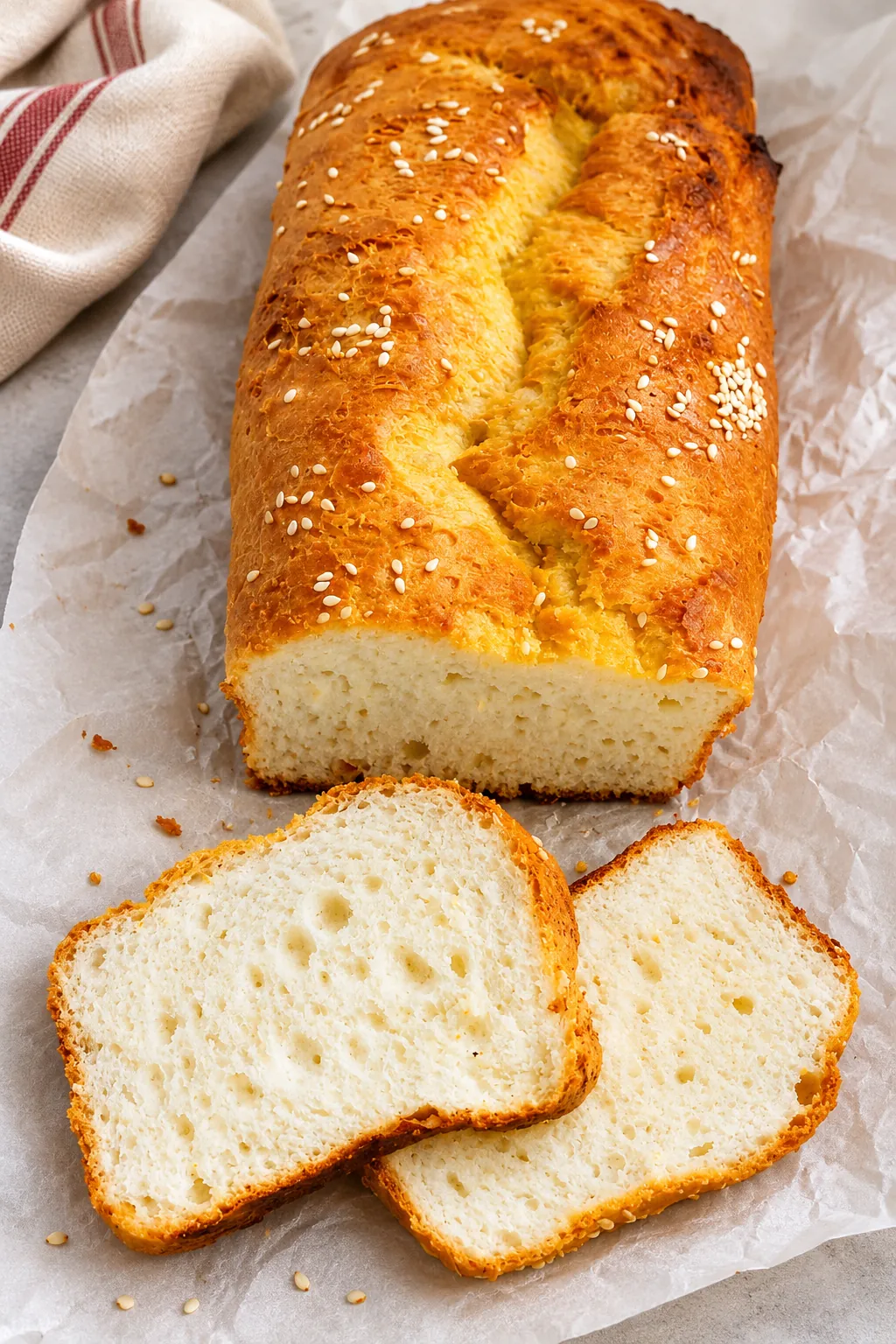
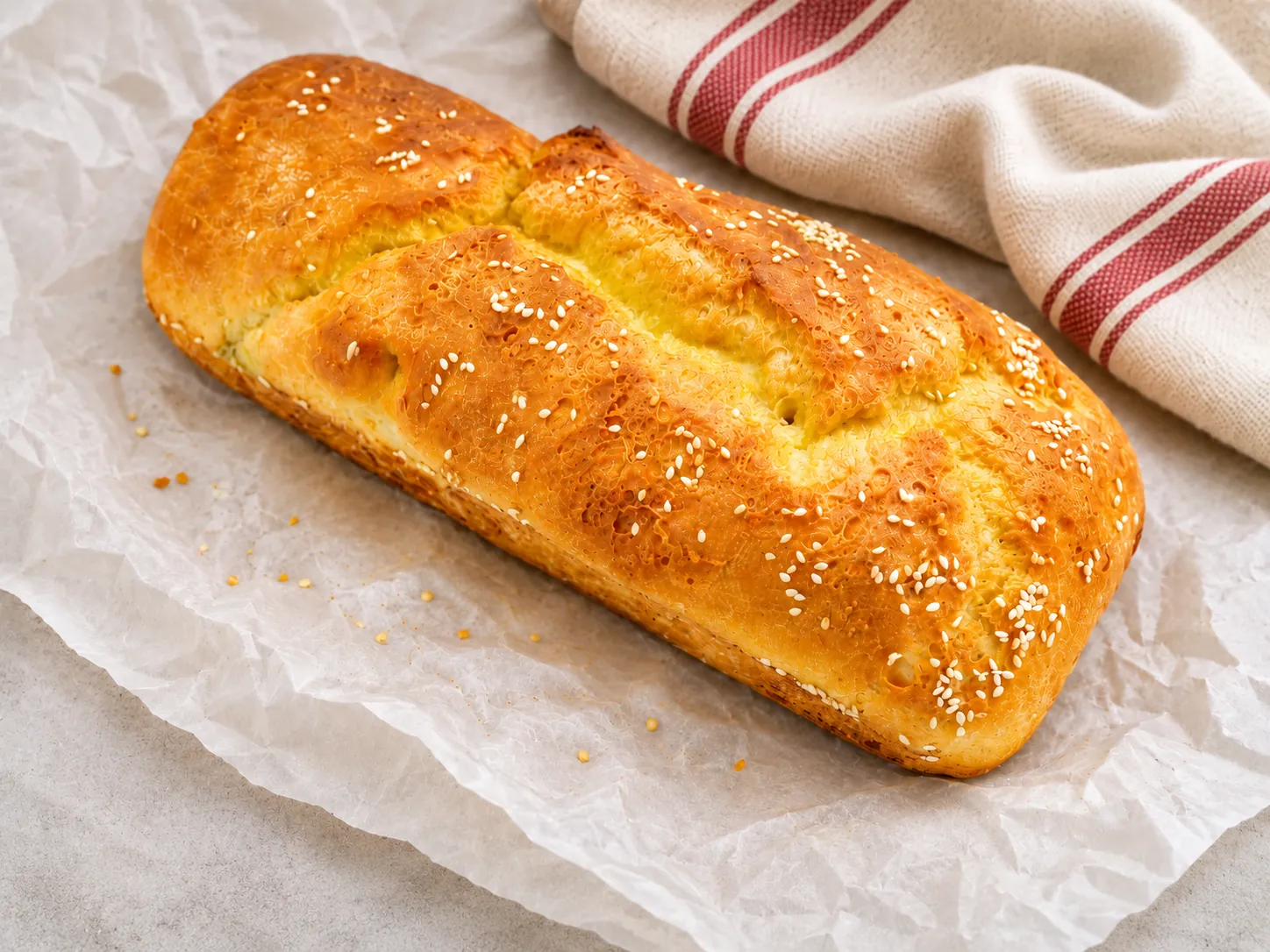
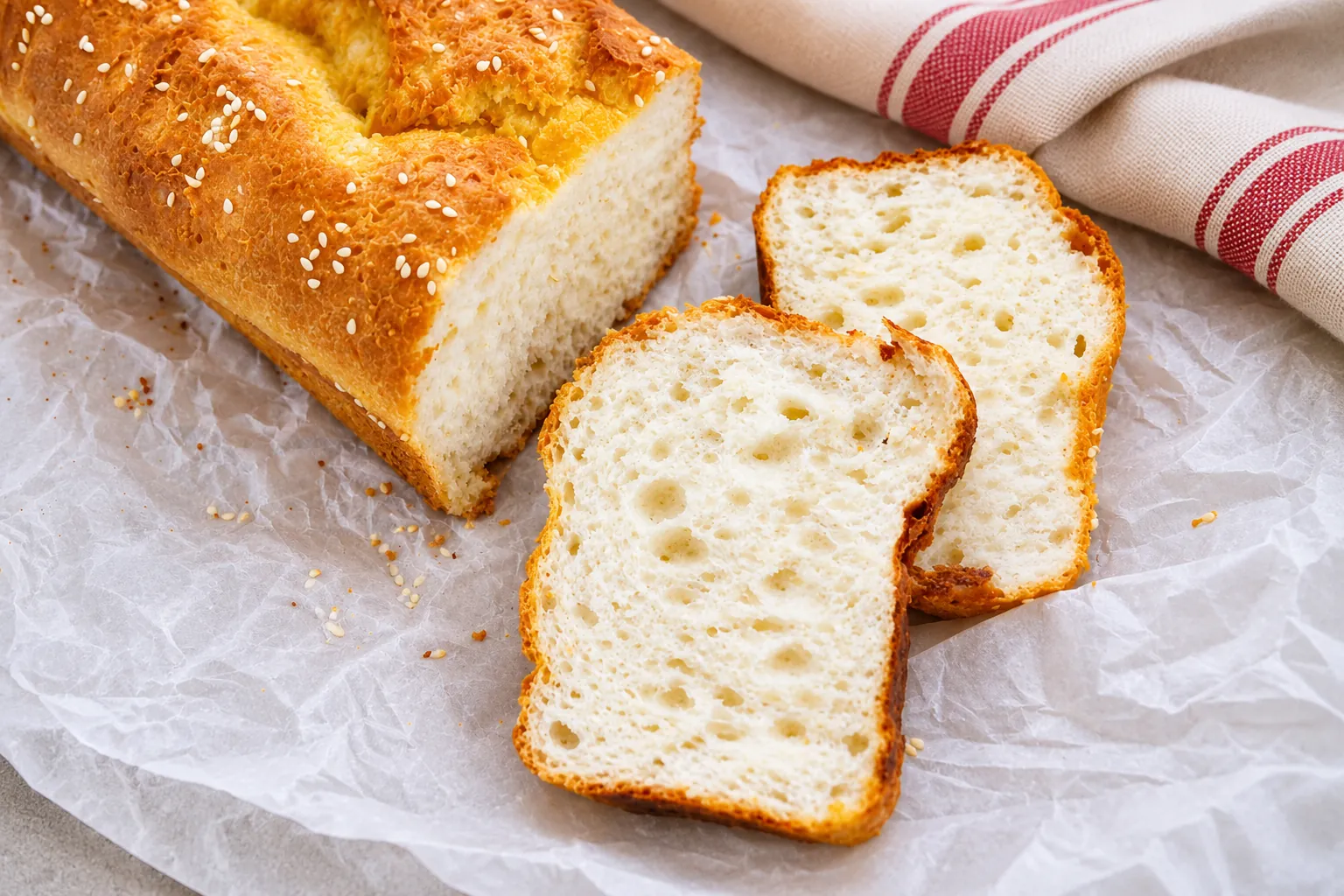
- Slash it for the split top. The opening down the middle that you see in the photos is a single lengthwise cut, about 1/2 inch (1 cm) deep, made with a sharp knife just before baking. It lets the bread expand evenly instead of tearing on the side.
- Bake by temperature, not only by color. The egg wash and sesame brown fast, so the crust can look done before the center is. The bread is baked when the middle reads 190 to 195°F (88 to 90°C). If the top darkens too quickly, cover it loosely with foil after 20 minutes.
- Let it cool before slicing. The crumb is still setting as the steam escapes. Cut it hot and it turns gummy; wait at least an hour.
Which Loaf Pan to Use
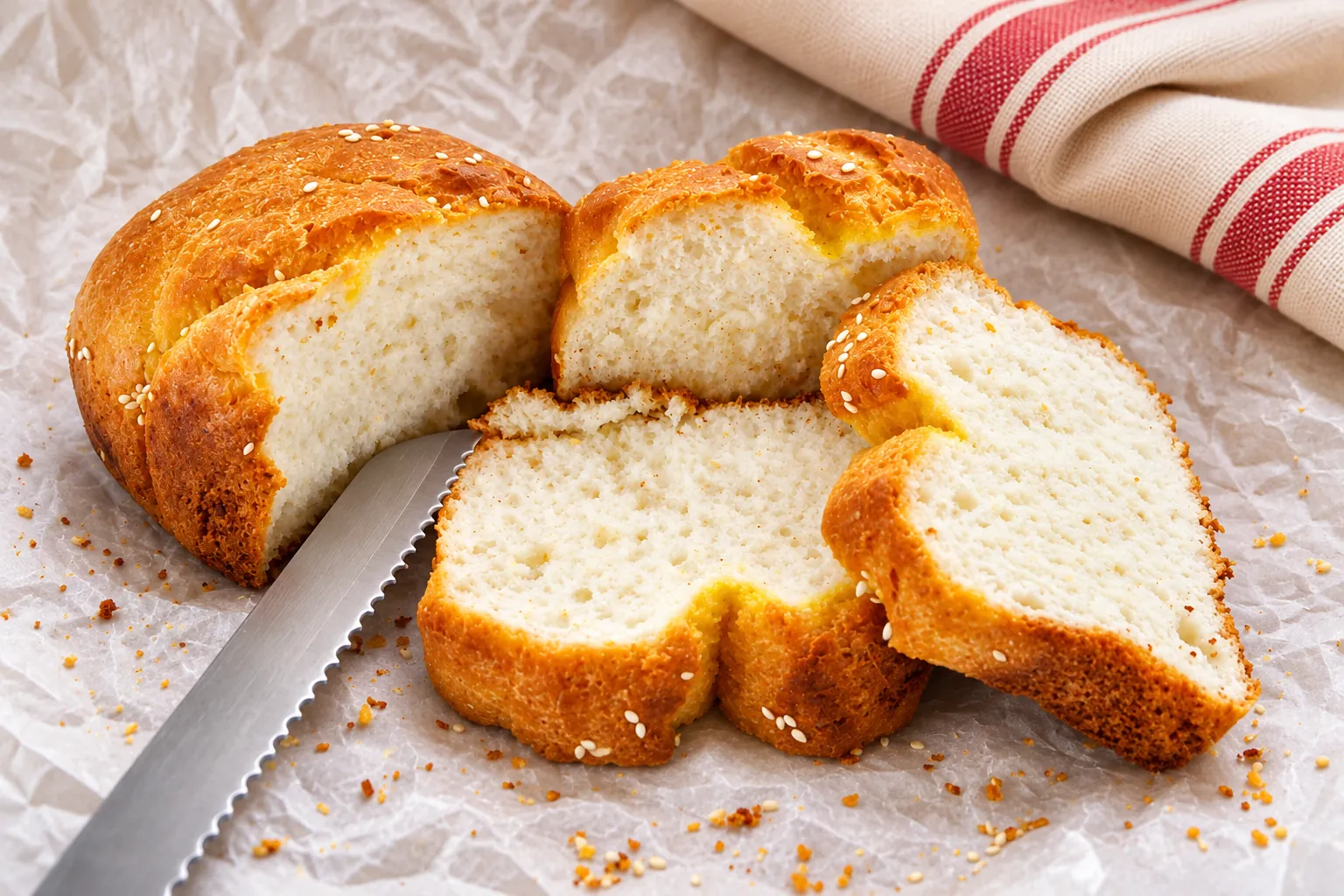
This recipe fills a 9 x 5-inch (23 x 13 cm) loaf pan, or a long, narrow 11 to 12-inch (28 to 30 cm) pan, which is what I used for the loaf in the photos. In a smaller 8 1/2 x 4 1/2-inch pan the dough will rise very high and may spill over, so bake any extra dough as a couple of rolls. Metal pans give the most even browning. In a glass or ceramic pan, lower the oven to 325°F (165°C) and check the bread a few minutes earlier.
No Mixer? Bread Machine? Both Work
By hand, mix everything in a large bowl with a wooden spoon until shaggy, then knead on a lightly oiled counter. Adding the soft butter by hand is messy for the first minute, then the dough absorbs it. Keep going until it is smooth and passes the windowpane test.
In a bread machine, add the ingredients in the order your manufacturer recommends (usually liquids first) and run the dough cycle. Then take the dough out, shape it and bake it in the oven, following the recipe from the shaping step. The crust and the shape are much nicer than a loaf baked in the machine.
Ways to Use Your Sandwich Bread
This is the bread I want for toast with butter and jam, but it works for almost everything:
- Toast and open sandwiches: try it in my avocado toast recipes.
- Grilled cheese and sandwiches, because the square slices toast evenly and do not fall apart.
- Shibuya toast, the Japanese honey toast dessert; this soft loaf is a great base for my Shibuya toast.
- French toast and bread pudding from the last, slightly dry slices, for example my bread pudding.
- Croutons and breadcrumbs from the heels.
If you need a gluten-free loaf, I have a separate recipe for gluten-free toast bread; this one is made with regular wheat flour.
Can You Make It Dairy-Free or Vegan?
Yes, the dough is forgiving. Use unsweetened soy or oat milk instead of cow’s milk (in the tangzhong too), replace the butter with the same amount of vegan butter or 3 tablespoons of neutral oil, and skip the egg, adding 3 extra tablespoons (45 ml) of plant milk instead. Brush the top with plant milk mixed with a teaspoon of maple syrup, so the sesame seeds stick and the crust browns. The bread is a little less rich, but still soft.
How to Store and Freeze Homemade Bread
Once completely cool, keep the bread in a bread bag or a closed plastic bag at room temperature for 3 to 4 days; thanks to the tangzhong it stays soft much longer than most homemade bread. Do not keep it in the fridge, where bread goes stale faster. To freeze, slice it first, put parchment between the slices if you like, and freeze in a freezer bag for up to 3 months. You can toast the slices straight from frozen.
Soft White Sandwich Bread with Sesame Seeds
Equipment
- 9×5-inch loaf pan
- Stand mixer with dough hook (optional)
- Cooling rack
Ingredients
Tangzhong
- 3 tbsp bread flour for the tangzhong, 25 g
- ½ cup milk whole, for the tangzhong
Dough
- 3 ¾ cups bread flour or all-purpose flour
- ¾ cup milk whole, lukewarm
- 2 tbsp granulated sugar 25 g
- 2 ¼ tsp instant yeast 1 packet, 7 g
- 1 egg large, at room temperature
- 1 ½ tsp salt fine, 9 g
- 3 ½ tbsp butter unsalted, very soft, 50 g
Topping
- 1 egg yolk
- 1 tbsp milk whole
- 2 tbsp sesame seeds 18 g
Instructions
- In a small saucepan, whisk the 3 tablespoons of flour into the 1/2 cup of milk until smooth. Cook over medium-low heat, whisking constantly, for 2 to 3 minutes, until it thickens into a soft pudding and the whisk leaves lines. Scrape the tangzhong into a small bowl and let it cool to lukewarm, about 10 minutes.
- In the bowl of a stand mixer, combine the remaining flour, the sugar and the yeast. Add the lukewarm milk, the egg and the tangzhong and mix on low speed with the dough hook for 3 minutes, until no dry flour remains. Add the salt and knead for 2 more minutes.
- Add the soft butter a piece at a time, letting each piece disappear before adding the next. Knead on medium-low speed for 8 to 10 minutes, until the dough is smooth, elastic and slightly tacky and stretches into a thin, translucent sheet without tearing. By hand, knead for 12 to 15 minutes.
- Shape the dough into a ball, place it in a lightly greased bowl, cover and let it rise in a warm place for 1 to 1 1/2 hours, until doubled in size.
- Grease the loaf pan. Press the air out of the dough and roll it into a rectangle with one side as long as your pan and the other about 12 inches (30 cm). Starting from the side that matches the pan, roll the dough up tightly, pinch the seam closed and place the log seam side down in the pan.
- Cover and let rise for 45 to 60 minutes, until the dough domes about 1 inch (2 to 3 cm) above the rim and springs back slowly when pressed. Meanwhile, preheat the oven to 350°F (180°C), conventional, with a rack in the lower third.
- Whisk the egg yolk with the 1 tablespoon of milk. Brush the top of the loaf and sprinkle generously with the sesame seeds. For a split top, cut a 1/2-inch (1 cm) deep slash down the length of the loaf with a sharp knife.
- Bake for 35 to 40 minutes, until deep golden and the center reads 190 to 195°F (88 to 90°C), or the bottom sounds hollow when tapped. If the top browns too fast, cover it loosely with foil after 20 minutes.
- Let the bread cool in the pan for 10 minutes, then turn it out onto a cooling rack. Let it cool for at least 1 hour before slicing.
Notes
Homemade White Bread Questions
Usually the dough was not kneaded long enough, the yeast was killed by milk that was too hot, or the loaf did not rise enough before baking. Knead until the dough passes the windowpane test, keep the milk lukewarm, and bake only when the dough domes about 1 inch above the rim of the pan.
Yes. All-purpose flour gives a slightly softer, a little less tall loaf. Hold back a tablespoon of milk and add it only if the dough feels stiff, because all-purpose flour absorbs a bit less liquid.
You can. Use all the flour and all the milk directly in the dough. The bread will still be good, just a little less soft and it will go stale sooner. The tangzhong takes about three minutes and is what keeps this bread soft for days.
The crust is deep golden, the bottom sounds hollow when you tap it, and an instant-read thermometer in the center shows 190 to 195°F (88 to 90°C). The thermometer is the most reliable, because the egg wash and sesame can make the crust look done too early.
Brush the loaf with the egg yolk and milk wash right before baking and sprinkle the sesame seeds on while the wash is still wet, then press them on very lightly. Without a wash, most of the seeds fall off when you slice the bread.
The bread keeps cooking from the inside while it cools, as steam escapes. If you cut it hot, the crumb turns gummy and squashes under the knife. Let it cool for at least an hour on a wire rack.
Yes. After kneading, put the dough in a covered, greased bowl in the fridge overnight. The next day, shape it straight from the fridge and let it rise in the pan, which will take a little longer, about 1 1/2 hours, because the dough is cold.