Quattro Formaggi Mac and Cheese
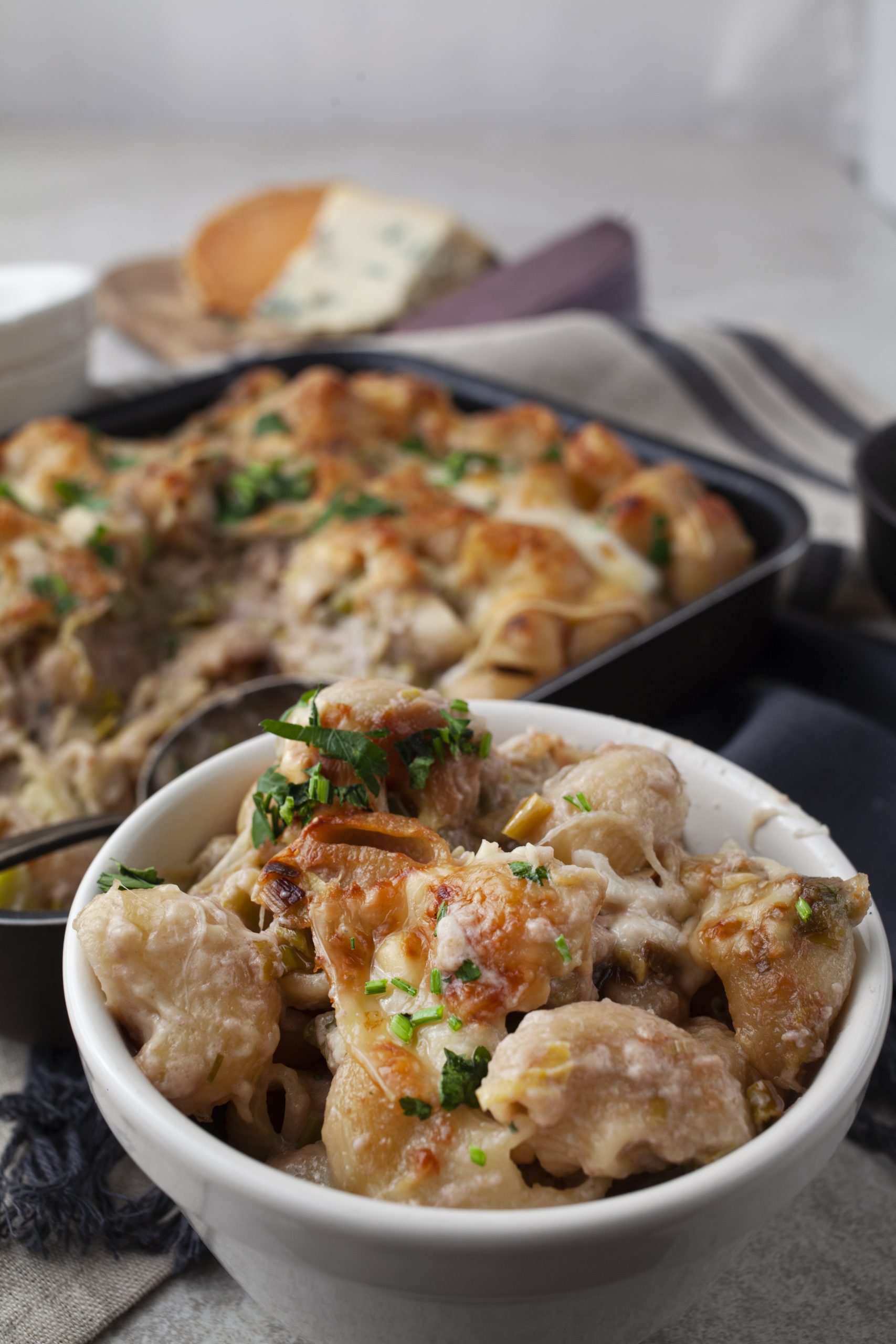
Quattro Formaggi mac and cheese is a baked pasta dish that pours an Italian four-cheese sauce over elbow macaroni, then finishes it in the oven until golden. I build the sauce from Taleggio, aged Cheddar, Gorgonzola and aged Gouda, melted into milk with a browned shallot. It is creamy, bubbling and ready in about 35 minutes of baking.
Today I had a craving for something decadent with lots of cheese, so what better combination than the quattro formaggi sauce poured over some large macaroni, then baked in the oven. A recipe has come out that I will keep in mind for when I get hungry again, and I know for sure that it will delight your taste buds too.
For this recipe of the best Quattro Formaggi mac and cheese, I did not use the classic combination of Quattro Formaggi cheeses. Although the inspiration for the pasta sauce is Italian, I chose to give it an American twist inspired by the popular mac n’ cheese recipe. So, in addition to the classic Gorgonzola, indispensable in this sauce, I chose to add Taleggio (another “stinky” cheese but one of my favourites), aged Cheddar which has a strong aroma, and Gouda which goes excellently au gratin.
This Recipe Works If You Need
- A decadent, cheese-forward dinner that the whole family will actually finish
- A make-ahead casserole you can assemble earlier and bake when guests arrive
- A way to use up that wedge of Gorgonzola or Taleggio sitting in the fridge
- A meatless main that still feels rich and satisfying enough to be the centre of the meal
- A crowd-pleasing comfort dish that bridges Italian flavour and American mac and cheese
Why You’ll Love This Recipe
- Four real cheeses, not powder. The sauce gets its depth from Taleggio, aged Cheddar, Gorgonzola and aged Gouda, so every bite tastes layered rather than flat.
- One pan to the sauce. The shallot, milk and cheese all come together in a single deep frying pan before the pasta even goes in.
- An American twist on an Italian classic. I took the four-cheese idea from quattro formaggi and baked it like mac and cheese, so you get both the flavour and the crust.
- That browned top. Thirty-five minutes in a hot oven gives you the golden, slightly crisp surface that turns pasta into a proper casserole.
- Forgiving and flexible. The cheeses are a guide, not a rule, so you can lean on what you already have in the fridge.
Ingredient Notes
Elbow pasta is the backbone here, and the shape matters more than people think. Those curved tubes catch the sauce in their bends and hollows, which is exactly what you want when the cheese is this rich. Personally, I also prefer penne, especially when I choose to bake them au gratin in the oven for a few minutes, so use whatever short, ridged or hollow shape you love. Cook it only to al dente, because it keeps baking in the oven and you do not want it mushy by the time it comes out.
Taleggio cheese is the soul of this version. It is another “stinky” cheese but one of my favourites, and it melts into a silky, almost buttery sauce that holds everything together. When you buy it, look for a creamy, slightly pinkish rind and a soft, yielding paste; a Taleggio that is firm all the way through is under-ripe and will not melt as generously. It is by far my favorite cheese, but be careful: store it in an airtight casserole because you risk contaminating the whole house with its aroma.
Aged Cheddar brings the strong, savoury aroma that keeps the sauce from tasting one-note. Grate it yourself from a block rather than buying pre-shredded, because the anti-caking starch on bagged cheese stops it from melting smoothly and can leave the sauce grainy. The older the Cheddar, the sharper the bite, which is what stands up to the milder melting cheeses.
Gorgonzola is indispensable in this sauce and the one cheese I would not skip. Its blue veins add a sharp, tangy punch that cuts through all that creaminess. I crumble it over the top before baking so you get little pockets of bold flavour rather than one uniform note. Choose Gorgonzola dolce if you want it softer and sweeter, or piccante if you want the blue to come through louder.
Aged Gouda is the cheese I reach for when I want a good gratin, because it goes excellently au gratin and browns beautifully. I lay it in slices over the top, where it melts into a golden blanket. Aged Gouda has a deeper, slightly caramel, nutty character than young Gouda, so it adds richness on top without disappearing into the sauce.
Shallot, milk, olive oil, salt and pepper form the base of the sauce. The shallot is sautéed in olive oil until well browned, which builds a sweet, savoury foundation before the milk goes in. The milk is heated until almost boiling so the cheeses melt quickly and evenly, and the salt and pepper are added with the first cheeses so they season the sauce from the inside out. Fresh parsley at the end keeps the whole rich dish from feeling heavy.
Tips
- Brown the shallot properly. Do not rush it; sauté until it is well browned, stirring from time to time. That deep colour is where a lot of the savoury flavour comes from, and pale onion leaves the sauce tasting flat.
- Stop the milk just before it boils. Heat it until it is almost boiling, then add the cheese. A full rolling boil can scorch the milk and make the melted cheese split into oily strings instead of staying creamy.
- Add the first cheeses off a hard boil and mix until creamy. Stir in the Taleggio and grated Cheddar until they are fully incorporated and you get a smooth, creamy sauce before the pasta goes in. If it looks broken, lower the heat and keep stirring rather than adding more cheese.
- Keep the pasta al dente. It finishes cooking in the oven, so slightly firm pasta out of the pot becomes perfectly tender after 35 minutes of baking.
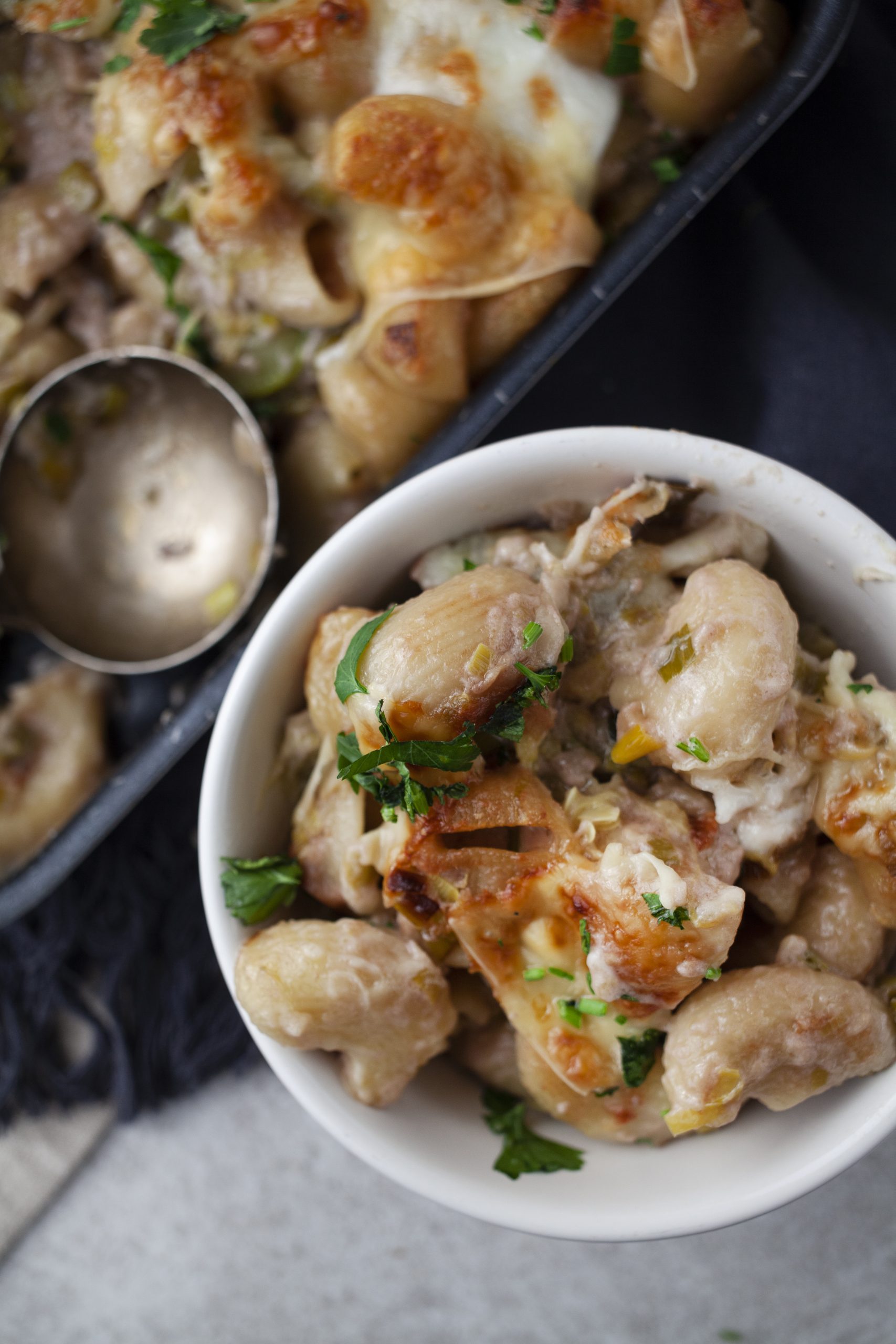
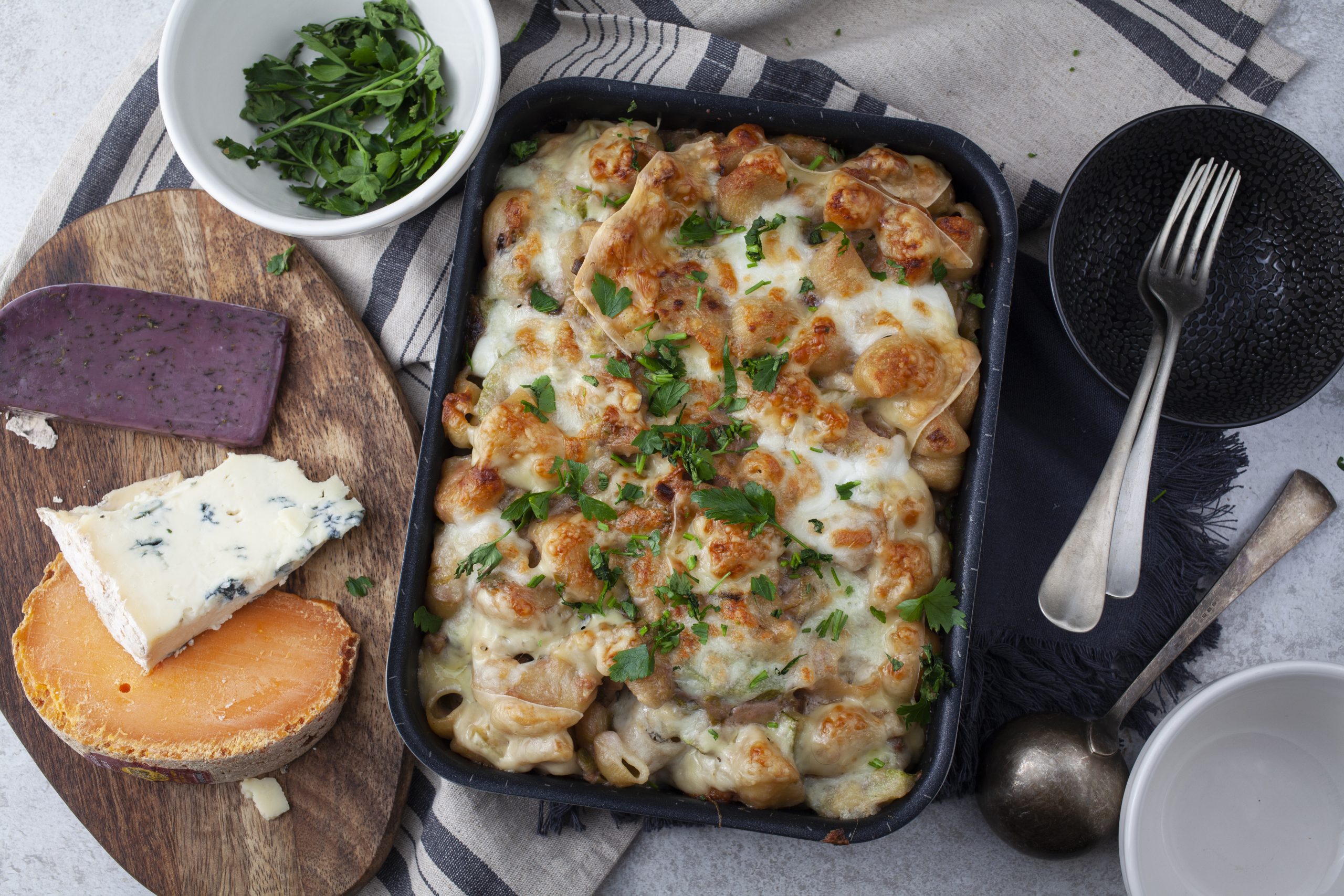
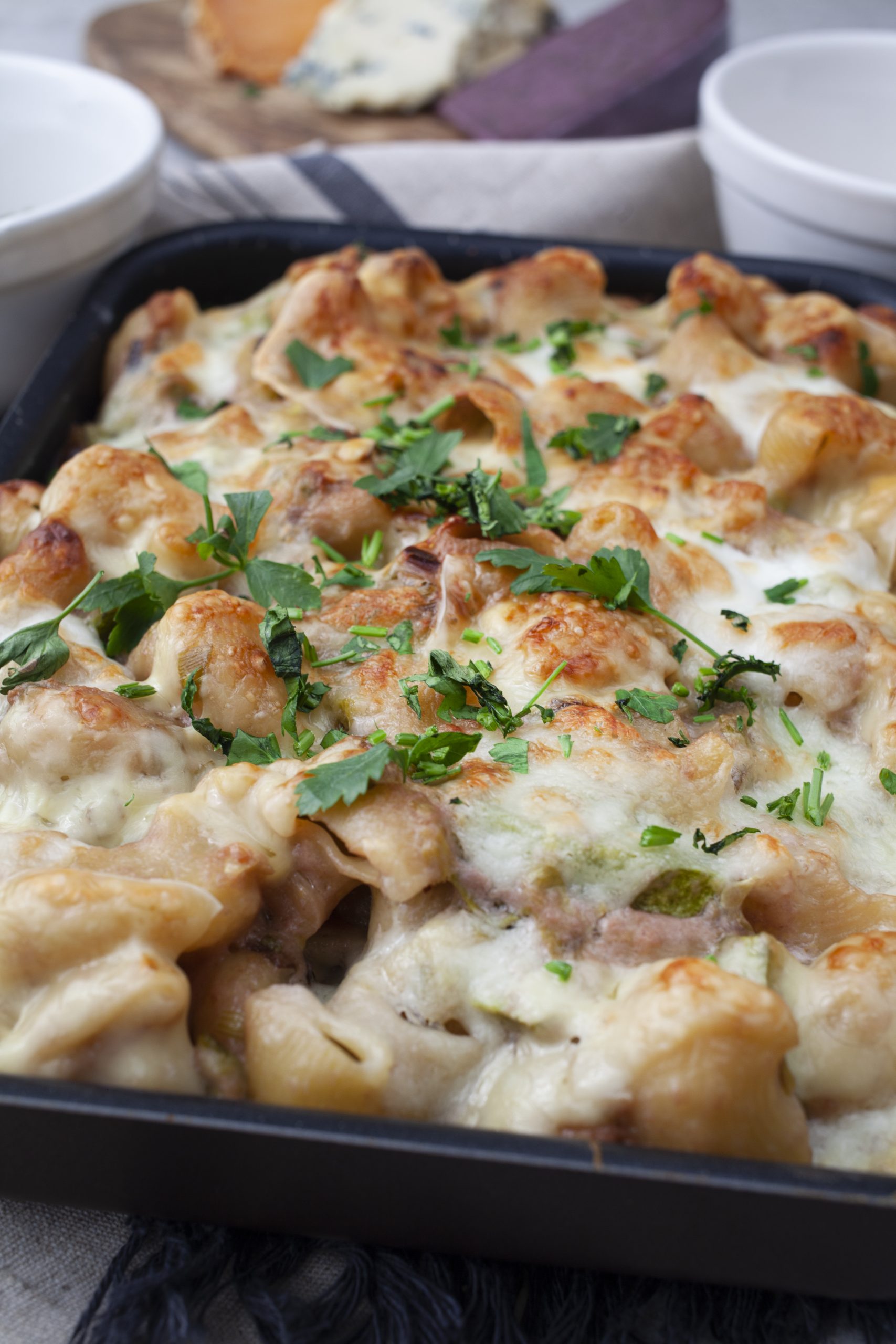
- Know when it is done. You want the top well browned, with the Gouda melted and the Gorgonzola bubbling at the edges. That browned crust is your signal to pull it out.
Substitutions and Variations
- Swap the pasta shape. Elbows are classic, but I also love penne here, especially baked au gratin. Any short shape with ridges or a hollow centre will hold the sauce well.
- Adjust the cheese line-up. These four are a guide, not a rule. Keep the Gorgonzola, which is indispensable, but you can swap the Taleggio, Cheddar or Gouda for whatever good melting cheese you have on hand.
- Dial the blue up or down. Use more Gorgonzola if you love that sharp, funky tang, or scale it back and let the Taleggio and Gouda lead for a mellower, creamier bake.
- Add a green note. Stir a handful of wilted spinach or some sautéed mushrooms into the pasta before baking if you want a little more substance and colour in the dish.
Storage and Make Ahead
This casserole keeps well in the fridge for up to three days in an airtight container. Reheat individual portions in the oven or a covered pan with a splash of milk to loosen the sauce, since baked cheese pasta firms up as it cools. To make it ahead, assemble everything in the casserole, top with the Gorgonzola and Gouda, then cover and refrigerate; bake it fresh when you are ready, adding a few extra minutes if it goes in cold. A quick reminder from experience: store any leftover Taleggio in an airtight casserole, because you risk contaminating the whole house with its aroma.
If you are after more cheesy comfort like this, take a look at my vegan cheesy pasta casserole for a dairy-free baked version, my cauliflower and cheese casserole for a lighter gratin, or browse these types of pasta dishes for more ways to put your favourite shapes to work.
Quattro Formaggi Mac’n’Cheese
Ingredients
- 350 g elbow pasta 12.3 oz
- 1 tablespoon olive oil
- 1 shallot chopped
- 400 ml milk 14 fl oz
- 200 g Taleggio cheese 7.1 oz
- 100 g aged Cheddar cheese 3.5 oz, grated
- 100 g Gorgonzola cheese 3.5 oz, crumbled
- 100 g aged Gouda 3.5 oz, sliced
- ½ teaspoon pepper
- ½ teaspoon salt
- parsley for garnish
Instructions
- Heat the oven to 180 C (356 F).
- Cook the pasta according to the package instructions, until al dente.
- Put a deep frying pan over medium heat, add the olive oil and chopped shallot. Saute the shallot until well browned, stirring from time to time.
- Pour the milk over the shallot and let it heat until it is almost boiling.
- Add the Taleggio and the grated Cheddar, salt and pepper, and mix well until incorporated and you get a creamy sauce. Then add the pasta and mix well.
- Transfer everything to a casserole dish, sprinkle with crumbled Gorgonzola and top with slices of Gouda.
- Bake in the hot oven for 35 minutes, until the top is well browned.
- Serve warm and garnish with freshly chopped parsley.
Notes
Frequently Asked Questions
This version uses Taleggio, aged Cheddar, Gorgonzola and aged Gouda. It is an American twist on the Italian four-cheese idea rather than the classic quattro formaggi line-up. Gorgonzola is the one cheese you should not skip, since its blue tang balances the creamier cheeses.
Yes, this recipe is vegetarian. It is built on milk and four cheeses with no meat. If you need it to be strictly vegetarian, check that your cheeses are made with non-animal rennet, as some traditional cheeses use animal rennet.
Elbow macaroni is the classic choice because its curved tubes trap the rich sauce. Penne also works beautifully, especially baked au gratin. Any short shape with ridges or a hollow centre will hold the cheese sauce well, so cook it only to al dente before baking.
Usually it is too much heat or pre-shredded cheese. Heat the milk only until it is almost boiling before adding cheese, since a hard boil can make melted cheese split into oily strings. Grate your own Cheddar from a block, because the anti-caking starch on bagged cheese stops it from melting smoothly.
Bake it at 180 C (356 F) for about 35 minutes, until the top is well browned. You want the Gouda melted into a golden blanket and the Gorgonzola bubbling at the edges. That browned crust is your signal that it is ready to come out.
Yes. Assemble everything in the casserole, top with the Gorgonzola and Gouda, then cover and refrigerate. Bake it fresh when you are ready, adding a few extra minutes if it goes into the oven cold. Leftovers keep up to three days and reheat best with a splash of milk to loosen the sauce.