
Asian Mushroom Soup (Vegan, One Pot)
This Asian mushroom soup is made with brown mushrooms, coconut milk, soy sauce, and miso paste in a vegetable broth base. The coconut milk makes it creamy without any dairy; the soy sauce and miso give it a deep, savory flavor that a plain mushroom soup does not have. It takes about 30 minutes from start to finish and uses one pot. The onion is cooked separately and added at the end, which keeps its texture distinct from the mushrooms rather than becoming soft and lost in the broth.
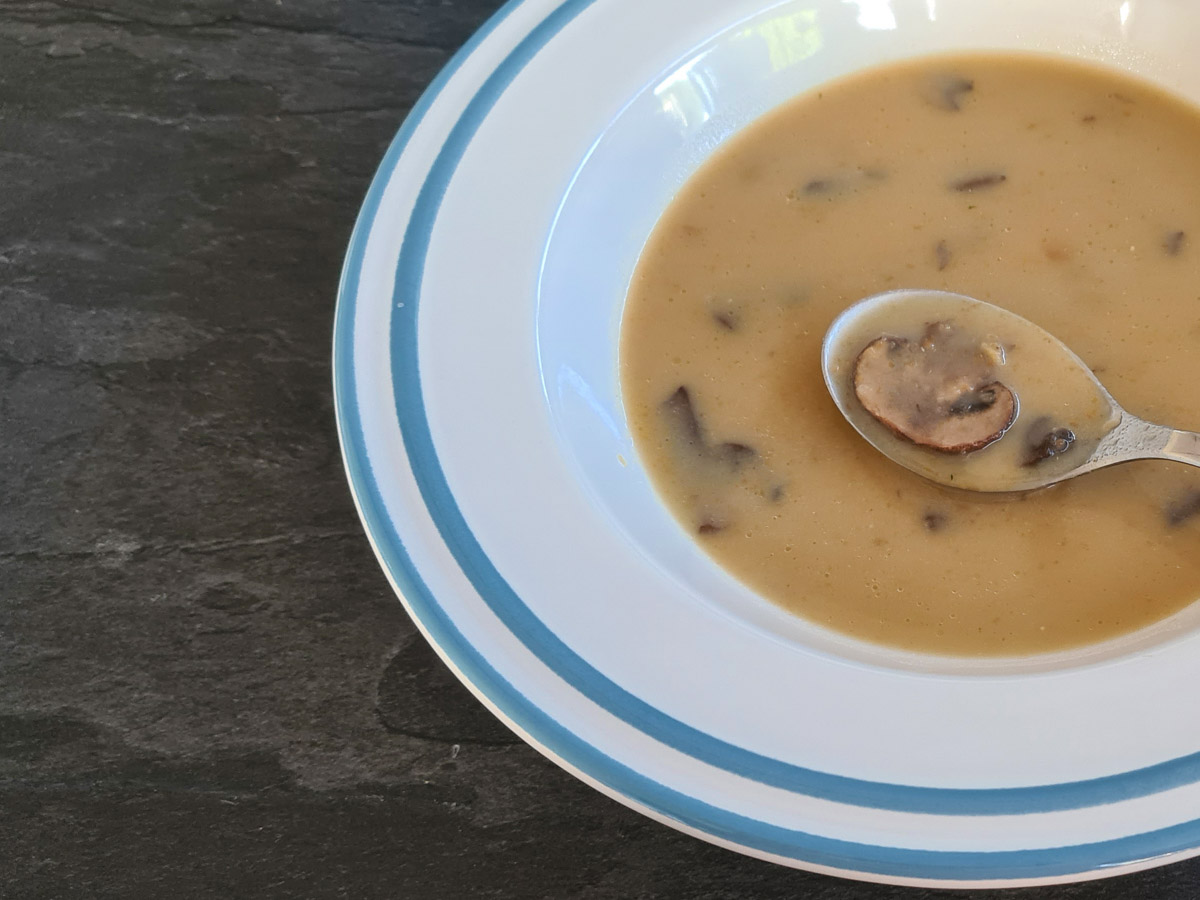
This Recipe Works If You Need
- A filling soup that uses a standard casserole of brown mushrooms and not much else
- A creamy vegan soup without any dairy or blending
- A weeknight dinner that comes together in one pot in 30 minutes
- A soup with genuinely layered flavor that goes beyond a basic cream of mushroom
Why You’ll Love This Recipe
- One pot, 30 minutes — minimal cleanup, quick enough for a weeknight
- Coconut milk instead of cream — gives a rich, silky broth without any dairy
- Miso at the end — adds a fermented depth that makes the soup taste like it has been simmering for hours
- Filling enough to be a main — the coconut milk and mushrooms together make this satisfying from lunch to dinner
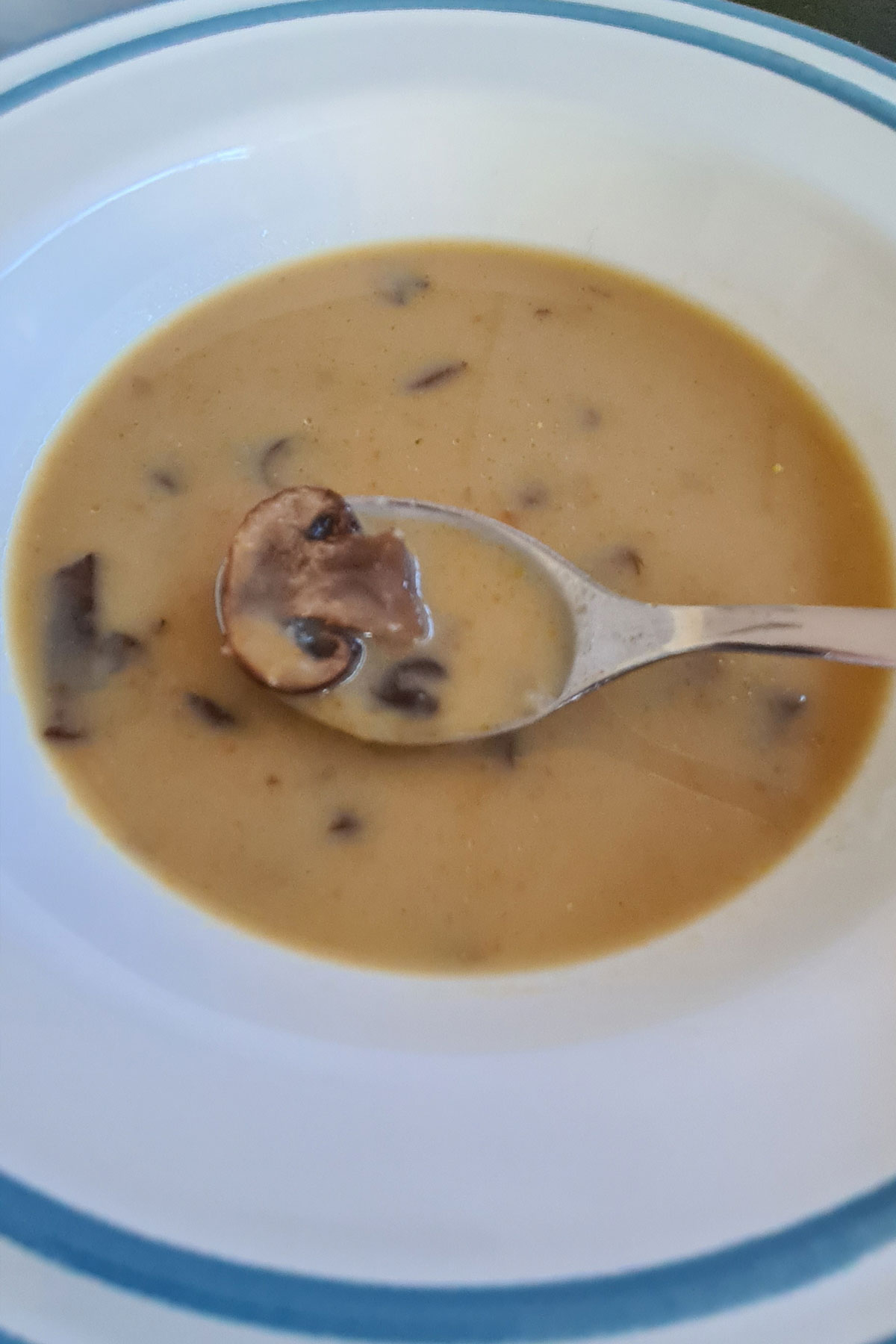
Ingredient Notes
Mushrooms — Brown (cremini) mushrooms are used here, but this soup works with most varieties. Shiitake mushrooms give a deeper, more intensely umami broth. A mix of shiitake and cremini is a good middle ground: the cremini add bulk and a familiar texture while the shiitake bring complexity. Avoid button mushrooms if possible — they are too mild to give the soup much flavor. Slice them thickly so they remain present in the finished soup rather than disappearing into the broth.
Coconut milk — Use full-fat canned coconut milk, not coconut cream or coconut drink. Full-fat gives the broth its creamy body. Shake the can well before opening. Light coconut milk can be used if you prefer a thinner soup, but the broth will be noticeably less rich.
Soy sauce — Adds saltiness and umami. Use regular soy sauce for a stronger flavor, or tamari for a gluten-free option. Start with the amount in the recipe and adjust at the end — miso also adds saltiness, so taste before adding more.
Miso paste — White (shiro) miso is milder and sweeter; red miso is stronger and more fermented. Either works here. The critical rule: never boil miso. Add it off the heat or at the very end of cooking by dissolving it in a small ladle of hot broth first, then stirring into the pot. Boiling destroys the beneficial bacteria and makes the miso taste flat.
Vegetable broth — Use a good-quality broth or a homemade one. A mushroom-based broth will amplify the mushroom flavor further. If using a stock cube, choose a low-sodium one since the soy sauce and miso already add significant salt.
Onion — Cooked separately in a pan until soft and slightly golden, then added to the soup at the end. This keeps the onion texture distinct. If you add raw onion directly to the broth, it softens unevenly and the texture becomes lost.
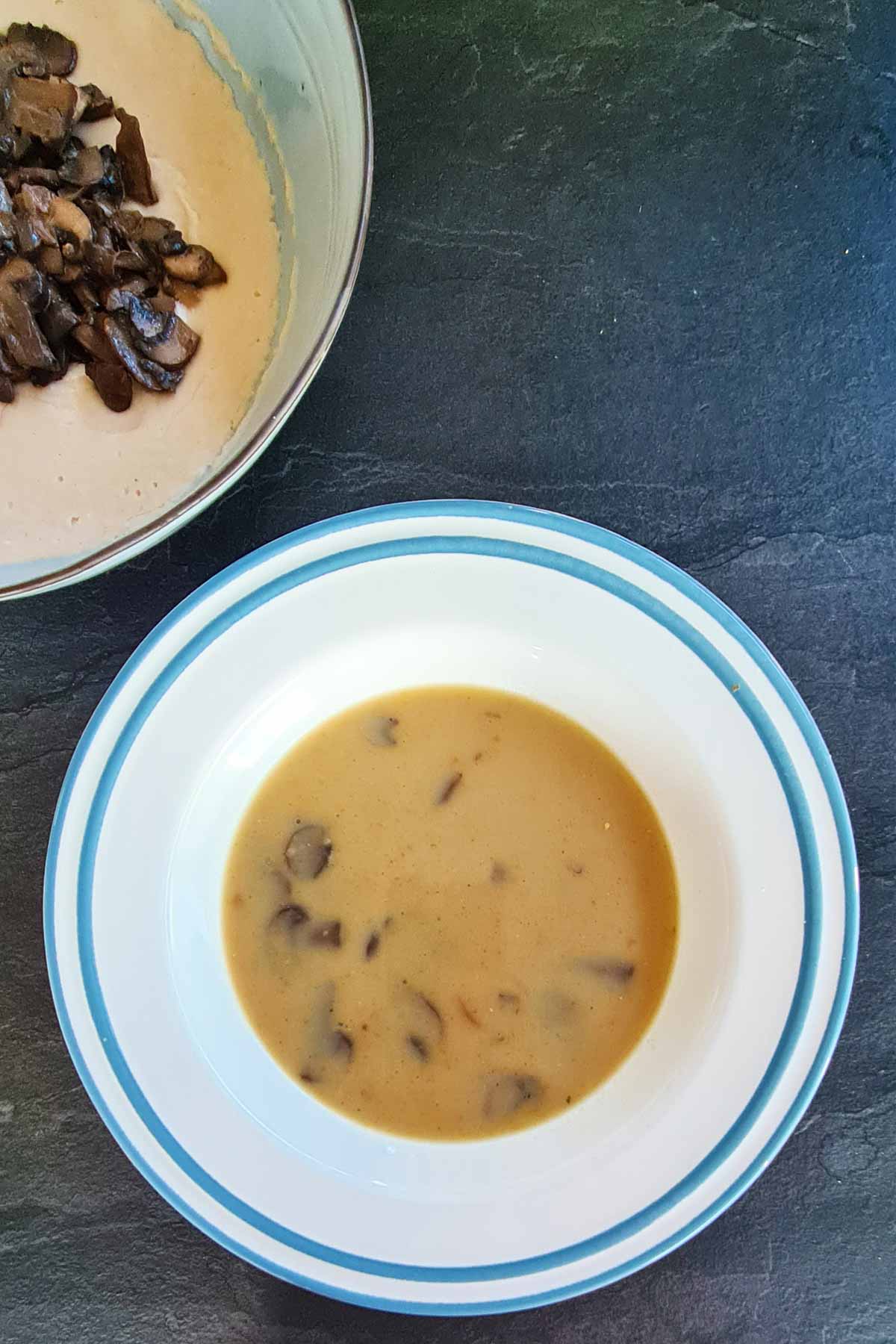
Tips
- Cook the onion separately in a pan with a little oil until golden before adding to the soup. This single step makes a noticeable difference in the final texture — the onion keeps its bite rather than going soft in the broth.
- Do not stir the mushrooms constantly as they cook. Let them sit undisturbed in the hot broth for a minute or two at a time so they can develop some color and concentrate in flavor rather than steaming.
- Dissolve miso in a small amount of hot broth in a separate ladle or bowl before adding to the pot. This ensures it disperses evenly without any lumps.
- Taste for salt only after adding the miso. Between the soy sauce and the miso, the soup is often fully seasoned at that point and needs little or no extra salt.
- To thicken the soup slightly without blending, stir a tablespoon of mushroom protein powder or a teaspoon of cornstarch dissolved in cold water into the simmering broth a few minutes before serving.
Substitutions and Variations
Add noodles — Rice noodles or soba noodles added in the last 5 minutes of cooking turn this soup into a more substantial one-bowl meal. Cook the noodles separately and add to individual bowls rather than to the pot, so they don’t absorb all the broth on reheating.
Add tofu — Firm or extra-firm tofu, cubed and pressed dry, can be pan-fried separately and added to the soup just before serving. It absorbs the miso-coconut broth well without falling apart.
Add lemongrass — One stalk of lemongrass, bruised and simmered in the broth for 10 minutes then removed, adds a citrusy, floral dimension that moves the soup closer to a Thai-style mushroom broth.
Use tamari instead of soy sauce — For a certified gluten-free version. Tamari has a slightly richer, less salty flavor than regular soy sauce; the difference in this soup is minimal.
Add fresh ginger — A 2 cm piece of fresh ginger, grated and added with the mushrooms, gives a warming note that works particularly well in cooler months.
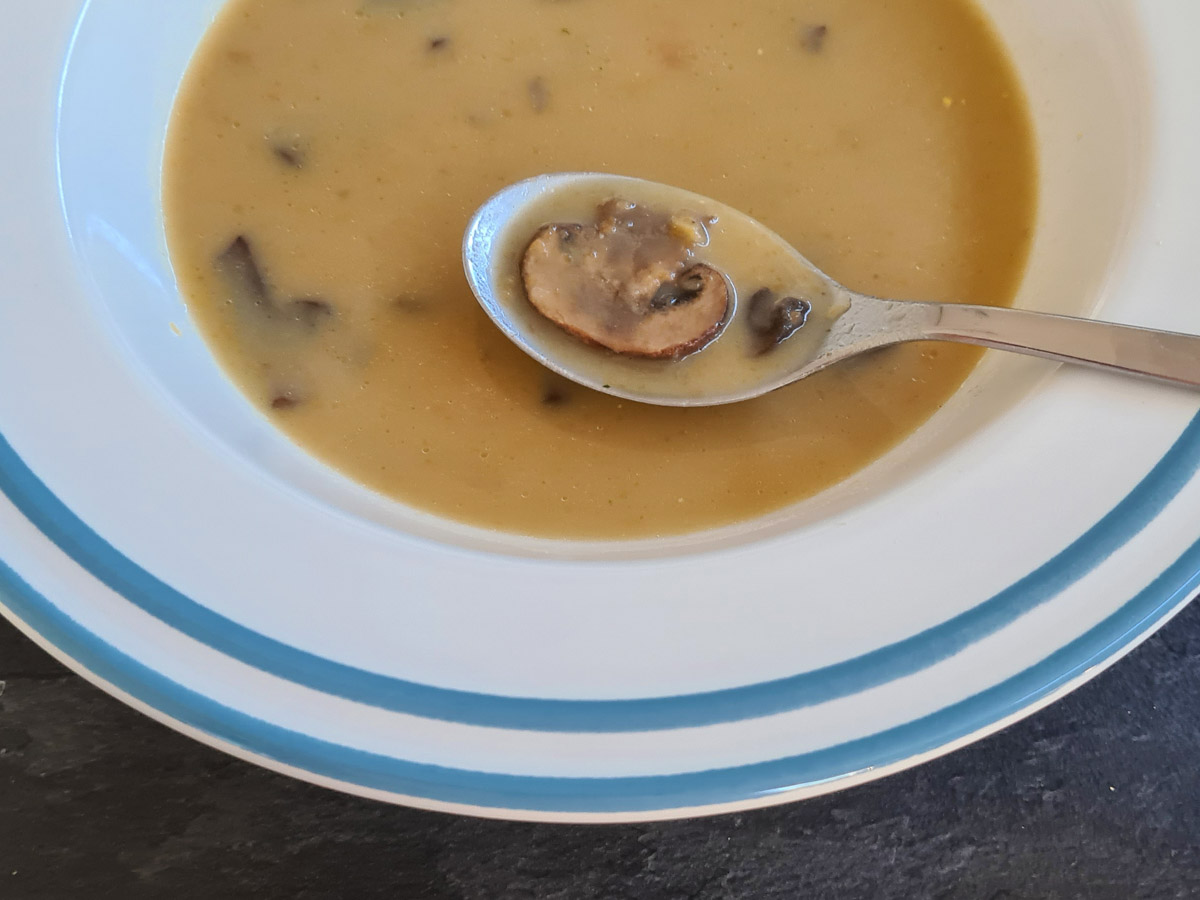
Storage and Make Ahead
This soup keeps in the fridge for 3 to 4 days in an airtight container. Reheat gently on the stove over low heat — do not boil after the miso has been added, as this diminishes the flavor. The coconut milk may separate slightly in the fridge; stir the soup as it reheats and it will come back together. Freeze for up to 2 months; thaw overnight in the fridge and reheat slowly.
For more mushroom recipes, see the full guide on how to cook mushrooms with 10 recipe ideas, or try this hearty mixed mushroom soup for a chunkier, more rustic version. For other creamy vegan soups, the cream of broccoli soup uses a similar technique with a different vegetable base.
Summarise & Save This Recipe
★ Add us as a trusted Google source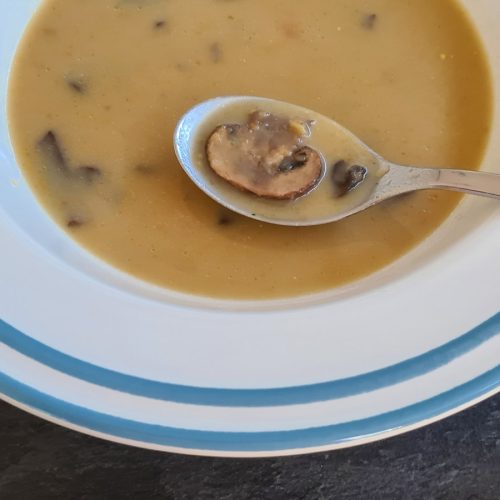
Asian Mushroom Soup
Ingredients
- 500 g 2 cups brown mushrooms
- 1 onion chopped
- 2 garlic cloves sliced
- 1 tsp thyme
- 2 Tbsp olive oil
- 4 L 16 cups water
- 2 medium potatoes
- 1 big carrot
- 1 can of coconut milk 400ml | 13.5 oz
- 5 Tbsp soy sauce or tamari for the gluten-free version
- 1 Tbsp miso paste
- 4 Tbsp mushroom protein powder – optional but recommended. I wrote here about how I discovered that Formula 1 Gourmet protein powder with mushrooms is ideal to thicken sauces and soups and to add extra flavor to your recipes. Since I tested it for this Protein Power Creamy Soup I started using it instead of flour or starch. In case you don’t use this product, replace it with 4 tsp of corn starch
- 1 tsp sesame oil
Instructions
- Set the water to boil in a pot.
- Peel the potatoes and carrot and cut them into cubes. Add them to the pot. Let them boil until soft – 15 minutes.
- Meanwhile, slice the mushrooms and add them to a pan with heated the olive oil. Add the onion, garlic and thyme. Cook over medium heat for 10-12 minutes.
- Once the vegetables are cooked, turn off the heat. Remove them and put them in a blender with a little bit of the boiled water and the protein powder (if you do not use protein powder, add 4 teaspoons of cornstarch).
- Process everything until a fine cream is formed. Pour the cream back into the pot and stir.
- Add the coconut milk, sesame oil, miso paste and soy sauce. Mix.
- If needed, add a little more soy sauce. I did not use salt for this recipe, as both the soy sauce and miso paste are very salty.
- Add the cooked mushrooms and mix. Your soup is ready!
Frequently Asked Questions
Three ingredients shift this from a standard Western cream of mushroom into something distinctly Asian in flavor: coconut milk (used across Thai, Vietnamese, and Indonesian cooking), soy sauce (a foundational seasoning in East and Southeast Asian cuisines), and miso paste (a fermented Japanese condiment). Together they give the broth a layered, savory depth and a richness that is entirely different from a European-style mushroom soup made with cream and thyme.
Yes. Dried shiitake or porcini mushrooms, rehydrated in hot water for 20 to 30 minutes, can replace some or all of the fresh mushrooms. Use the soaking liquid as part of the broth — it is intensely flavored and should not be discarded. Squeeze the rehydrated mushrooms dry before slicing to avoid adding too much extra liquid to the pot. The flavor of the finished soup will be deeper and more concentrated than with fresh mushrooms alone.
Always at the very end, off the heat or with the heat at the lowest possible setting. Miso is a fermented food; boiling destroys the beneficial bacteria and makes it taste flat rather than complex. The standard technique is to dissolve the miso in a small ladle of hot broth first so it disperses evenly, then stir the dissolved mixture back into the pot. Stir gently and serve immediately or within a few minutes.
It can be made gluten-free with two swaps: use tamari instead of regular soy sauce (soy sauce typically contains wheat), and choose a gluten-free miso (some misos are made with barley or wheat rather than just soybeans and rice). Check both labels. All other ingredients in this recipe are naturally gluten-free.
Brown cremini mushrooms are the most practical choice — widely available, affordable, and flavorful enough to hold their own against the soy and miso. Shiitake mushrooms give a more intensely savory, almost meaty broth and are the best single upgrade if you want a more complex soup. A 50/50 mix of cremini and shiitake gives both the bulk of cremini and the depth of shiitake. Avoid white button mushrooms — they are too mild and watery for this kind of broth.




I used almost all ingrediets, but I changed way how to prepare this soup. I always firstly sautee my ingredient sand then cook. Thanks for inspiration.
You’re welcome! 😀