How to Make Labneh at Home
To make labneh at home, all you need is Greek yogurt, a pinch of salt, and a little patience. You stir salt into thick yogurt, spoon it into a cheesecloth, and let it drain overnight in the fridge. By the next day the whey has dripped away and what stays behind is labneh: a soft, spreadable yogurt cheese that is tangy, creamy, and endlessly useful. No special equipment, no cooking, no fuss.
What Is Labneh?
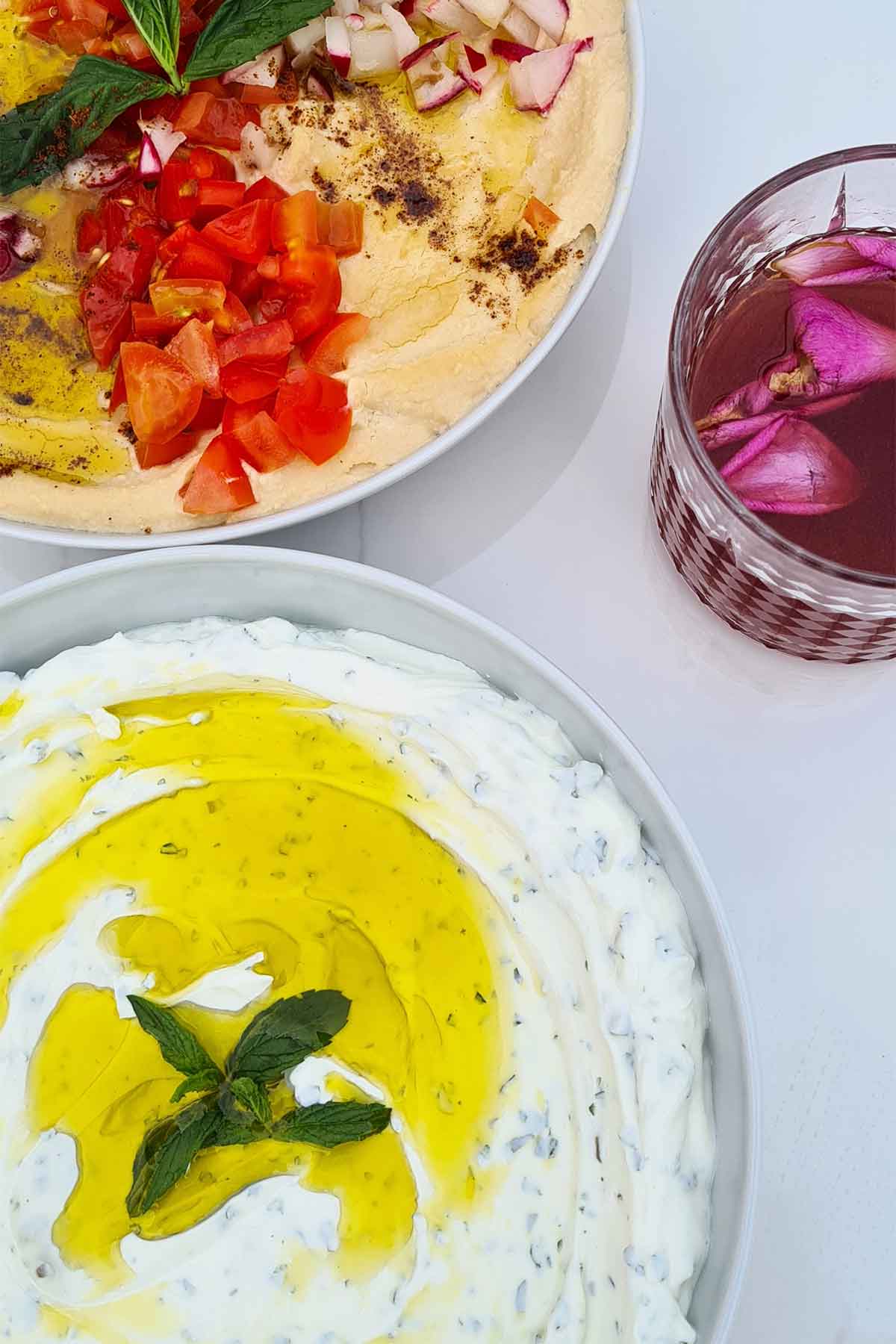
Labneh is a fresh Middle Eastern yogurt cheese that is light, creamy, and pleasantly tangy. It is sometimes called Lebanese cream cheese or Greek yogurt cheese, and you may see it spelled labaneh, labne, or lebnah. It sits somewhere between a thick yogurt and a soft spreadable cheese, which is exactly what makes it so versatile at the table.
The whole thing works on one simple idea: when you strain the liquid whey out of yogurt, you concentrate everything that is left. This process can also be done in your own kitchen with a few basic tools, and I will walk you through it step by step below.
What You’ll Need
The ingredient list is short, so quality really counts here. Here is what goes into a good batch:
- Greek yogurt (10% fat) — I recommend using only high-quality yogurt, such as an authentic Greek yogurt made from whole milk. A full-fat yogurt gives you the creamiest, richest result.
- Sea salt — just a quarter teaspoon seasons the labneh and helps draw out moisture as it strains.
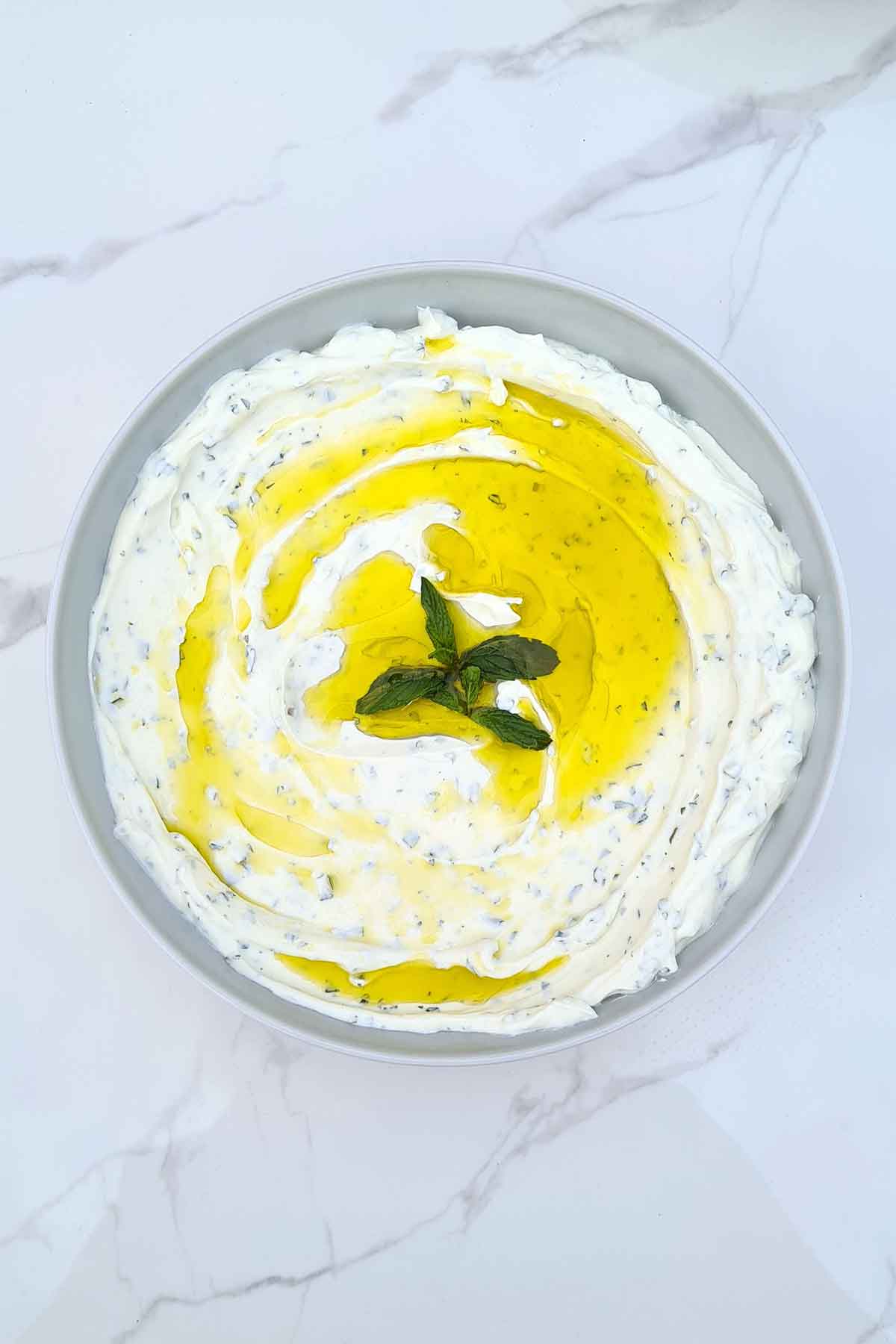
- Toppings and flavorings — I like flavoring my labneh with fresh chopped mint, za’atar, or chili flakes, finished with a good drizzle of olive oil.
You will also need a cheesecloth to strain the yogurt. Strainers come in different shapes and sizes, but I do recommend a cheesecloth, preferably folded into two layers so none of the soft yogurt slips through.
How to Make Labneh, Step by Step
- Mix the yogurt with the salt in a bowl until evenly combined.
- Spoon the mixture into your cheesecloth, then tie the cheesecloth around a wooden spoon by knotting its edges to the spoon’s handle.
- Rest the wooden spoon across a deep bowl or pot so the cheesecloth bundle hangs in the center and does not touch the bottom. This gives the whey room to drip freely.
- Place the whole setup in the fridge and let it strain and chill overnight. Your labneh will be ready the next day.
- Once it is thick and creamy, chop some fresh mint thinly and fold it through, or top with za’atar, chili flakes, and olive oil.
Tips for the Creamiest Labneh
- Start with thick yogurt. A full-fat Greek yogurt already has less liquid to lose, so it strains into a richer, creamier labneh.
- Give it real time. A full overnight strain in the fridge is what turns runny yogurt into a spoonable cheese. If you like it firmer and more spreadable, let it drain a little longer.
- Keep it suspended. Make sure the cheesecloth hangs clear of the bottom of the bowl. If it sits in the collected whey, the labneh cannot firm up properly.
- Do not toss the whey. The strained liquid is great stirred into smoothies or used in place of water when baking bread, so keep it if you can.
- Salt as you go. Taste before serving and adjust. A little extra salt right at the end brings the tang forward.
How to Serve Labneh
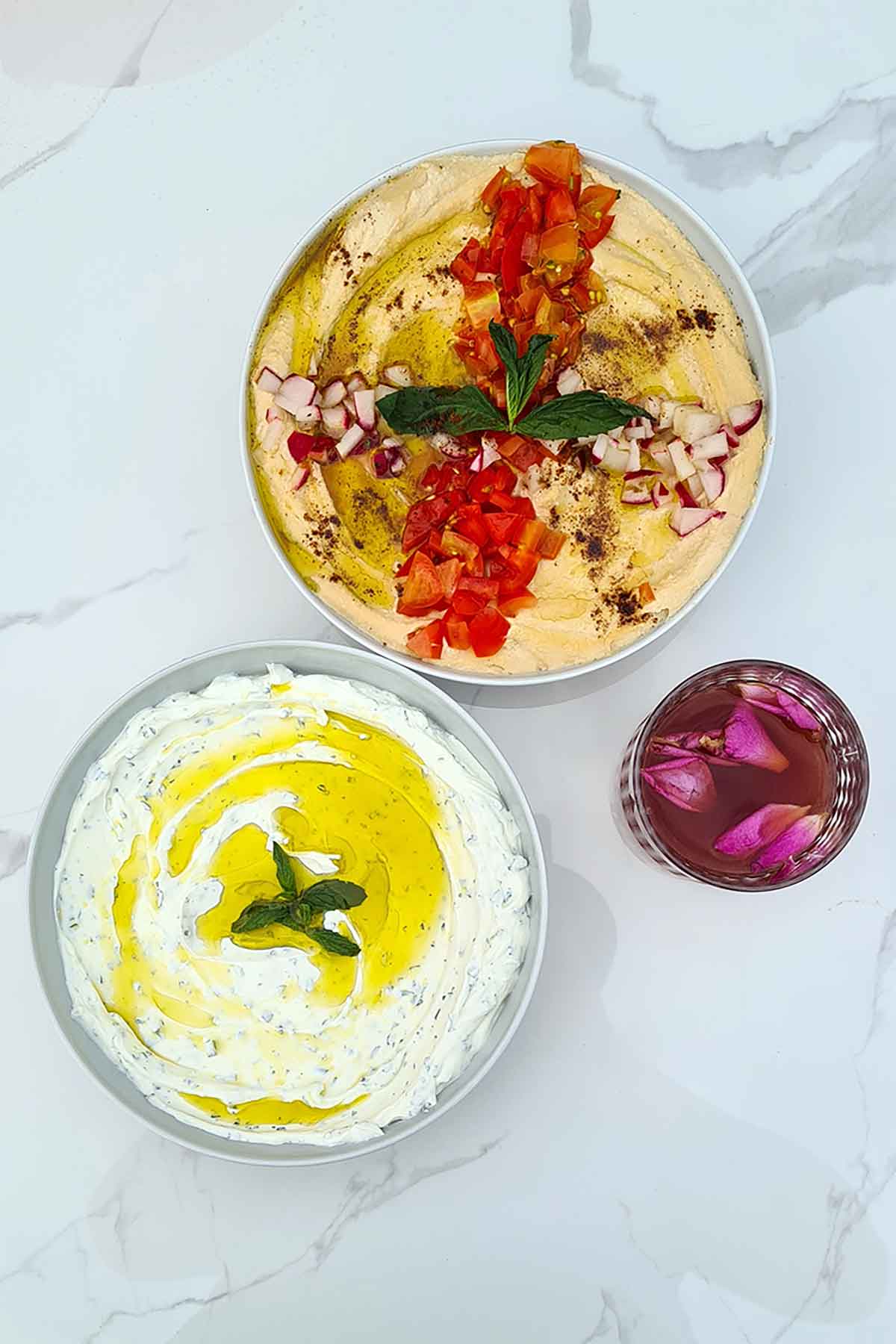
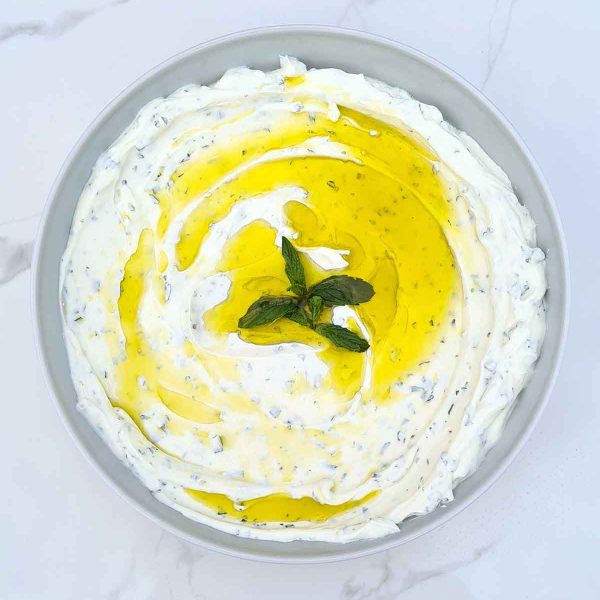
Labneh belongs on any mezze spread. Swirl it onto a plate, pool some olive oil in the center, scatter za’atar or chili flakes over the top, and serve it with warm pita or crackers for dipping. It sits happily next to homemade hummus and other small plates, and if you love a cool, herby yogurt dip you will find it plays a similar role to tzatziki.
It is just as good at other meals too. Spread it on toast with fruit and vegetables for breakfast, use it as a creamy base under roasted vegetables, or spoon it alongside shawarma and other Middle Eastern mains where a cooling element pulls everything together.
How to Store Labneh
Keep labneh in an airtight container in the fridge, where it stays fresh for several days. If you flavor it before storing, hold off on the fresh mint until serving so it stays bright. For a longer keep, roll firm labneh into small balls, pack them into a clean jar, and cover them completely with olive oil. Stored this way in the fridge, the oil-covered balls last well beyond a fresh batch and make an easy, ready-to-serve appetizer.
If you make a batch of this labneh, I would love to know how it turned out. Leave a star rating and drop a comment below to tell me how you flavored yours, whether you went the minty route or piled on the za’atar and chili.
How to Make Labneh at Home
Ingredients
- 500 g Greek yogurt, 10% fat
- ¼ tsp sea salt
Optional toppings or flavorings:
- fresh mint chopped, to serve
- za’atar to serve
- olive oil to serve
- chili flakes to serve
Important:
- cheesecloth to strain the yogurt; use two layers
- high-quality yogurt use an authentic Greek yogurt made from whole milk
Instructions
- Mix the yogurt with the salt in a bowl.
- Transfer the mixture to the cheesecloth. Tie the cheesecloth around a wooden spoon by knotting its edges to the spoon’s handle.
- Place the wooden spoon across a deep bowl or pot so that the cheesecloth with the labneh hangs in the center, without touching the bottom.
- Place in the fridge and let it strain and chill overnight. Your labneh will be ready the next day.
- I like my labneh with fresh chopped mint, so chop it thinly and mix it into the creamy labneh.
Notes
Frequently Asked Questions
Labneh is made from just two core ingredients: Greek yogurt and a little salt. The salted yogurt is strained through a cheesecloth overnight so the liquid whey drips away, leaving a thick, creamy yogurt cheese. From there you can flavor it with mint, za’atar, chili flakes, and olive oil.
This labneh is vegetarian, not vegan, because it is made from dairy Greek yogurt. There are no eggs, meat, or honey in the recipe, but the yogurt itself is an animal product. If you need a plant-based spread, you would have to start from a non-dairy cultured yogurt instead.
The hands-on part takes only a few minutes: mix, wrap, and hang. The straining is where the time goes, and it needs an overnight rest in the fridge. You mix it one evening and have creamy labneh ready the next day.
Both start as yogurt, but labneh is strained much further. Removing more of the whey concentrates the yogurt into a thick, spreadable cheese that is denser and tangier than Greek yogurt. In short, labneh is what you get when you keep straining Greek yogurt until it turns into a soft cheese.
A cheesecloth folded into two layers is the tool I recommend, because it catches the soft yogurt while letting the whey drip through. Strainers come in different shapes and sizes, so a fine mesh sieve lined with cloth can work too. The key is that the yogurt hangs freely and the liquid can escape.
Keep it in an airtight container in the fridge, where it stays fresh for several days. For a longer keep, roll firm labneh into balls, pack them in a jar, and cover them completely with olive oil. Add fresh mint only at serving time so it stays bright.