Best Caponata Recipe (Sicilian-Style)
Caponata is a Sicilian sweet-and-sour eggplant dish made by simmering fried eggplant with celery, tomatoes, olives, and capers, then balancing it all with vinegar and a touch of sugar. This is the best caponata recipe to keep on hand for eggplant season: rich, tangy, and packed with the kind of aromatic Mediterranean flavor that tastes even better the next day. It is naturally vegan, served warm or at room temperature, and endlessly useful as a side, a spread, or a light main.
It’s eggplant season, so it’s time to enjoy them in every possible form. If you’ve had your fill of the classic eggplant salad, this hearty Italian caponata is the perfect way to cook the same vegetable into something completely different.
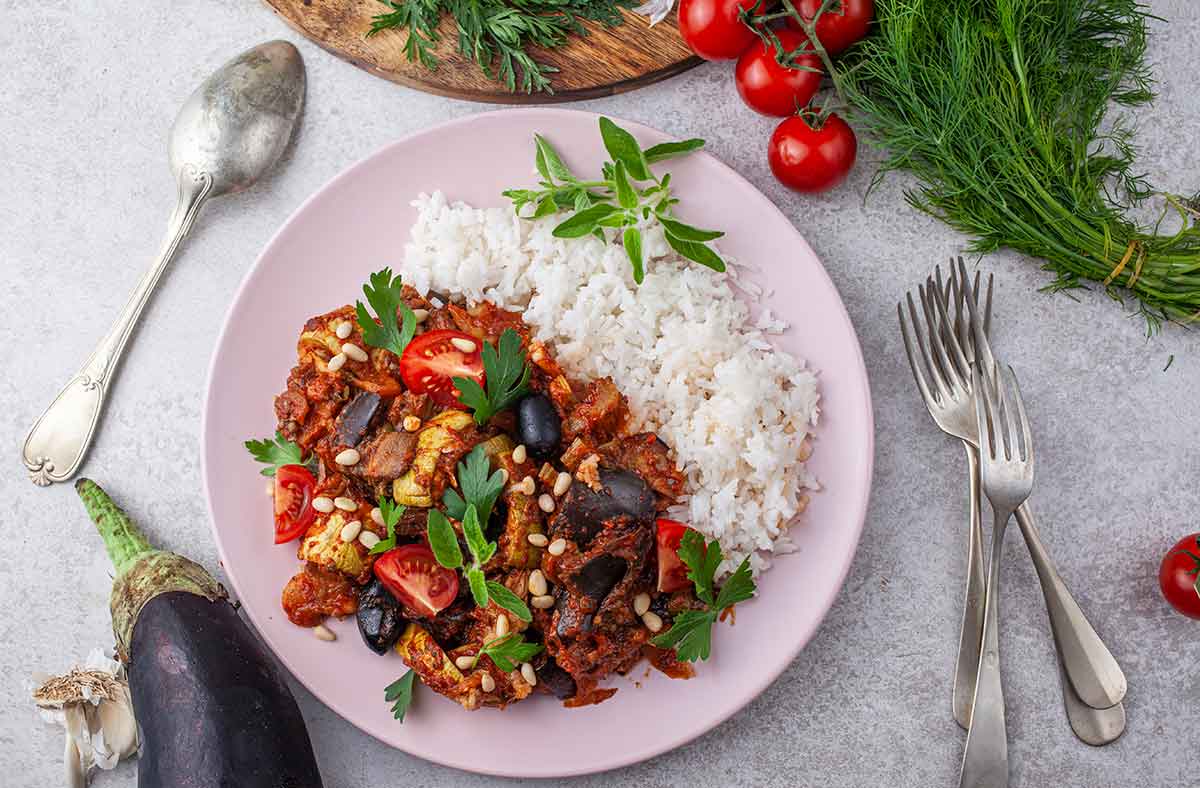
Caponata is a dish with a long history and a strong sense of place. Its origins trace back to the 18th century in Sicily, in southern Italy, where it was first considered humble, everyday food. Made from fresh seasonal vegetables, olive oil, and vinegar, it often stood in for meat during fasting periods. Centuries later, that same frugal combination is what makes it so appealing: a few pantry staples and a basketful of summer vegetables turn into something that feels far more special than the sum of its parts. You’ll find it in the good company of other Italian vegetarian recipes here on the blog.
The Ingredients That Make Caponata Sing
Caponata is built on contrast, so each ingredient earns its place. Here’s what you’re working with and why it matters:
- Eggplant is the star. You’ll need four, cut into bite-sized pieces and sauteed in olive oil until soft and golden. This is where the body of the dish comes from.
- Celery, onion, and bell pepper form the aromatic base. The celery is not optional in a real caponata; its slight bitterness and crunch are part of the signature.
- Olives and capers bring the briny, salty backbone. Two tablespoons of capers and 200 g of olives give the dish its savory edge.
- Peeled tomatoes and tomato paste add body and a deep, concentrated tomato flavor that ties everything together.
- Apple cider vinegar and sugar are the magic pair. Three tablespoons of vinegar against two teaspoons of sugar create the sweet-and-sour tension caponata is famous for.
- Pine nuts, fresh basil, and oregano finish it off with texture and fragrance. The pine nuts add a gentle richness that keeps the dish from tasting too sharp.
How to Get It Right
Caponata is not a difficult dish, but a few small habits make the difference between good and memorable:
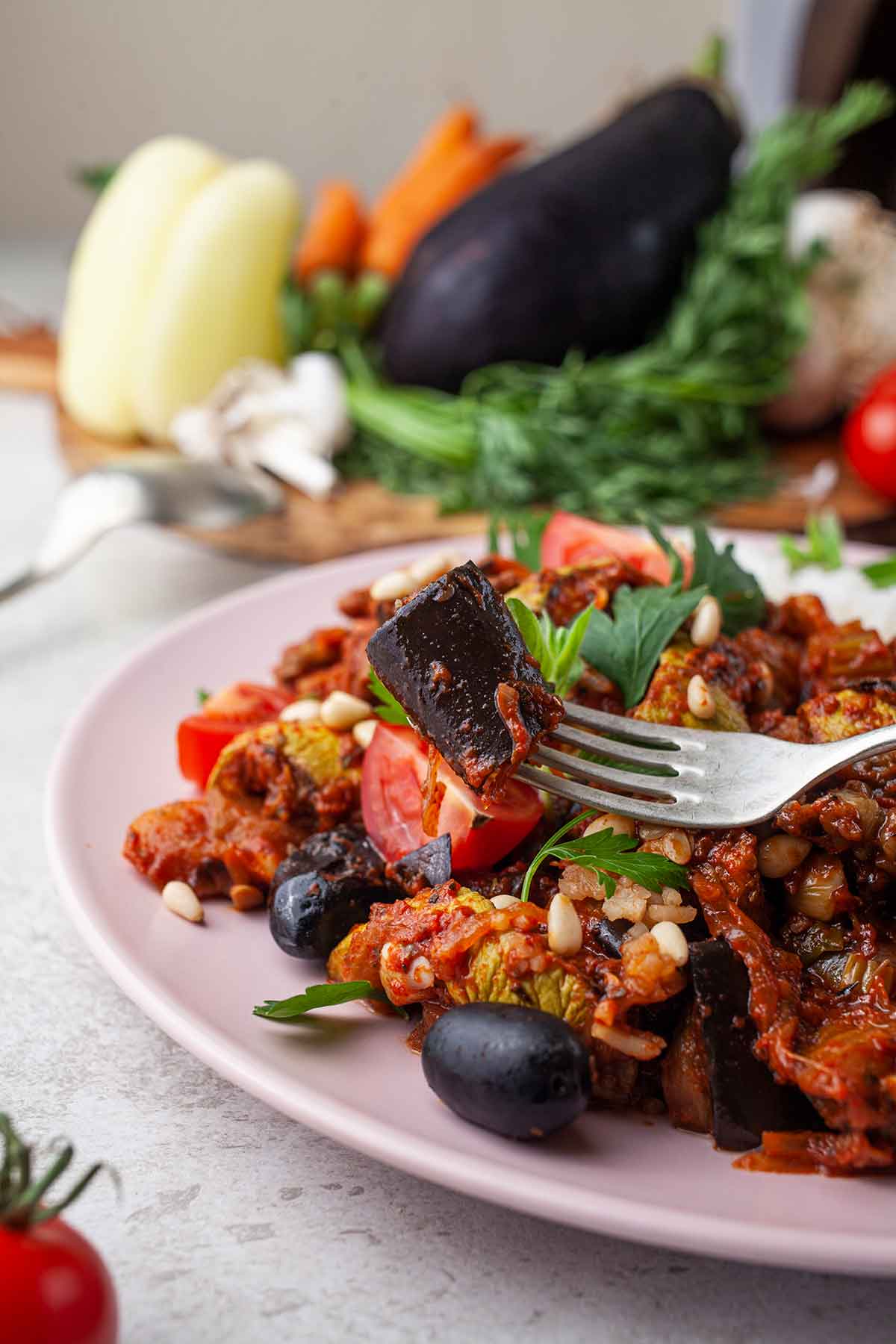
- Cook the eggplant separately first. Saute it in two tablespoons of olive oil until soft, then set it aside in a bowl. Adding it back at the end keeps the pieces intact instead of letting them dissolve into the sauce.
- Build the base in layers. Soften the onion for about four minutes, then add the celery and bell pepper for another three to four minutes before the olives, capers, pine nuts, and tomatoes go in. Each layer sets up the next.
- Mix the agrodolce off the heat. Stir the vinegar, tomato paste, and sugar together in a small bowl first, then add it once the vegetables are tender. This gives you an even sweet-and-sour balance instead of pockets of raw vinegar.
- Let the eggplant rejoin at the end. Fold the cooked eggplant, basil, and oregano back in and cook for just five more minutes so the flavors marry without turning to mush.
Why the Sweet-and-Sour Balance Works
The heart of caponata is what Sicilians call agrodolce, the interplay of sour and sweet. The apple cider vinegar cuts through the richness of the olive oil and eggplant, while the sugar softens the vinegar’s sharp edge so neither one dominates. Salt, briny olives, and capers push against that sweetness from the other direction. When it’s balanced, no single flavor stands out; you taste all of them at once. That tension is also why caponata improves as it sits, since the flavors have time to settle into each other.
What to Serve With Caponata
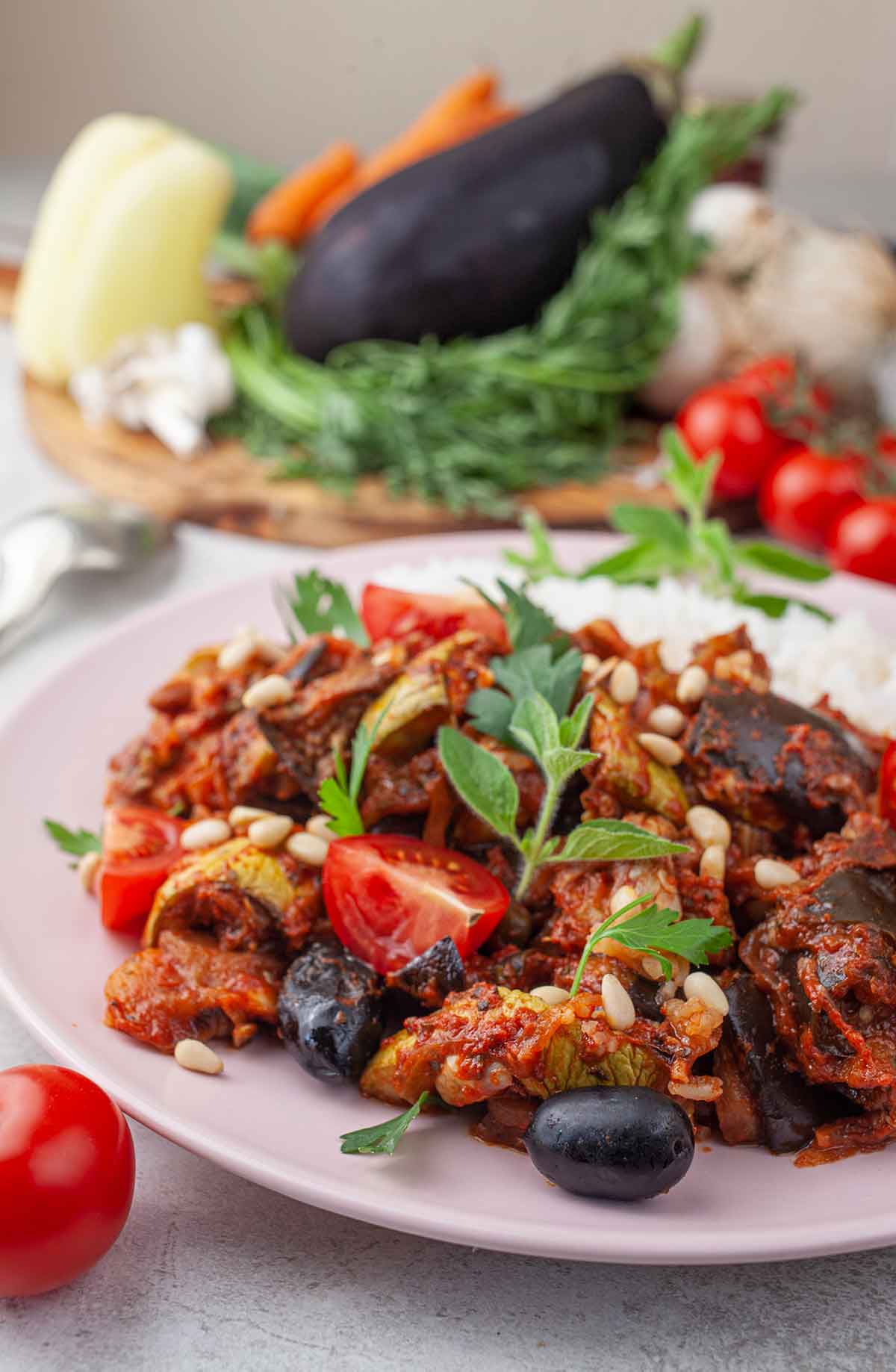
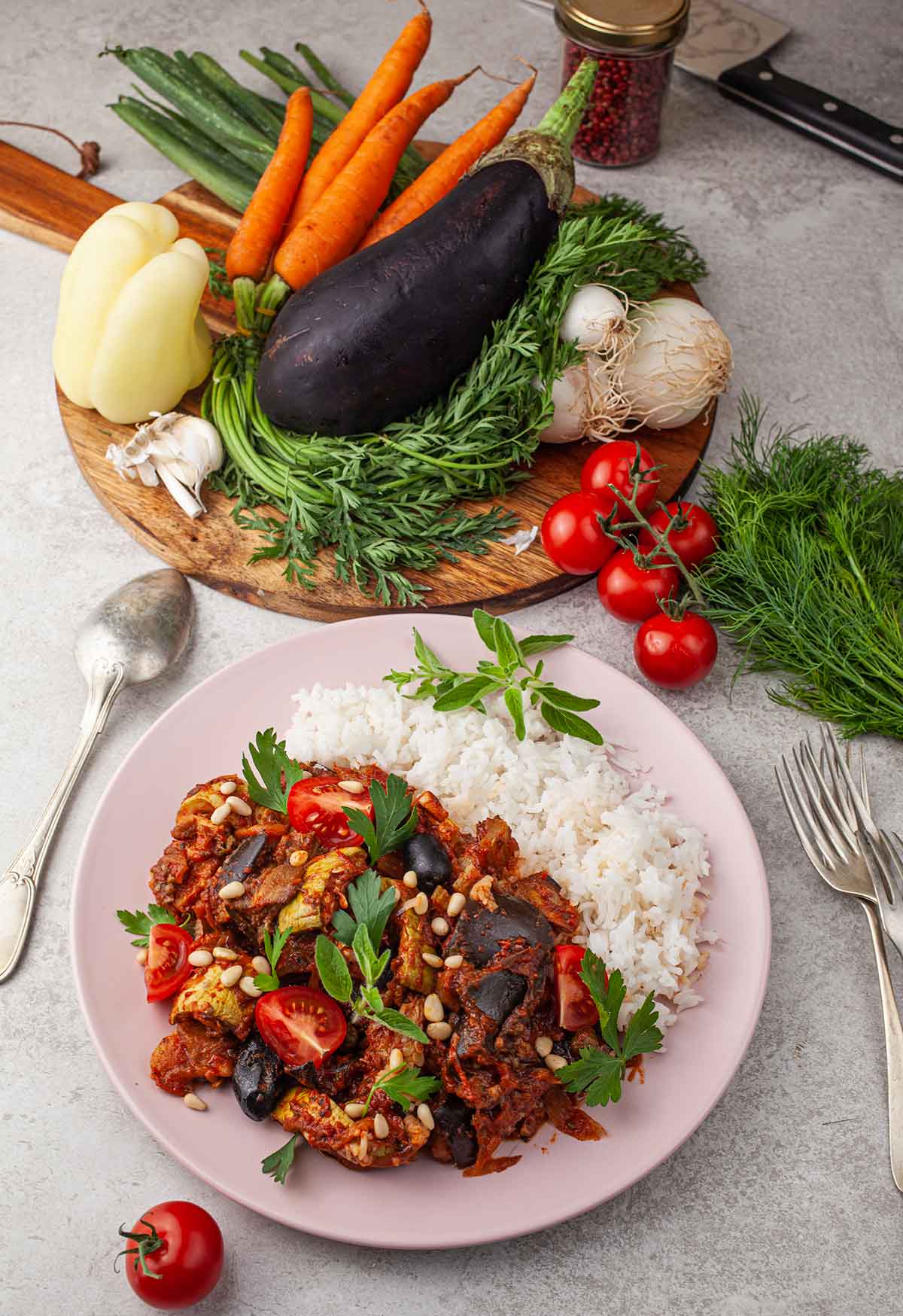
Caponata is happiest served hot with a scattering of extra pine nuts and fresh herbs, alongside a bowl of rice or some crusty bread to catch the sauce. It also plays well with other Mediterranean staples. Spoon it next to a creamy cauliflower risotto, pile it over soft polenta the way you would with bread, or toss it through your favorite pasta for an easy weeknight dinner. If you’re building a bigger spread, browse these pasta ideas to round out the table.
Storing and Making It Ahead
This is a make-ahead cook’s best friend. Caponata keeps well in an airtight container in the fridge for several days, and most people agree it tastes even better on day two once the agrodolce has fully mingled. Serve leftovers cold, at room temperature, or gently rewarmed. It’s a smart dish to prepare in advance for a gathering, since one pot gives you a side, a topping, and a spread all at once with no last-minute work.
If you make this caponata, I’d love to know how it turned out for you. Leave a star rating and drop a comment below to tell me what you served it with, since half the fun of this dish is finding new ways to use it.
Best Caponata Recipe
Ingredients
- 4 eggplants cut into pieces
- 4 tablespoons olive oil
- 1 white onion sliced
- 3 stalks celery
- 1 bell pepper chopped
- 2 tablespoons capers
- 200 g olives
- 400 g tomatoes peeled
- 4 leaves fresh basil
- 3 leaves oregano
- 3 tablespoons pine nuts
- 1 teaspoon salt
- 2 teaspoons sugar
- 3 tablespoons apple cider vinegar
- 2 tablespoons tomato paste
Instructions
- In a pan over medium heat, saute the eggplants in two tablespoons of olive oil.
- Once ready, transfer them to a bowl and set aside.
- In the same pan over medium heat, add another 2 tablespoons of olive oil, and when the oil is hot, add the sliced onion.
- Saute the onion, stirring for around 4 minutes. When the onion becomes soft, add the celery and bell pepper and continue to stir for another 3-4 minutes. Then add the olives, capers, pine nuts and tomatoes.
- Mix the ingredients and cover with a lid. Let them cook on low heat for around 15 minutes, stirring from time to time.
- Meanwhile, in a small bowl, combine the vinegar, tomato paste and sugar. Stir well.
- When the vegetables are ready, add the salt and the tomato paste mixture, stir in the basil and oregano leaves, then add the cooked eggplant.
- Cook for 5 more minutes.
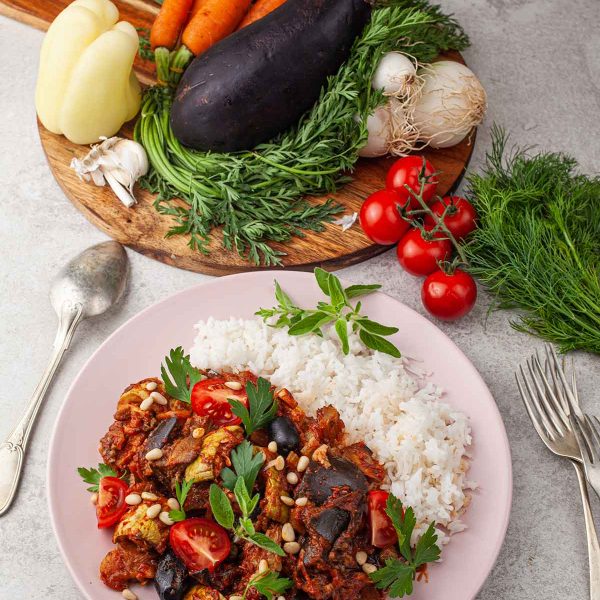
- Serve the caponata hot with extra pine nuts and fresh herbs, and a side of rice or bread.
Notes
Frequently Asked Questions
Caponata is a traditional Sicilian dish of sauteed eggplant simmered with celery, onion, bell pepper, tomatoes, olives, and capers, finished with a sweet-and-sour balance of vinegar and sugar. It originated in 18th-century Sicily as humble, seasonal food and is served warm or at room temperature as a side, spread, or light main.
Yes. This caponata is naturally vegan, made entirely from plant-based ingredients: eggplant, olive oil, vegetables, olives, capers, tomatoes, pine nuts, herbs, vinegar, and a little sugar. There is no cheese, egg, or other animal product in the recipe.
Mushy caponata usually comes from overcooking the eggplant with everything else. The fix is to saute the eggplant separately first, set it aside, and fold it back in only during the final five minutes of cooking so the pieces stay intact instead of dissolving into the sauce.
The signature flavor comes from agrodolce, the Sicilian pairing of sour and sweet. In this recipe, three tablespoons of apple cider vinegar provide the tang while two teaspoons of sugar round it off, and the briny olives and capers balance the sweetness from the savory side.
Absolutely, and it is often better for it. Caponata keeps in an airtight container in the fridge for several days, and the flavors deepen as the vinegar and sugar mingle overnight. Serve it cold, at room temperature, or gently reheated.
Caponata is traditionally served hot with extra pine nuts and fresh herbs alongside rice or crusty bread to soak up the sauce. It also works spooned over polenta, next to a creamy risotto, or tossed through pasta for a quick main.