
Raw Vegan Easter Cheesecake (Pasca)
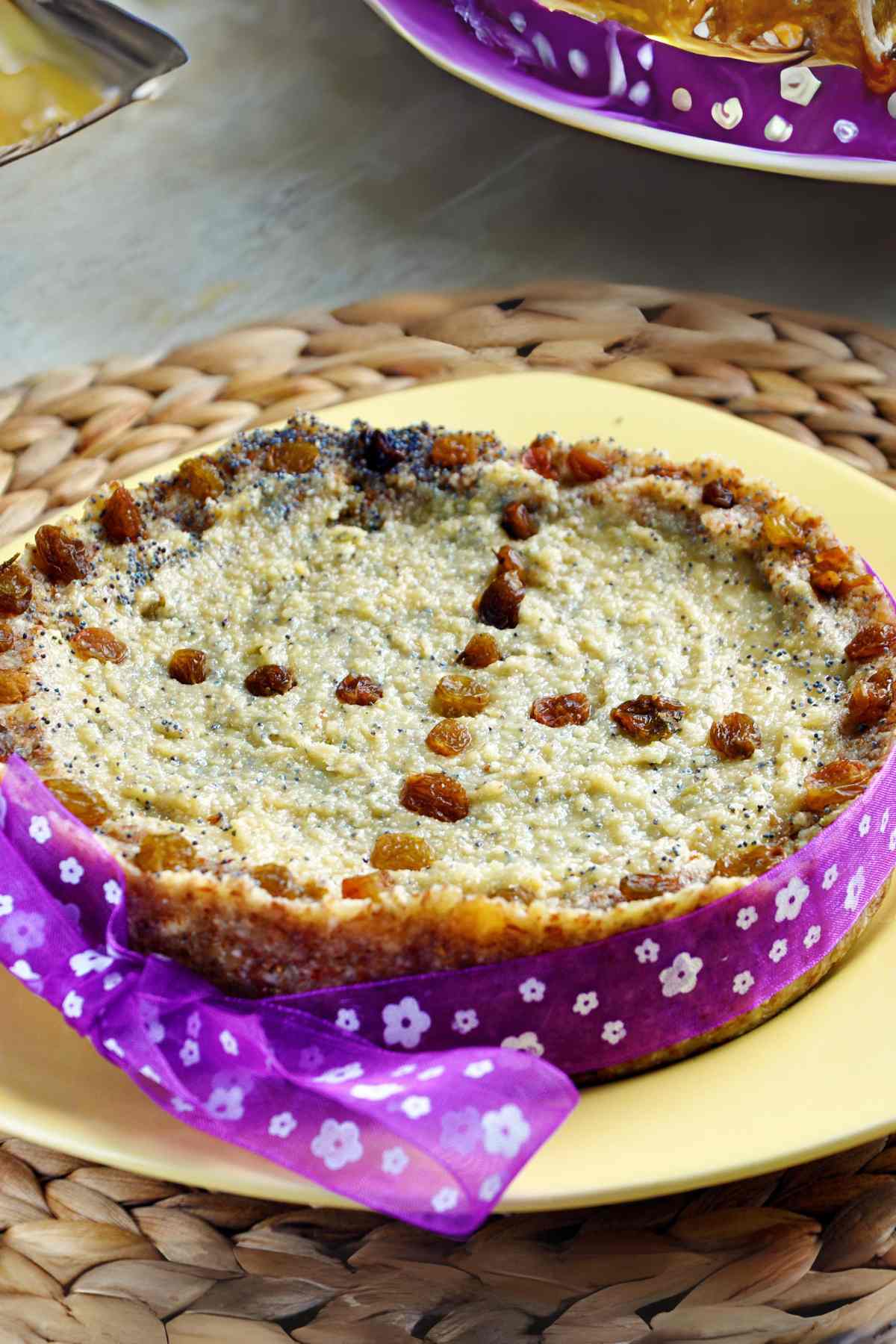
This raw vegan Easter cheesecake is a plant-based version of pasca, the traditional Romanian Easter dessert made with sweetened cottage cheese, eggs, and raisins in a pastry shell. This version skips all of that: the crust is blended almonds and soaked raisins pressed into the tin; the cream is blended cashews with coconut oil, psyllium husks, poppy seeds, and vanilla and rum extract. No baking, no eggs, no dairy. Active prep takes about 15 minutes plus soaking time for the nuts; the cheesecake then sets in the fridge for at least 1 hour, though overnight gives a firmer, creamier result. Vegan, gluten-free, refined sugar-free if you swap honey for maple syrup.
The crust is the part that surprises people: soaked almonds and soaked raisins blended together form a dense, sticky paste that presses into the tin and holds together cleanly when sliced, with no added fat or binding agent needed. The cashew cream has the thick, slightly tangy richness of a proper cheesecake filling. The rum and vanilla extracts are what give this its pasca character, lifting it from generic raw cheesecake into something that actually tastes like the holiday.
This Recipe Works If You Need
- No baking? Yes, entirely raw and no-bake. No oven at any stage.
- Gluten-free? Yes. The crust is almonds and raisins only, with no grain or flour of any kind.
- Refined sugar-free? Use maple syrup or agave instead of honey. The rest of the sweetness comes from the raisins in the crust.
- Make ahead? Yes. Set overnight in the fridge; it slices more cleanly and the flavour is better on day two.
- A traditional pasca replacement? It captures the key flavour notes: vanilla, rum, raisins, poppy seeds. Not identical to the original, but recognisably in the same family.
Why You’ll Love This Recipe
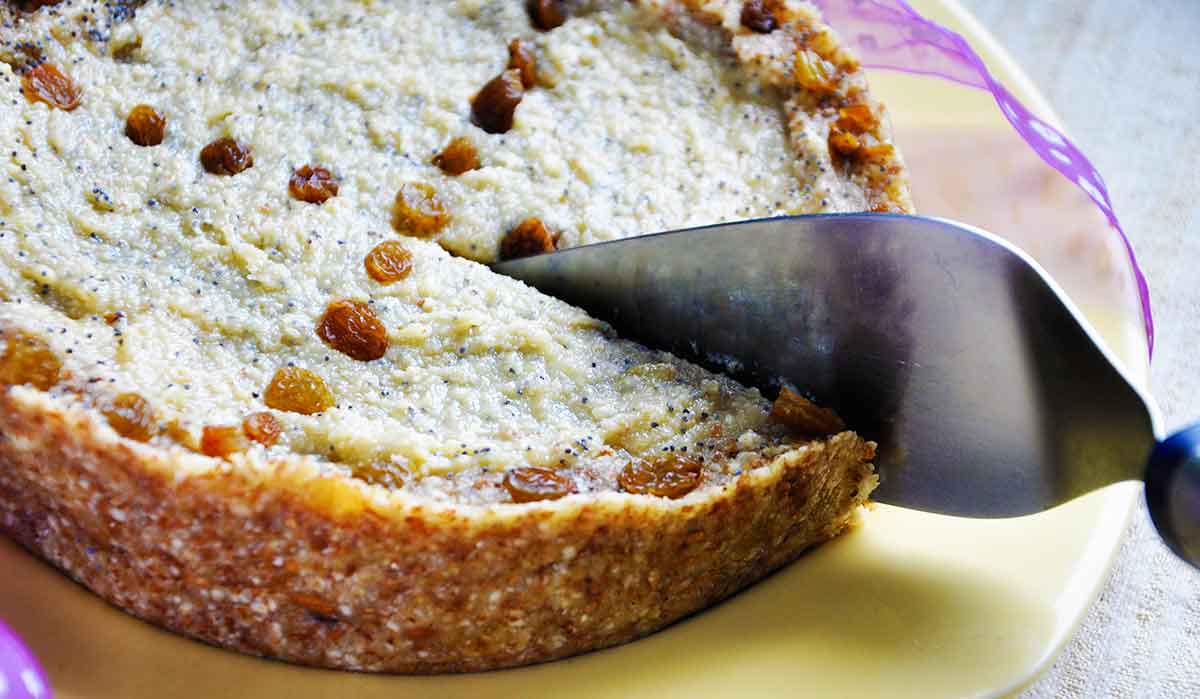
- The crust needs no fat or binding agent. Soaked almonds and soaked raisins blended together become naturally sticky and dense. It presses into the tin cleanly and holds together when sliced.
- The cashew cream tastes genuinely rich. Blended soaked cashews with coconut oil and psyllium husks produces a thick, creamy filling that is much closer to a real cheesecake than most raw versions.
- The rum and vanilla extracts do the flavour work. These two together are what make this taste like pasca rather than just a generic nut dessert. Do not skip them.
- 15 minutes of actual work. The rest is soaking and waiting. This is a very low-effort dessert that looks considerably more laboured than it is.
Ingredient Notes
Almonds: Soak in cold water overnight, or in warm water for at least 1 hour. Soaking softens them so they blend smoothly into a paste rather than a dry, grainy crumble. Drain and rinse before using. The skin can be left on; it gives the crust a slightly darker colour and a more rustic look.
Raisins (crust): Soak for 20-30 minutes to soften. They act as both the sweetener and the sticky binder for the crust. Use regular dark raisins or golden raisins; both work. Medjool dates can substitute for a richer, more caramel-like base flavour.
Cashews: Raw, unsalted. Soak overnight in cold water or for at least 1 hour in warm water. The longer the soak, the smoother the cream. Drain and rinse before blending. Under-soaked cashews leave small grainy bits in the cream even in a powerful blender.
Coconut oil: Melted. It helps the cream set firmly in the fridge because coconut oil solidifies when cold. Do not substitute with other oils; liquid oils will not give the same firm, sliceable texture.
Psyllium husks: Adds additional binding and thickening to the cream. A small amount goes a long way. Without it the cream may be slightly softer, but the coconut oil alone does most of the setting work here, so the psyllium is more of a backup than essential.
Vanilla and rum extract: Both together are essential for the pasca flavour profile. Rum extract is not alcoholic but captures the characteristic warm, slightly boozy note of traditional pasca. If you cannot find rum extract, a tablespoon of actual rum or brandy works in the same quantity.
Poppy seeds: Traditional in Romanian pasca. Stir them into the cream after blending; do not blend them in or they disappear. They add a slight crunch and the characteristic speckling of the original.
Tips for the Best Result
- Line the tin with cling film before pressing in the crust. Leave generous overhanging edges. This lets you lift the whole cheesecake out cleanly after setting, which is much easier than trying to release it by other means.
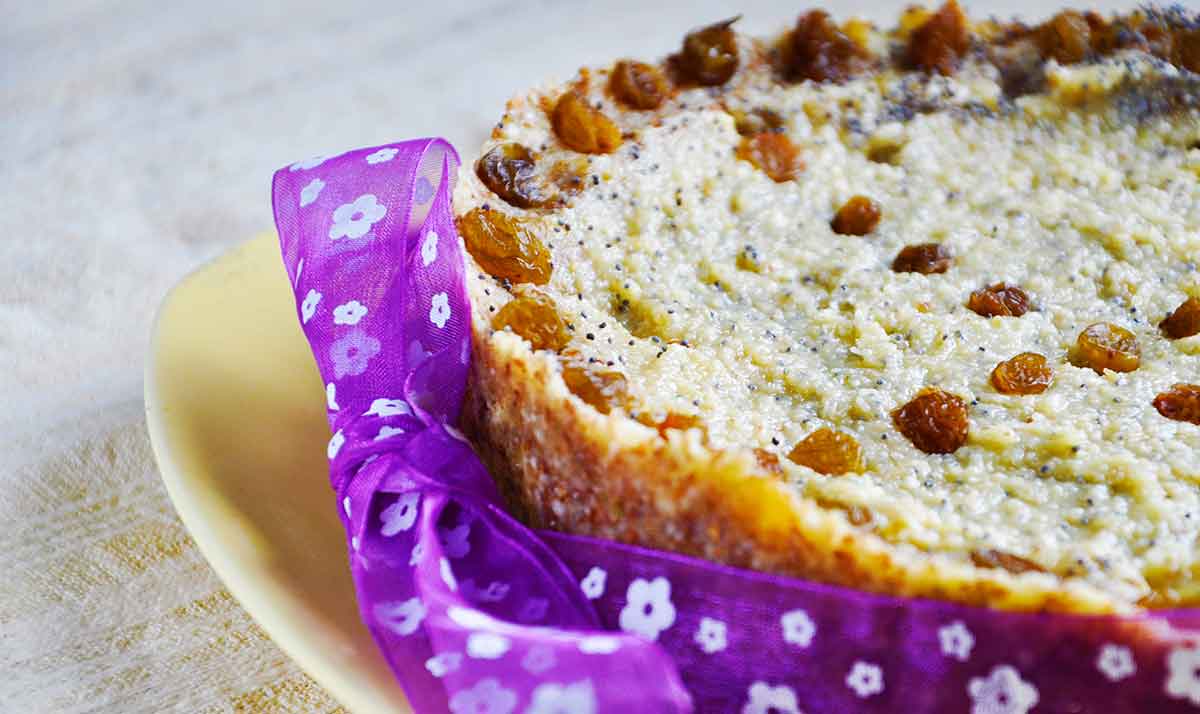
- Press the crust firmly and evenly up the sides. A crust that only covers the bottom will not hold together when sliced. Bring it 2-3cm up the sides of the tin so each slice has a complete border of crust.
- Blend the cashew cream until completely smooth. Blend for at least 2 minutes, scraping down the sides. Any remaining grit in the cream will be noticeable in the finished texture. A high-powered blender gives the best result.
- Stir in poppy seeds, raisins, and psyllium by hand after blending. This keeps the poppy seeds visible and the raisins whole rather than pulverised into the cream.
- Set overnight for the cleanest slices. After 1 hour the cream is set but still quite soft. Overnight, the coconut oil firms fully and the cream becomes dense and sliceable. Worth the wait.

Substitutions
Almonds in the crust: Walnuts or pecans can replace almonds for a slightly different flavour. The ratio stays the same. Walnuts give a more bitter, earthy crust; pecans give a sweeter, richer one.
Raisins in the crust: Medjool dates (pitted) are the best substitute. They are stickier than raisins and produce a denser, richer crust. Use the same weight. Dried figs also work, though they give a slightly more pronounced flavour.
Honey: Maple syrup, agave, or date syrup all work as direct substitutes in the same quantity. Any of these keeps the recipe fully vegan.
Rum extract: Use 1 tablespoon of actual rum or brandy, or substitute with a little more vanilla extract plus a drop of almond extract. The flavour will be less distinctly pasca-like but still very good.
No poppy seeds: Simply omit them. The cream is delicious without them. You can also substitute with a tablespoon of hemp seeds for a similar visual effect.
Storage
Store covered in the fridge for up to 4 days. The texture improves on days two and three as the flavours meld and the cream continues to firm. Keep it in the tin or transfer to an airtight container once sliced.
This cheesecake freezes well. Slice it first, place slices on a lined tray until solid, then transfer to a freezer bag. Keeps for up to 2 months. Thaw individual slices in the fridge for a few hours or at room temperature for about 30 minutes. The texture after thawing is nearly identical to fresh.
Looking for more vegan Easter desserts? Try the Vegan Fruit Tart, the Easter Trifle, or browse all Easter desserts.
Summarise & Save This Recipe
★ Add us as a trusted Google source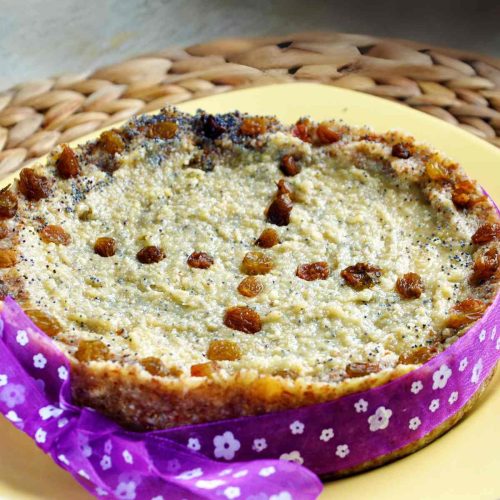
Raw Vegan Easter Cheesecake (Pasca)
Ingredients
Crust:
- 1 cup almonds raw, soaked overnight or for at least 1 hour
- 1 cup raisins soaked for 20-30 minutes
Cream:
- 1 ½ cup cashews raw, soaked overnight or for at least 1 hour
- 4 Tbsps coconut oil
- 1 Tbsp psyllium husks
- 3 Tbsps honey or any other healthy sweetener
- 1 Tbsp poppy seeds
- 2 Tbsp raisins
- ½ tsp vanilla extract
- ½ tsp rum extract
- 1 pinch salt
Instructions
- I used a 20cm diameter round-shaped form. Cover the form with plastic wrap. This way the cheesecake will be removed from the form a lot easier.
- Add almonds in the food processor. Pulse until smooth. Add raisins. Pulse until well combined.
- Add the sticky paste in your cheesecake form. Using your hands, start pressing untill the bottom and form’s walls are covered.
- Add cashews in the food processor. Pulse until creamy. Add psyllium husks, coconut oil, honet, pinch of salt, vanilla and rum extracts. Process until smooth.
- Add poppy seeds, psyllium and golden raisins. Mix well using a spoon.
- Pour the cashew cream in the cheesecake form.
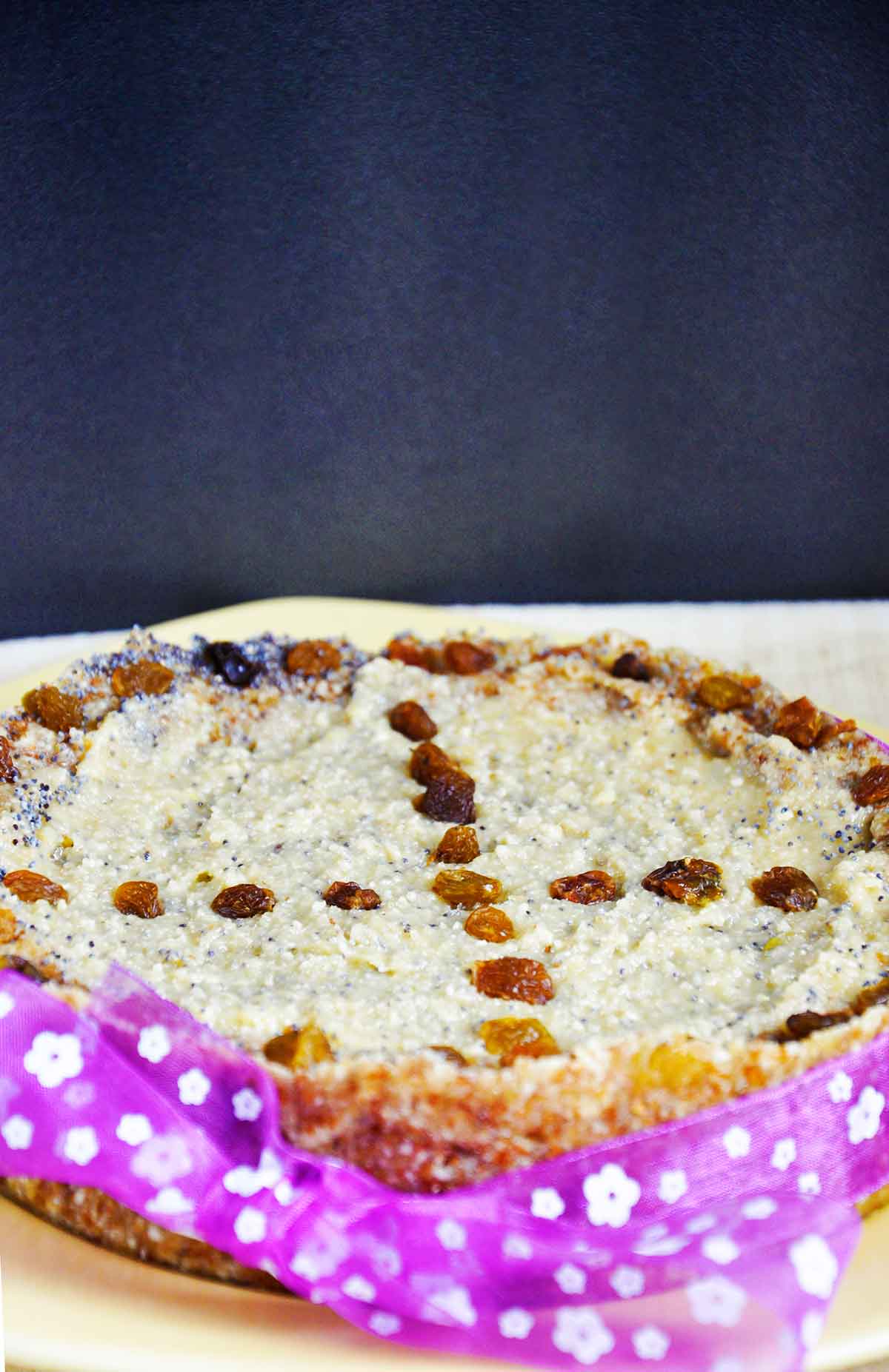
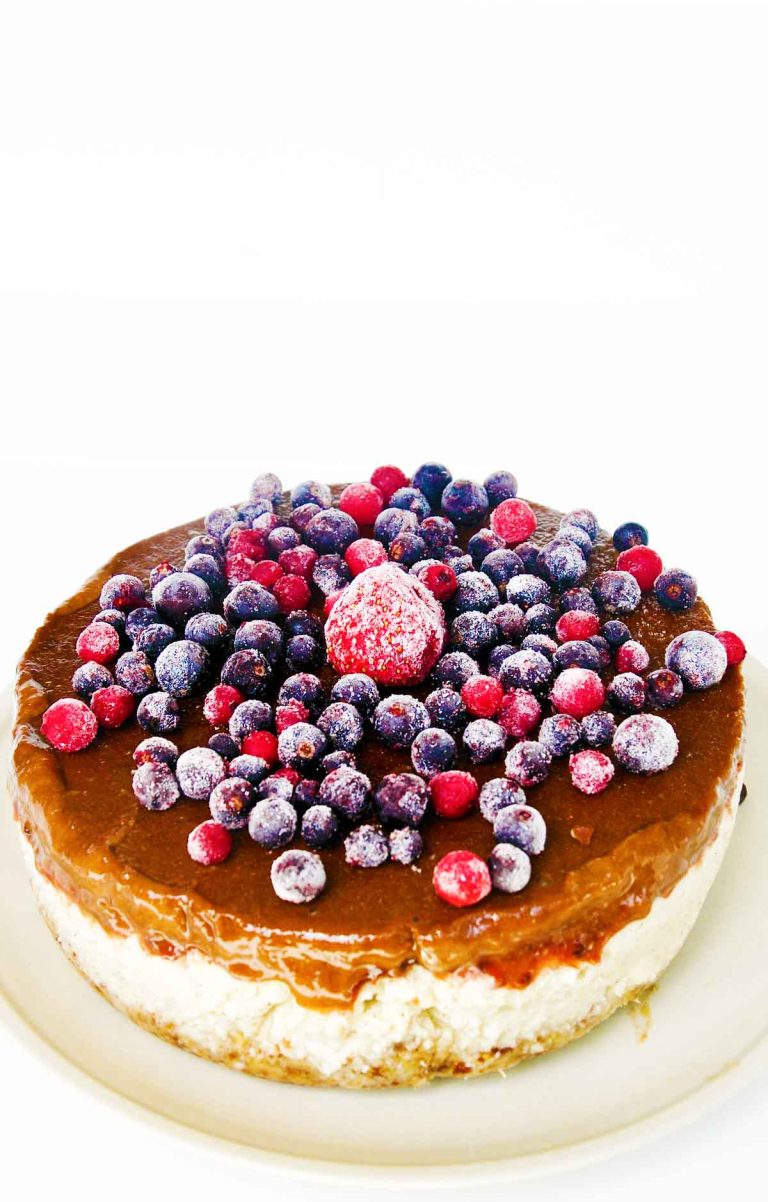
- Decorate the Easter cheesecake with some golden raisins.
- Let it cool in the fridge for at least an hour before serving.
Notes
Frequently Asked Questions
Pasca is the traditional Romanian Easter cheesecake made with sweetened cottage cheese (brânză de vaci), eggs, raisins, and vanilla in a pastry shell, traditionally decorated with a cross of dough on top. It is baked and served at Easter alongside cozonac (a sweet enriched bread). This raw vegan version replaces the dairy and eggs with cashews and coconut oil, the pastry shell with an almond-raisin pressed crust, and captures the characteristic flavours of vanilla, rum, poppy seeds, and raisins. It is not identical, but it is recognisably in the same spirit.
Either the cashews were not soaked long enough, or the blending time was too short. Soak for a full overnight in cold water for the smoothest result, or at minimum 1 hour in very warm water. Blend for at least 2 full minutes, stopping to scrape down the sides twice. A high-powered blender (Vitamix, Blendtec) gives a noticeably smoother result than a standard household blender. If the cream is still slightly grainy, blend for another minute and add a teaspoon of water to help it along.
A high-powered blender can handle both the crust and cream, though you will need to work in smaller batches for the crust. For the crust, pulse carefully rather than blending continuously so the almonds do not over-process into almond butter before the raisins are added. For the cream, a blender works better than a food processor and produces a smoother result.
A minimum of 1 hour in the fridge gives a set but fairly soft result. For clean slices and a denser, more cheesecake-like texture, refrigerate overnight. The coconut oil needs adequate chilling time to fully solidify and firm the cream. If you are making this for Easter lunch, prepare it the evening before.


Thank you for the recipe!