
Traditional Romanian Polenta (Mamaliga) Recipe
Romanian polenta, called “mamaliga” (mamaliga), is a cornmeal porridge cooked with water and salt until thick and smooth. It is one of the oldest staple foods in Romania, eaten for centuries as a substitute for bread and as a base for stews, fried egg dishes, and fermented cheese. The traditional version uses just three ingredients: yellow cornmeal, water, and salt. The ratio of cornmeal to water controls whether the final result is soft and creamy (served immediately with a spoon) or firm enough to slice and fry. Both textures have their uses in Romanian cooking.
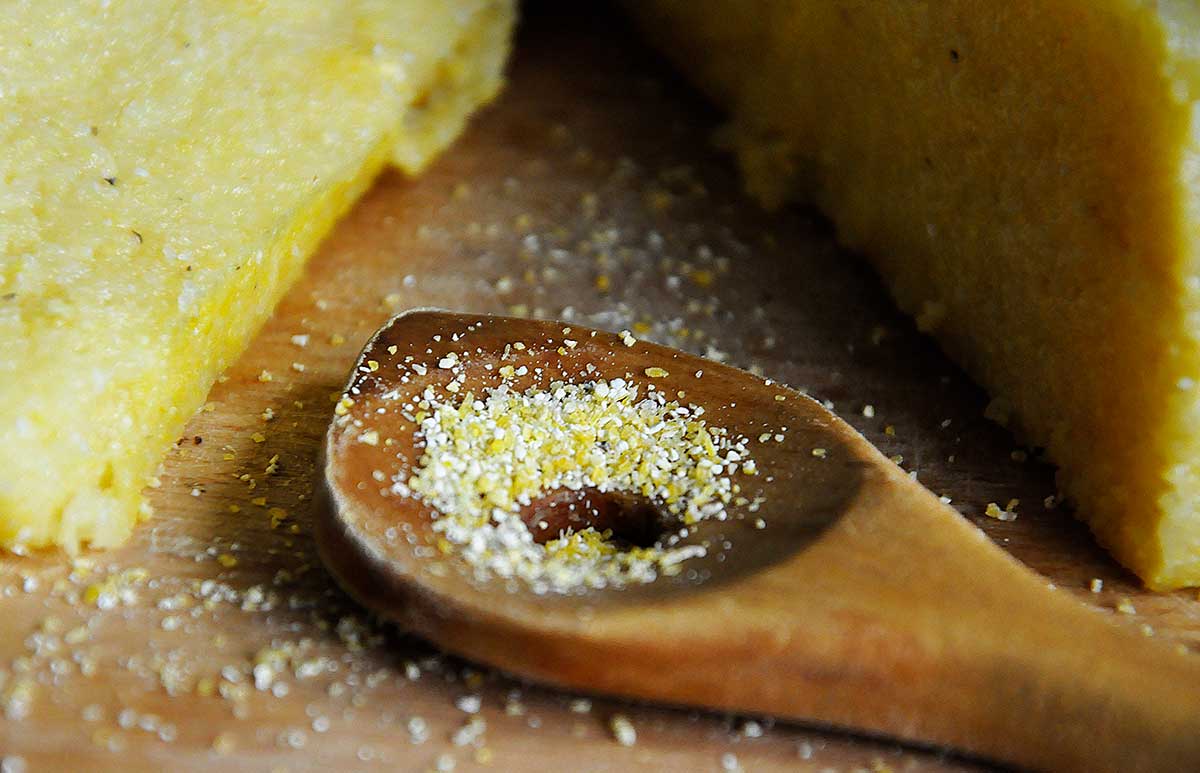
What is Romanian Polenta (Mamaliga)?
Mamaliga is the Romanian name for polenta. It is made by adding cornmeal to salted boiling water and stirring continuously until the mixture thickens and pulls away from the sides of the pot. The result is a thick, golden porridge that sets as it cools. In Romania it is eaten daily in rural areas, served alongside sour cream, cottage cheese, fried eggs, or hearty stews. It replaced bread in peasant households for centuries because cornmeal was abundant and cheap.
The texture of mamaliga depends on how much cornmeal you use relative to the water. A 1:4 ratio (one part cornmeal to four parts water) gives a creamy, spoonable polenta. A 1:3 ratio gives a firmer result that can be poured into a dish, allowed to set, sliced, and then pan-fried or grilled.
This Recipe Works If You Need
- A traditional Romanian side dish to serve with stews or sauces
- A gluten-free alternative to bread or pasta
- A quick base for creamy mushroom dishes, fried eggs, or cheese
- A firm polenta that can be sliced, pan-fried, or grilled the next day
- A filling, inexpensive dish made with pantry staples
Why You’ll Love This Recipe
- Only 3 ingredients: cornmeal, water, and salt
- Naturally vegan and gluten-free
- Ready in about 20 to 30 minutes
- Soft or firm depending on the ratio you use
- Works as a side dish, a main base, or a next-day fried polenta
- Deeply satisfying and filling
Tips for Perfect Romanian Polenta
Add cornmeal to boiling salted water, not cold water. Adding cornmeal to cold water causes it to clump at the bottom. Bring the water to a full boil first with the salt already dissolved, then pour the cornmeal in a thin, steady stream while stirring.
Stir continuously, especially at the beginning. The first 5 minutes after adding the cornmeal are critical. Stir constantly with a wooden spoon or whisk to prevent lumps from forming. Once the mixture begins to thicken, you can stir less frequently, every 2 to 3 minutes, but never leave it unattended.
Cook over medium-low heat. High heat causes the polenta to spit and splatter as bubbles burst through the thick mixture. Reduce to medium-low once it starts thickening and stir more carefully to avoid burns.
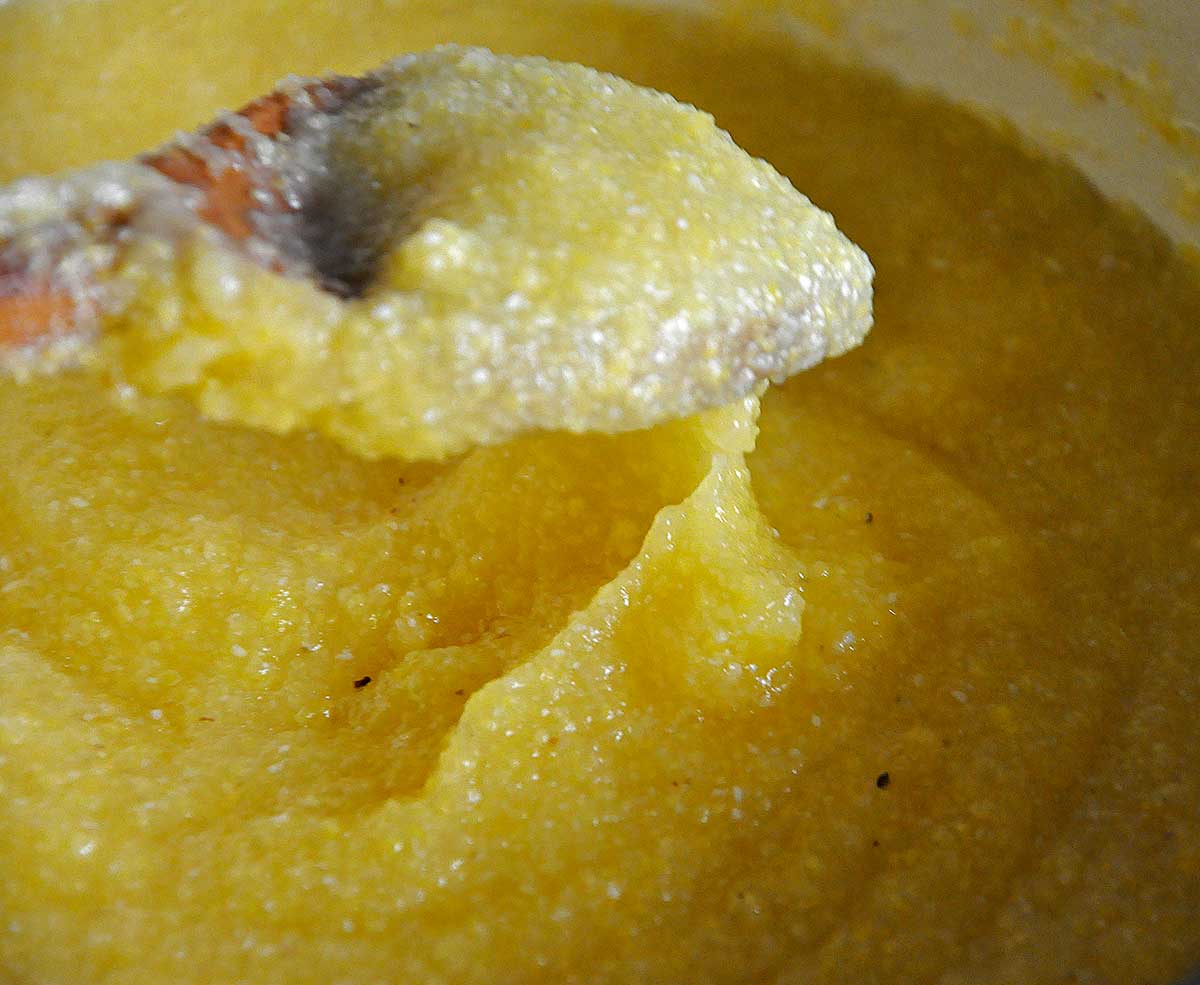
Test for doneness. Polenta is ready when it pulls away cleanly from the sides of the pot and a wooden spoon dragged through the center leaves a clean line that closes slowly. This usually takes 20 to 30 minutes depending on the grind of the cornmeal.
For creamy polenta, use 1:4 ratio. For firm polenta, use 1:3. If you want polenta that sets and can be sliced, use less water. If you want a spoonable, porridge-like texture to serve immediately, use more water.
Substitutions and Variations
Use vegetable broth instead of water. Replacing some or all of the water with vegetable broth adds depth and savory flavor to the polenta without any extra effort.
Add vegan butter or olive oil. Stir in a tablespoon of vegan butter or a drizzle of olive oil at the end of cooking for a richer, smoother texture.
Cheesy polenta. Stir in 2 to 3 tablespoons of nutritional yeast or grated vegan cheese in the last few minutes of cooking for a savory, cheesy version.
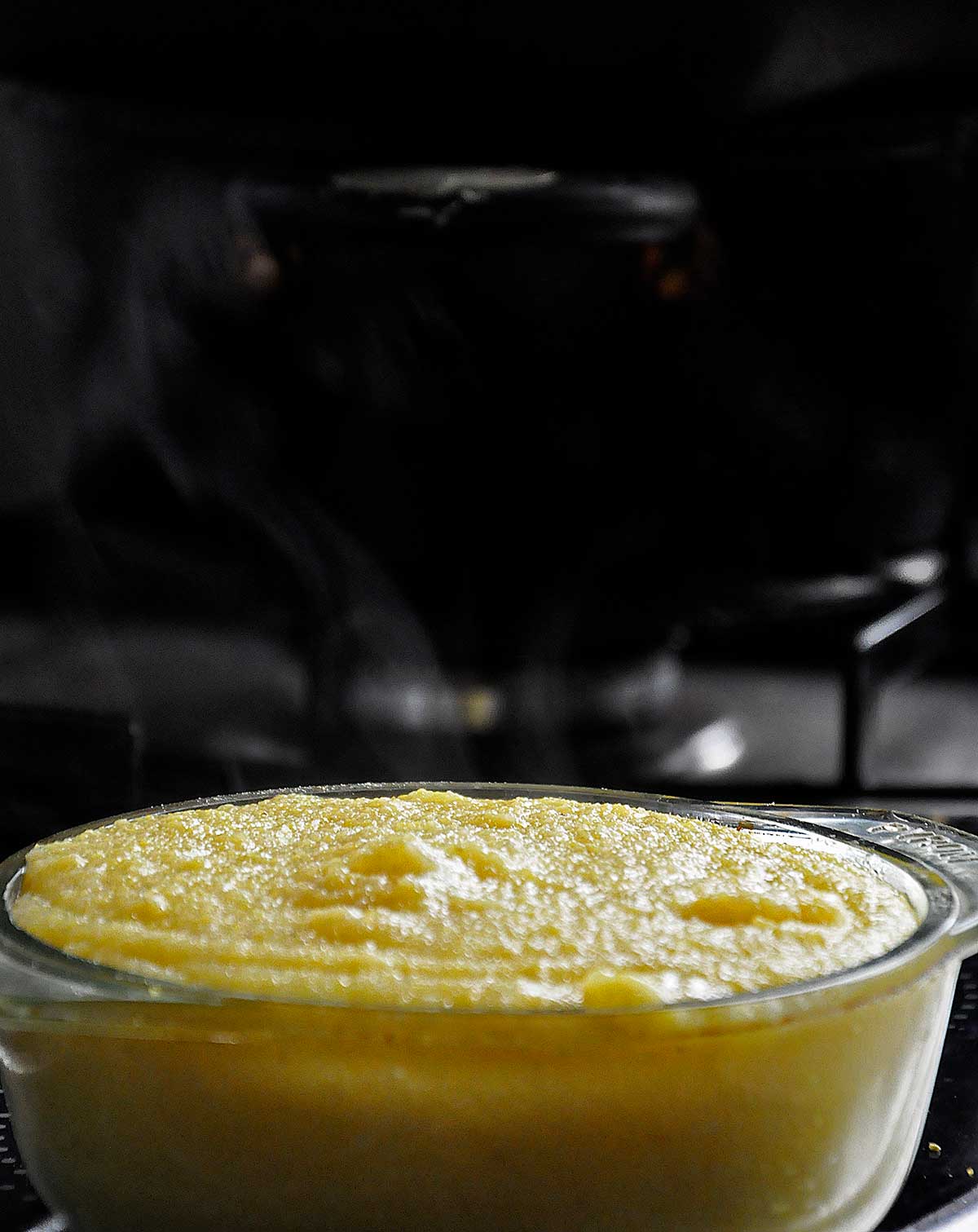
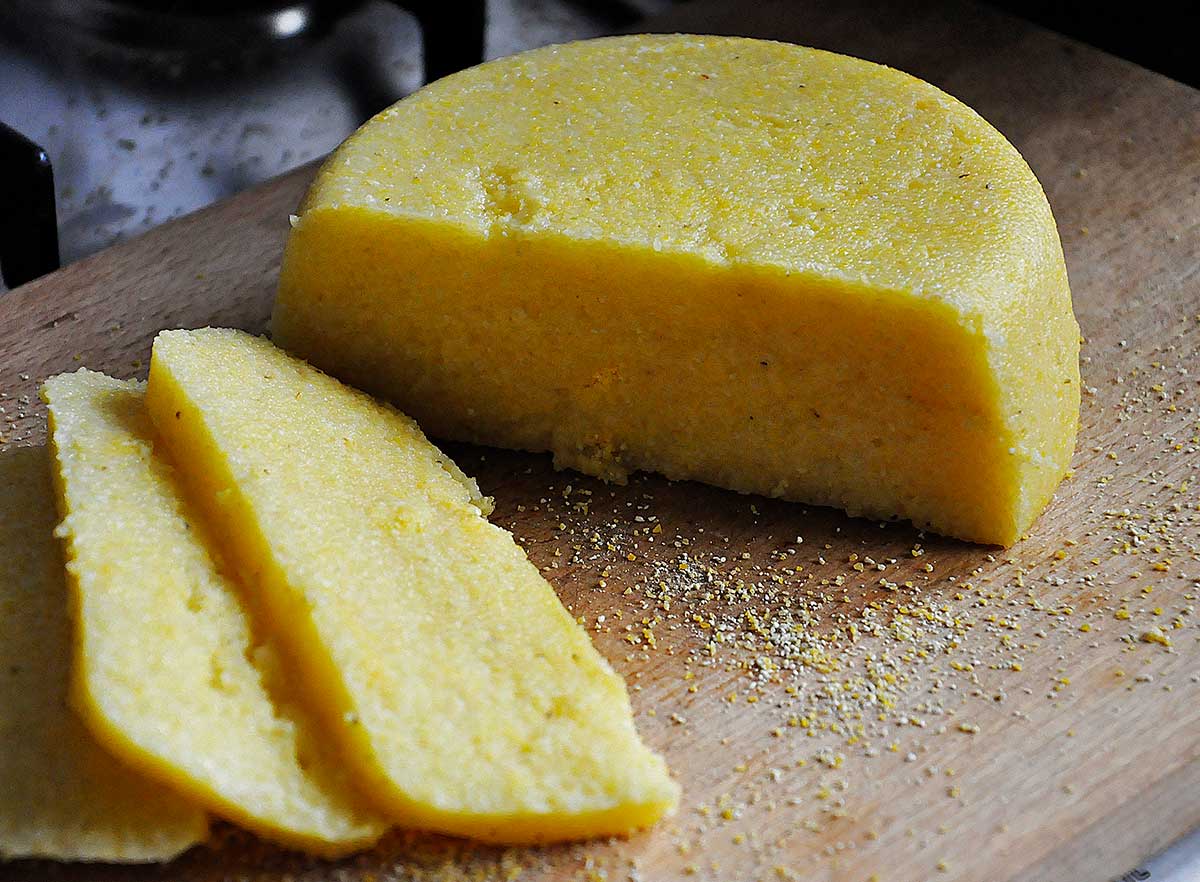
Firm polenta for frying. Pour the cooked polenta into a lightly oiled baking dish and let it cool and set completely (at least 1 hour). Slice into squares or triangles and fry in a hot pan with olive oil until golden and crispy on both sides. This fried mamaliga is a traditional Romanian snack.
What to Serve with Romanian Polenta
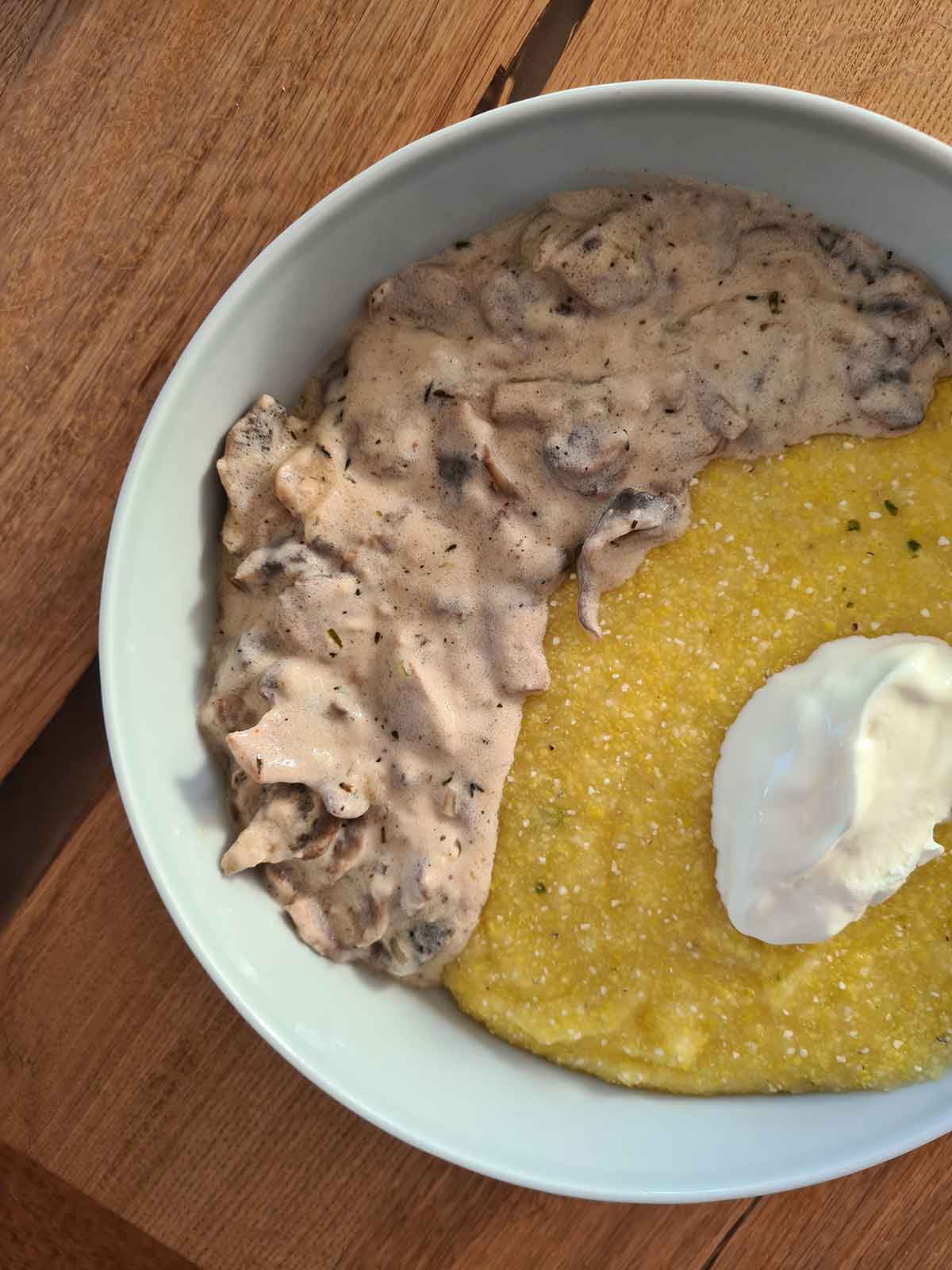
Romanian polenta is traditionally served with sour cream, cottage cheese (branza de vaci), fried eggs, and pickled vegetables. In modern vegetarian and vegan cooking, it works as a base for sauces and stews. Here are some Gourmandelle recipes that pair well with polenta:
- Mushroom Polenta
- Creamy Polenta with Tofu and Pepper Saute
- 10 Recipes with Polenta
- All polenta and mamaliga recipes on Gourmandelle
Storage and Make Ahead
Fridge: Soft cooked polenta keeps in the fridge for up to 4 days. It will firm up as it cools. Reheat with a splash of water over medium-low heat, stirring until smooth again.
Firm/sliced polenta: Pour the cooked polenta into a container, cool completely, cover, and refrigerate for up to 5 days. Slice and pan-fry or grill as needed.
Freezer: Firm polenta freezes well. Slice it, lay the slices on a baking sheet to freeze individually, then transfer to a freezer bag. Keeps for up to 3 months. Reheat from frozen in a 180°C oven for 15 minutes or in a pan.
Summarise & Save This Recipe
★ Add us as a trusted Google source
Basic Polenta Recipe | Traditional Romanian Polenta
Ingredients
- 1 L water
- 200 g cornmeal
- 1 tsp sea salt
- 25 g butter optional
Instructions
- Bring water to a boil in a large pot. Add sea salt.
- Take cornmeal by the handful and add to water slowly by sprinkling it bit by bit. Stir quickly to avoid lumps. Use a long handled wooden spoon (I used one with a hole in the middle which is more suitable for liquid consistency meals).
- Cook for 20-30 minutes, stirring constantly. Polenta will become very thick while cooking. It is done when it comes away cleanly from the sides of the pot.
- Optional – Add butter.
- Pour polenta in a round shape form and let it cool for 15 minutes.
- Cut polenta into slices and serve!
Frequently Asked Questions
Polenta and mamaliga are essentially the same dish: a cornmeal porridge cooked in salted water. The term polenta comes from Italian and mamaliga from Romanian. Both use yellow cornmeal and the same basic cooking technique. Regional traditions differ in how they serve and flavor it, but the base recipe is the same.
The key is to add the cornmeal to already-boiling salted water in a thin, steady stream while stirring continuously. If you add cornmeal all at once or to cold water, lumps form immediately. Whisking during the first 5 minutes before the mixture thickens also helps prevent lumps from setting.
Yes, the basic recipe is 100% vegan: cornmeal, water, and salt. Traditional Romanian accompaniments often include sour cream, butter, or cheese, but these can all be replaced with vegan alternatives. The polenta itself contains no animal products.
Use a 1:3 ratio of cornmeal to water (for example, 1 cup cornmeal to 3 cups water). Cook until very thick and pulling away from the sides of the pot. Pour into a lightly oiled dish or lined baking tin, smooth the top, and let it cool and set at room temperature or in the fridge for at least 1 hour before slicing.
Polenta works well as a base for creamy mushroom sauce, roasted vegetables, lentil or bean stews, tomato sauce with herbs, or a simple topping of vegan sour cream and chives. It absorbs sauces and stews and provides a neutral, filling base that complements both mild and strongly flavored toppings.


Omg – this a deffenatilly a keeper. Best polenta ever. Thanks for sharing. 💯
I want to give it 5 stars but it won’t let me rate it below.
Thank you! Don’t know why the rating system doesn’t appear. Will check it out.
This is the first time that my polenta is not full of little hard bits. It’s so creamy and yummy!
I’m so happy I gave it another try!!
Glad you liked it! 😀