
Vegan Meatloaf Recipe
This vegan meatloaf is a hearty, sliceable chickpea loaf with a sticky tomato glaze that tastes like the classic comfort food, minus any meat. It comes together in a food processor, bakes in about 40 minutes, and holds its shape beautifully for slicing, so it works as a Sunday dinner centerpiece or a make-ahead meal for the week. If you want a meat-free main that still feels rich and satisfying, this is the one to make.
Meatloaf became an icon of the American cuisine as a dish that reflects the tumultuous history of the nation. It seems to trace back to a dish called “scrapple”, introduced by German-Americans in Pennsylvania during the colonial period. Scrapple was a mixture of pork and cornmeal, sliced and pan-fried, but the well-loved all-American meatloaf only appeared officially around the 19th century, as a tribute to hearty leftover dishes such as casseroles and shepherd’s pies.
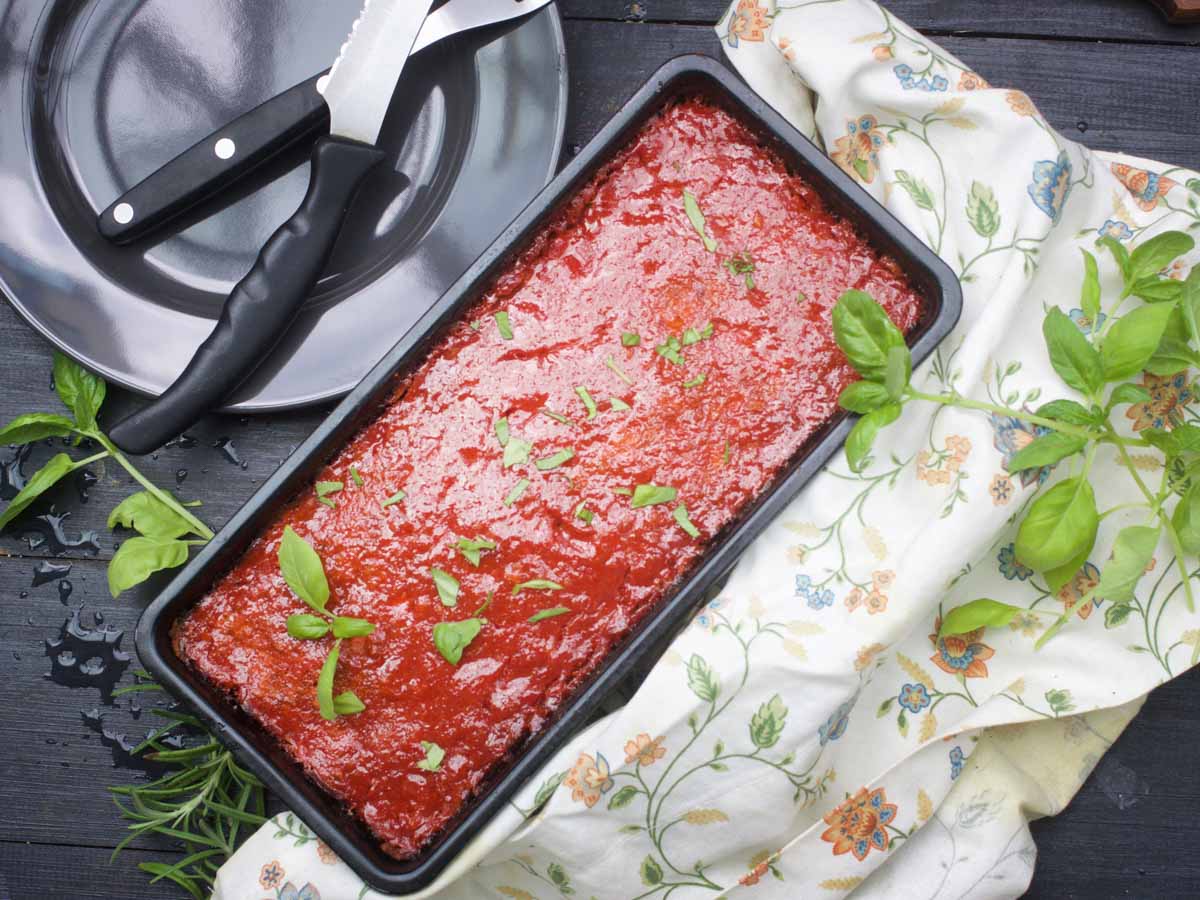
Because of that history, I wanted to create my own vegan version of this very “meaty” dish, and I’m actually impressed with the results. I used a mixture of chickpeas, bell peppers, nutritional yeast and many other vegan goodies to land on a loaf that’s extremely similar in taste and texture to the original.
What Goes Into This Chickpea Loaf
Chickpeas are the base here, and they do the heavy lifting. Three cups of drained canned chickpeas give the loaf its protein, its bite, and that satisfying density you want in a meatloaf. The trick is not to over-process them, but more on that below.
The bell peppers and onions (a mix of red and yellow peppers, plus red and white onion) bring sweetness, color, and moisture, so chop them finely so they distribute evenly and don’t leave big wet pockets. Breadcrumbs absorb moisture and give structure, while psyllium husks act as the binder that holds everything together once baked. If you would rather make a vegetarian version, you can swap the psyllium husks for one whole egg. Soy sauce, nutritional yeast, tahini, and barbecue sauce build the savory, umami-rich backbone that makes a meat-free loaf taste like the real thing, and the smoked paprika, liquid smoke, cayenne, and dried basil round out that classic barbecue-adjacent flavor.
The Tomato Glaze That Makes It
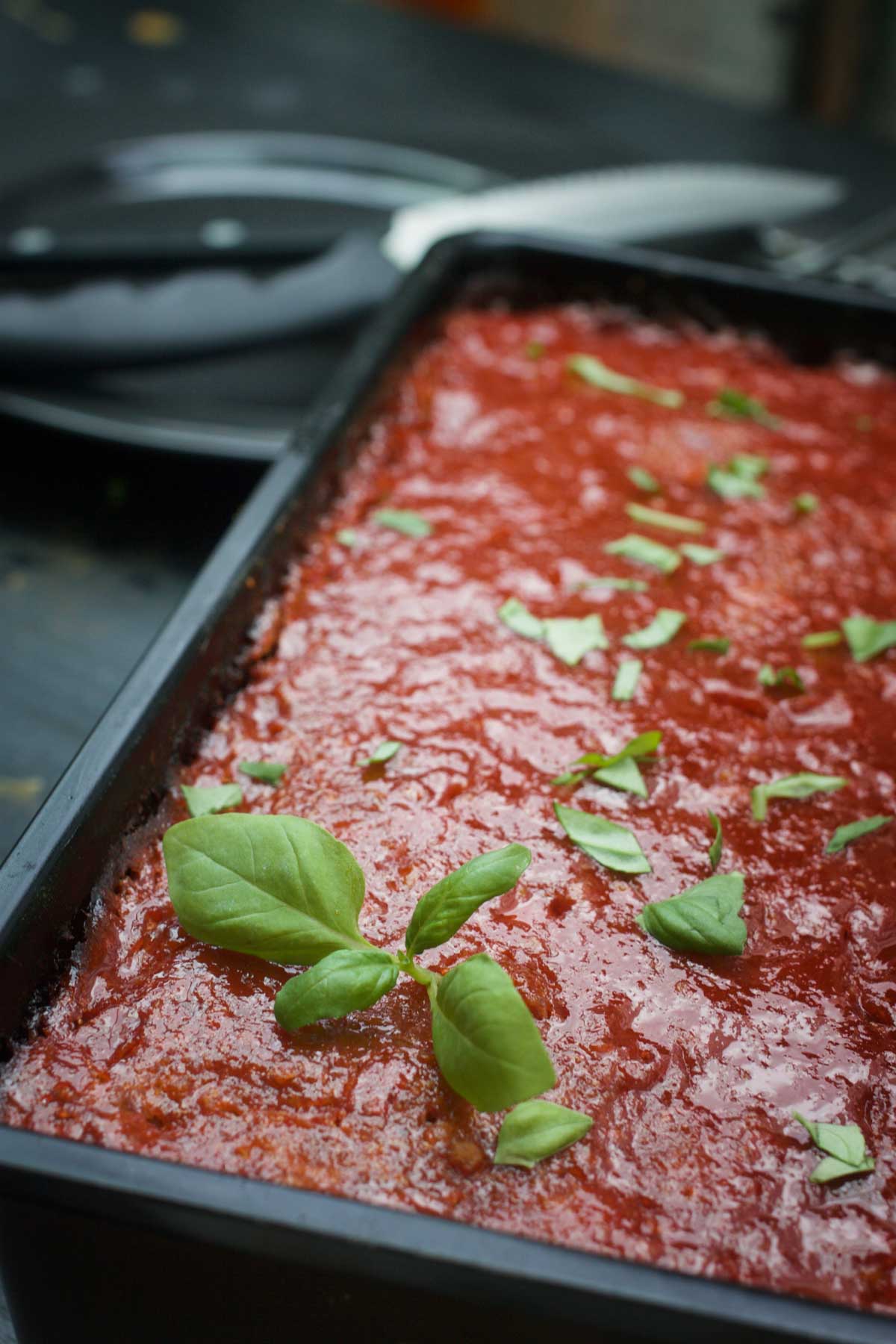
The glaze is what turns a good loaf into a great one. It’s a quick stir-together of ketchup, smoked paprika, a splash of white wine, lemon juice, brown sugar, maple syrup, and mustard. Blend it smooth and set it aside while the loaf gets a head start in the oven. Spreading it on partway through baking, rather than at the beginning, lets it caramelize into a glossy, tangy-sweet top without burning. That sticky, slightly charred crust is the signature of a proper meatloaf, and this glaze delivers it without any animal products.
Why Pulsing Matters
The single most important step is how you process the mixture. Add everything to the food processor and pulse just a few times, until the ingredients come together but the chickpeas are still partly whole. That texture is the whole point: if you blend the chickpeas into a completely smooth paste, the loaf turns dense and gluey, more like a hummus brick than a sliceable meatloaf. Leaving some chickpeas intact gives you a crumbly, tender bite that mimics the texture of real meatloaf. When in doubt, under-process rather than over-process, because you can always pulse one more time but you can’t un-blend.
Tips for the Best Vegan Meatloaf
- Grease the pan well. Brush the loaf pan generously with oil so the loaf releases cleanly once it’s baked and cooled.
- Let it rest before slicing. Meatloaf needs time to set. Pull it out, let it cool in the pan, and it will firm up so slices hold together instead of crumbling.
- Taste your mixture before baking. Since there’s no raw meat, you can safely taste and adjust the salt, smoke, or heat before it goes in the oven.
- Don’t skip the finely chopped vegetables. Large chunks of pepper or onion release too much water and can make the loaf fall apart. Small dice keeps the structure tight.
- The liquid smoke is optional but worth it if you want that deeper, grilled, “meaty” note.
What to Serve With It
Meatloaf loves a comforting side. It’s fantastic next to creamy mashed potatoes or traditional Romanian polenta, and a bright side keeps the plate from feeling heavy. Try it with oven-roasted cabbage or a simple summer salad. If you’re feeding a crowd who love this style of cooking, my vegan meatballs make a great companion dish for the same table.
Make-Ahead and Storage
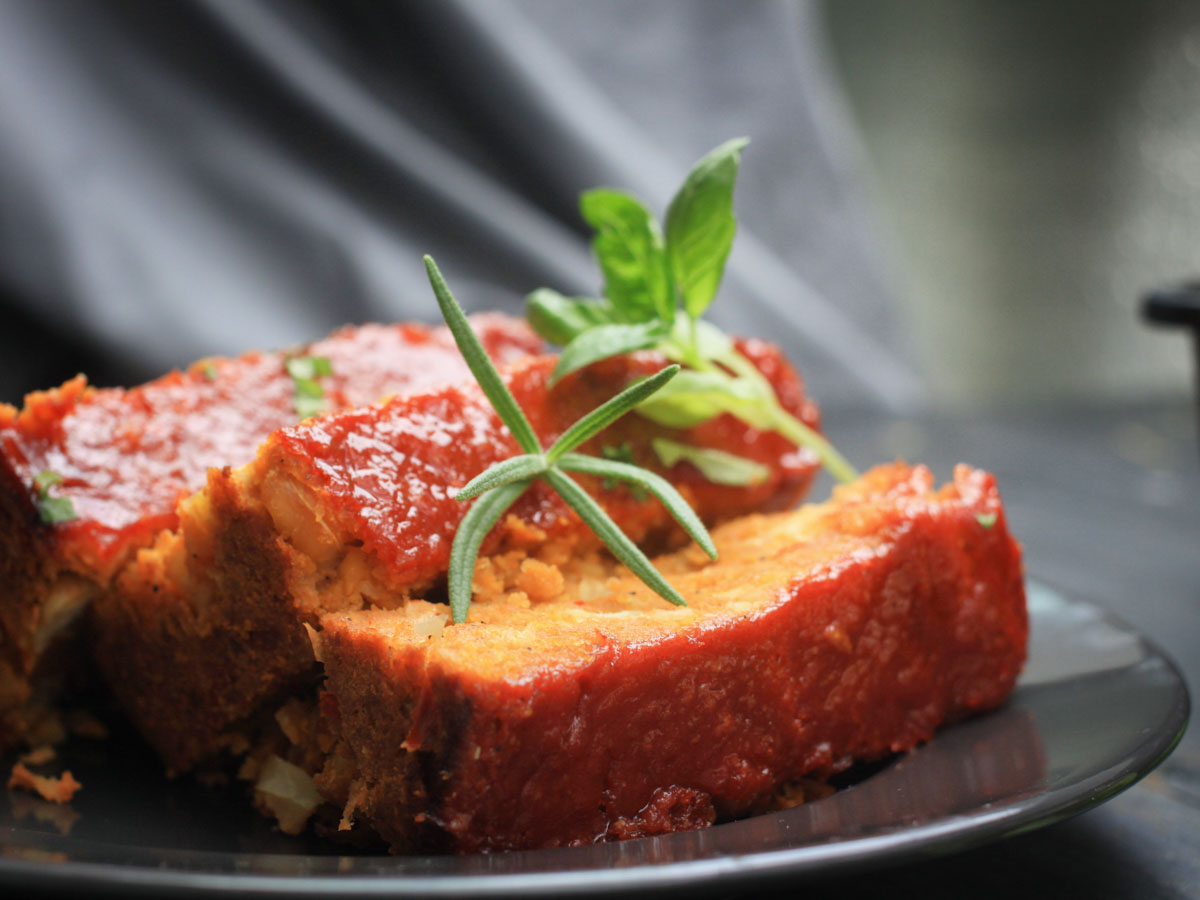
This loaf is a great make-ahead dish. You can assemble the mixture a day in advance, keep it covered in the fridge, and bake it fresh when you need it. Once baked, store leftovers in an airtight container in the refrigerator for up to 4 days. Cold slices are excellent in sandwiches the next day, and they reheat well in a low oven or a pan. For longer storage, wrap cooled slices well and freeze for up to 2 months, then thaw in the fridge before reheating. If you enjoy building a spread of plant-based classics, it pairs naturally with a batch of vegan meatballs or a bowl of vegan red lentil soup to round out the meal.
If you make this vegan meatloaf, I’d love to know how your glaze turned out and whether you went for the psyllium or the egg version. Leave a star rating and drop a comment below with any tweaks you tried!
Vegan Meatloaf
Ingredients
- 3 cups chickpeas canned, drained
- 1 red bell pepper finely chopped
- 1 yellow bell pepper finely chopped
- ½ red onion finely chopped
- ½ white onion finely chopped
- 2 tbsp soy sauce
- 3 tbsp olive oil
- 2 cloves garlic crushed
- 2 cups breadcrumbs
- 2 tbsp barbecue sauce
- 1 tbsp tahini
- 2 tbsp psyllium husks or 1 whole egg, for a vegetarian version
- 2 tbsp nutritional yeast
- 1 tsp salt
- 1 tsp black pepper
- ½ tsp liquid smoke optional
- ½ tsp smoked paprika
- ¼ tsp cayenne pepper
- 1 tsp dried basil
- fresh basil and rosemary for serving
For the glaze:
- ⅓ cup ketchup
- ½ tsp smoked paprika
- 1 tbsp white wine
- 1 tbsp lemon juice
- 1 tsp brown sugar
- 1 tsp maple syrup
- 1 tsp mustard
Instructions
- Preheat the oven to 180°C (350°F).
- Brush a loaf pan with a little oil and set it aside.
- For the glaze:
- In a small bowl, whisk all the glaze ingredients together until smooth. Set aside.
- For the loaf:
- Add all the loaf ingredients to a food processor (except the fresh basil and rosemary, which are just for serving) and pulse several times, until everything is combined but the chickpeas are not completely crushed.
- Transfer the mixture to the prepared loaf pan, pressing it down evenly, then place it in the oven.
- Bake for about 20 minutes.
- Take the meatloaf out of the oven and spread the tomato glaze evenly over the top.
- Return it to the oven and bake for 20 minutes more.
- Let it cool slightly, top with the fresh basil and rosemary, and serve.
Notes
Frequently Asked Questions
Yes, the base recipe is fully vegan. It uses psyllium husks as the binder instead of egg, and every other ingredient (chickpeas, vegetables, breadcrumbs, soy sauce, nutritional yeast, tahini, and the glaze) is plant-based. If you prefer a vegetarian version, you can swap the psyllium husks for one whole egg.
This recipe uses psyllium husks as the binder. When mixed into the loaf, psyllium absorbs moisture and gels, holding everything together so the loaf slices cleanly once baked and cooled. Breadcrumbs also help by absorbing excess moisture and adding structure.
The most common cause is over-processing the chickpeas into a smooth paste, which makes the loaf gluey and dense. Pulse just until combined so some chickpeas stay partly whole. Also chop the peppers and onions finely and let the baked loaf cool fully before slicing, since it firms up as it rests.
Yes. You can mix the loaf a day in advance and keep it covered in the fridge until you’re ready to bake. Baked leftovers keep in an airtight container in the refrigerator for up to 4 days and reheat well in a low oven or pan.
Yes. Let the baked loaf cool completely, wrap the slices well, and freeze for up to 2 months. Thaw in the refrigerator overnight before reheating in a low oven or a pan so the slices hold their shape.
Liquid smoke is optional in this recipe. If you don’t have it, the smoked paprika already provides a smoky note, and you can lean on the barbecue sauce and a touch more smoked paprika to deepen that grilled, meaty flavor.



Beautiful recipe with simple ingredients and amazing results.
Excellent every time I make it and especially good for leftover sandwiches too.
Very yummy and so much easier to make it than I thought! Yum! 🙂
Thank you! 🙂