
Roasted Stuffed Onions
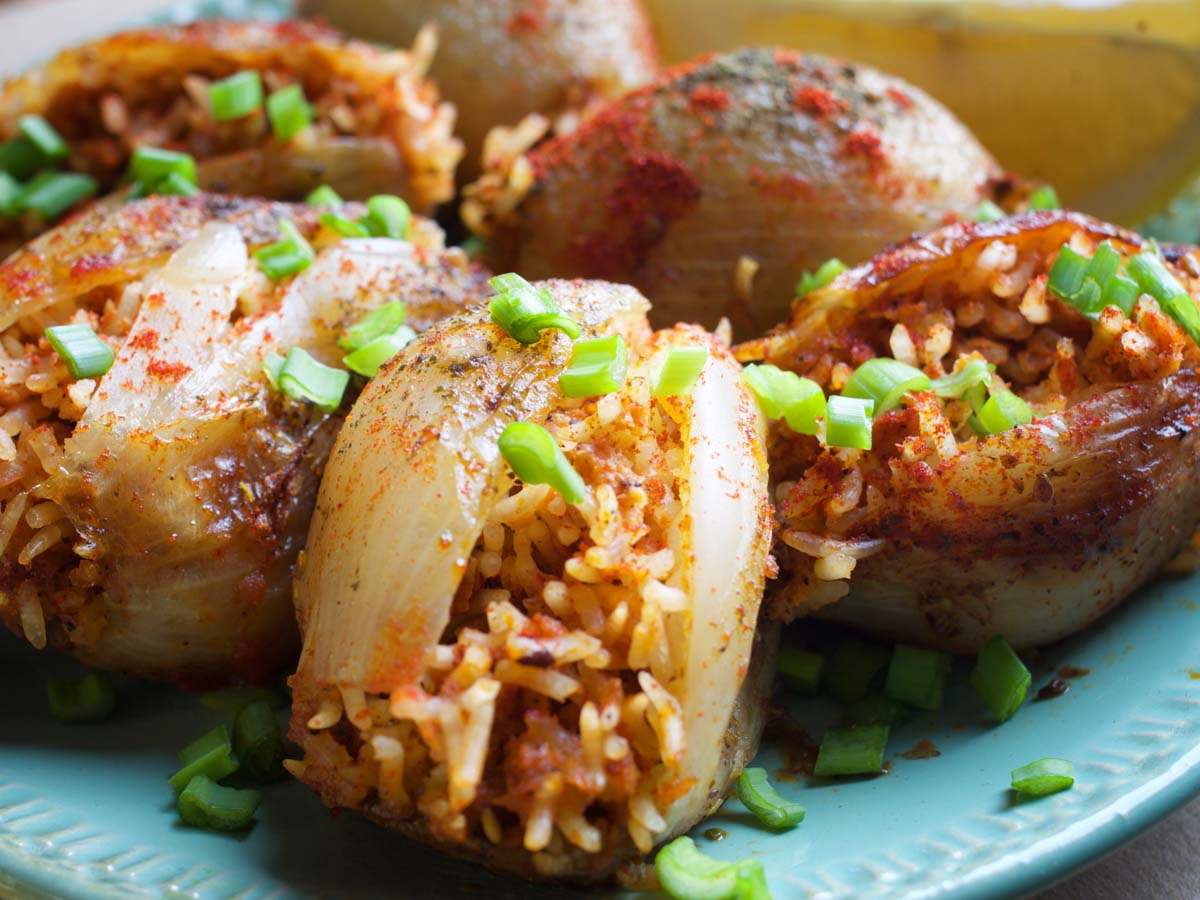
These roasted stuffed onions are a vegan take on a classic Lebanese dish: soft onion layers wrapped around a spiced filling of basmati rice and textured soy protein, simmered slowly with olive oil and a splash of vinegar or white wine. The rice expands as it cooks, the onions turn meltingly tender, and warm spices like cinnamon, allspice and cumin carry the whole thing.
I couldn’t live without onions and garlic. I simply feel that these two ingredients give flavor to any meal, and I add onions to about 95% of the savory meals I cook. So you can imagine I was pretty excited when I discovered a Lebanese stuffed onions recipe and realized the onion itself could be the wrapper instead of just the seasoning.
The original Lebanese version is made with ground meat, which I replaced with TSP granules. The texture is exactly the same as in the original recipe, and I bet you could trick a meat-eating friend with it. This is also the last recipe from my Middle Eastern Cuisine challenge, so it holds a special place for me. I have so many awesome recipes prepared for you, and I am so excited about this. I hope you are too.

This Recipe Works If You Need
- A meat-free dish that still satisfies meat eaters, thanks to the TSP granule filling that mimics the texture of ground meat.
- An impressive appetizer or snack when you want to put something a little unexpected on the table.
- A way to use onions as the star of the plate instead of a background flavor.
- A make-ahead component you can stuff in advance and finish on the stovetop later.
- A warming, spiced Middle Eastern dish to round out a mezze-style spread alongside dips and salads.
Why You’ll Love This Recipe
- It is convincingly “meaty” without any meat. The soaked TSP granules pick up the spices and tomato and give the filling a savory, satisfying bite.
- The spice blend does the heavy lifting. Cinnamon, allspice, cumin and coriander together give that distinctly warm, Middle Eastern profile with very little effort.
- Onions become silky and sweet. Boiling first, then slow simmering, mellows their sharpness completely and leaves them tender.
- It is naturally vegan and dairy-free. No special substitutions needed, just whole-food ingredients.
- It is flexible. Serve it as a snack, an appetizer, or a main with a side of veggies, mashed potatoes or a veg yogurt sauce on top.

Ingredient Notes
Onions are the wrapper here, so size and shape matter more than usual. Reach for large, round onions rather than small or flat ones, because you want layers wide enough to roll around a tablespoon of filling. Look for firm bulbs with tight, papery skins and no soft spots or green sprouts at the top. A single lateral cut from top to bottom is what lets the boiled layers slip apart cleanly, so don’t skip it.
Basmati rice brings a fragrant, separate-grain quality that suits the filling. Soak it as the recipe says: this rinses off surface starch and gives the grains a head start so they cook evenly inside the onion. Keep in mind the rice is added uncooked and will roughly double in size as it simmers, which is exactly why you wrap the onion loosely around the filling.
Textured soy protein (TSP) granules are the meat stand-in and the reason the texture reads so close to the original. Buy the fine granule form rather than large chunks for this dish, and soak it before mixing so it is already rehydrated and ready to absorb the tomato and spices. Drained, plump granules should feel soft and a little springy, not crunchy.
Tomato paste and a fresh peeled tomato work together: the paste gives concentrated depth and color, while the cubed fresh tomato adds moisture that helps the rice cook through. Peel the tomato so you don’t get tough skin flecks in a smooth filling.
The warm spices are the soul of the dish: cinnamon, allspice, cumin and coriander, all ground. If you have whole cumin and coriander, toast and grind them fresh for a noticeably bigger aroma. Buy spices in small amounts and replace ground ones every six months or so, because stale spices are the most common reason a “Middle Eastern” dish ends up tasting flat.
Vinegar or white wine goes into the pan, not the filling, deglazing and adding a gentle tang that balances the sweetness of the slow-cooked onions. Olive oil, fresh parsley and spring onion round things out with richness and a fresh, green lift.
Tips
- Boil the onions only until the layers soften enough to separate, around 10 minutes. You want them pliable, not falling apart. If they overcook now, they tear when you try to roll them.
- Wrap loosely, not tightly. The rice and TSP both swell as they cook, so a packed roll can split open. Aim for about one tablespoon of filling per layer with a little room to expand.
- Start the onions cut side down in the hot oil and let them get a couple of minutes of color before adding the liquid. That quick sear seals the seam and adds flavor.
- Keep the heat low once the lid is on. You know they are ready when the onions are completely tender and a grain of rice tastes soft all the way through, with no chalky center.
- Flip the onions after the first 10 minutes so both sides cook evenly and nothing scorches on the bottom of the pan.
Substitutions and Variations
- No TSP on hand? Cooked brown or green lentils make a hearty, whole-food swap that keeps the filling vegan and adds a similar bite.
- Swap basmati for short-grain or another long-grain rice. Just remember the soaking step and the loose wrapping still apply, since any rice will expand.
- Use white wine in place of vinegar for a softer, rounder acidity, or stick with vinegar for a brighter tang and to keep it alcohol-free.
- Lean into the Middle Eastern angle by serving with a veg yogurt sauce on top, or add a pinch of chili or a little chopped mint to the filling for extra freshness and heat.

Storage and Make Ahead
These keep well, which makes them handy for entertaining. Store cooked stuffed onions in an airtight container in the fridge for up to 3 to 4 days, and reheat gently in a covered pan with a splash of water or in the microwave so they stay moist. To get ahead, you can stuff the onions a day in advance and keep the filled rolls covered in the fridge, then simmer them fresh when you are ready to serve. They also freeze well once cooked: cool completely, freeze in a single layer, then thaw in the fridge before reheating.
If you love this kind of cooking, this dish was part of my Middle Eastern Cuisine series, so there is plenty more to explore. For another vegetable-as-wrapper idea, try my vegetarian mushroom dolmas, and if you want a whole spread, the stuffed vegetable recipes collection is a great place to start.

Roasted Stuffed Onions
Ingredients
- 3 onions
- 1 cup basmati rice
- 2 Tbsp tomato paste
- 1 ½ cup textured soy protein granules soaked
- 1 tomato peeled and cubed
- 2 Tbsp olive oil
- 1 Tbsp parsley chopped
- 1 Tbsp spring onion chopped
- 1 tsp cinnamon ground
- 1 tsp allspice ground
- 1 tsp cumin ground
- 1 tsp coriander ground
- 3 Tbsp vinegar or white wine
- 1 ½ cups water hot
- salt and pepper to taste
Instructions
- Soak the rice in a bowl of water.
- Fill a pot with water and bring it to a boil.
- Cut off the top and bottom of each onion. Then make a single lateral cut on one side of each onion, running from top to bottom all the way to the center. This lets the onion layers separate as they boil.
- Add the onions to the boiling water and boil for about 10 minutes, until they soften and the layers loosen.
- Drain the rice and transfer it to a bowl. Add all the other ingredients except the onions, vinegar/wine, water and olive oil, then mix until well combined.
- Once the onions are cooked, drain them and let them cool enough to handle. Separate the layers and fill each one with about one tablespoon of stuffing. Wrap the onion layer snugly around the filling, leaving a little room since the rice will expand as it cooks.
- Heat the olive oil in a large pan. Add the stuffed onions cut side down and cook for 2-3 minutes. Pour in the vinegar/wine and 1 ½ cups of hot water, cover with a lid, and cook on low for 20-30 minutes, flipping the onions after the first 10 minutes.
Frequently Asked Questions
On its own TSP is fairly neutral, which is why it works so well here. Once soaked and mixed with tomato paste, fresh tomato and warm spices, it takes on a savory, slightly meaty flavor and a texture close to ground meat. In this recipe it stands in for the ground meat used in the traditional Lebanese version.
Boiling for about 10 minutes softens the onion so the layers separate cleanly and become pliable enough to roll around the filling. Raw onion layers are stiff and crack when you try to fold them. The brief boil also mellows the onion’s sharpness so the finished dish tastes sweet and tender.
Yes. This version is fully vegan and dairy-free. The traditional Lebanese recipe uses ground meat, but here it is replaced with textured soy protein granules, and the rest of the ingredients (rice, tomato, olive oil, herbs and spices) are all plant based.
Yes. You can prepare the filling and stuff the onion layers up to a day in advance, then keep the rolls covered in the fridge and simmer them fresh when you need them. Already-cooked stuffed onions also keep for 3 to 4 days refrigerated and reheat well in a covered pan.
They are versatile. Enjoy them as a snack or appetizer, or serve them as a main with a side of veggies or mashed potatoes. A veg yogurt sauce spooned on top is a great Middle Eastern style finish, and they fit naturally into a mezze spread with dips and salads.
Choose large, round onions with tight, papery skins and no soft spots, since you need layers wide enough to wrap around a tablespoon of filling. After cutting off the top and bottom, make one lateral cut from top to bottom so the layers slip apart easily once boiled.

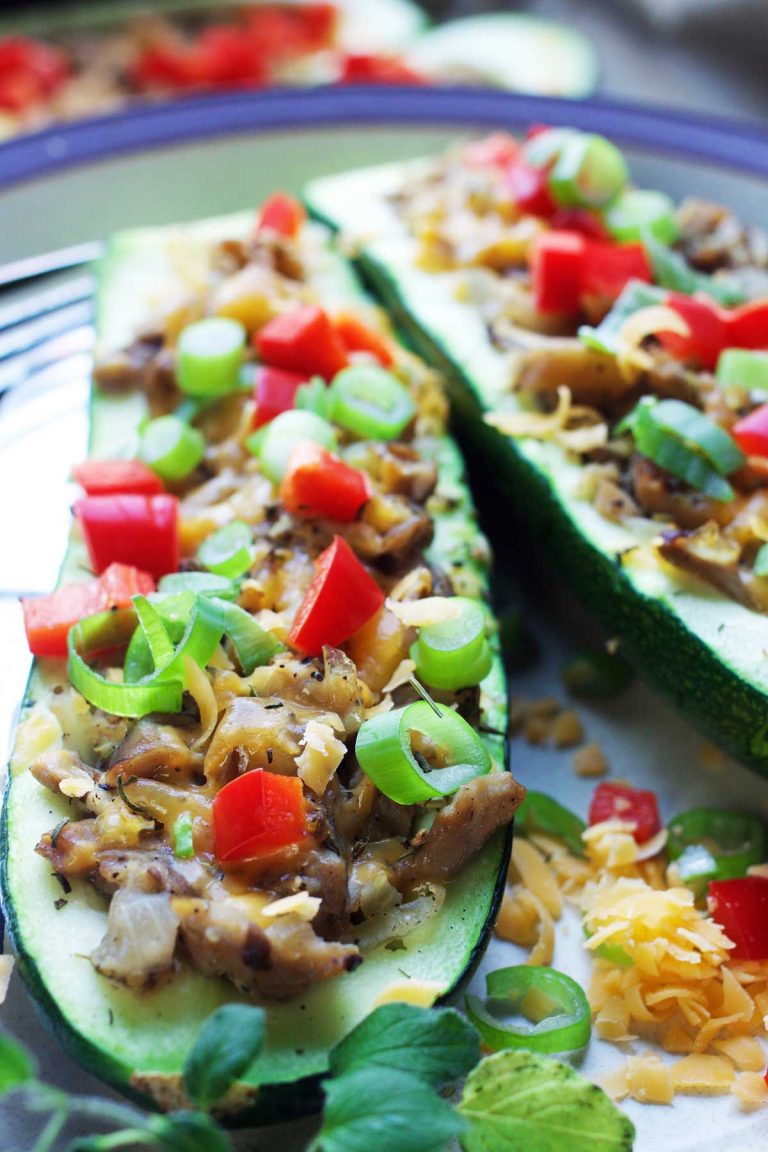



I love onions and this sounded like a great recipe to try! Made a gravy sauce for them and served them with a side of fluffy mashed potatoes. They were a hit!
Awesome idea serving these with gravy and potatoes!