
Manakish Zaatar
Manakish Zaatar is a Middle Eastern flatbread topped with a fragrant blend of zaatar spice mixed into olive oil, then baked until the edges brown. Think of it as the Levantine cousin of pizza: a soft yeasted dough spread with sumac, thyme, oregano, toasted sesame and good oil. It works as breakfast, a snack, lunch or dinner.
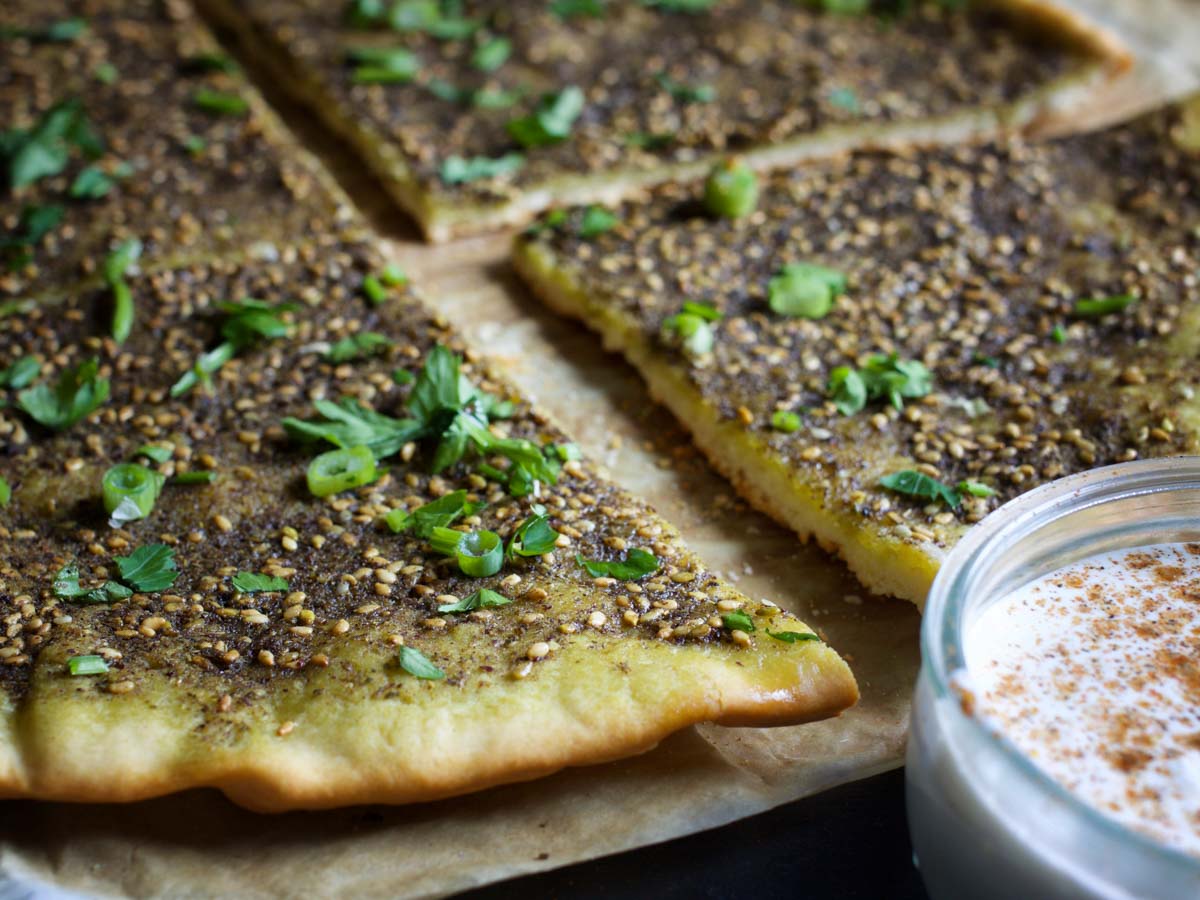
Personally, I think Middle Eastern cuisine is the best in the world, and the month I spent cooking my way through it was an incredible culinary journey for me. While researching which recipes are the most popular, I discovered Manakish Zaatar, a flavorful spiced pita bread that is more or less similar to the pizzas we all enjoy. The version I made uses zaatar, a unique spice blend I personally love, and once you smell that toasted-sesame-and-thyme aroma hitting the hot oven, you understand why this bread shows up on breakfast tables across the region.
I made my dough with regular wheat flour, but it adapts beautifully if you need it to. If you are gluten intolerant, you can easily swap in a gluten-free flour mix, and I will share exactly which one I reach for further down. This is one of those recipes I keep coming back to because it asks for pantry spices and a bit of patience, nothing more.
This Recipe Works If You Need
- A warm, savory breakfast or brunch that feels special but uses only pantry staples.
- A pizza alternative for evenings when you want something doughy but lighter and herb-forward.
- A make-ahead bread you can shape, bake and reheat across a few busy days.
- A crowd-pleasing mezze or party platter centerpiece to tear and share.
- A naturally dairy-free, plant-based bake that happens to be vegan without any substitutions.
Why You’ll Love This Recipe
- Big flavor from the spice rack. Sumac, thyme, oregano and toasted sesame deliver a tangy, herbal, nutty hit with no fancy ingredients.
- Forgiving dough. A simple yeasted dough that rises in an hour and is hard to overwork, so beginners get great results.
- One bowl of zaatar, endless uses. You make the spice-and-oil mix once and it doubles as a dip, dressing or toast topping.
- Naturally vegan. Olive oil instead of butter, no eggs, no dairy in the dough itself.
- Fast bake. Each flatbread cooks in about 10 minutes, so the active stovetop-free time is short.
- Endlessly adaptable. Serve plain, or load it with toppings like vegan yogurt, parsley and olives.
Ingredient Notes
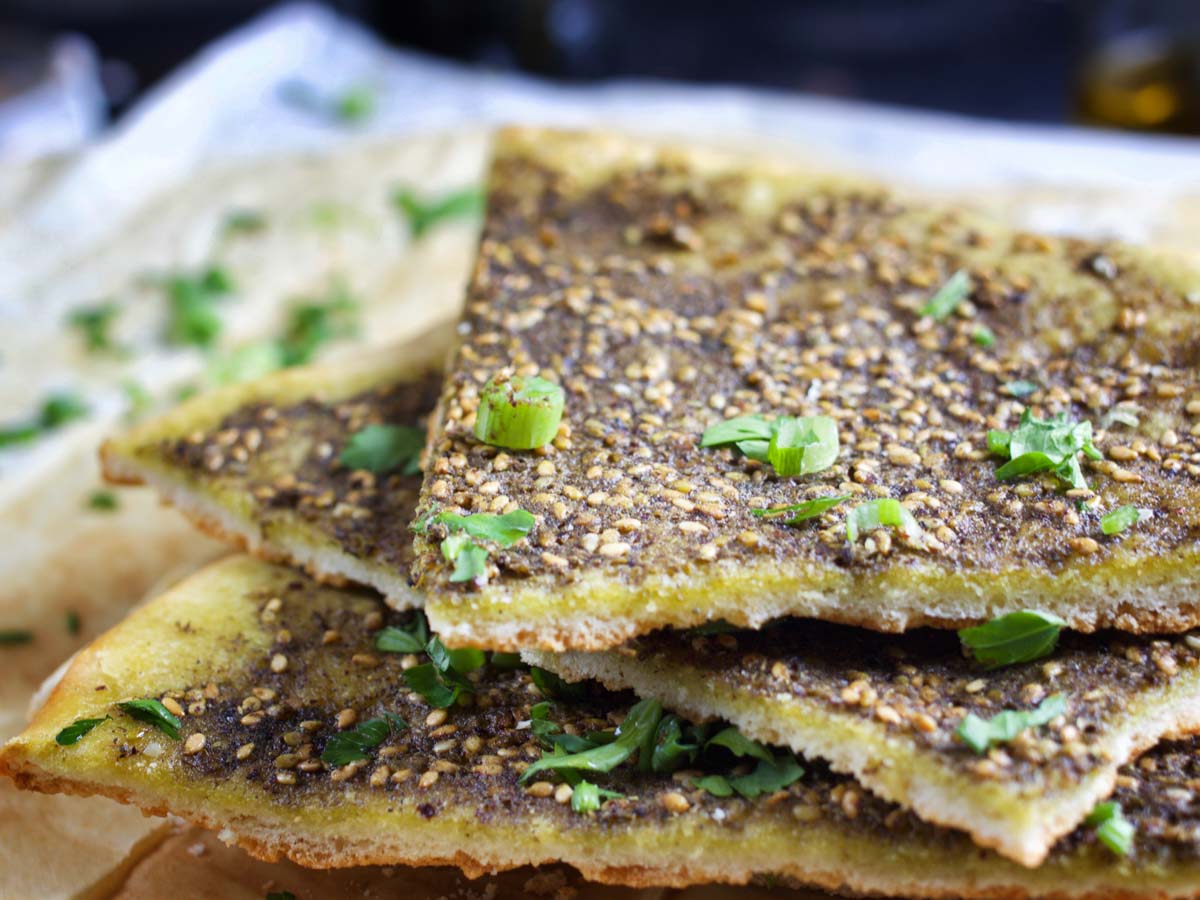
Sumac is the backbone of zaatar and the ingredient most people skip. It brings a bright, lemony tartness that balances the resinous herbs. Buy it from a Middle Eastern grocer or a shop with high turnover: good sumac is a deep brick-red, not brown and dusty. If it smells faintly sour rather than musty, it is fresh.
Thyme and oregano form the herbal core. I use dried here because the moisture in fresh leaves would loosen the spice paste and burn faster in a hot oven. Crush the dried leaves between your fingers before mixing, which wakes up the volatile oils and you will smell them release.
Toasted sesame seeds add the nutty depth that makes zaatar taste finished rather than just herby. If your seeds are raw, toast them dry in a pan over medium heat, shaking constantly, until they turn golden and smell like popcorn. Pull them off the heat the moment the color shifts, because they go from toasted to bitter in seconds.
Extra-virgin olive oil does double duty: half a cup binds the zaatar into a spreadable paste, and two tablespoons enriches the dough. This is a place where quality shows, so use a fruity oil you would happily dip bread into rather than a flat refined one.
Active dry yeast is what gives the bread its soft chew. Proof it first in lukewarm water with the teaspoon of sugar. If it does not foam within a few minutes, the yeast is dead or the water was too hot, and you should start over before committing your flour.
All-purpose flour gives reliable structure and a tender crumb. I made this manakish with regular wheat flour, but if you are gluten intolerant you can replace it with a gluten-free mix. I recommend the Schar flour mix, either Mix B or MixIt, which I have tested numerous times and even used for gluten-free flatbreads.
Tips
- Check your water temperature. Lukewarm means it should feel like bathwater, not hot. Water that is too hot kills the yeast, and the most common reason manakish dough fails to rise is overheated water at the proofing stage.
- Knead the full 10 minutes. The dough is ready when it turns smooth and springs back slowly when you press it. Under-kneaded dough tears when you roll it and bakes up dense.
- Leave a border when you spread the zaatar. Keeping the margins clear lets the edges puff and brown, giving you that pizza-like crust instead of a soggy, oil-soaked rim.
- Watch the edges, not the clock. Ten minutes is a guide, but ovens vary. Pull the flatbreads when the rims start to brown and the surface looks set, since the oil can darken quickly past that point.
- Spread generously but not soggily. One to two tablespoons of zaatar per circle is enough; pile on too much oil and the center will steam rather than crisp.
Substitutions and Variations
- Gluten-free: Swap the all-purpose flour for a gluten-free mix. I use the Schar Mix B or MixIt, which hold together well in flatbread dough.
- Buy versus build the zaatar: A good ready-made zaatar blend works in a pinch, but mixing your own from sumac, thyme, oregano and sesame lets you control the tartness and freshness.
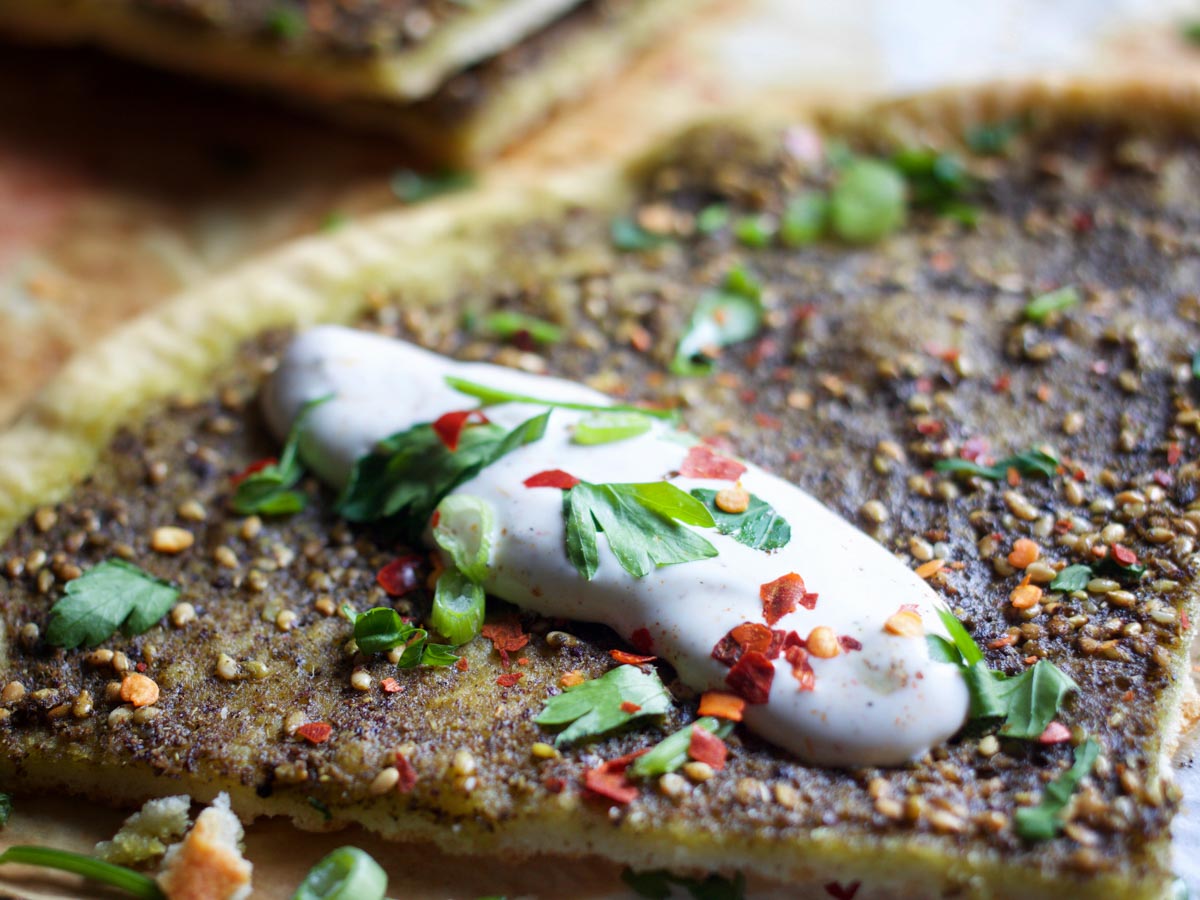
- Topping ideas: Serve with vegan yogurt and chopped parsley on top. Sliced green olives are also a great addition and add a briny contrast to the herby oil.
- Make it a meal: Fold a baked manakish around fresh tomatoes, cucumber and mint for a quick handheld lunch, or serve alongside a mezze spread.
Storage and Make Ahead
Manakish is best the day it is baked, while the edges are still crisp. To store, let the flatbreads cool completely, then keep them in an airtight container at room temperature for up to two days or in the fridge for up to four. Reheat in a hot oven or a dry pan for a few minutes to bring back the crust; the microwave will make them go soft. You can also freeze baked manakish, wrapped well, for up to two months and reheat straight from frozen.
For make-ahead, the zaatar-and-oil mix keeps for weeks in a sealed jar, so I often batch it. The dough can be made the night before and left to rise slowly in the fridge, then brought back to room temperature before shaping. If you are baking gluten-free, my gluten-free flatbreads with sesame use a similar approach, and the gluten-free diet plan guide is worth a read if you cook this way often. For more recipes in this style, browse the Middle Eastern cuisine collection.
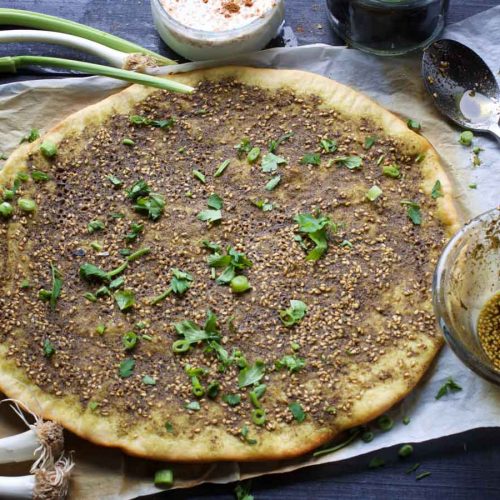
Manakish Zaatar
Ingredients
Zaatar mix:
- 2 Tablespoons sumac ground
- 3 Tablespoons thyme dried
- 3 Tablespoons oregano dried
- 4 Tablespoons sesame seeds toasted
- 1 teaspoon sea salt
- ½ cup extra-virgin olive oil
For the pita bread:
- 1 cup lukewarm water
- 1 teaspoon sugar
- 2 ½ teaspoons active dry yeast
- 3 cups all-purpose flour plus more for dusting (or use gluten-free flour if gluten intolerant)
- 1 teaspoon sea salt
- 2 Tablespoons extra-virgin olive oil plus more for greasing
Instructions
- In a medium bowl, mix all the za’atar ingredients and set aside.
- Combine the water, sugar, and yeast and set aside. It will start to foam.
- Combine the flour and salt in a large bowl. Add the olive oil and mix with your hands. Once the yeast mixture has foamed, add it in and mix into a soft dough.
- Place the dough onto a floured surface and knead for 10 minutes.
- Grease a bowl and place the dough in it. Cover the bowl with plastic wrap and let the dough rise in a warm place for 1 hour. It will double in size.
- Once the dough is ready, place it on a floured surface again. Knead it for 2-3 more minutes.
- Divide the dough into 6-8 balls.
- Roll each dough ball into a circle.
- Preheat the oven to 200C/400F.
- Spread 1-2 tablespoons of za’atar over each flattened dough circle, leaving a little space around the margins.
- Repeat the process and place each spiced pita on an oven tray lined with parchment paper.
- Bake until the edges start to brown, about 10 minutes.
- Serve with vegan yogurt and chopped parsley on top. Sliced green olives also make a great topping!
Notes
Frequently Asked Questions
Manakish Zaatar is a Middle Eastern flatbread topped with zaatar, a spice blend of sumac, thyme, oregano and toasted sesame seeds mixed into olive oil. The dough is yeasted and baked until the edges brown, giving a result that is often compared to a herb-spiced pizza. It is eaten across the Levant for breakfast, as a snack, or as part of a larger meal.
Yes. This version is naturally vegan. The dough is made with flour, water, yeast, salt and olive oil, and the zaatar topping is just spices, sesame and olive oil, so there is no dairy, egg or honey. It is finished with vegan yogurt and parsley, keeping the whole dish plant-based.
Zaatar is tangy, herbal and nutty all at once. The sumac brings a bright, lemony tartness, the thyme and oregano give a savory, slightly resinous herb flavor, and the toasted sesame seeds add a warm, nutty depth. Mixed with olive oil and baked onto bread, it tastes savory and aromatic rather than spicy-hot.
Yes. Replace the all-purpose flour with a gluten-free flour mix. I recommend the Schar Mix B or MixIt blends, which I have tested numerous times for flatbreads. The rest of the recipe, including the zaatar topping, is already gluten-free, so only the flour needs swapping.
The most common cause is water that was too hot, which kills the yeast, or yeast that is past its date. Combine the yeast with lukewarm water and a teaspoon of sugar first and wait for it to foam before adding it to the flour. If it does not foam within a few minutes, start over with fresh yeast and cooler water.
Serve it warm, straight from the oven while the edges are still crisp. It is traditional to top it with vegan yogurt and chopped parsley, and sliced green olives make an excellent addition. You can eat it as a breakfast or snack on its own, or fold it around fresh vegetables for a quick handheld lunch.


This was so good! Served it with your hummus recipe. Perfection! Thank you so much!
Yay! Glad you liked it!