What Is Tahini? Types, Nutrition, Storage and How to Use It
Tahini is a paste made from ground sesame seeds, usually hulled and lightly roasted, and nothing else except sometimes a little salt. It tastes nutty and slightly bitter, and it’s what makes hummus creamy. One tablespoon has about 90 calories, and most of its fat is unsaturated. Below you’ll find what tahini is made of, the different types, what it tastes like, its nutrition, how to store it, whether it goes bad and how to use the rest of the jar.
Tahini shows up in more than 30 recipes on this blog, from my classic hummus to mutabal and tahini cookies. In hummus I usually add 2 to 4 tablespoons, and in the sauce for my falafel wraps, 6. My pantry always has a jar of Lebanese tahini (Darinne) and one of black tahini. I wrote this guide for anyone who bought a jar for one recipe and is now staring at it, wondering what else it’s good for.
Tahini at a glance
- What it is: finely ground sesame seeds; the name comes from the Arabic verb “to grind”.
- Types: hulled (light and mild), unhulled (darker, more bitter), black (from black sesame), raw (from unroasted seeds).
- One tablespoon (15 g): about 90 calories, 8 g fat, 2.5 to 3.5 g protein, about 1.5 g fiber.
- Oil on top: completely normal; stir well before using.
- Storage: tightly closed, in a cool pantry or the fridge, always with a dry spoon.
Table of Contents
- What Is Tahini Made Of?
- Types of Tahini
- What Does Tahini Taste Like?
- Tahini Nutrition Facts
- Is Tahini Good for You?
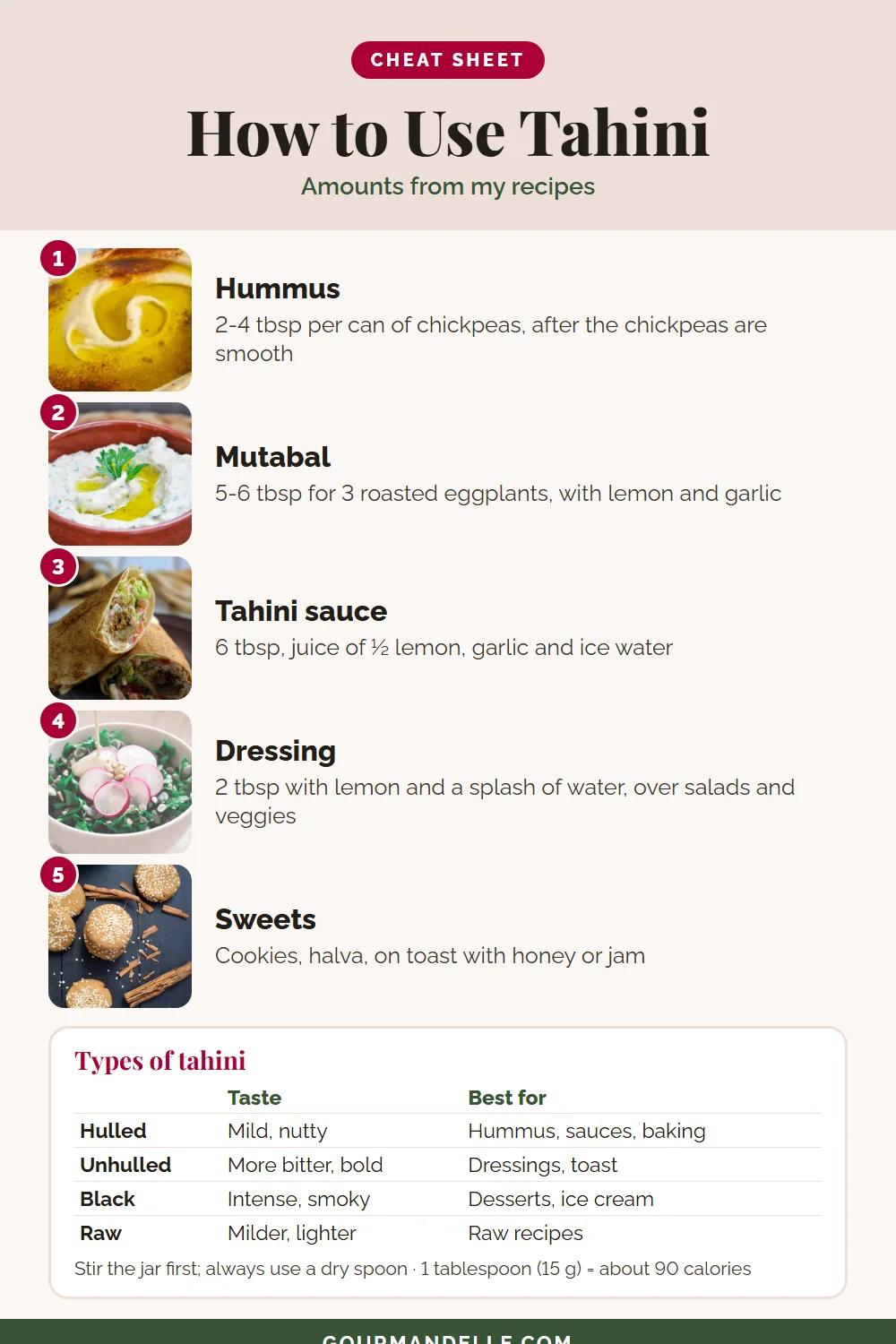
- What Is Tahini Used For?
- Recipes with Tahini
- Does Tahini Go Bad? How to Store It
- Tahini vs Sesame Paste and Halva
- How to Make Tahini at Home
- Frequently Asked Questions
- Sources
What Is Tahini Made Of?
Tahini is made of sesame seeds and nothing else. The seeds are soaked, hulled, roasted and then ground, and the oil inside them turns them into a smooth paste without any added fat. Some brands add salt. The word comes from the Arabic ṭaḥīna, from the verb “to grind”. A recipe for ground sesame appears in a 10th-century Arabic cookbook, and hummus made with tahini in one from the 13th century.
Most tahini is made from roasted seeds. Raw tahini, made from unroasted seeds, is a small niche. The biggest exporters are Lebanon, Syria, Egypt, Greece and Israel, while the sesame itself mostly comes from Sudan, Myanmar, Tanzania and India.
Types of Tahini
| Type | What it’s like | Best for |
|---|---|---|
| Hulled (white) | made from sesame without the hull; light beige, smooth, mild | hummus, sauces, dressings, baking |
| Unhulled (whole) | made from whole sesame seeds; darker, thicker, more bitter | lemony dressings, on toast, with honey or dates |
| Roasted | most jars; a deeper, toasty, nutty flavor | everything |
| Raw | unroasted seeds; lighter in color, harder to find | raw recipes |
| Black | made from black sesame; intense, almost smoky | ice cream, glazes, desserts, black hummus |
Hulled vs unhulled tahini: hulled is the one most recipes mean when they say “tahini”. Unhulled has a stronger, more bitter taste and much more calcium on the label, but a lot of that calcium is bound to oxalates in the hull and isn’t absorbed well (more on that in the nutrition section).
A little bitterness is normal, especially in unhulled and darker-roasted tahini. If the bitterness keeps building in your mouth and the jar smells like paint, it has gone rancid.
What Does Tahini Taste Like?
Hulled tahini tastes like toasted sesame: nutty, rich, with a gentle bitter finish. Straight from the jar it can feel thick and a little dry in the mouth. Whisk it with lemon juice, garlic and ice water, though, and it turns into a pale, creamy sauce, which is the whole trick behind hummus and falafel sauce. Unhulled tahini is stronger and more bitter, and black tahini tastes almost smoky. Anything sweet, like honey, maple syrup or dates, balances it instantly, which is why it’s so good in baking.
Tahini Nutrition Facts
| Tahini | Per 100 g | Per tablespoon (15 g) |
|---|---|---|
| Calories | 595-650 kcal | about 90 kcal |
| Fat | 54-60 g | about 8 g |
| Protein | 17-25 g | 2.5-3.5 g |
| Fiber | 5-11 g | 1-1.5 g |
| Net carbs | 3-12 g | under 2 g |
| Iron | 4-9 mg | about 1 mg |
| Magnesium | 95-350 mg | 14-50 mg |
The numbers vary between sources. The USDA database lists about 17 g of protein per 100 g, while European labels usually say 24 to 25 g, so check the jar you buy. What matters most:
- Mostly unsaturated fat: about 85% of the fat in tahini is unsaturated, mostly omega-6. It has very little omega-3.
- Fiber: at 8 to 11 g per 100 g, most tahini is high in fiber.
- Iron, copper and zinc: tahini is rich in all three per 100 g, but a normal serving is a tablespoon, not 100 g.
- Calcium: here’s the catch. Almost all the calcium in sesame sits in the hull: whole seeds have 975 mg per 100 g, hulled seeds only 60 mg. So unhulled tahini has far more calcium, but much of it is bound to oxalates and poorly absorbed. A tablespoon of hulled tahini gives you roughly 20 to 65 mg of calcium, which isn’t much.
- Calories: tahini is calorie-dense, so measure it with a spoon instead of pouring it from the jar.
Is Tahini Good for You?
Tahini is a nutritious food: mostly unsaturated fat, fiber, iron, magnesium and some plant protein. Here’s what the research does and doesn’t show:
- Heart and cholesterol: the studies are on sesame seeds, sesame oil and sesamin supplements, not on tahini itself. A meta-analysis of 10 trials found that sesame lowered triglycerides but not LDL cholesterol. LDL only dropped in trials with sesamin supplements. I wouldn’t call tahini a cholesterol-lowering food.
- Blood pressure: the effect seen in studies is small, around 3/2 mmHg in the better-quality trials.
- Sesame allergy: sesame is one of the 14 allergens that must be highlighted on EU labels, and it became the 9th major allergen in the US in 2023. Reactions can be severe.
- Babies: the NHS and ASCIA recommend introducing sesame at around 6 months (not before 4 months): a tiny amount of tahini thinned with water, breast milk or a purée and stirred into food. Never give a baby thick tahini straight from a spoon: it’s sticky and a choking risk. If your baby has severe eczema or other allergies, talk to your doctor first.
- IBS: tahini is low FODMAP up to 2 tablespoons (30 g), according to Monash. More in my low FODMAP diet guide.
- Keto: under 2 g of net carbs per tablespoon.
- Vegan and gluten-free: plain tahini is vegan, and sesame has no gluten. If you have celiac disease, look for a “gluten-free” label, since factories may also process other seeds or grains.
Food safety: tahini isn’t cooked after it’s ground, and Salmonella can survive in it for months. There have been outbreaks linked to tahini and halva, including one in Europe from Syrian products in 2019-2021 and several US recalls. The risk is small, but it’s a good reason to buy from brands you trust and to check recall notices.
What Is Tahini Used For?
- Hummus: I use 2 to 4 tablespoons per can of chickpeas, and 150 g for two cans in my classic hummus. Blend the chickpeas until very smooth first, then add the tahini.
- Tahini sauce: 6 tablespoons of tahini, the juice of half a lemon, a garlic clove and cold water, added a little at a time, until creamy. That’s the sauce in my falafel wrap. If it seizes and looks curdled at first, keep adding water and whisking: that’s normal.
- Dressing: 2 tablespoons of tahini with lemon and a splash of water, over a spinach salad or roasted vegetables.
- Eggplant dips: my mutabal has 5 to 6 tablespoons for 3 roasted eggplants.
- Baking: my tahini cookies use ¾ cup (180 g) with almond flour and maple syrup. Tahini is also lovely on toast with honey or jam, like peanut butter.
- As a binder: a tablespoon in veggie patties, loaves or falafel mix.
For more ideas by category, see how to use tahini in recipes. If you’re out of tahini, I also have a hummus without tahini.
Recipes with Tahini
Here are three of my recipes for each of the ways I use tahini most, so you can see what it does in each.
Hummus and dips

Smooth Lebanese-style hummus with a generous 150 g of tahini for two cans of chickpeas.
Get the recipe
Smoky roasted eggplant mashed with 5-6 tablespoons of tahini, lemon and garlic.
Get the recipe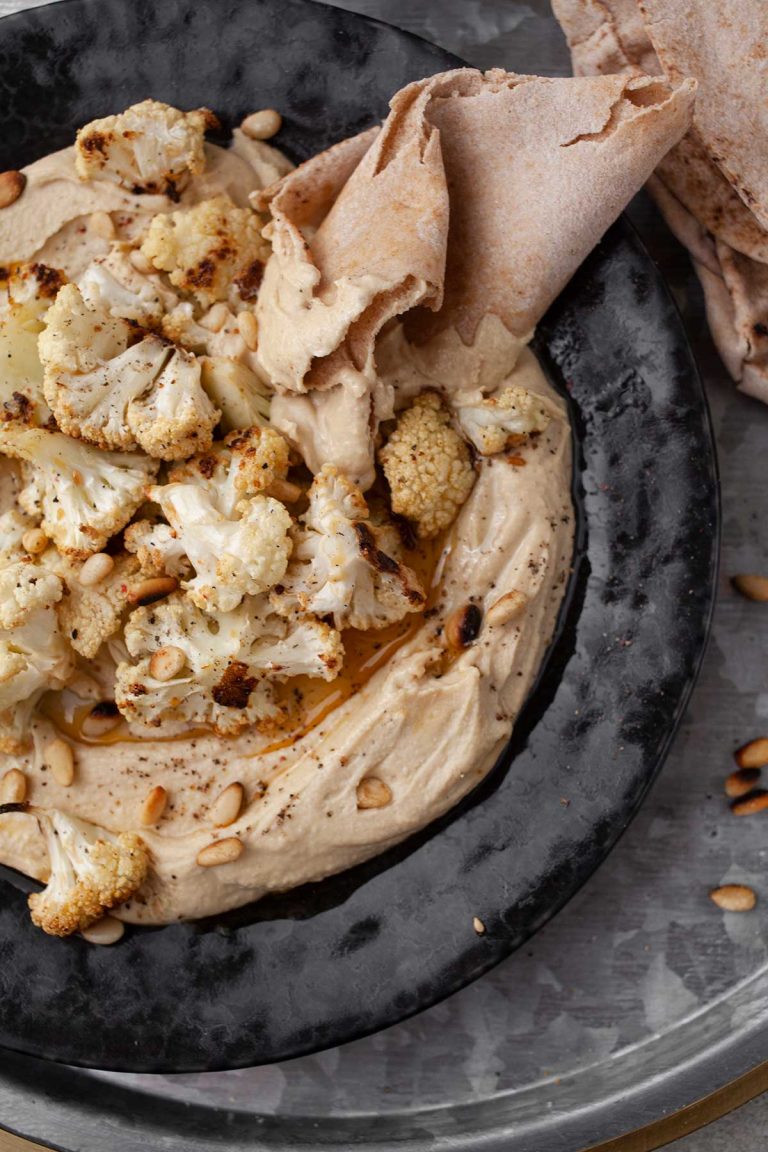
Roasted cauliflower blended with tahini into a lighter, creamy hummus.
Get the recipeSauces and dressings

The tahini sauce here is the one I make most: tahini, lemon, garlic and cold water.
Get the recipe
Spinach Salad with Tahini Dressing
Baby spinach with a simple lemony dressing made with 2 tablespoons of tahini.
Get the recipe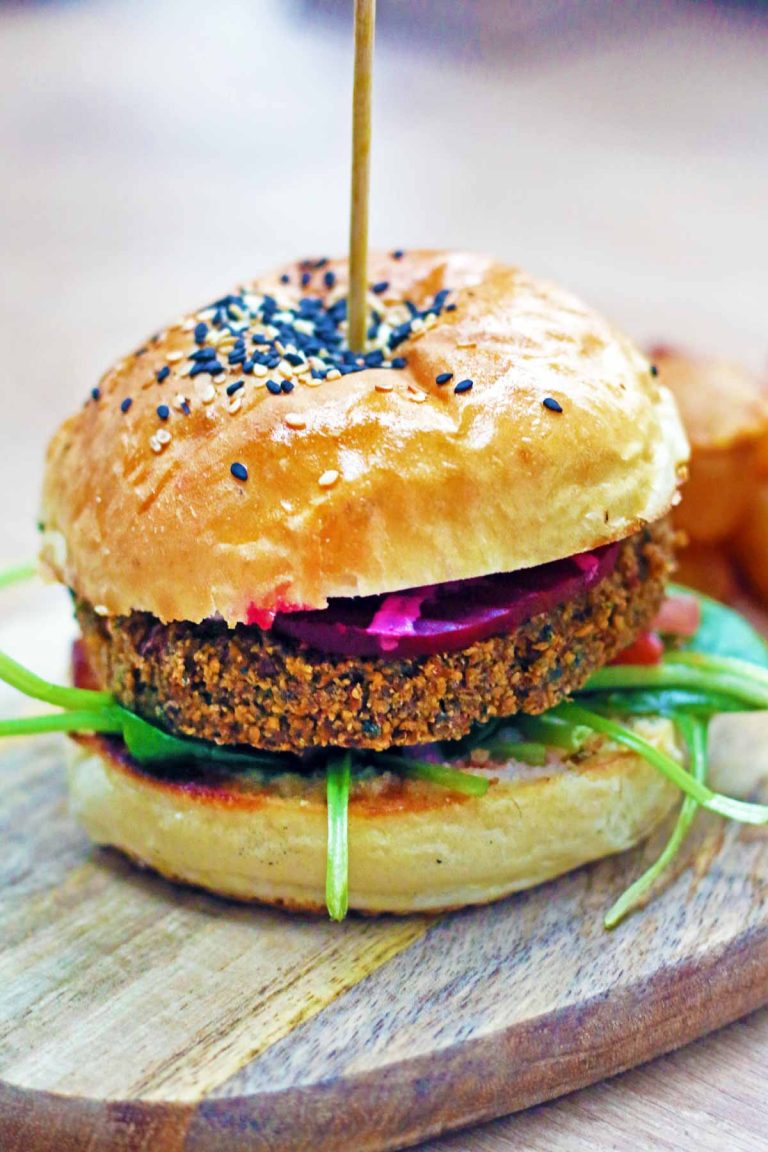
Crispy falafel patties in a bun, with a pourable lemon-tahini sauce.
Get the recipeCookies, halva and patties

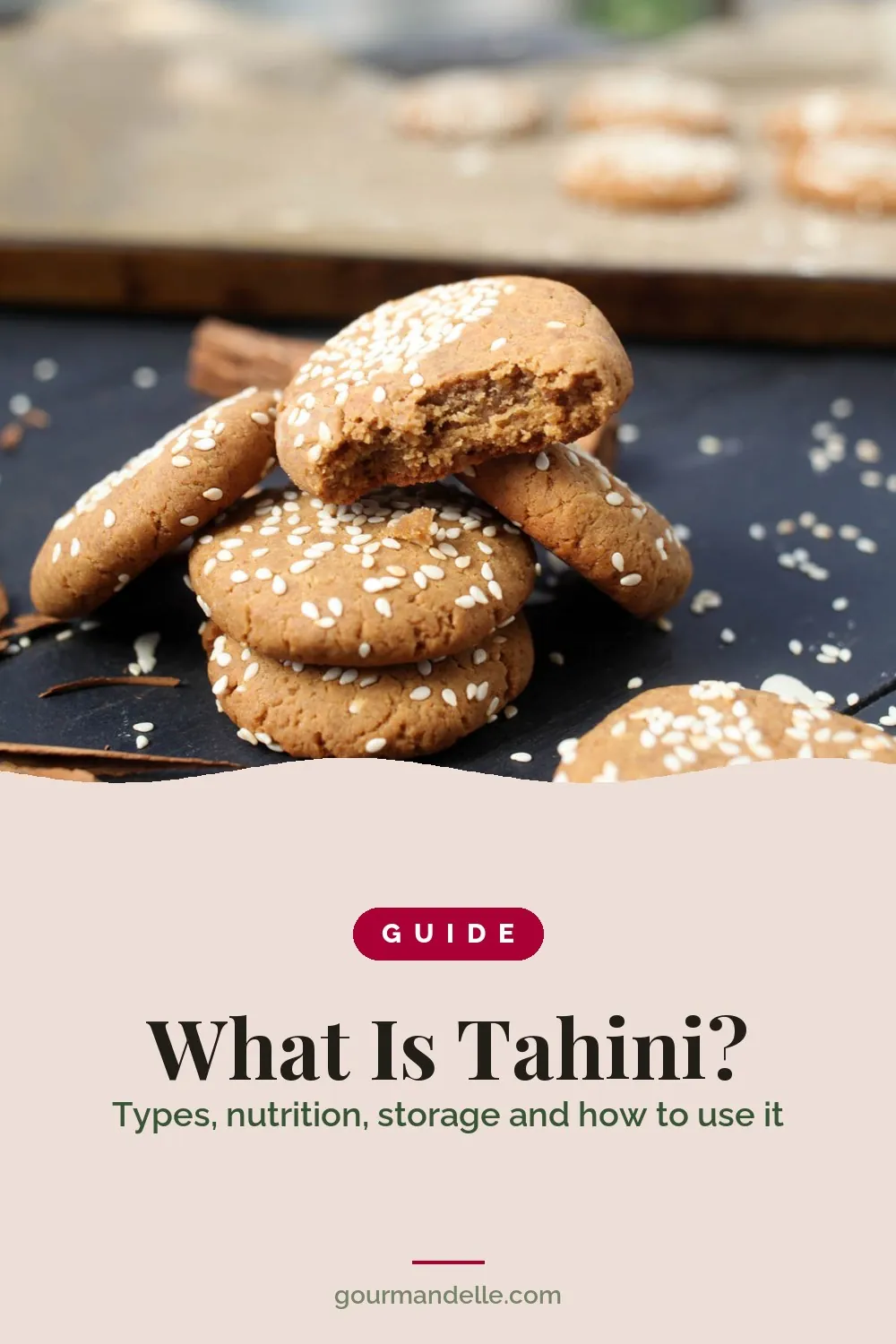
Soft cookies with 180 g of tahini, almond flour and maple syrup, rolled in sesame.
Get the recipe
A no-bake halva from sunflower seeds, with a spoonful of tahini for the sesame flavor.
Get the recipe
Green Chickpea Patties with Tahini
Herby chickpea patties with tahini in the mix and on the side.
Get the recipeDoes Tahini Go Bad? How to Store It
- The oil on top: separation is normal and doesn’t mean it’s gone bad. Stir all the way to the bottom before measuring. If the paste at the bottom has hardened, set the closed jar in warm water for a few minutes.
- Pantry or fridge: unopened, tahini keeps until the date on the jar. Once opened, it can sit in a cool, dark pantry for a few months, but it goes rancid more slowly in the fridge, where it keeps for 6 to 12 months. It firms up when cold, so take it out about 15 minutes before using.
- Use a dry spoon: water is the enemy of tahini in the jar. Add water and lemon in the bowl, never in the jar.
- When to throw it out: if it smells like paint, crayons or old oil, tastes harsh and metallic, or shows any mold.
- Tahini sauce (with water, lemon and garlic) keeps in a closed jar in the fridge for about 5 days.
Tahini vs Sesame Paste and Halva
- Chinese sesame paste is made from sesame roasted much darker. It’s darker, thicker and more aromatic, great in noodles and cold sauces. It doesn’t work in hummus, but tahini can stand in for it in Chinese recipes.
- Halva is a sweet: tahini (about 50 to 65%) beaten with sugar syrup and soapwort root extract, which gives it its flaky texture. It’s 35 to 48% sugar, so it’s a treat, not a healthier tahini. I also have a raw vegan halvah made with sunflower seeds.
- Sweet sesame spreads (with cocoa, pistachio or sugar) are dessert spreads, not tahini. Don’t use them in hummus.
How to Make Tahini at Home
The basic method is simple: all you need is sesame seeds and a strong food processor.
- Toast hulled sesame seeds on a sheet pan at 350°F (175-180°C) for 5 to 10 minutes, stirring once, until golden and fragrant but not brown, or the tahini turns bitter.
- Let them cool for about 5 minutes.
- Process them: they turn into a powder first, then a crumbly paste after a few minutes. Stop now and then to scrape down the sides.
- Add 1 to 2 tablespoons of neutral oil (or untoasted sesame oil) if you want it runnier, and keep processing until smooth.
About 2 cups of seeds make roughly 1 cup of tahini. In a large food processor, use more seeds so they cover the blade. Homemade tahini keeps in the fridge for 3 to 4 weeks. Home toasting is shorter than factory roasting, so buy your seeds from a source you trust.
Frequently Asked Questions
Tahini is a paste made from ground sesame seeds, usually hulled and roasted, with nothing else added except sometimes salt. It’s used in hummus, sauces, dressings and baking.
Tahini is a sesame paste, and the names are often used for the same thing. Chinese sesame paste is different, though: it’s made from sesame roasted much darker and has a stronger, toastier flavor.
Tahini tastes nutty and rich, like toasted sesame, with a slightly bitter finish. Unhulled tahini is more bitter, and black tahini tastes almost smoky. With lemon and water it becomes creamy and mild.
A tablespoon of tahini (15 g) has about 90 calories, 8 g of fat, 2.5 to 3.5 g of protein and about 1.5 g of fiber.
Yes, tahini can go rancid. It keeps a few months in a cool pantry and 6 to 12 months in the fridge once opened. If it smells like paint or crayons or tastes harsh and metallic, throw it out.
Oil separation is normal, because tahini has no emulsifiers. Stir the jar well, all the way to the bottom, before using it. It doesn’t mean the tahini has gone bad.
Plain tahini is just sesame seeds, so it’s vegan and naturally gluten-free. If you have celiac disease, choose a jar labeled gluten-free, since some factories also process grains.
Sources
- USDA FoodData Central (tahini and sesame seeds; FDC 170189, 168604, 169406, 170150, 169412): fdc.nal.usda.gov
- Coulombe G., Tamber S., 2022, Microorganisms (tahini and Salmonella: outbreaks and survival): PubMed
- ECDC-EFSA, 2021, rapid outbreak assessment, Salmonella in sesame-based products from Syria: ecdc.europa.eu
- Khalesi S. et al., 2016, British Journal of Nutrition (sesame and blood lipids, meta-analysis): PubMed
- Khosravi-Boroujeni H. et al., 2017, Journal of the Science of Food and Agriculture (sesame and blood pressure, meta-analysis): PubMed
- FDA, Food Allergies (FASTER Act, sesame as the 9th major allergen): fda.gov
- NHS, Food allergies in babies and young children: nhs.uk
- ASCIA, Introducing solid foods and allergy prevention: allergy.org.au
- Monash University, Low FODMAP Diet app (tahini): monashfodmap.com