
Types of Seaweed to Eat: Wakame, Nori, Kombu and Aonori Compared (From My Pantry)
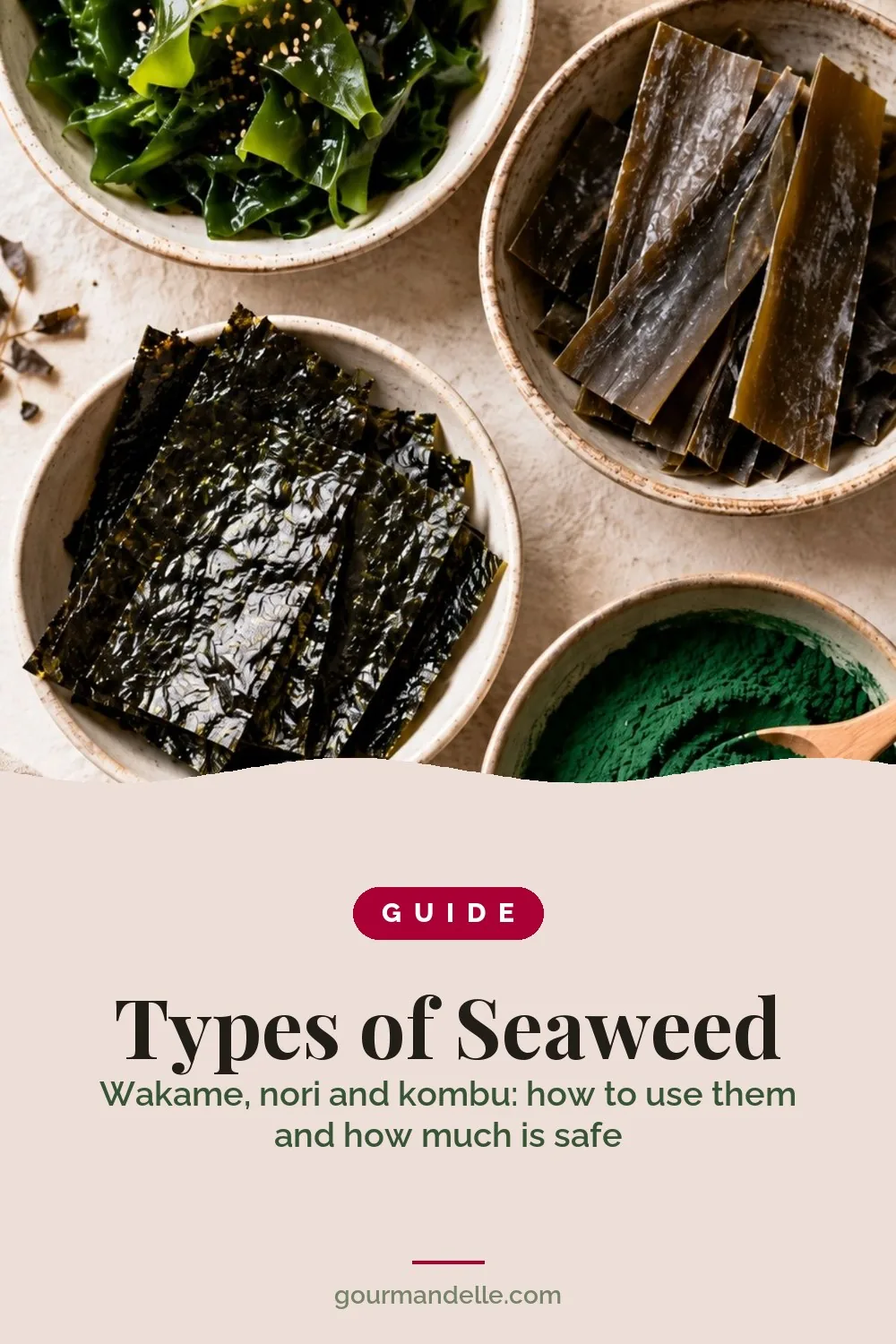
The types of seaweed you’ll find most easily are wakame, nori, kombu and aonori, and each one does a different job in the kitchen: wakame goes into salads and soups, nori wraps sushi, kombu flavors broth, and aonori is a flake you sprinkle at the end. Below I compare them all (taste, texture, how to prepare them, how much iodine they carry and what they’re good for), then show you how to rehydrate them, how much seaweed is safe to eat, and what the studies actually say.
Seaweed isn’t an exotic ingredient in my kitchen, it’s an everyday one. My absolute favorite is a dead-simple wakame salad: rehydrated wakame, a drizzle of toasted sesame oil, a splash of rice vinegar and a spoonful of gomasio. Three ingredients, five minutes, and it’s exactly what I want next to a bowl of rice. I also make a miso soba noodle soup with kombu, wakame and a few dried mushrooms all the time, topped with my own fish-free furikake. So this is my guide, from someone who actually cooks with the stuff.
Quick answer: types of edible seaweed
- Wakame is the salad and soup seaweed: soak it in cold water for a few minutes and it expands several times.
- Nori is the sushi sheet: you use it dry and crisp, no soaking.
- Kombu flavors broth and comes out of the pot. It has by far the most iodine: a single gram of dried kombu can go over the safe daily limit.
- Aonori is not nori: it’s a green seaweed ground into flakes that you sprinkle at the end.
- I skip hijiki: Canada’s food agency advises avoiding it and Ireland’s advises limiting it, because of inorganic arsenic.
- Spirulina isn’t a cooking seaweed: it’s a cyanobacterium sold as a supplement.
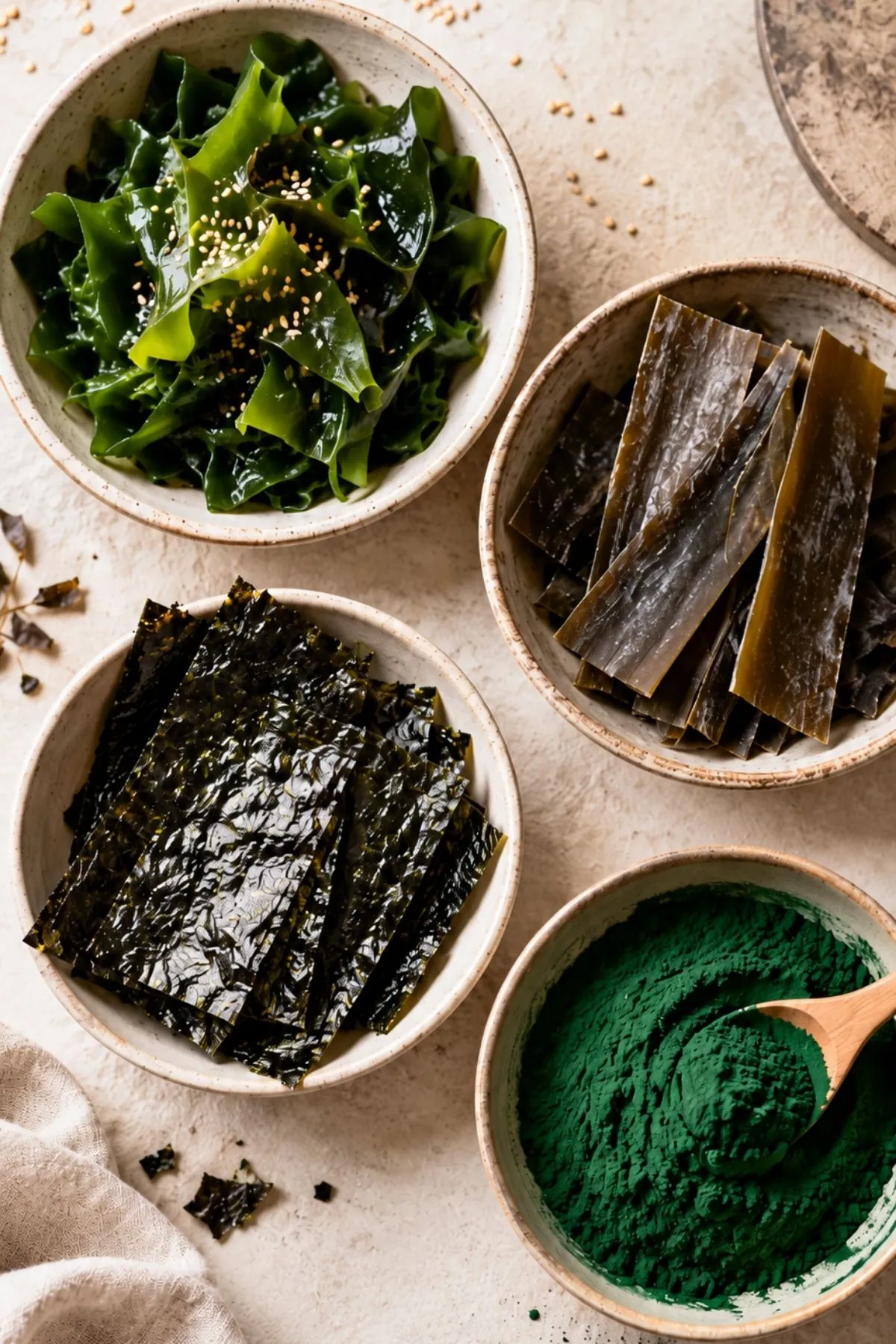
Table of Contents
- Edible Seaweed Types at a Glance
- The Seaweeds in My Pantry, One by One
- Wakame vs Nori vs Kombu: What’s the Difference?
- Which Seaweed for What
- How to Rehydrate and Cook Dried Seaweed
- How Much Seaweed Is Too Much? (Iodine)
- What the Studies Say (and What They Don’t)
- Seaweed Myths I Stopped Believing
- How to Choose Good Seaweed
- Where to Buy Seaweed
- How to Store Dried Seaweed
- Seaweed Recipes on the Blog
- Frequently Asked Questions
- Sources
Edible Seaweed Types at a Glance
Kitchen seaweeds fall into brown, red and green, and the color tells you quite a bit about how you use them. Here’s how the ones I cook with compare (plus two I know but don’t buy):
| Seaweed | Type | How it’s sold | Taste and texture | How to prepare | Iodine | Best for |
|---|---|---|---|---|---|---|
| Wakame | Brown | Dried, finely cut (fueru) or in strips | Silky, slightly sweet and briny | A few minutes in cold water | High | Salads, miso soup, vegetable soups |
| Nori | Red (dark green once toasted) | Toasted sheets | Crisp, ocean flavor, umami | Use as is | Low | Sushi, onigiri, ramen, vegan “seafood” |
| Kombu | Brown (kelp) | Thick dried strips | Deep umami, tough | Steep in water, then remove | Very high | Broth (dashi), cooking beans |
| Aonori | Green | Fine flakes | Grassy, sea-breeze aroma | Sprinkle at the end | Used in tiny amounts | Rice, fries, noodles, furikake |
| Dulse | Red | Strips or flakes | Salty, slightly smoky | Dry or briefly soaked | Medium | Salads, sprinkling |
| Agar | Extract from red seaweed | Powder or flakes | Neutral | Boiled to set | – | Desserts, instead of gelatin |
| Hijiki | Brown | Dried black strands | – | – | – | I avoid it (inorganic arsenic) |
Iodine levels are indicative, based on retail product analyses (Yeh et al., 2014) and EU monitoring data (EFSA, 2023). They vary a lot from batch to batch.
The Seaweeds in My Pantry, One by One
Wakame
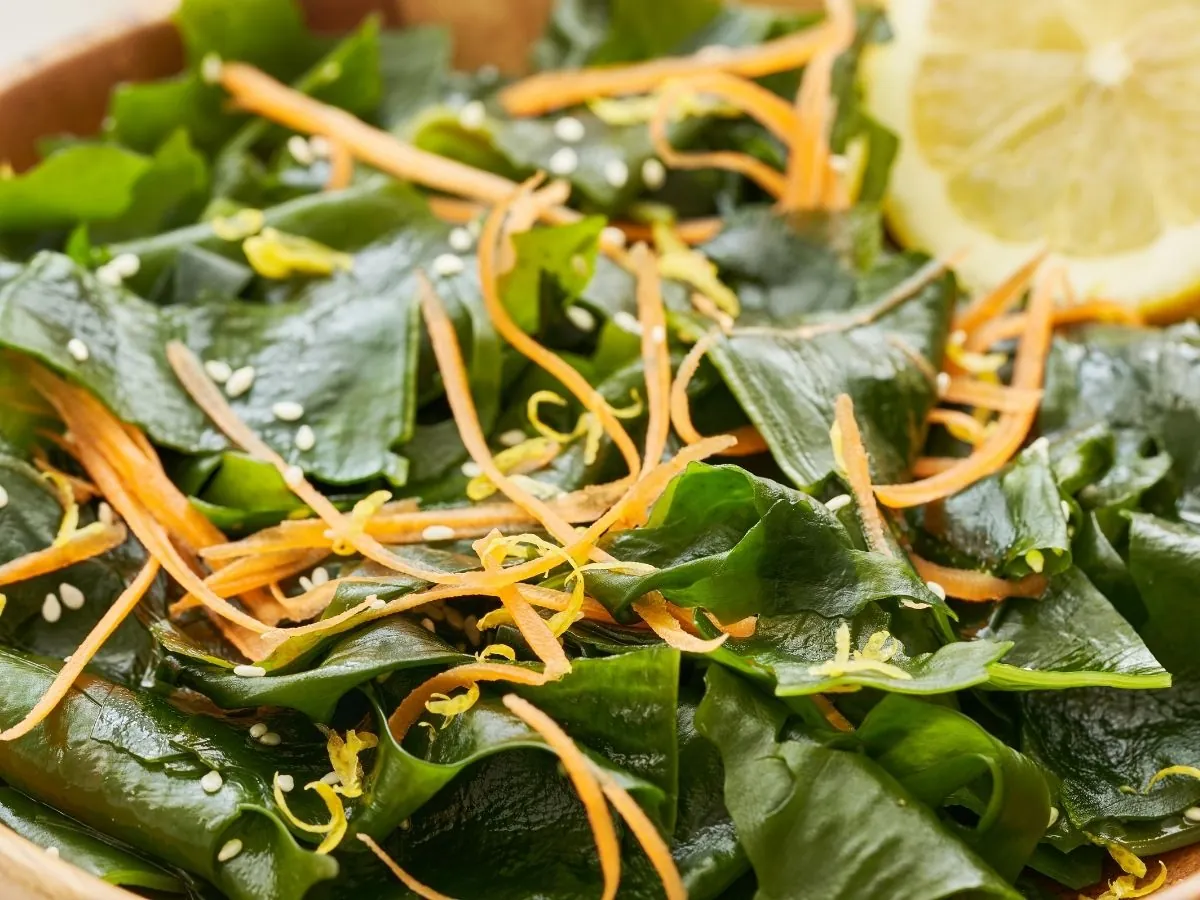
Wakame is the salad and soup seaweed: it’s sold dried, and in water it swells into soft, silky, deep-green ribbons. It comes from Undaria pinnatifida, a brown seaweed. I buy it finely cut, as “wakame fueru” (fueru means “to increase” in Japanese), and that’s exactly what it does: one spoonful of dried flakes fills a bowl once soaked.
My favorite salad goes like this: I soak the wakame in cold water for a few minutes, drain it well, dress it with toasted sesame oil and rice vinegar, then sprinkle gomasio on top. That’s it. It’s salty, tangy and tastes of the sea, and it’s perfect next to rice or tofu. Wakame does carry a fair amount of iodine (on average 140-200 µg per gram dried), and soaking removes only a little of it (Correia et al., 2021). A salad made from 3 g of dried wakame can already hold 400-600 µg, close to the safe limit for a whole day. So I see it as a few-times-a-week salad, not an everyday one.
Nori
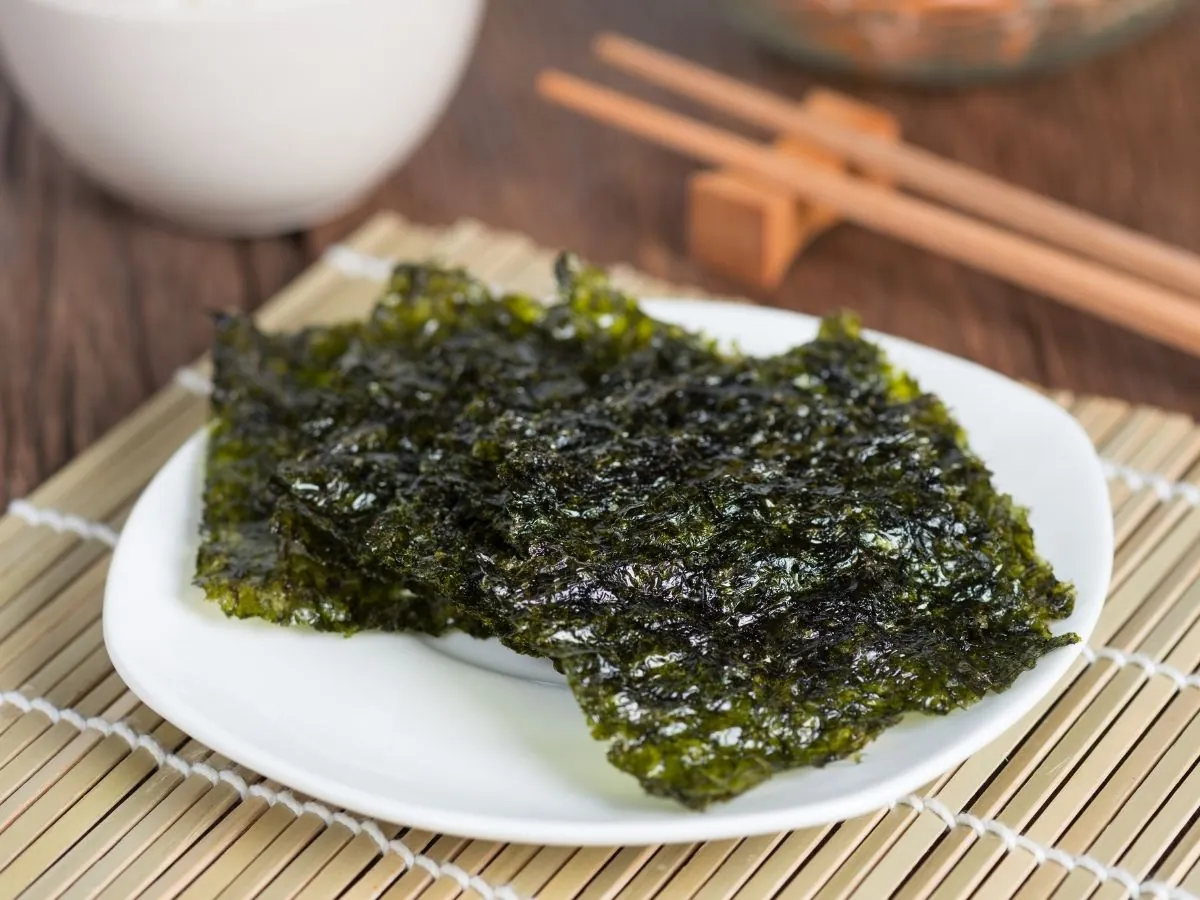
Nori is the dark green sushi sheet: a red seaweed (Porphyra or Pyropia) pressed into thin sheets and toasted. You use it straight from the pack, no soaking. I use it for sushi and California rolls, cut into strips over ramen and, above all, in fish-free “seafood” recipes. Nori is what gives the ocean flavor to my vegan salmon, vegan fish and chips, vegan scallops and spaghetti alla puttanesca, where it stands in for the anchovies. Of the seaweeds here, nori has the least iodine: one sheet usually carries 50-250 µg (Bouga and Combet, 2015).
Kombu
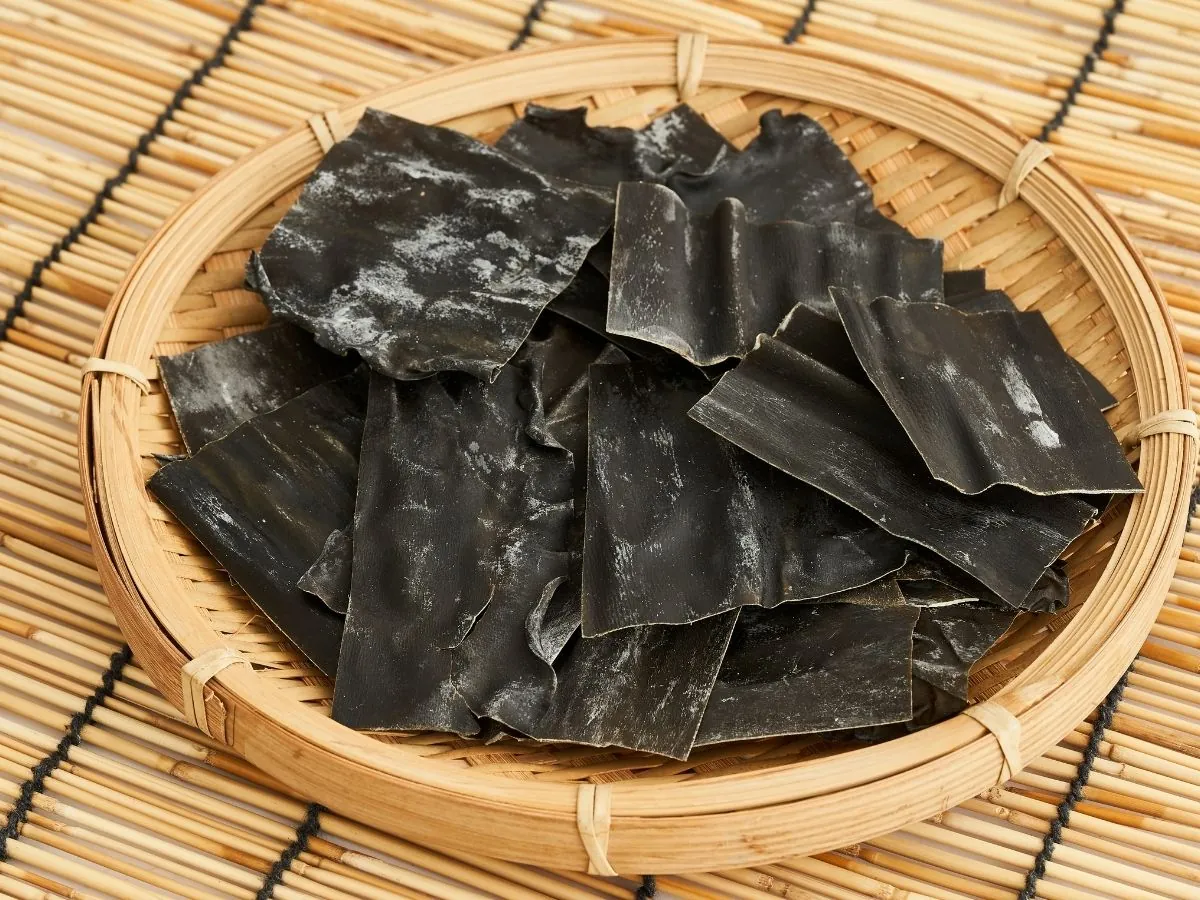
Kombu is the thick, wide seaweed used to make dashi, the basic broth of Japanese cooking. It’s a kelp (Saccharina or Laminaria) packed with natural glutamate, which is where its deep umami flavor comes from. The classic way is to put a piece in cold water, let it steep, warm it gently and take it out before the water boils. In my miso soba noodle soup I simmer an 8-inch (20 cm) piece right in the vegetable broth, then lift it out, slice it into thin strips and drop it back into the pot, where it turns silky. On the blog you’ll also find it in my vegan miso soup and, as an old trick, in the cooking water for kidney beans.
Kombu has by far the most iodine of any edible seaweed. In retail product tests it ranged from 241 to 4,921 µg per gram dried (Yeh et al., 2014), so a single gram can be up to 8 times the safe daily limit. Boiling pulls a lot of iodine out of the seaweed (94% after 10 minutes in a lab study, Li et al., 2024), but the iodine doesn’t vanish: it goes into the water. In Korea, kelp soup supplied three times more iodine than kelp eaten on its own (Kwon et al., 2024). So one piece is enough for a whole pot (I use one for 6 bowls), and a soup with kombu isn’t an everyday one.
Aonori
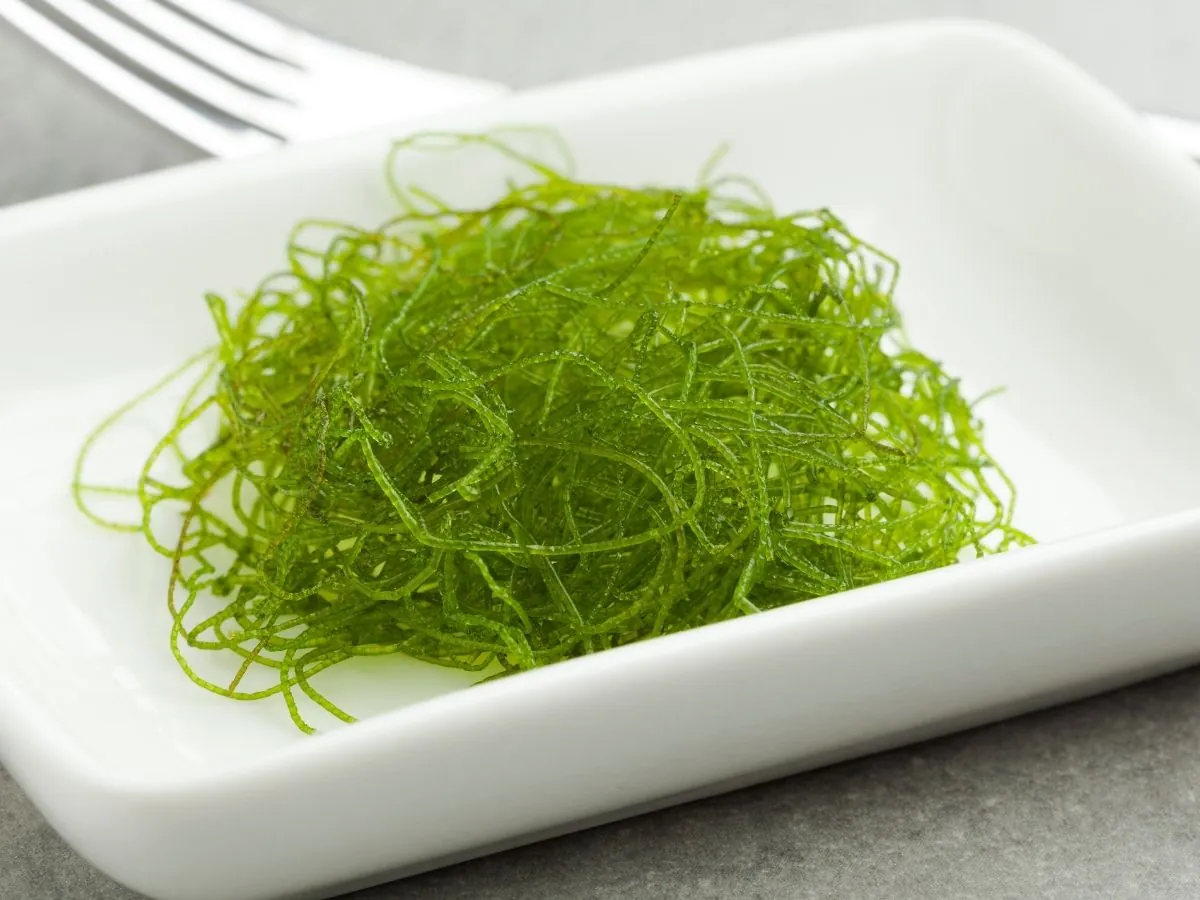
Aonori is not the same as nori: it’s a green seaweed, dried and ground into fine flakes, with a grassy, sea-breeze aroma. You sprinkle it at the end, over rice, fries, noodles or okonomiyaki. Some shops even sell it as “nori flakes” (my own bag says “aonori, seaweed nori flakes”), but nori is a red seaweed pressed into sheets, while aonori comes from green seaweeds (Monostroma or Ulva). I couldn’t find iodine tests on aonori itself, but you use it by the pinch, so it matters far less than a serving of wakame.
Furikake, My Fish-Free Version
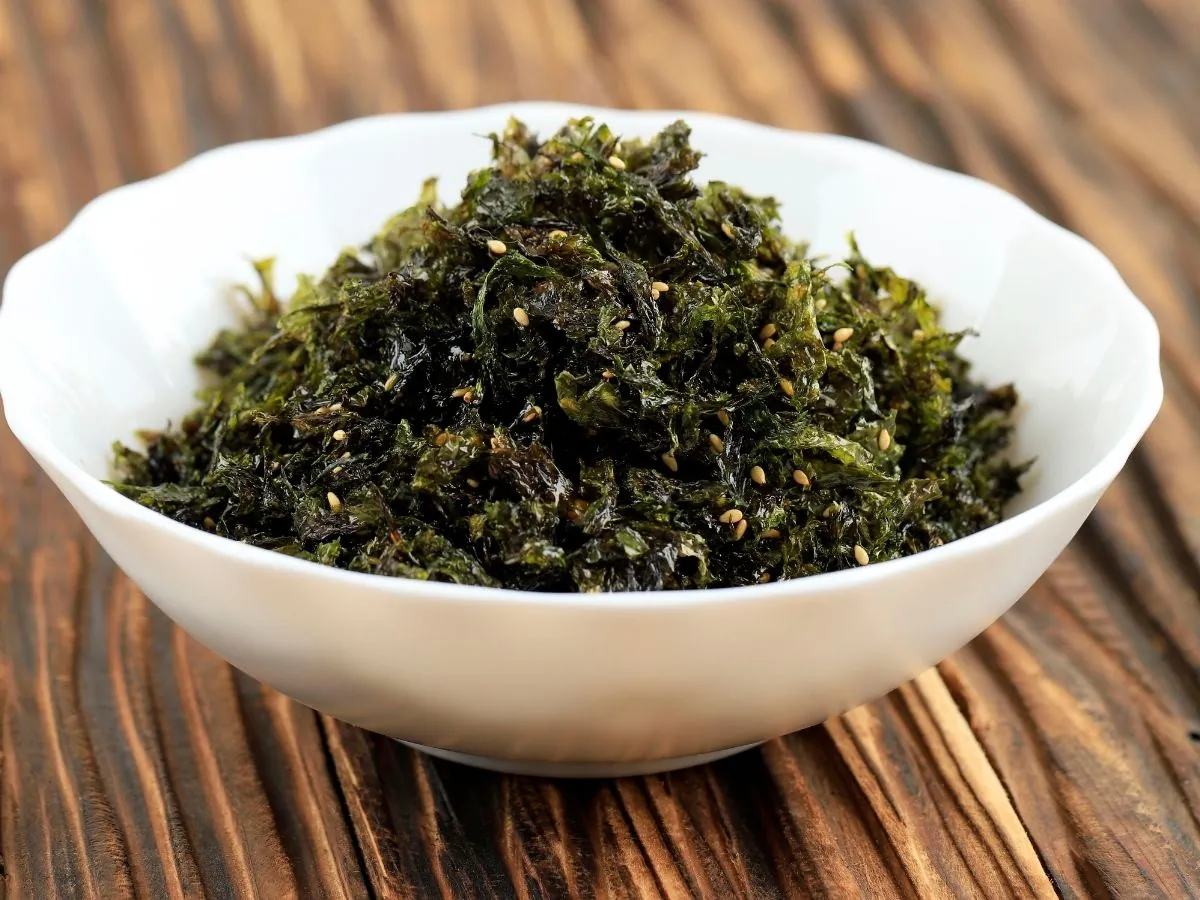
Furikake is a dry Japanese seasoning you sprinkle over rice. The classic version contains dried fish (bonito), sesame, seaweed flakes, salt and a little sugar (Ole G. Mouritsen, Sushi, Springer, 2009), so it isn’t vegetarian. I make a vegan, salt-free furikake: white and black sesame toasted in a dry pan, mixed with aonori flakes. I sprinkle it over my miso soba noodle soup, rice and avocado toast. It’s the easiest way to eat seaweed often, in small amounts.
Dulse and Hijiki
Dulse is a red seaweed, salty and slightly smoky, that you can eat straight from the bag as flakes. I don’t keep it at home, but you’ll often see it in health food stores. Hijiki, the thin black strands, I don’t buy at all: it’s high in inorganic arsenic, and Canada’s food inspection agency advises avoiding it (CFIA), while Ireland advises limiting it (FSAI).
Agar-Agar
Agar isn’t a seaweed you eat as is: it’s the plant-based gelling agent extracted from red seaweed, the vegetarian swap for gelatin. It’s the food additive E 406, assessed as safe by EFSA at normal uses (EFSA, 2016). I use it in desserts like vegan crème brûlée and strawberry cheesecake.
Wakame vs Nori vs Kombu: What’s the Difference?
Wakame vs nori: wakame is a brown seaweed you soak and eat soft, in salads and soups; nori is a red seaweed pressed into crisp sheets that you use dry, for sushi.
Wakame vs kombu: both are brown seaweeds, but wakame is eaten, while kombu is mostly used to flavor broth and then removed. Kombu also has more than 10 times the iodine of wakame (Bouga and Combet, 2015).
Nori vs aonori: nori is a sheet of red seaweed you wrap rice in; aonori is a powder of green seaweed flakes you sprinkle.
Which Seaweed for What
| For | I use | Why |
|---|---|---|
| Sushi, onigiri | Nori | Sticks to the rice and stays crisp. Try my vegan sushi |
| Miso soup | Wakame, with kombu dashi | The classic pairing, as in my vegan miso soup |
| Salad | Wakame | Rehydrates in minutes and holds the dressing well |
| Soba noodle soup | Wakame and kombu | As in my miso soba noodle soup |
| Broth (dashi) | Kombu | Umami without a “fishy” taste |
| Cooking beans and chickpeas | A small strip of kombu | An old trick, explained in my kidney beans guide |
| Sprinkling on rice, fries, popcorn | Aonori, furikake | Ocean flavor in tiny amounts |
| “Seafood” flavor in vegan recipes | Nori | Like in my vegan salmon or vegan tuna casserole |
| Desserts | Agar | Sets creams without gelatin |
How to Rehydrate and Cook Dried Seaweed
Dried seaweed grows a lot in water, so use less than you think. Wakame packs usually say it expands 6 to 10 times, so one spoonful of dried wakame makes a serving.
- Wakame: soak it in cold water for a few minutes, until it swells and softens, then drain and squeeze gently. In soup you can add it dry, 1-2 minutes before you turn off the heat.
- Nori: no soaking. If it has lost its crispness, pass it through a hot dry pan for a few seconds.
- Kombu: don’t scrub it, the white powder on the surface is flavor, not mold. Wipe it with a damp cloth, leave it in cold water for at least half an hour, warm it slowly and take it out before it boils. Or do what I do: simmer it in the soup, slice it and put it back.
- Aonori: nothing to do, sprinkle it at the end so it keeps its aroma.
My soup with wakame and soba: I start with the vegetable broth I make in the slow cooker from vegetable scraps and keep in the freezer. I simmer kombu, carrots, onion and a few dried shiitake and wood ear mushrooms in it, then near the end add the soba noodles and dried wakame, which rehydrates right in the pot. The miso goes in last, with the heat off. Here’s the full recipe: miso soba noodle soup. For more ideas, try my soba noodles with mushrooms and miso-lime sauce or browse my vegan Asian soups.
How Much Seaweed Is Too Much? (Iodine)
An adult needs about 150 µg of iodine a day, and the safe upper limit in Europe is 600 µg a day (EFSA, 2014; BfR, 2025). The catch is that seaweeds differ enormously: a sheet of nori is nowhere near the limit, while a gram of kombu can blow past it several times over.
| Seaweed | Iodine per 1 g dried | What a serving means |
|---|---|---|
| Kombu | 240-4,900 µg | 1 g can be up to 8 times the daily limit |
| Wakame | 95-200 µg | 3 g (a salad) ≈ 300-600 µg |
| Nori | 20-85 µg | One sheet (2.5-3 g) ≈ 50-250 µg |
Ranges from Yeh et al., 2014 and Bouga and Combet, 2015.
Package labels won’t help much, because every brand calculates its “safe” serving differently. I compared three packs sold in Romania: an organic kombu listing 1,060 µg of iodine per gram and a maximum of 0.5 g a day, a wakame advising at most 0.66 g a day without saying how much iodine it has, and an organic sushi nori listing 5 mg per 100 g and a maximum of one sheet a week. That nori limit is far stricter than its own iodine figure would call for. I look at the iodine amount when it’s listed and compare it with the 600 µg limit. In the EU there are no iodine or heavy-metal limits for seaweed sold as food, only for supplements (Recommendation (EU) 2018/464).
Who should be more careful: France’s food safety agency advises against seaweed for people with thyroid problems, heart disease or kidney failure, people taking medication containing iodine or lithium, and pregnant or breastfeeding women without medical advice (ANSES). With children, be cautious, as the data are limited.
What the Studies Say (and What They Don’t)
| Claim | What the research shows | How solid it is |
|---|---|---|
| Seaweed is a source of B12 | Nori contains active B12, and 5 g of nori a day for 4 weeks improved B12 levels in 30 vegetarians (Huang et al., 2024). But the amount varied a lot between batches, so nori doesn’t replace fortified foods or supplements. Wakame, kombu and spirulina aren’t B12 sources (Watanabe et al., 2014) | One small human study, not blinded |
| Seaweed lowers blood pressure | A meta-analysis of 29 trials found a small drop of about 2 mmHg, mostly with spirulina and in people with high blood pressure (Casas-Agustench et al., 2025) | Human studies, small effect |
| Seaweed helps you lose weight | Wakame’s fucoxanthin shows “anti-obesity” effects almost only in the lab and in animals (Mohibbullah et al., 2022). Alginate may curb appetite in the short term (Jensen et al., 2013) | Mostly lab and short studies |
| Seaweed is high in protein | Nori is 24-44% protein when dried, but a sheet weighs just 2.5-3 g, so about 1 g of protein (Cherry et al., 2019) | Composition data |
| Seaweed “detoxes” you | No evidence. Seaweed can absorb arsenic, cadmium or lead from the water, which is why the EU monitors it | No evidence |
Seaweed Myths I Stopped Believing
- “Seaweed detoxes your body.” No. If anything, seaweed can pick up metals from the water it grows in, which is why hijiki is on the avoid list.
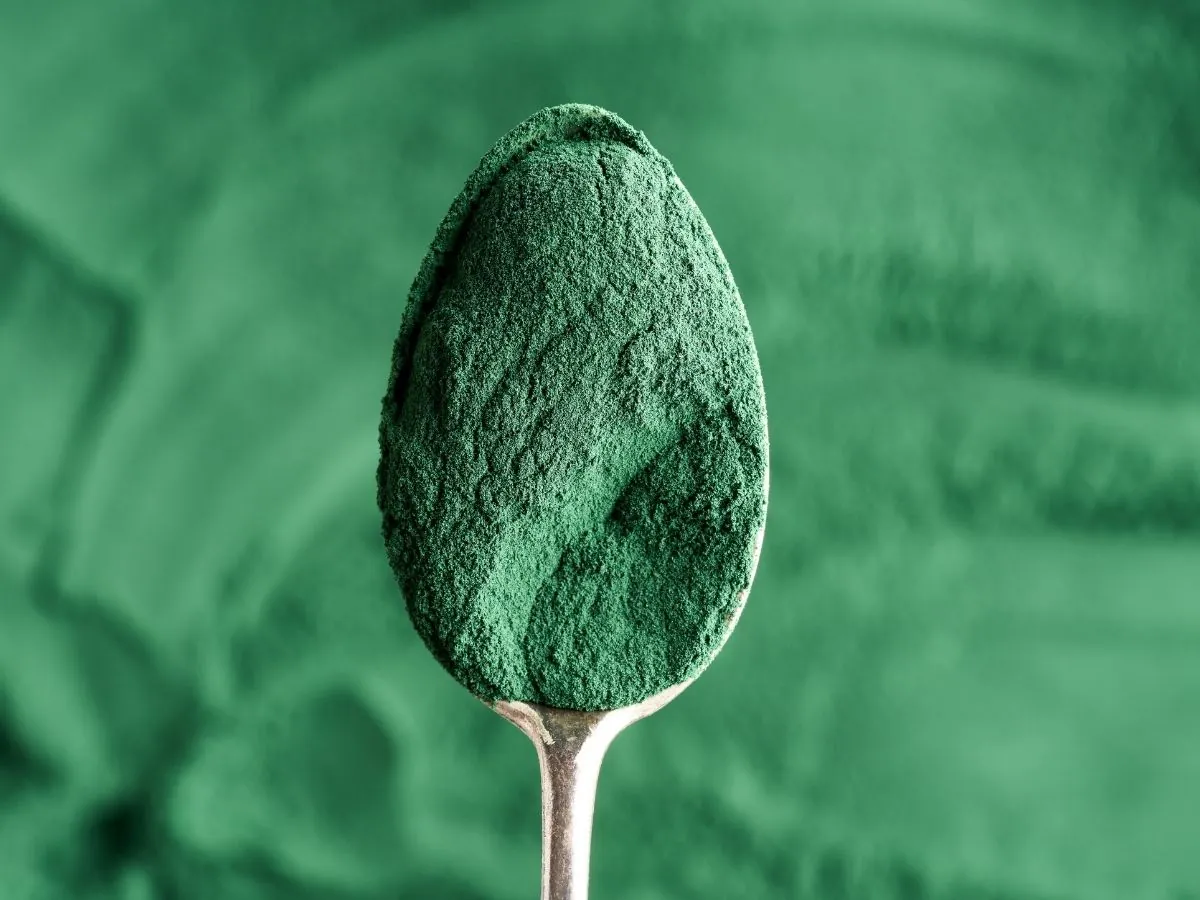
- “Spirulina is seaweed and gives you B12.” Spirulina is a cyanobacterium, and most of its B12 is a form your body can’t use (Watanabe et al., 1999).
- “Soaking gets rid of the iodine.” Soaking removes only a little. Boiling removes a lot, but the iodine stays in the water, so it ends up in your soup.
- “Seaweed is good for your thyroid.” Your thyroid needs iodine, but too much can throw it off, and with kombu too much comes quickly.
- “All seaweed is the same.” Between a sheet of nori and a gram of kombu, the iodine gap can be dozens of times.
How to Choose Good Seaweed
- Look for the species on the label (Undaria for wakame, Porphyra or Pyropia for nori, Saccharina or Laminaria for kombu). A pack that just says “seaweed” tells you nothing.
- Check for the iodine content. Germany’s risk assessment institute says producers should list it, along with a maximum daily serving (BfR, 2007), but few do.
- Skip hijiki, however nicely it’s packaged.
- For nori, pick dry, crisp sheets in a pack that reseals well.
- If you’re just starting, buy a small pack. Dried seaweed expands a lot, and 100 g of wakame lasts a long time.
Where to Buy Seaweed
Nori sheets are easy to find in most supermarkets, in the sushi section. For wakame, kombu and aonori, an Asian grocery store or a Japanese food importer will have a much better range; mine come from a Japanese pantry shop here in Romania, along with my soba noodles, miso, low-sodium soy sauce, toasted sesame seeds and sesame oil.
How to Store Dried Seaweed
Keep it in its sealed pack or a jar, somewhere dry and dark. Nori goes soft quickly in humid air, so put leftover sheets back in the bag right away. Rehydrated wakame keeps in the fridge, in a closed container, for 1-2 days. Dried seaweed lasts a long time, but stick to the date on the pack.
Seaweed Recipes on the Blog
- Miso soba noodle soup with kombu, wakame and vegan furikake
- Vegan miso soup
- Vegan sushi and vegan California rolls
- Vegan poke bowl
- Vegan ramen
- Soba noodles with mushrooms and miso-lime sauce
- Vegan salmon
- Vegan fish and chips
- Vegan scallops with pea purée
- Vegan spaghetti alla puttanesca
- Miso pasta
- Gomasio (sesame salt), which you can also make with nori or wakame
- More ideas in my guide to cooking with miso paste and my Asian cuisine guide
Frequently Asked Questions
It depends on the seaweed. A sheet or two of nori a day is fine for a healthy adult, a wakame salad already comes close to the daily iodine limit, and one piece of kombu is enough for a whole pot of soup, because a single gram can be several times the safe limit of 600 µg.
No. Dried wakame just needs a few minutes in cold water and is eaten as is, in salads. In soup you can add it dry, 1-2 minutes before the end.
Only nori contains active B12, and the amount varies a lot between batches. It doesn’t replace fortified foods or supplements, especially on a vegan diet. Wakame, kombu and spirulina are not B12 sources.
Ask your doctor first. Seaweed is high in iodine, and France’s food safety agency advises against it without medical advice for people with thyroid conditions, pregnant or breastfeeding women and people on certain medications.
I wouldn’t. Seaweed absorbs what’s in the water, including metals and pollutants, and without testing you don’t know what you’re eating. Buy dried seaweed with the species and origin on the label.
Furikake is a dry Japanese seasoning sprinkled over rice. The classic version contains dried fish, sesame, seaweed, salt and sugar, so it isn’t vegetarian. My version is just toasted white and black sesame and aonori flakes, with no salt.
Yes, seaweed is vegan and vegetarian. Just watch out for ready-made mixes like furikake or some seaweed salads, which can contain fish.
It keeps for a long time if sealed and stored somewhere dry. Stick to the date on the pack, and keep nori tightly closed, because it goes soft quickly.
Sources
- Yeh T. S. et al. (2014), iodine content of commercial edible seaweed, Journal of Food and Drug Analysis 22(2)
- EFSA (2023), dietary exposure to iodine from seaweed in the EU, EFSA Journal 21:e07798
- EFSA NDA (2014), dietary reference values for iodine, EFSA Journal 12:3660
- BfR (2025), proposed maximum levels for iodine in foods and food supplements
- BfR (2007), health risks linked to high iodine levels in dried algae
- Bouga M., Combet E. (2015), Foods 4:240
- Correia H. et al. (2021), Food and Chemical Toxicology 155:112385
- Li et al. (2024), Foods 13:2864
- Kwon et al. (2024), Nutrition Research and Practice 18:412
- ANSES, seaweed consumption and the risk of excess iodine
- CFIA, inorganic arsenic and hijiki seaweed
- FSAI, consumption of hijiki seaweed
- EFSA (2016), re-evaluation of agar (E 406)
- Commission Recommendation (EU) 2018/464 on monitoring metals and iodine in seaweed
- Huang et al. (2024), European Journal of Nutrition 63:3269
- Watanabe F. et al. (2014), Nutrients 6:1861
- Watanabe F. et al. (1999), vitamin B12 in spirulina
- Casas-Agustench et al. (2025), meta-analysis: seaweed and blood pressure
- Mohibbullah et al. (2022), fucoxanthin
- Jensen et al. (2013), alginate and appetite
- Cherry et al. (2019), Nutrition Reviews 77:307
- Mouritsen O. G. (2009), Sushi: Food for the Eye, the Body and the Soul, Springer
Health information is general and doesn’t replace medical advice.