Miso Soba Noodle Soup with Wakame and Vegan Furikake
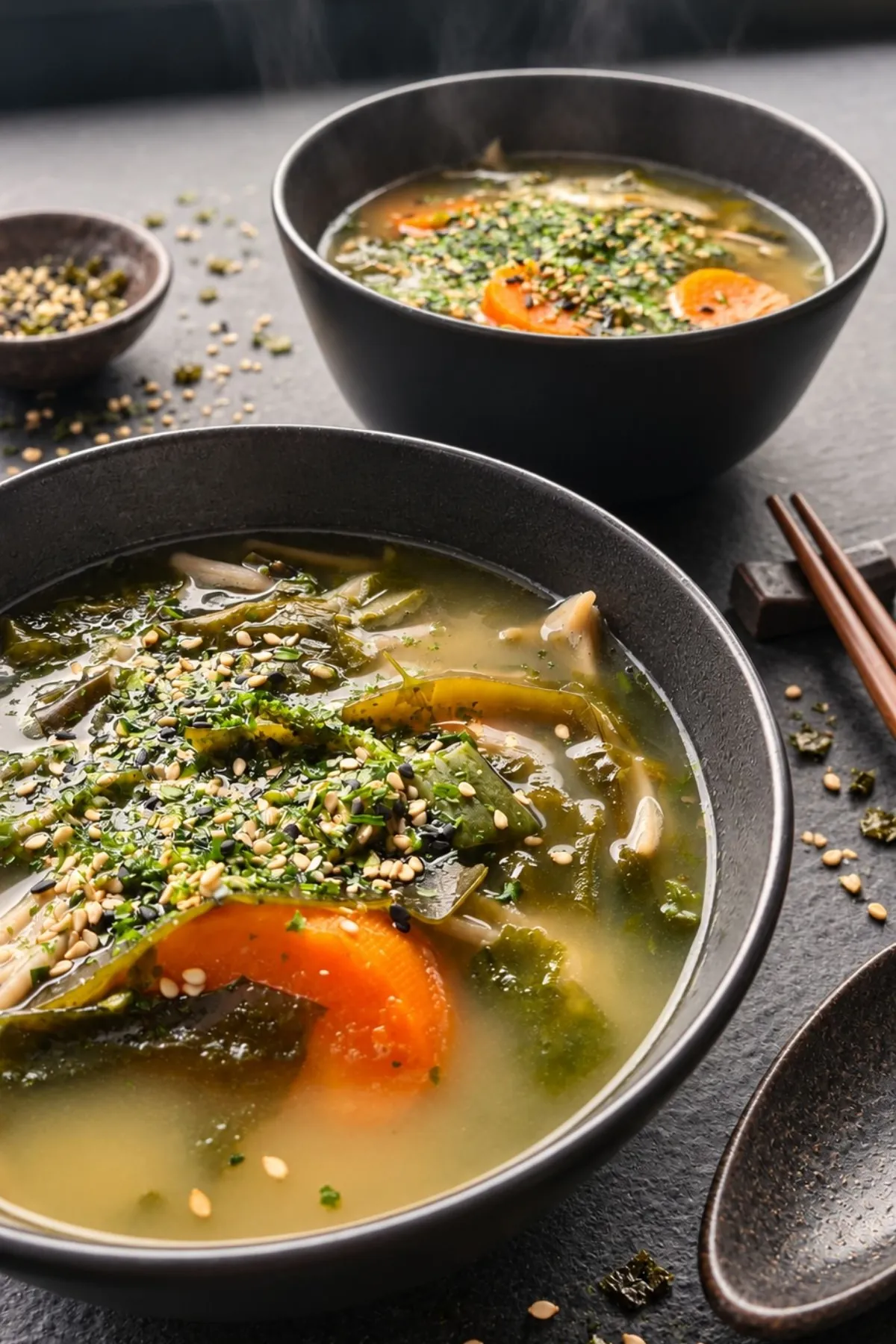
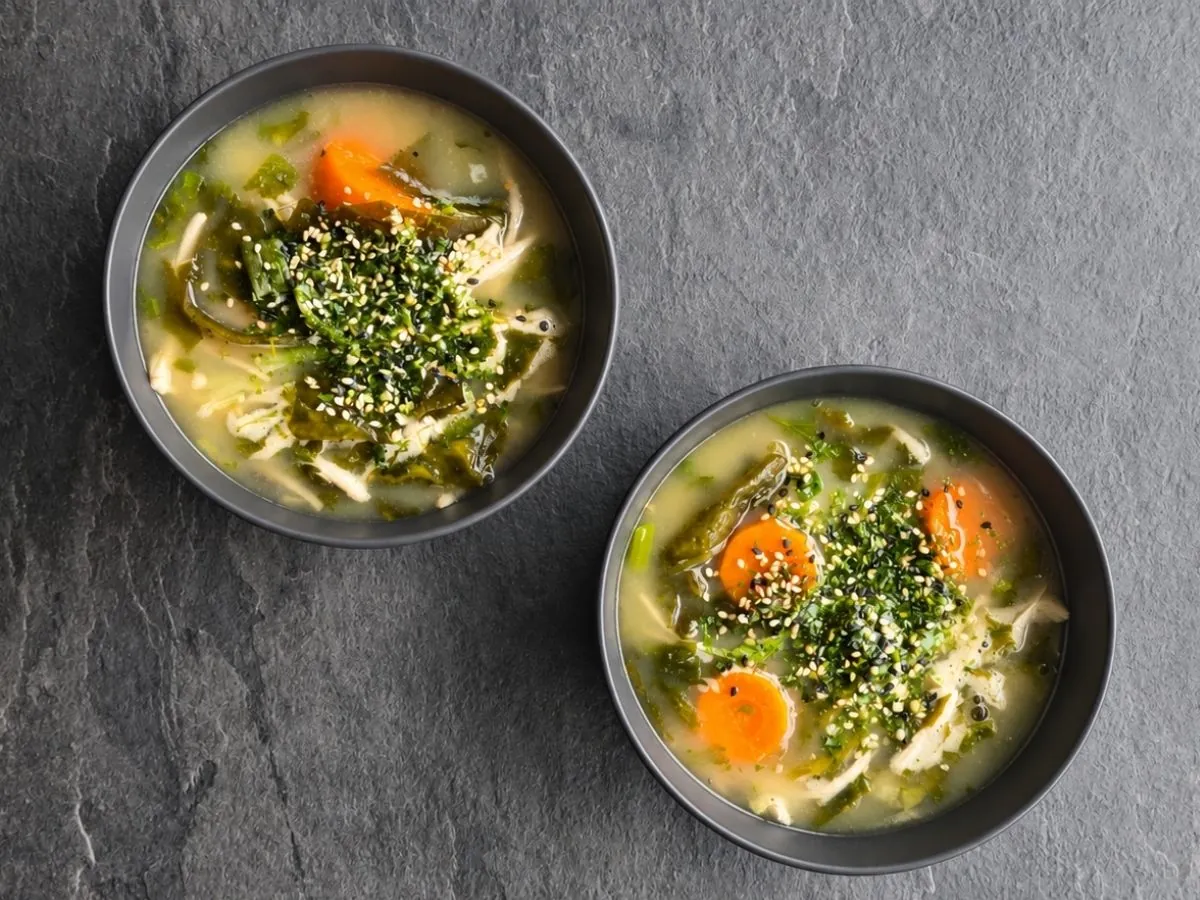
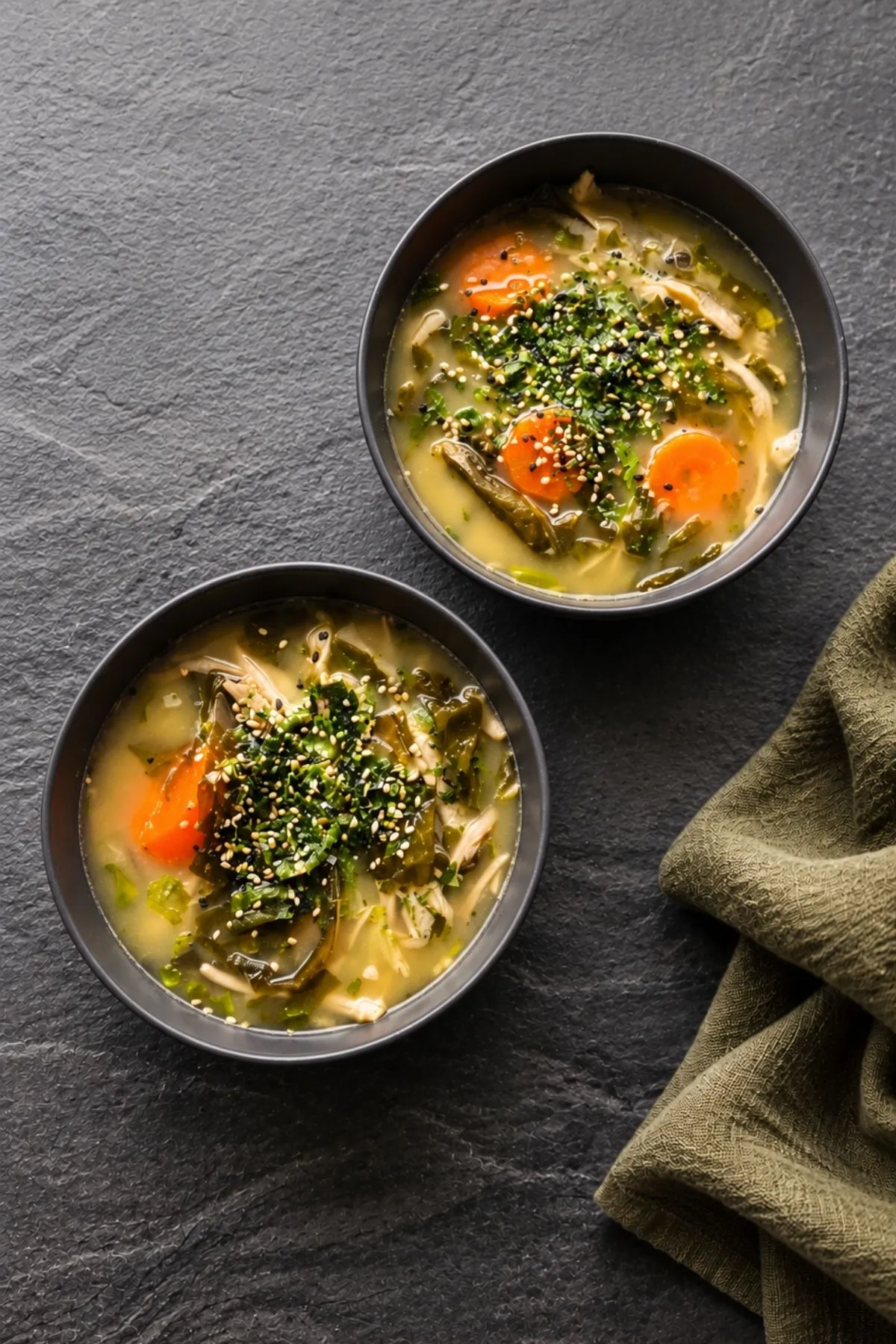
This miso soba noodle soup starts with a clear vegetable broth simmered with a piece of kombu, then gets thick carrot rounds, white onion, a few dried shiitake and wood ear mushrooms, wakame and buckwheat soba noodles, with white miso stirred in at the very end. On top goes a homemade vegan furikake of toasted white and black sesame and nori flakes. It’s a vegan soba noodle soup that makes 6 generous bowls in about 40 minutes.
The broth is the part I never skip. Every few weeks I fill the slow cooker with vegetable scraps (carrot peels, onion ends, the leafy tops of celery, whatever is left in the fridge), and the strained broth goes into the freezer, so a soup like this is mostly assembly. I don’t throw out the kombu once it has done its job, either: I fish it out, slice it into thin strips and drop it back into the pot, where it turns silky.
What Goes Into This Miso Soba Soup
- Vegetable broth. I use my homemade slow cooker broth from vegetable scraps, straight from the freezer. Store-bought works too. You can also make the soup with water only: the kombu still adds flavor, but the result is a bit lighter.
- Kombu. One piece of dried kelp simmered in the broth works like a quick vegan dashi, giving the soup a deep, savory base without any fish.
- Wakame. Dried wakame goes in at the end and unfolds in a couple of minutes into soft, silky leaves. It grows several times in size, so a few tablespoons are plenty.
- White miso. Shiro miso is the mild, slightly sweet one, perfect for a clear soup. Red miso works too, but it’s saltier and stronger, so start with less.
- Soba noodles. Japanese buckwheat noodles with a nutty taste. I cook them right in the soup, toward the end, so they soak up the broth. Most packs mix buckwheat with wheat flour, so if you need gluten-free, look for 100% buckwheat soba.
- Dried shiitake and wood ear mushrooms. Just a few of each. Shiitake give the broth a deep, earthy savoriness, and wood ear stays pleasantly crunchy even after simmering. I soak them in hot water for about 20 minutes, slice them and strain the soaking water into the pot too.
- Carrots, white onion and green onion. Carrots cut into thick rounds stay sweet and hold their shape, the white onion is sliced into thin strips and melts into the broth, and the green onion goes in at the end and on top.
Why the Miso Goes In Last
Miso doesn’t like boiling. I turn off the heat, let the soup settle for a few minutes so it’s hot but no longer bubbling, then dissolve the miso in a ladle (or a mug) of broth and stir it back into the pot. Unpasteurized miso contains live cultures that high heat destroys, and boiling also dulls its aroma, so the soup ends up tasting flat and just salty.
How much miso? I used about 2 tablespoons for the whole pot, but every miso and every broth is different. Start with less, taste, and add more the same way, dissolved first. That’s the rule for any miso noodle soup: you can always add more miso, but you can’t take it out.
Vegan Furikake: My Salt-Free Sesame and Nori Sprinkle
Classic furikake, the Japanese rice seasoning, usually contains dried bonito flakes, so it isn’t vegetarian. Mine is just toasted white and black sesame mixed with nori flakes: nutty, crunchy and a little briny from the seaweed. I make it without salt, because the miso already seasons the soup.
You may know a similar mix as gomasio, but gomasio is sesame ground with salt (here’s my macrobiotic gomasio). Make a double batch: the furikake keeps in a jar and is just as good on rice, salads and roasted vegetables.
A Note on Kombu and Iodine
Seaweed is rich in iodine, and kombu can contain so much that a single gram can go over the safe daily limit (600 µg for adults). Simmering moves most of that iodine from the kombu into the broth, which you eat. I use one 8-inch (20 cm) piece for 6+ bowls, and if you make this soup often, use a smaller piece. For more on iodine and every seaweed I cook with, see my guide to types of seaweed.
Making It Ahead
- The noodles keep soaking. Like in any soup with noodles, soba drinks up the broth and softens overnight, so add a splash of water or broth when you reheat.
- Fridge: up to 3 days, in airtight containers.
- Reheat gently. Warm the soup over low heat and take it off before it boils, so you don’t cook the miso.
- Furikake: in a dry jar at room temperature, for about two weeks.
More bowls like this: my classic vegan miso soup with tofu and wakame, a cozy vegan ramen, soba noodles with mushrooms and miso-lime sauce and my whole list of Asian soup recipes. And if you have a tub of miso open, here’s how to cook with miso paste.
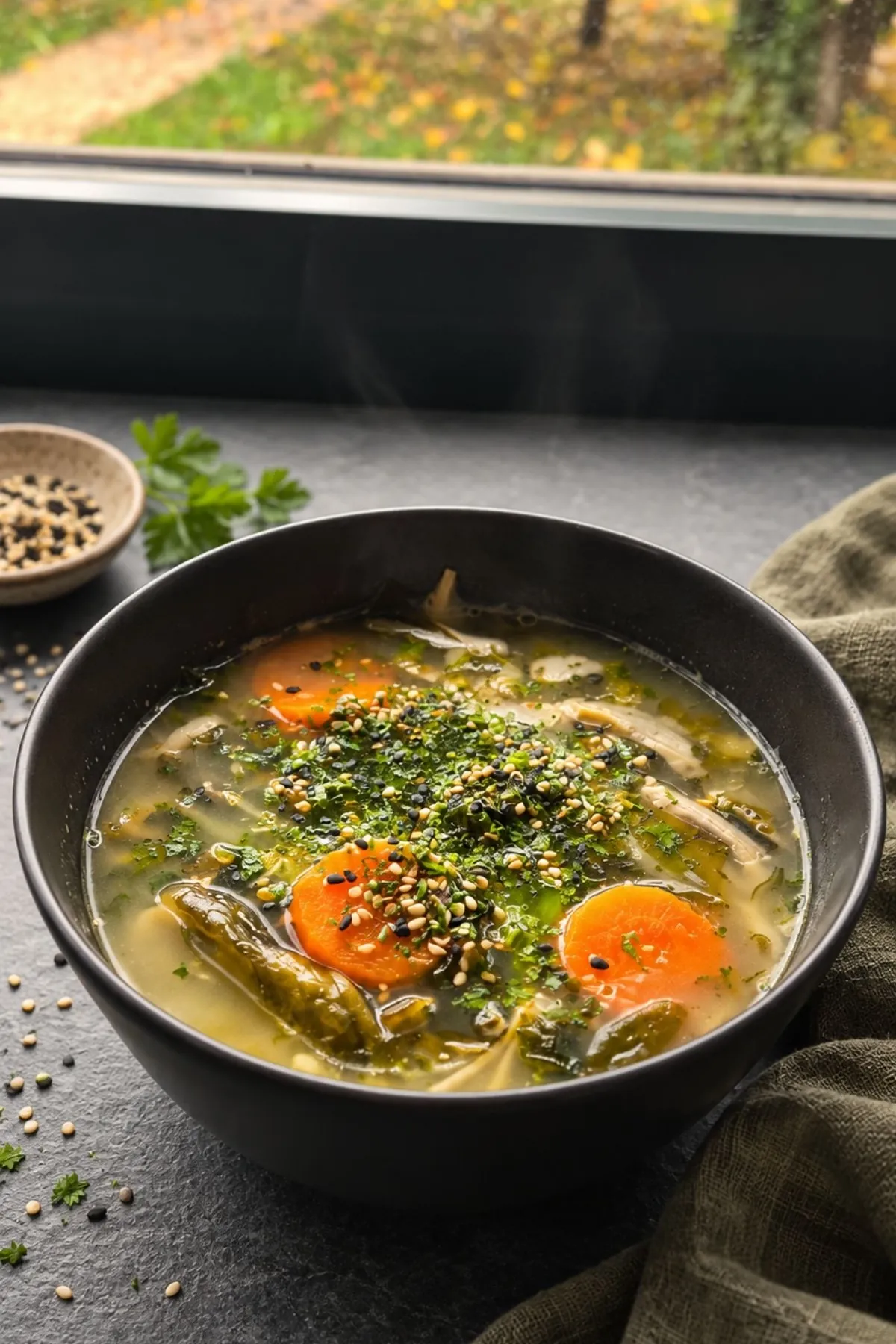
Miso Soba Noodle Soup with Vegan Furikake
Equipment
- Large pot
- Frying pan
Ingredients
For the soup
- 6 cups vegetable broth
- 4 cups water
- 1 piece kombu about 8 inches / 20 cm
- 2 carrots medium, cut into thick rounds
- 1 white onion thinly sliced
- 4 shiitake mushrooms dried
- 1 handful wood ear mushrooms dried, a small handful, about 5 g
- 4 green onions sliced
- 3 tbsp wakame dried
- 8 oz soba noodles
- 2-3 tbsp white miso paste to taste
For the vegan furikake
- 2 tbsp white sesame seeds
- 1 tbsp black sesame seeds
- 2 tbsp nori flakes or 1 nori sheet, crumbled
Instructions
- Put the dried shiitake and wood ear mushrooms in a bowl, cover them with hot water and soak for about 20 minutes, until soft.
- Make the furikake: toast the white and black sesame seeds in a dry frying pan over medium heat, stirring, for 2-3 minutes, until fragrant and the white seeds turn lightly golden. Let them cool, then mix with the nori flakes.
- Put the vegetable broth, water and kombu in a large pot and bring slowly to a simmer over medium heat. Simmer gently for 10 minutes.
- Lift out the kombu, slice it into thin strips and return the strips to the pot.
- Drain the mushrooms, saving the soaking water. Cut off the tough shiitake stems, slice the caps and cut the wood ear into strips. Pour the soaking water into the pot through a fine sieve, leaving any grit behind.
- Add the carrots, white onion and mushrooms and simmer for 10-12 minutes, until the carrots are almost tender.
- Add the soba noodles and cook for 4-5 minutes (check the package), stirring now and then so they don’t stick together.
- For the last 2-3 minutes, add the wakame and most of the green onion, until the seaweed unfolds. Turn off the heat and let the soup rest for a few minutes, so it is no longer bubbling.
- Put 2 tablespoons of miso in a mug or a ladle, add a little hot broth and whisk until smooth. Stir it into the pot. Taste and add more miso the same way if needed. Do not let the soup boil after adding the miso.
- Ladle the soup and noodles into bowls and top with the remaining green onion and a spoonful of furikake.
Notes
Questions About This Soba Noodle Soup
Yes. Use water and keep the kombu, which gives the soup a savory base, like a simple vegan dashi. The soup comes out a little lighter, so you may want a bit more miso at the end.
Yes, that’s how I make it: they go into the pot for the last 4-5 minutes, soak up the flavor of the broth, and their starch makes the soup a little silkier. If you’re making the soup ahead or want a perfectly clear broth, cook them separately, rinse them under cold water and add them to each bowl.
This pot (about 10 cups, or 2.5 liters) takes 2 to 3 tablespoons of white miso. Start with 2, dissolved in a ladle of broth, then taste and add more if needed, always with the heat off.
Not always. Many soba noodles are made with a mix of buckwheat and wheat flour. For a gluten-free soup, choose 100% buckwheat soba and check your miso too, since some types are made with barley.
Gomasio is toasted sesame ground with salt. Furikake is a Japanese seasoning of sesame and nori, traditionally with dried fish flakes. My vegan furikake keeps the sesame and nori and skips both the fish and the salt.
Yes. The broth is made from vegetables and kombu instead of bonito, the miso and soba are plant-based, and the furikake has no fish flakes. If you buy broth or soba, check the label.