
Curry Coconut Thai Rice
Curry coconut Thai rice is a one-pot dish where basmati rice simmers in water and coconut milk with curry powder, ground coriander, and chile flakes, then finishes with red bell peppers, grated carrot, and scallions. It is vegan, ready in about 25 minutes, and bright with both color and aroma.
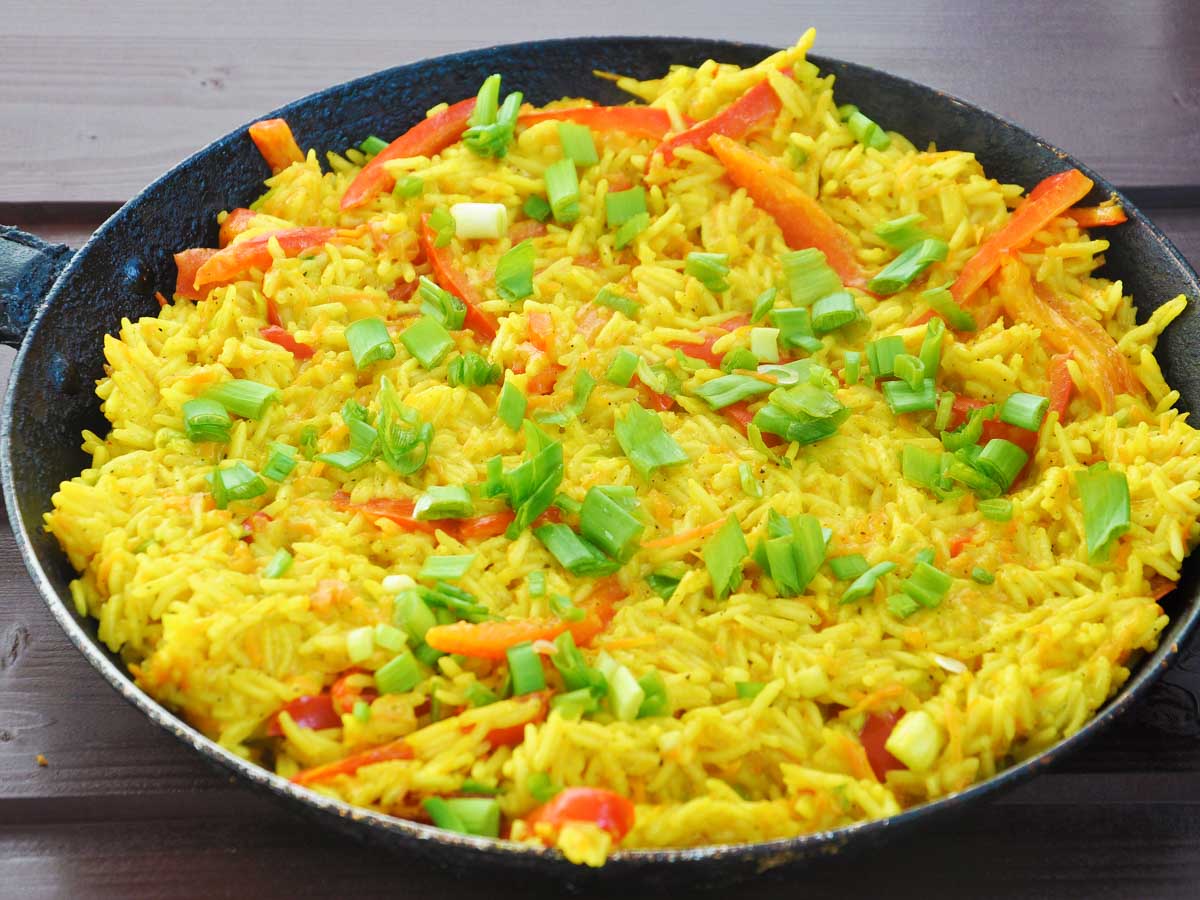
I have been eating rice like crazy these past few days. I am part of an Asian foods campaign and I have been testing all sorts of Asian products, from rice and sauces to spices and veggie mixes, and with this occasion I discovered how awesome rice recipes really are. I will admit I am not a huge fan of Asian food in general, but I have fallen in love with a handful of Asian-specific ingredients, like coconut milk, curry paste and powder, and of course rice in all of its forms.
For lunch I have been having only rice-based recipes, and I love that they are ready in about 15 minutes once the rice is going, with prep that is quicker than ever. This curry coconut Thai rice became my favorite of the bunch, and now that my pantry is full of these great Asian ingredients, I keep coming back to it.
This Recipe Works If You Need
- A fast weeknight lunch or dinner that comes together in one wok with barely any prep.
- A naturally vegan and gluten-free meal that still tastes rich and satisfying.
- A way to use up half-tins of coconut milk and a couple of bell peppers sitting in the fridge.
- A colorful side dish to serve alongside curries, stir-fries, or grilled vegetables.
- A make-ahead lunch you can portion out and reheat through the week.
Why You’ll Love This Recipe
- One pot, minimal cleanup. Everything cooks in a single wok, so the rice absorbs all the curry and coconut flavor and you are left with one pan to wash.
- Ready fast. From the moment the rice starts boiling to a finished dish is roughly 25 minutes, and most of that is hands-off.
- Bright and fragrant. Curry powder and ground coriander perfume the whole kitchen, while the red peppers and carrot keep it fresh rather than heavy.
- Naturally vegan and gluten-free. Coconut milk does all the work that cream or butter would, with no dairy needed.
- Forgiving and flexible. The vegetables are easy to swap for whatever you have, so it rarely needs a special shopping trip.

Ingredient Notes
Basmati rice is the right choice here because its long, separate grains stay fluffy and do not turn gluey as they soak up the coconut milk. Look for aged basmati if you can find it, since older rice has lost more moisture and cooks up even drier and more distinct. A quick rinse under cold water until it runs almost clear removes surface starch and helps the grains stay loose once cooked.
Coconut milk is what makes this rice taste rich rather than plain. Reach for full-fat coconut milk in a tin, not the thin drinking kind in a carton, and give the tin a good shake before opening so the thick cream and watery layer combine. Half a cup is enough to flavor and enrich the rice without making it soupy.
Curry powder carries the dish, so it is worth using a jar you have opened recently. Ground spices fade within a few months of opening, and a tired curry powder will taste flat and dusty. If you toast it for a few seconds in the dry wok before the liquid goes in, the aroma blooms noticeably.
Ground coriander adds a warm, slightly citrusy note that rounds out the curry powder. It is mild on its own, so do not skip it thinking it is optional; it is the background layer that keeps the dish from tasting one-dimensional.
Red bell peppers bring color, sweetness, and a bit of bite. Cut them into thin strips so they soften in the time the rice needs but still hold some texture. Choose peppers that feel heavy and firm with tight, glossy skin, which is the sign they are fresh and sweet rather than mealy.
Carrot goes in grated rather than chopped so it melts into the rice and adds a gentle sweetness throughout instead of showing up as separate chunks. Grate it on the large holes of a box grater for the best texture.
Scallions and chile flakes are the finishing touches. The scallions add a fresh, oniony lift, and the chile flakes give just enough heat to wake everything up. Both are easy to dial up or down to your taste.
Tips
- Let the rice get a head start. Boiling the rice in water alone for the first 10 minutes before the vegetables and coconut milk go in keeps the grains cooking evenly. Adding everything at once tends to leave the rice underdone in the middle.
- Resist over-stirring. Stir only occasionally. Constant stirring rubs the starch off the grains and turns the rice sticky and gummy instead of fluffy.
- Watch the liquid, not the clock. The recipe is done when all the liquid is absorbed and the rice is tender. You will know it is ready when you draw a spoon across the bottom of the wok and no liquid pools back into the track.
- Add the chile flakes early but taste late. Heat builds as the dish cooks, so start with the amount in the recipe and adjust salt and chile right at the end once the flavors have settled.
- Keep the lid on. Cooking covered traps the steam the rice needs to finish, so only lift the lid when you stir.
Substitutions and Variations
- Swap the vegetables. The peppers and carrot are flexible. Frozen peas, sweetcorn, thin green beans, or shredded cabbage all work well stirred in with the rest of the ingredients.
- Change the rice. Jasmine rice gives a similar fluffy result with a slightly floral aroma. If you use brown basmati, expect to add more water and cooking time, since whole grains need longer to soften.
- Adjust the spice. For a milder dish, drop the chile flakes; for a deeper, hotter version, stir in a spoon of curry paste along with the powder.
- Make it a fuller meal. Fold in cubes of pan-fried tofu or a tin of drained chickpeas in the last few minutes for extra protein while keeping it vegan.
Storage and Make Ahead
Let the rice cool, then store it in an airtight container in the fridge for up to three days. Cooked rice is best cooled quickly and refrigerated within an hour or two rather than left out, so it stays safe to eat. To reheat, add a small splash of water or coconut milk and warm it gently in a pan or the microwave until piping hot all the way through, which loosens the grains and brings back the creaminess.
This dish is a great make-ahead lunch, and it sits nicely within a week of vegan rice recipes if you like to plan a few in a row, the way I did during my Asian foods campaign. If you have leftover coconut milk to use up, browse these vegan recipes with coconut milk, and for more in the same spirit take a look at the best vegan curry recipes.
Summarise & Save This Recipe
★ Add us as a trusted Google source
Curry Coconut Thai Rice
Ingredients
- 1 cup basmati rice
- 1 ½ cup water
- ½ cup coconut milk
- 1 tsp curry powder
- ½ tsp ground coriander
- 2 red bell peppers cut in thin strips
- 1 medium carrot grated
- ⅓ cup scallions chopped
- ⅓ tsp chile flakes
- sea salt to taste
Instructions
- Add the water and rice to a wok or deep pan. Cover with a lid and bring to a boil.
- After 10 minutes, add the rest of the ingredients.
- Cook for another 15 minutes, or until all the liquid is absorbed and the rice is well cooked, stirring occasionally.
- Serve warm and enjoy!
Notes
Frequently Asked Questions
Yes. This recipe is fully vegan. The richness comes from coconut milk instead of dairy, and there are no eggs, butter, or other animal products in it. It is also naturally gluten-free, since rice and the spices used contain no gluten.
Basmati rice works best because its long grains stay separate and fluffy as they soak up the coconut milk, rather than turning sticky. Jasmine rice is a good alternative with a slightly floral aroma. A quick rinse before cooking removes surface starch and keeps the grains loose.
You can, but the rice will taste less rich and creamy, since most of the flavor and body comes from the coconut fat. If you only have light coconut milk, use it and consider stirring in a spoonful of extra to deepen the flavor. Shake the tin well before measuring.
About 25 minutes from start to finish, and most of that is hands-off. The rice boils on its own for the first 10 minutes, then everything else cooks together for another 15 minutes until the liquid is absorbed and the rice is tender.
Cool the rice quickly, then keep it in an airtight container in the fridge for up to three days. To reheat, add a small splash of water or coconut milk and warm it gently in a pan or the microwave until piping hot all the way through. This loosens the grains and restores the creamy texture.
It works as a light main on its own or as a side dish next to curries, stir-fries, and grilled vegetables. To turn it into a fuller meal, fold in pan-fried tofu or drained chickpeas in the last few minutes for extra protein while keeping it vegan.






This recipe was fabulous! I didn’t have coriander so I used Garam Marsala. I made it yesterday and I will probably make more tonight!
Thank you, Carol! 😀
Sooo flavorful and much better than the classic, plain rice. Thank you for sharing! 🙂
You’re welcome! 😀
Hi, Lynn! The basmati rice I used is ready in about 15-20 minutes. You should check the instructions on the package and if it needs to boil longer, let it boil as needed.
Hi, I am using jasmine rice instead of basmati, how much water and coconut milk should I use then? Because I know jasmine rice won’t need as much liquid or it will turn really mushy. Thanks
I can’t tell you the exact quantities because I haven’t used it myself, but you can use a bit less water than in the recipe and add more later if needed. Use the same coconut milk quantity.
LOVED this recipe. Simple and flavorful. I added only 1 bell pepper 🙂
Thank you, Paige! 😀