
How to make vegan butter at home
Store-bought vegan butter may be good, but have you ever tried making your own at home? It’s SO easy and delicious! Here’s how to make vegan butter at home!
Homemade vegan butter is a creamy, spreadable, dairy-free butter you blend together in minutes from refined coconut oil, a splash of neutral oil, curdled soy milk, and a few pantry seasonings. You make it because it tastes rich and buttery on toast, it costs a fraction of the store-bought tubs, and you control exactly what goes in it. All you need is a blender and a bit of patience while it sets in the fridge.
I can not contain my excitement for this recipe. Being vegan is not about limiting our options, it is about understanding the relationship between the mind and the body. If it’s true that we are what we eat, then we can try to make our bodies a nice place to be. This butter is one of those small swaps that makes going dairy-free feel effortless rather than like a sacrifice.
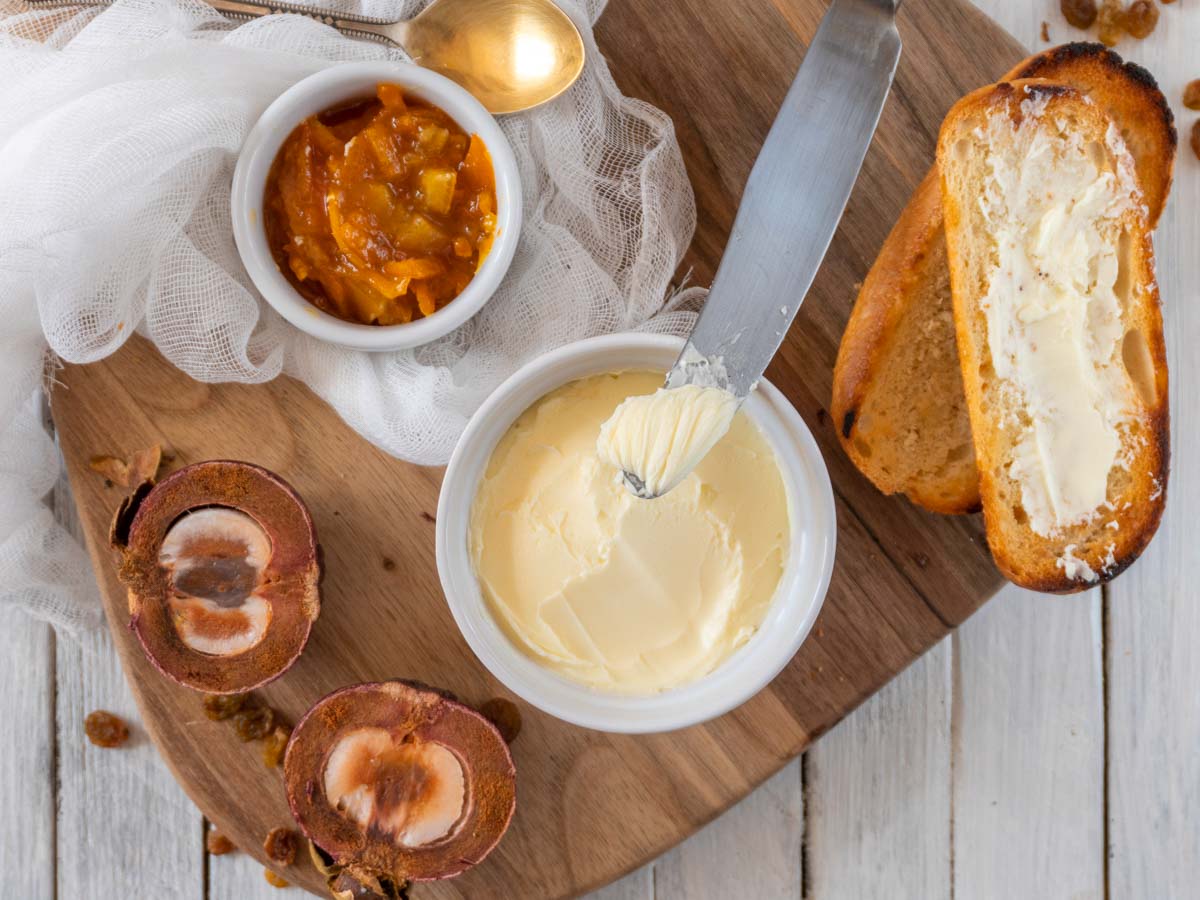
The ingredients that make it work
As I mentioned, the base of this recipe is refined coconut oil. That choice matters more than anything else here. Now I know that some of you are skeptical about refined versus unrefined coconut oil, but keep in mind that unrefined doesn’t automatically equal better. Refined coconut oil has a neutral flavor and no coconut aroma, so your butter tastes like butter and not like a tropical dessert. It also stays firm at fridge temperature and melts on warm toast, which is exactly the texture you want.
The rest of the ingredients each pull their weight. A couple of tablespoons of rapeseed oil keep the butter from getting brittle and hard when cold, so it stays spreadable straight from the fridge. Unsweetened soy milk curdled with apple cider vinegar gives you that faint tang and creaminess real butter has. Nutritional yeast adds a subtle savory, almost buttery depth, a pinch of turmeric lends the pale golden color, and salt ties it all together. Skip the sweetened milk here, since you want savory, not dessert.
Why the method is so simple
You’ll only need your blender for this recipe and a bit of patience. The reason it comes together so cleanly is emulsion: you’re combining melted coconut oil with the curdled soy milk into one smooth, stable mixture, and the blender does the heavy lifting by breaking everything into tiny droplets that hold together. The apple cider vinegar is not just for flavor either. Its acidity curdles the soy milk into a light buttermilk, which helps the whole thing emulsify and gives the finished butter its cultured tang. Once blended, the coconut oil re-solidifies in the fridge and carries that emulsion with it, which is how a liquid mixture turns into a sliceable, spreadable block.
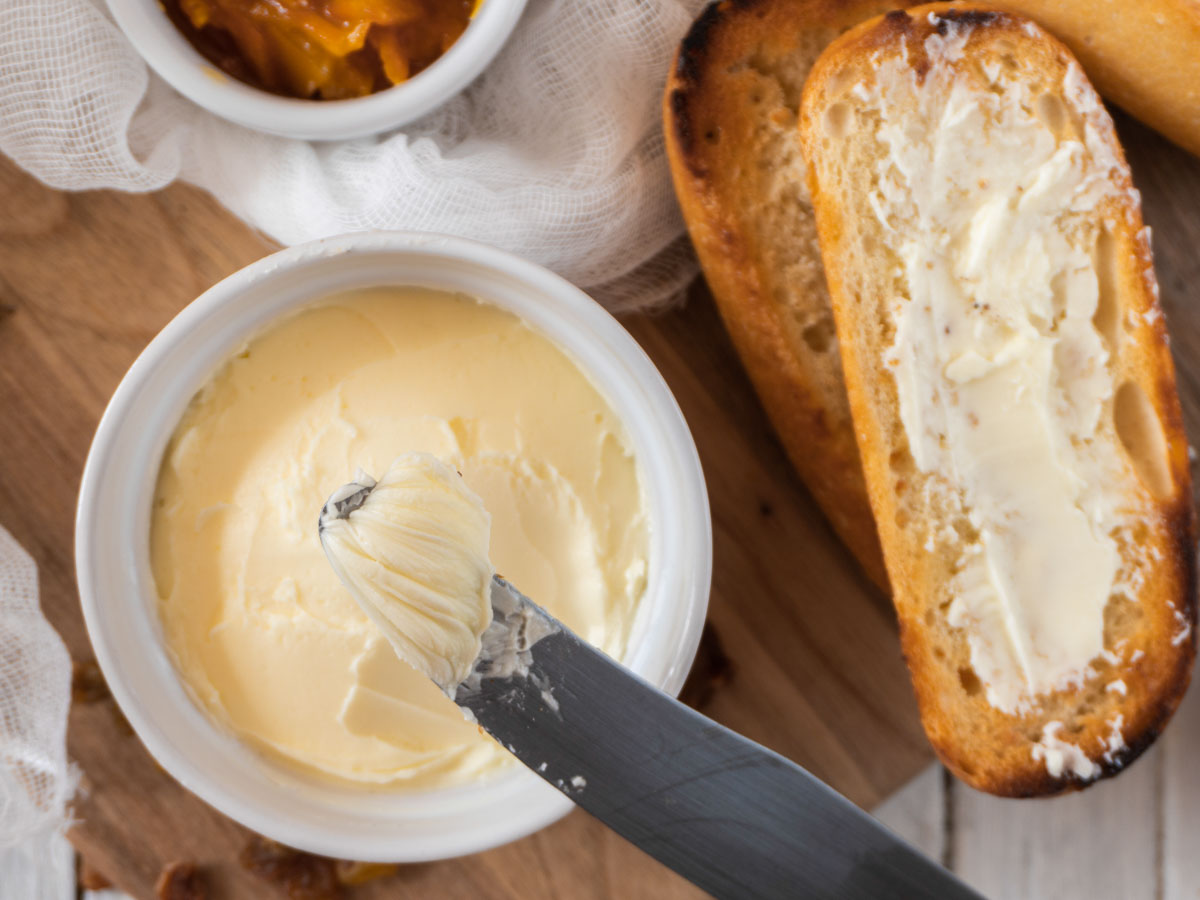
Tips for getting it right
Give the soy milk and vinegar a few minutes together before you blend, so the milk has time to actually curdle. Melt the coconut oil just until it’s liquid, not hot, because a scorching base can make the emulsion split. Season with salt a little at a time and taste as you go, since the amount you’ll want depends on how you plan to use it. Now, it’s up to you and your preference, but if you crave and miss your butter on toast, trust me with refined coconut oil. When you crave real butter on toast, that neutral base is what sells the illusion.
Once blended, pour the mixture into a small container or a silicone mold and let it set completely before you use it. Resist the urge to test it too early. It needs a couple of hours in the fridge to firm up into that proper butter texture.
Ways to use it and how to store it
This butter is endlessly versatile. It’s wonderful on toast, in sandwiches, melted over baked potatoes, on crumpets, or stirred into warm grains. Anywhere you’d reach for dairy butter, this stands in beautifully. It’s the kind of staple that quietly makes the rest of a plant-based kitchen easier, whether you’re building toward a fully vegan diet or just cooking dairy-free a few nights a week.
For storage, keep it in a sealed container in the fridge. While some of its ingredients are long-lasting, like the refined coconut oil base, others aren’t, like the non-dairy milk, so this homemade product keeps well in the fridge for up to a couple of weeks. You can also freeze it in portions for longer storage, then thaw in the fridge before using.
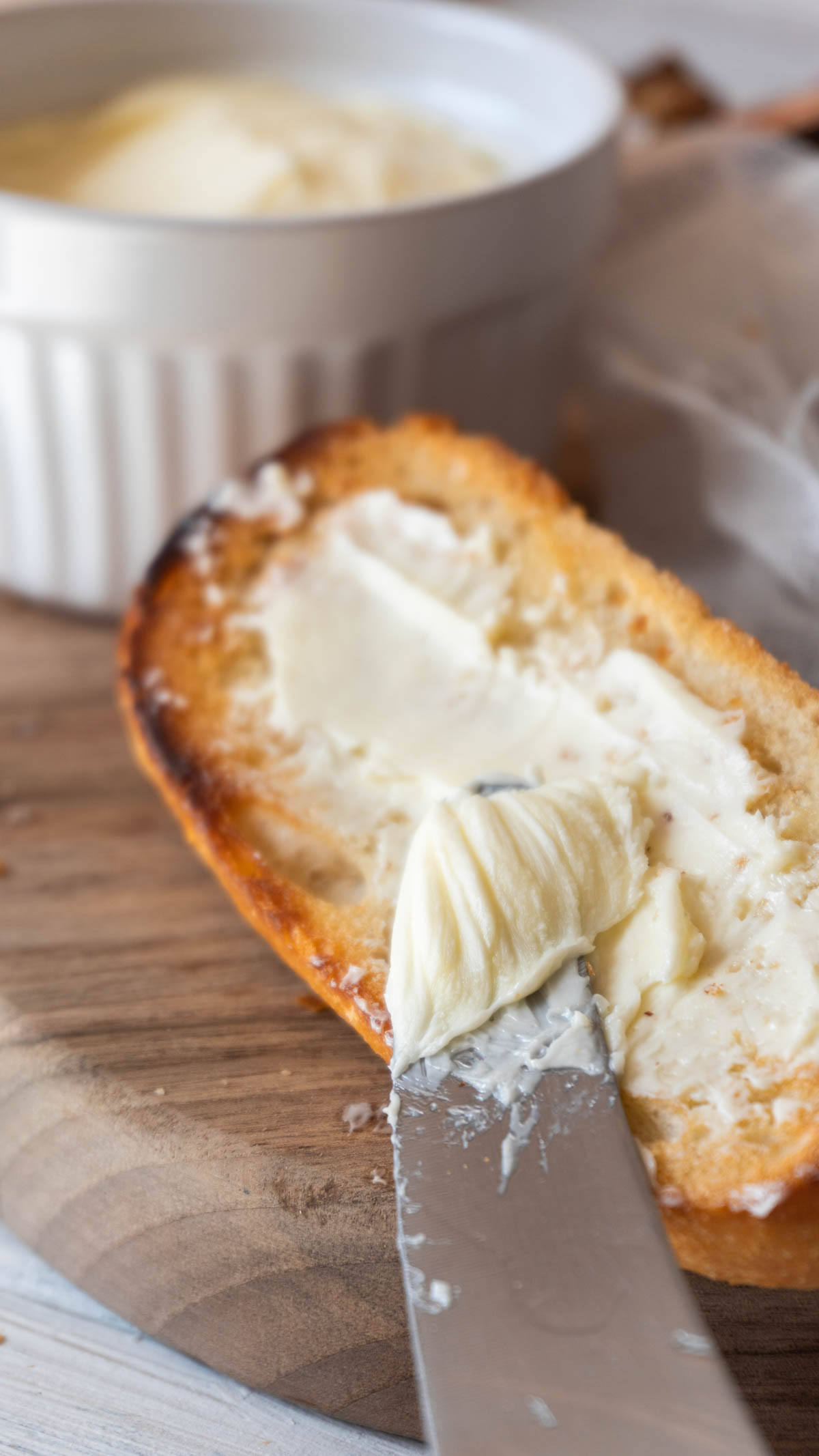
If you make this vegan butter, I’d love to know how it turned out. Please rate the recipe and leave a comment below telling me whether you spread it on toast first or went straight for the baked potatoes, and I am very curious: which type of oil would you use next to the ones I recommended?
Summarise & Save This Recipe
★ Add us as a trusted Google source
How to make vegan butter at home
Ingredients
- 1 cup refined coconut oil melted
- 2 Tbsps rapeseed oil
- ⅓ cup soy milk unsweetened
- 2 tsp nutritional yeast
- 1 tsp apple cider vinegar
- 1 pinch turmeric
- salt to taste
Instructions
- Add the apple cider vinegar to the soy milk and set aside for a few minutes to curdle.
- Transfer the melted coconut oil, rapeseed oil, nutritional yeast and the pinch of turmeric to a blender.
- Add the curdled soy milk.
- Season well with salt.
- Blend until fully combined and smooth.
- Pour into a container and refrigerate until it solidifies.
Notes
Frequently Asked Questions
Curdle unsweetened soy milk with apple cider vinegar, then blend it with melted refined coconut oil, a little rapeseed oil, nutritional yeast, a pinch of turmeric, and salt until smooth. Pour the mixture into a container or mold and refrigerate until it solidifies. It comes together in minutes and only needs a blender.
Refined coconut oil has a neutral flavor and no coconut aroma, so your butter actually tastes like butter rather than coconut. It also firms up well in the fridge and melts on warm toast. Unrefined coconut oil would carry a strong coconut taste into the finished spread, which is why refined is the better choice here.
The acidity of the apple cider vinegar curdles the soy milk into a light plant-based buttermilk. This gives the finished butter a faint cultured tang, similar to real butter, and helps the mixture emulsify into a smooth, stable spread. Let the milk and vinegar sit together a few minutes before blending so the curdling has time to happen.
Kept in a sealed container in the fridge, it stays good for up to a couple of weeks. The refined coconut oil is long-lasting, but the non-dairy milk is more perishable, which sets the limit. For longer storage you can freeze it in portions and thaw it in the fridge before using.
Yes. The couple of tablespoons of rapeseed oil keep the butter from turning brittle and rock-hard when cold, so it stays soft enough to spread right out of the fridge. Coconut oil alone would set very firm, so that small amount of neutral oil is what keeps the texture pliable.
The recipe is built on unsweetened soy milk, which curdles reliably and adds creaminess. Another unsweetened non-dairy milk can work, though results vary depending on how well it curdles with the vinegar. Whichever you choose, make sure it is unsweetened so the butter stays savory rather than sweet.


I can’t wait to make this. Can it be frozen? I’d like to double or triple the recipe. Thanks.
Hi Valerie! Sure! I actually tried it and it lasts a long time. When you need it, let it thaw in the fridge.
WOW! I’m amazed, it has the perfect texture!
Buna Ruxandra! spune-mi, te rog, nutritional yeast este drojdia inactiva cumva?
Multumesc!
Buna! Da 🙂