
Collard Greens Stew (Romanian-Style, Vegan)
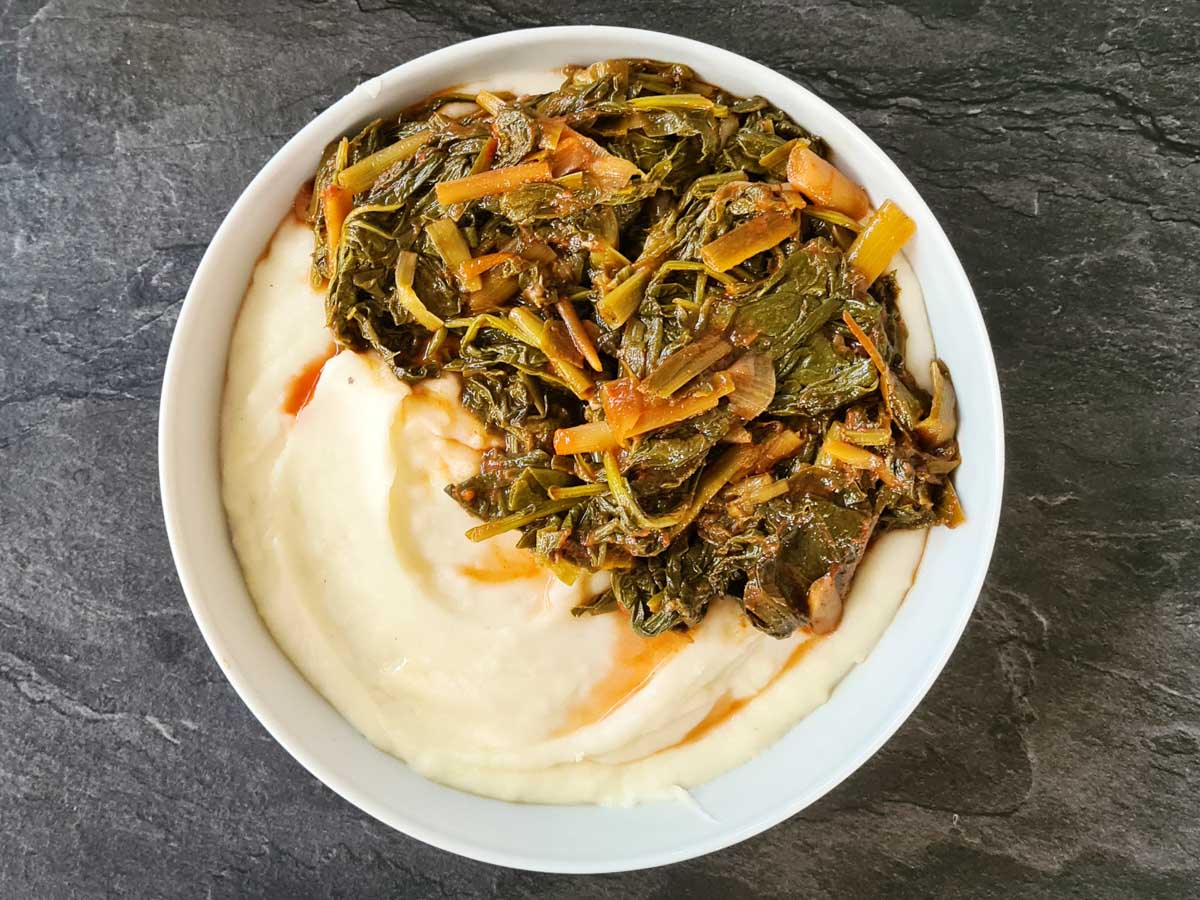
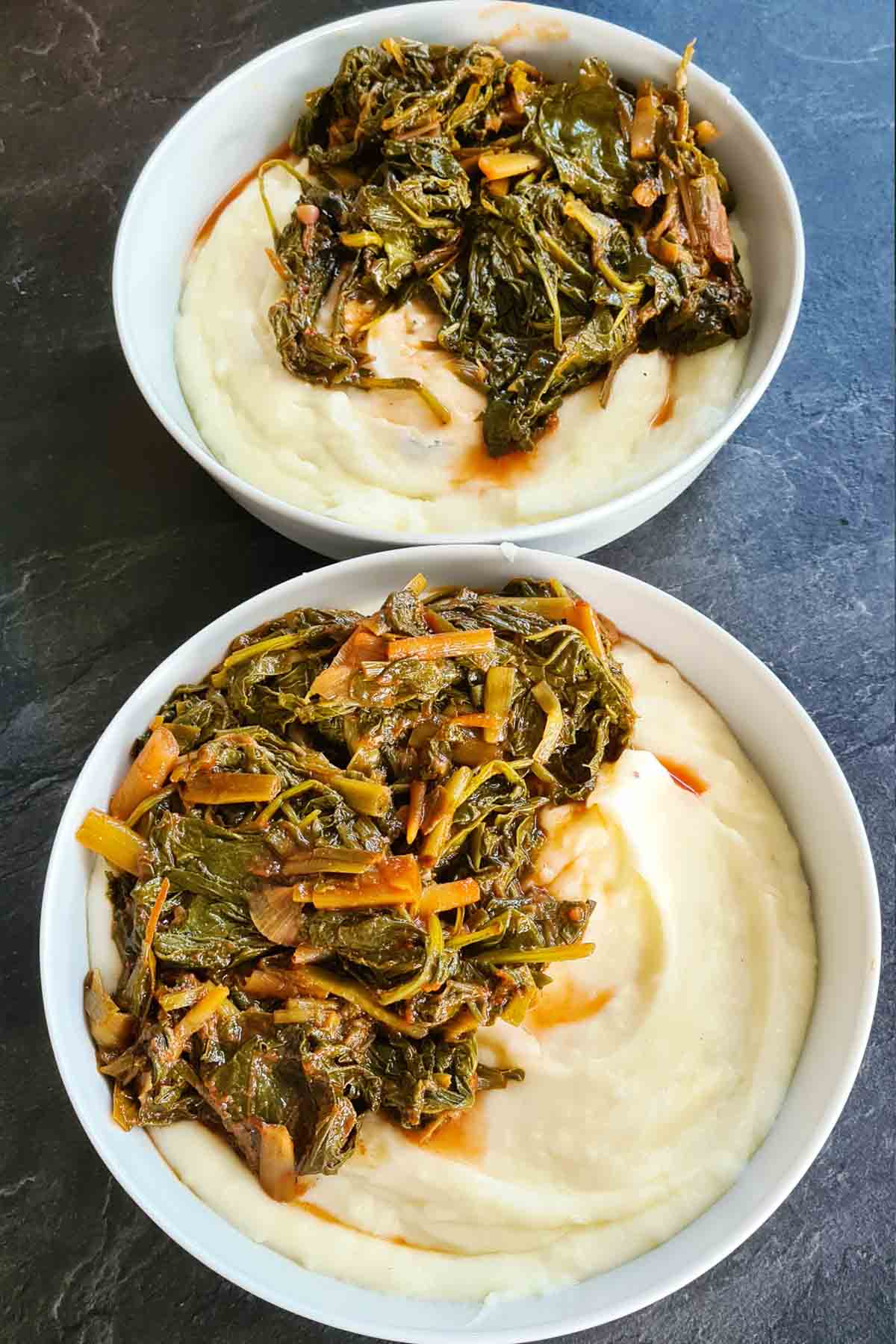
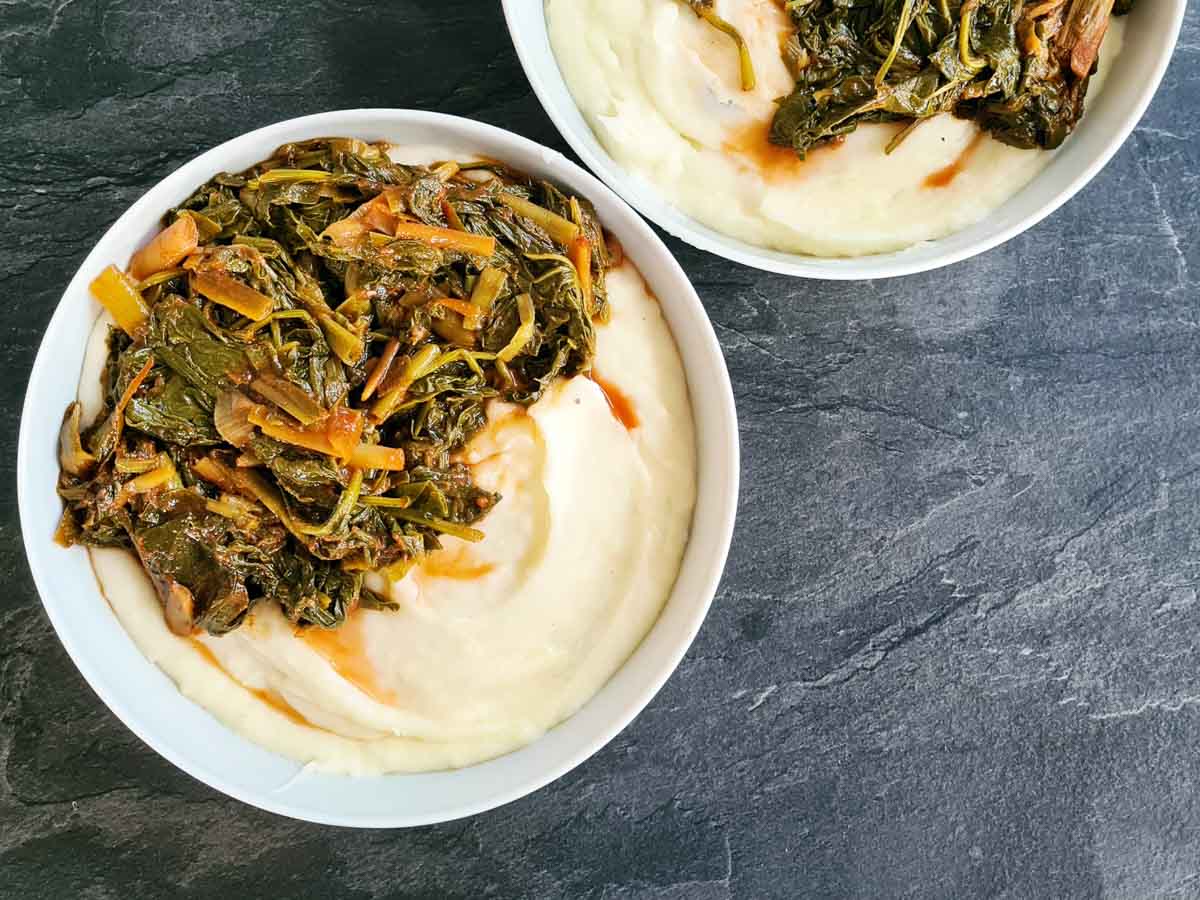
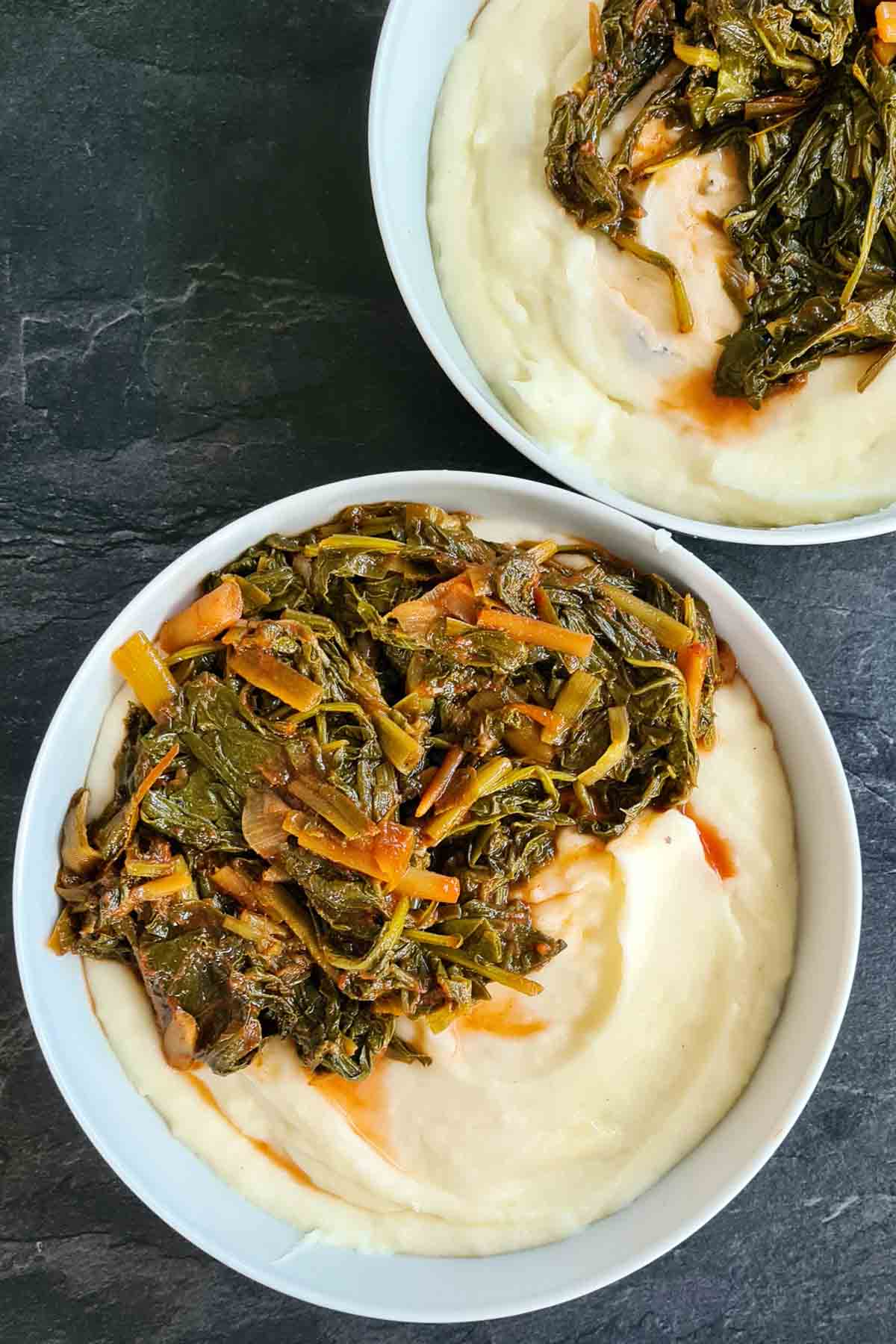
This collard greens stew is a Romanian-style braised green dish made with collard greens, green onion, green garlic, oil, and a splash of water, cooked low and slow until the leaves become completely tender and the flavors concentrate. It takes about 40 minutes and uses one pan. Serve it over mashed potatoes for a simple, filling meal in the Eastern European tradition of leafy stews. The recipe is naturally vegan as written; use dairy butter in the mashed potatoes if you prefer, or keep it fully plant-based with vegan butter.
This Recipe Works If You Need
- A simple, filling vegetable stew that uses a large bunch of leafy greens in one go
- A Romanian-style comfort meal served over mashed potatoes
- A naturally vegan or vegetarian main with very few ingredients
- A recipe that works with collard greens, kale, spinach, or sorrel
Why You’ll Love This Recipe
- One pan, minimal ingredients — collard greens, onion, garlic, oil, and water
- Classic Eastern European comfort food — leafy stew over mashed potatoes is a dish that has fed families across Romania for generations
- Flexible — works with whatever leafy greens you have, fresh or frozen
- Nutritious — collard greens are high in vitamin K, vitamin C, and calcium, and slow braising keeps most of it intact
Ingredient Notes
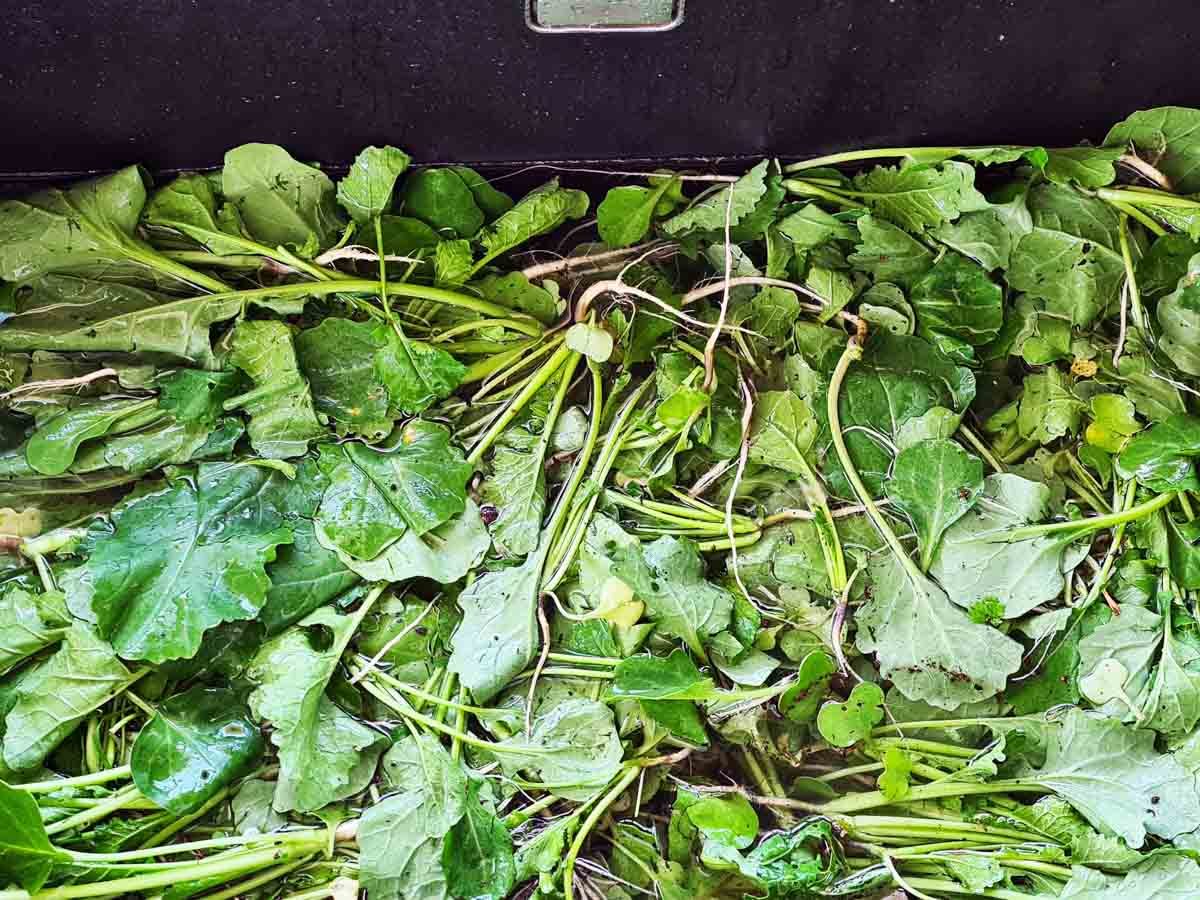
Collard greens — Use only the leaves, not the central stems, which are tough and take much longer to cook. For young plants, the stems are small enough to leave on; for mature collard greens, strip the leaf away from the stem by holding the stem at the base and pulling the leaf upward. Wash the leaves thoroughly — 3 to 4 rinses in cold water — as they tend to hold grit and soil between the folds. Chop roughly into large pieces; they will shrink significantly as they cook.
Green onion (scallions) — Both the white and green parts, sliced. Fresh green onion gives a milder flavor than dry onion; it softens into the stew rather than becoming sharp. Frozen pre-cut green onion works well here.
Green garlic — Young green garlic, sliced thinly, has a gentler flavor than mature garlic cloves. If you cannot find it, substitute 2 to 3 regular garlic cloves, minced. Add them slightly later in the cooking to prevent burning.
Oil — Sunflower oil or any neutral oil works well. A generous amount — do not reduce it — is what gives this stew its characteristic richness. The oil emulsifies with the vegetable liquid released during cooking and coats the greens.
Water or vegetable broth — Added in small amounts to keep the stew from drying out during the long braise. The greens release their own liquid as they cook; add water only as needed, a few tablespoons at a time.
Tips
- Do not rush the braise. Collard greens need time on low heat to become fully tender. High heat makes them chewy and slightly bitter. Low and slow — 30 to 35 minutes covered — is the only way to get the texture right.
- Salt the stew only near the end of cooking. Salting too early draws out moisture quickly and can make the leaves tough before they have had time to braise properly.
- Taste the greens before serving. They should be completely soft with no resistance when you bite through — if they still feel fibrous, cover and cook for another 10 minutes.
- For the mashed potatoes, cut potatoes into small cubes so they boil faster (about 15 minutes). Drain most of the water but leave a little in the pot, add butter, and mash with a hand mixer. Cover the pot with a kitchen towel for the first 20 seconds of mixing to prevent splashing.
Substitutions and Variations
Swap collard greens for kale — Kale has a similar texture and requires the same long braise. Curly kale works well; remove the tough central stems as you would with collard greens. The flavor is slightly more bitter than collard greens but mellows considerably with slow cooking.
Use spinach or sorrel for a quicker version — These are much more tender and cook in 10 to 15 minutes rather than 35 to 40. The technique is the same, but the timing is much shorter. Sorrel gives a distinctive sour note that is particularly good over mashed potatoes.
Add a can of white beans — Stir in drained cannellini or navy beans in the last 10 minutes of cooking. They absorb the braising liquid and make the stew more substantial without changing the character of the dish.
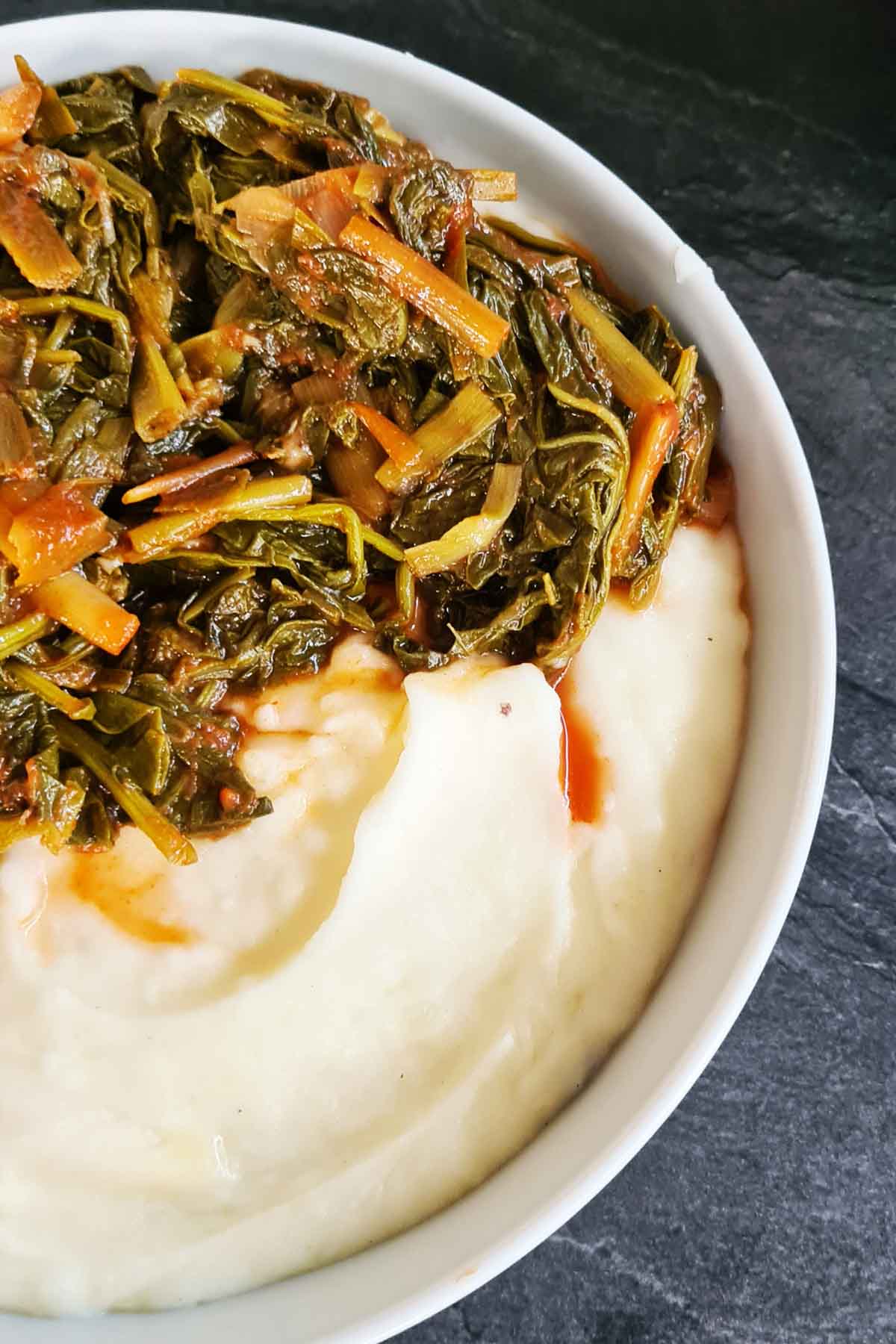
Serve over polenta instead of mashed potatoes — A thick, creamy polenta works equally well as the base. Try the traditional Romanian polenta recipe as the base for this stew.
Storage and Make Ahead
This stew keeps in the fridge for up to 4 days in an airtight container. The flavor deepens overnight as the greens continue to absorb the braising liquid — it is often better on the second day. Reheat gently on the stove over low heat with a splash of water to loosen it if needed. Freeze for up to 2 months; thaw overnight in the fridge and reheat slowly. The mashed potatoes are best made fresh rather than stored with the stew.
For other Romanian-style vegetable dishes, try the vegetarian cassoulet or the lentils and mushroom bake. For more ways to use leafy greens, see the kale breakfast salad.
Summarise & Save This Recipe
★ Add us as a trusted Google source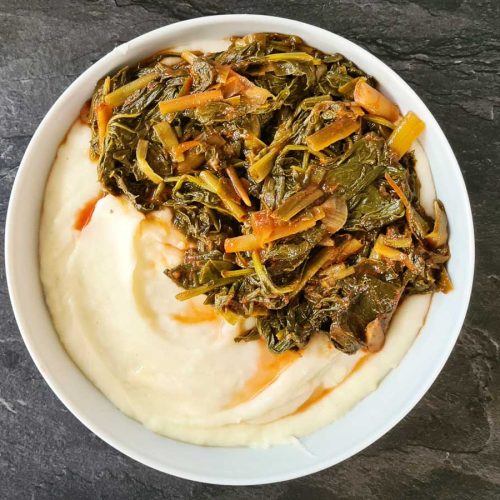
Collard Greens Stew
Ingredients
- 1 kg 2.2 pounds collard greens or other leafy greens – spinach, sorrel – I know it sounds a lot, but after you cook the greens they’ll shrink considerably
- 10 large bunches of green garlic
- 10 large bunches of green onion
- 1 white onion thinly chopped
- 500 ml 2 cups tomato juice
- 4 Tbsp sunflower oil
- salt and pepper to taste
Instructions
- Add the oil in a pan and wait for it to heat.
- Add the thinly chopped white onion and cook it.
- Then add the collard leaves, roughly chopped. Add the green onion and garlic.
- Add 200ml of water and cover with a lid. Leave the pan on medium heat for 20 minutes.
- Add the tomato juice and leave it to cook for 5 more minutes.
Frequently Asked Questions
Yes, collard greens are much better cooked than raw. The leaves are thick and fibrous with a slightly bitter flavor that raw preparation does not soften. Braising them slowly in oil and a small amount of liquid for 30 to 40 minutes transforms the texture completely — the leaves become tender and the bitterness mellows into a mild, savory flavor. Young collard greens can be eaten raw in very thin strips in a salad, but mature leaves need cooking.
In a braise like this stew, collard greens take 30 to 40 minutes over low heat to become fully tender. The exact time depends on the age and size of the leaves — young leaves from smaller plants cook faster than large, mature ones. Check by pressing a piece of leaf between two fingers: it should feel completely soft with no fibrous resistance. If still chewy, cover and cook for another 10 minutes before checking again.
In Romanian cooking, this style of dish is known as stufat and is made with various leafy greens: spinach, sorrel, leeks, or collard greens. It is similar in technique to a Southern-style braised collard greens dish (cooked low and slow with aromatics) but without the smoked meat and with much less liquid, making it closer to a thick stewed vegetable than a pot of braising liquid. Served over mashed potatoes or polenta, it is a complete meal.
Yes. Frozen collard greens are already chopped and blanched, which reduces the braising time to about 20 to 25 minutes. They release more liquid than fresh, so be careful not to add extra water in the early stages — wait until the pan looks dry before adding any. The flavor and texture of the finished stew are slightly softer than with fresh greens but entirely acceptable.
Mashed potatoes are the traditional accompaniment in Romanian cooking and complement the stew well — the creamy, rich potato base absorbs the braising liquid. Polenta works equally well and is common in Romanian cuisine. Plain boiled rice or thick slices of crusty bread are simpler alternatives. For a more complete plate, add a boiled or fried egg on top of the mashed potatoes before ladling on the stew.




Amazing recipe, thank you.