
Vegan Kung Pao Chick’n
Vegan Kung Pao Chick’n is a plant-based version of the classic Sichuan stir-fry, built on textured soy protein instead of chicken and coated in a bold sauce that hits spicy, sweet, sour, and savory all at once. This one folds in zucchini, bell pepper, green onion, macadamia nuts, garlic, ginger, and dried Chinese red pepper, then finishes with a little tapioca flour so the sauce turns glossy and clings to every cube. It is fully vegan, cooks in one pan, and stands up to any takeaway box.
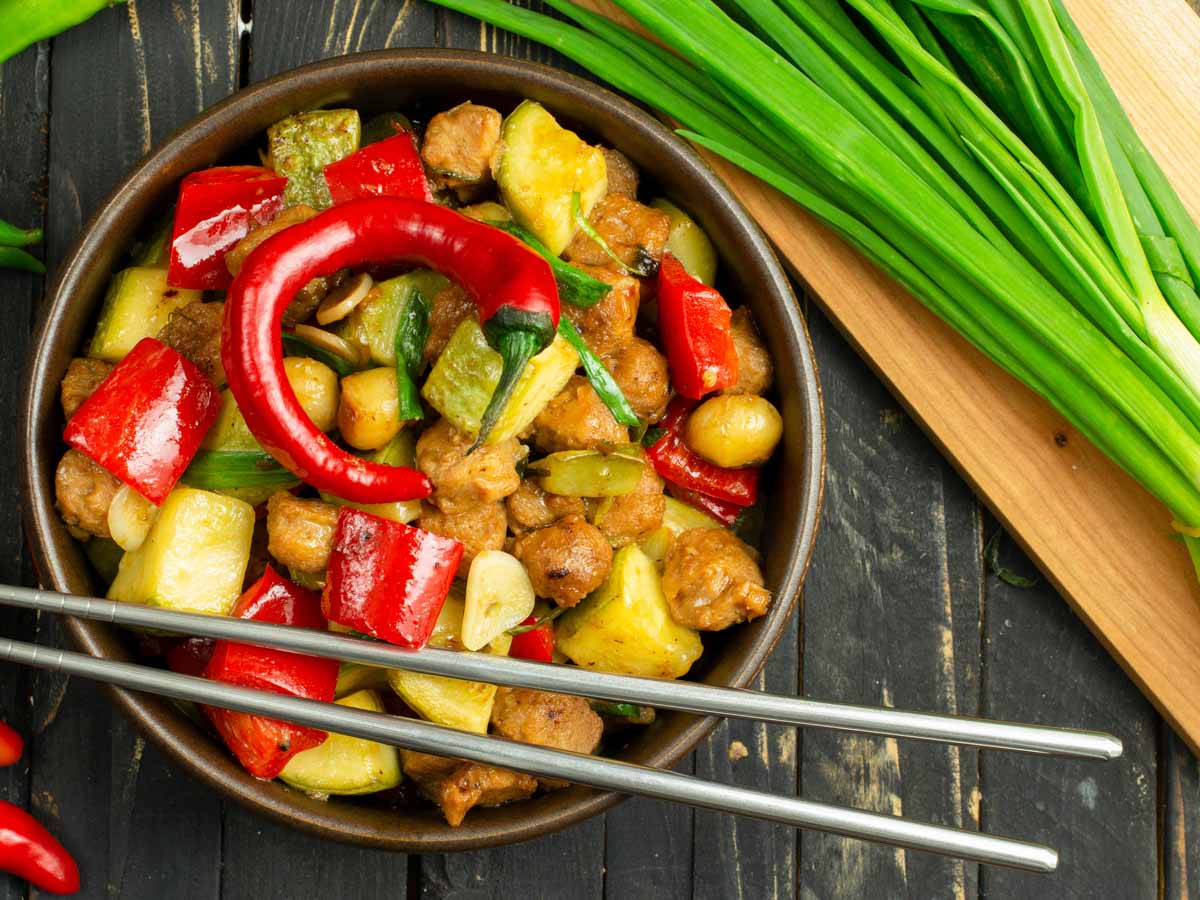
If you have been following my blog for a while, you might already know that I am a big lover of Chinese cuisine. A big one! I could happily eat my way through the whole Asian cuisine any day of the week, and this vegan Kung Pao Chick’n is one of those dishes that is, hand on heart, out of this world. I really believe it is 10 times better than ordering takeaway, and did I mention it is way cheaper to make the homemade version too?
What Is Kung Pao Chick’n?
Kung Pao is an authentic Chinese dish born in the Sichuan province, and like most things that come out of Sichuan, it surely is spicy. Traditionally it is made with chicken and built around one unforgettable combination of flavors: spicy, sour, sweet, and salty, all in the same bite. For this vegan take I swapped the chicken for textured soy protein, because its texture and taste complete the rest of the ingredient list perfectly. If you love this kind of food as much as I do, you will want to bookmark my whole Asian cuisine guide for more where this came from.
The Ingredients That Make It Work
For this vegan recipe I chose textured soy protein (also known as TSP), plus zucchini, bell peppers, green onions, ginger, macadamia nuts, coconut oil, and, of course, some dried Chinese red peppers. Here is what each of the key players brings to the pan:
- Textured soy protein: the star swap for chicken. It comes dry, so it needs a spell in boiling water and then a good marinade before it will drink up all that soy sauce. If you are curious where a protein like this fits into a plant-based plate, I go into it in my post on proteins in the vegan diet.
- Macadamia nuts: classic Kung Pao usually leans on peanuts, but I love macadamias here for their buttery crunch against the spicy sauce.
- Dried Chinese red pepper: the heat engine of the dish. The one thing I would swap if I could is this pepper. I would reach for real Sichuan peppercorn, but this comes pretty close, I must admit.
- The sauce: soy sauce (or tamari if you want the gluten-free version), balsamic vinegar, sesame oil, and chili garlic sauce, rounded out with fresh garlic and minced ginger.
- Tapioca flour: just a touch, stirred in at the end to thicken everything into a glossy coating.
- Zucchini, bell pepper, and green onion: the vegetables that keep it fresh, colorful, and full of bite.
How to Get the Texture and Sauce Right
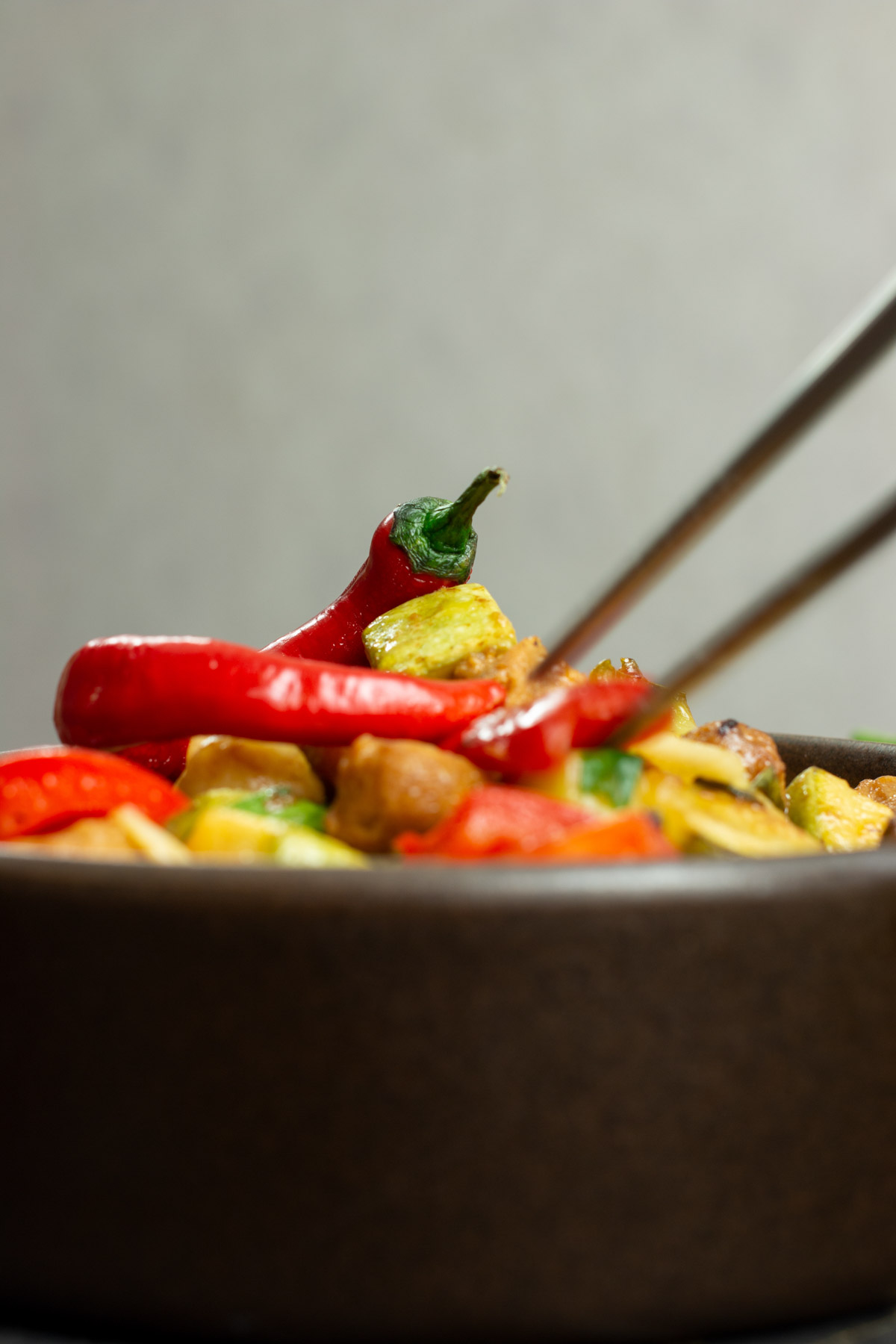
The whole dish lives or dies on how you treat the soy cubes. Boil them for 10 to 15 minutes first so they soften all the way through, then drain them well. That draining step matters, because textured soy protein is porous and holds a surprising amount of water. Toss the drained cubes with soy sauce and a little coconut oil and let them sit for 30 minutes. That rest is what turns bland spongy cubes into savory, seasoned bites, since the soy protein soaks the marinade right into the center.
When you move to the pan, start the garlic, ginger, and Chinese red pepper in hot coconut oil and let them develop some color before anything else goes in. This blooms the aromatics and the dried pepper so their flavor carries through the whole stir-fry, but keep an eye on the garlic so it does not scorch. Add the vegetables and cook them just 5 to 7 minutes so they keep some snap rather than going soft. The tapioca flour goes in last: stir it through and it thickens the pan into a shiny sauce that coats every cube instead of pooling at the bottom.
Dialing In the Heat
You know I am all about spices, and I am all about burning my tongue every time I eat Chinese. I usually add around half a teaspoon to a full teaspoon of dried Chinese red pepper, but this is the easiest thing in the recipe to make your own. Add less if you want a gentler warmth, or more if you like it fierce like I do. The chili garlic sauce brings its own kick too, so start conservative the first time and taste as you go. You can always bring the heat up, but you cannot take it back out.
What to Serve With Vegan Kung Pao
A bowl of steamed rice is the natural home for all that glossy sauce, and plain noodles work just as well if you want to soak up every last drop. If you are in the mood to build a bigger Asian spread, this Kung Pao sits beautifully next to a bowl of authentic vegan ramen or a fragrant pumpkin curry for a spread that keeps everyone reaching back for more.
Storing and Making It Ahead
Leftovers keep well in an airtight container in the fridge for a few days, and the flavor only deepens overnight as the marinade keeps working on the soy. Reheat gently in a hot pan with a splash of water to loosen the sauce back up. It is a great candidate for batch cooking too, so if you like planning ahead, tuck it into your rotation of healthy dinner meal prep recipes, and if you find yourself with an odd portion left over, it fits right in with my favorite ways to reinvent leftovers.
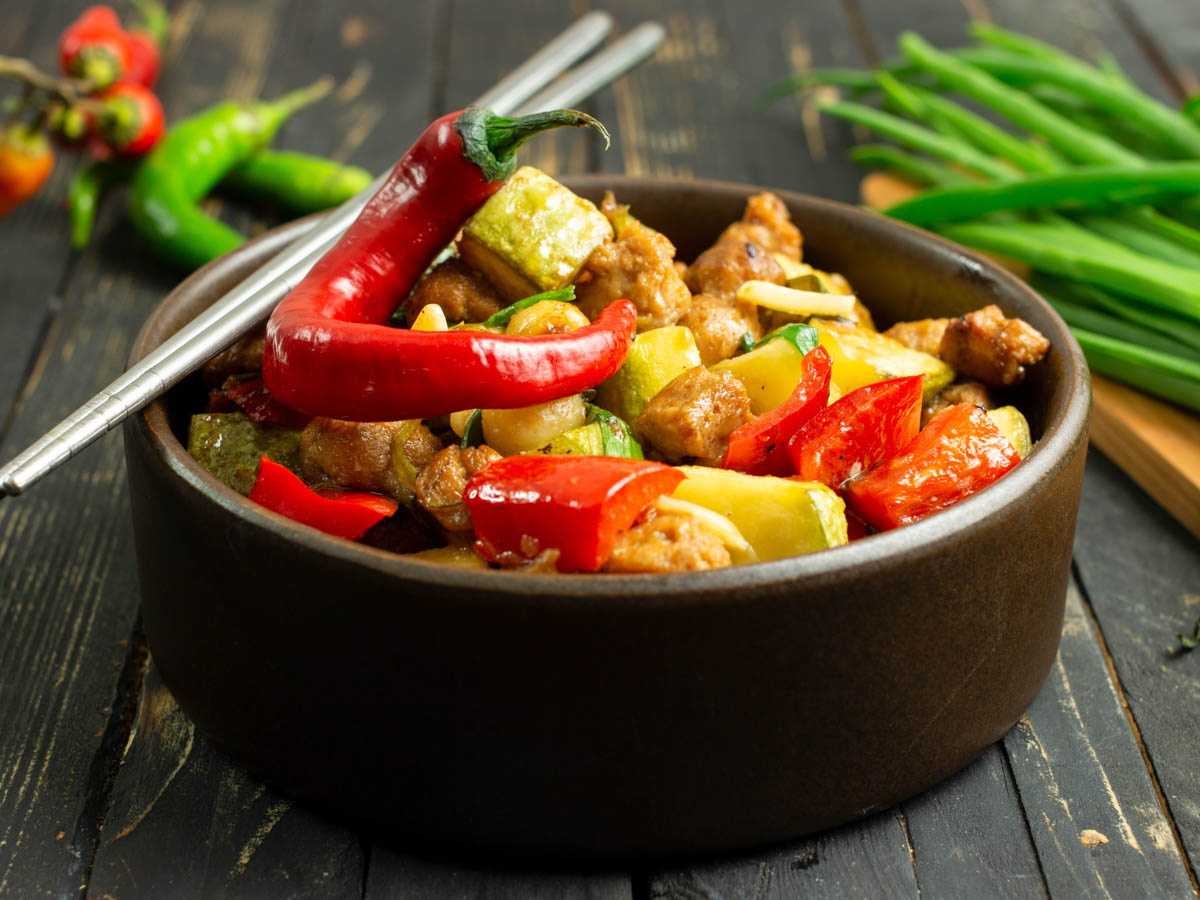
If you make this Kung Pao, come back and tell me how far you dared to go with the Chinese red pepper, and whether you stuck with the macadamias or reached for something else. Leave a star rating and a comment below so I know how it turned out for you. I am so curious if you loved it as much as I do!
Vegan Kung Pao Chick’n
Ingredients
- 100 g textured soy protein cubes
- 1 zucchini cut into cubes
- 1 bell pepper cut into cubes
- 2 green onions sliced
- ½ – 1 tsp dried Chinese red pepper depending on how spicy you like it
- 3 cloves garlic thinly sliced
- 1 tsp ginger minced
- 2 Tbsp macadamia nuts
- ¼ tsp tapioca flour
- 2 Tbsp coconut oil
- 1 Tbsp balsamic vinegar
- 1 Tbsp chili garlic sauce
- 1 Tbsp sesame oil
- 3 Tbsp soy sauce or tamari
- salt to taste
Instructions
- In a pot, bring some water to a boil, add the soy cubes, and cook for 10-15 minutes.
- Drain well, then transfer to a bowl.
- Add the soy sauce and 1 Tbsp of coconut oil. Mix to combine and set aside for 30 minutes.
- In a pan, add 1 Tbsp of coconut oil and saute the garlic, ginger, and Chinese red pepper over medium heat.
- When they develop some color, add the marinated soy cubes and cook for 1 more minute.
- Add the zucchini, bell pepper, half of the green onion, macadamia nuts, balsamic vinegar, sesame oil, and chili garlic sauce.
- Stir and cook for 5-7 minutes.
- Add the tapioca flour and stir until the sauce thickens.
- Season with salt, if needed.
- Sprinkle the remaining green onion on top when serving.
Notes
Frequently Asked Questions
Yes, this version is fully plant-based. The chicken is replaced with textured soy protein, and every other ingredient, from the coconut oil to the balsamic vinegar and chili garlic sauce, is vegetable-based. Use tamari in place of soy sauce and check your chili garlic sauce label if you also need it gluten-free.
It is made from textured soy protein cubes, sometimes labeled TSP. The dry cubes are boiled for 10 to 15 minutes to soften, then drained and marinated in soy sauce and a little coconut oil so they turn savory and meaty instead of spongy. Their porous texture is what lets them soak up the marinade and the sauce.
The heat comes mainly from the dried Chinese red pepper and the chili garlic sauce, so it is easy to control. I usually add half a teaspoon to a full teaspoon of the red pepper, but you can add less for a gentle warmth or more if you like it fierce. Start conservative the first time and taste as you go, since you can always add heat but cannot take it back out.
Yes. Swap the soy sauce for tamari, which is the naturally gluten-free alternative, and double-check the label on your chili garlic sauce. The tapioca flour used to thicken the sauce is already gluten-free, so no change is needed there.
The recipe is written for textured soy protein, which gives that chewy, chicken-like bite. If you cannot find it, extra-firm tofu that has been pressed and cubed is a common stand-in, though the texture will be softer and it will not hold the marinade in quite the same way. Whatever you use, give it time in the soy sauce marinade for the best flavor.
Steamed rice is the classic pairing, since it soaks up all the glossy sauce, and plain noodles work just as well. For a bigger Asian-inspired spread you can serve it alongside a bowl of vegan ramen or a fragrant pumpkin curry.



I see a chili pepper on top of the dish in the pictures, but I don’t see any mention of it in the recipe, am I missing something?
It’s just for garnishing – optional. 🙂
I made it SPICY. And I regret nothing, it was completely yummy. Thanks for the recipe! 😉
Hi! I do not see coconut aminos in the ingredient and if it is in the recipe how much is the mesure?
Thank You! Yolande Labbe
Hi, Yolande! I forgot to add coconut aminos or soy sauce. So you can use soy sauce or tamari (its gluten-free version) as well.