Japanese Curry – Vegetarian
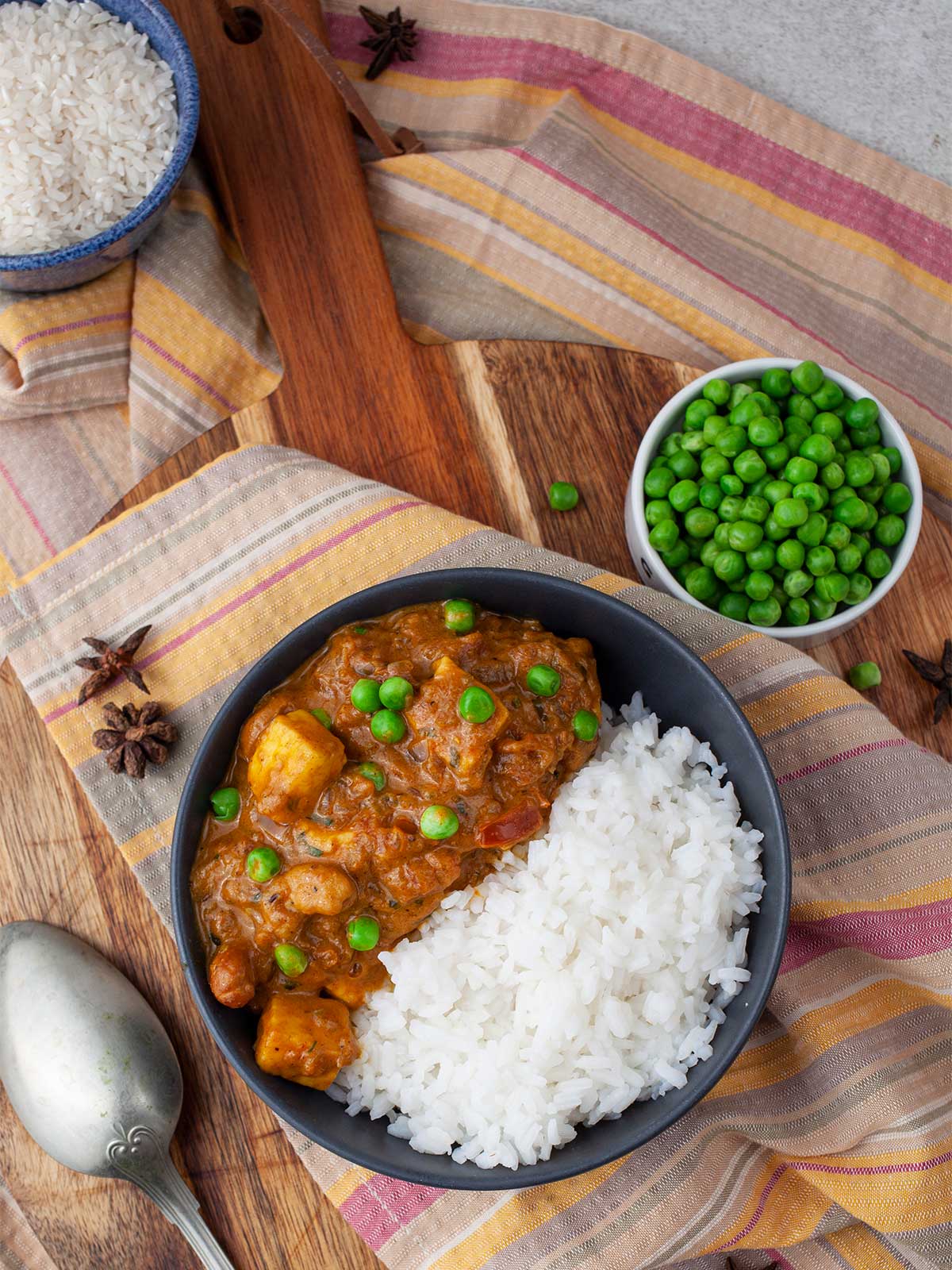
This vegetarian Japanese curry (kare) is a thick, mellow, gently spiced stew of smoked tofu, potatoes, carrots and peas, simmered in a homemade curry roux and spooned over warm white rice. It is fully plant-based, comforting, and less fiery than Indian or Thai curries, with a rounded, slightly sweet flavor that comes from grated apple and a scratch-made spice blend. Today I am excited to share my love for Japanese curry, a recipe I recently discovered and now cannot stop making.
Japanese curry has been a staple in home kitchens for well over a hundred years. It actually traces back to Indian cooking and was introduced to Japan in the late 19th century by the British, then adapted over time into its own comforting, family-friendly style within Japanese cuisine. What sets it apart is the texture: a glossy, spoon-coating sauce built on a butter-and-flour roux rather than a thin, brothy curry.
Why I make Japanese curry without meat
The authentic Japanese recipe traditionally contains meat, but I made a vegetarian and vegan version that keeps all the cozy, savory depth. I used smoked tofu for a meaty bite and a hint of smokiness, and I swapped in vegetable stock instead of chicken or beef broth. Nothing about the finished bowl feels like it is missing anything. It is the kind of dish I want after a long day, when I need something warm, filling and low-effort to eat.
Building the curry spice blend from scratch
The flavor here starts with a homemade curry powder, and it is worth the few extra minutes. You toast whole coriander, cumin, fenugreek, cardamom and fennel seeds along with black peppercorns, a cinnamon stick, cloves and star anise in a dry pan until they turn fragrant, then grind them with turmeric, chili powder, a little nutmeg and a touch of dehydrated orange peel. Toasting the whole spices before grinding wakes up their oils and gives the curry a much deeper aroma than pre-ground powder alone.
You will make more spice mix than this one pot needs, and that is on purpose. Transfer the extra to a clean jar and you have a head start on your next batch. If grinding your own blend feels like a lot, this is the same skill set behind working with any curry base, and my notes on cooking with curry paste cover the shortcuts too.
The roux is where the magic happens
The signature thick, velvety sauce of Japanese curry comes from a roux, not from cornstarch or reducing for an hour. In a small pot you melt vegan butter, whisk in white flour, and cook the two together over medium heat, stirring almost constantly, for around 15 minutes until the mixture turns a golden-brown color. Then you stir in grated ginger and a few tablespoons of your curry spice mix, cook it for about a minute more, and fold the whole thing into the simmering stew.
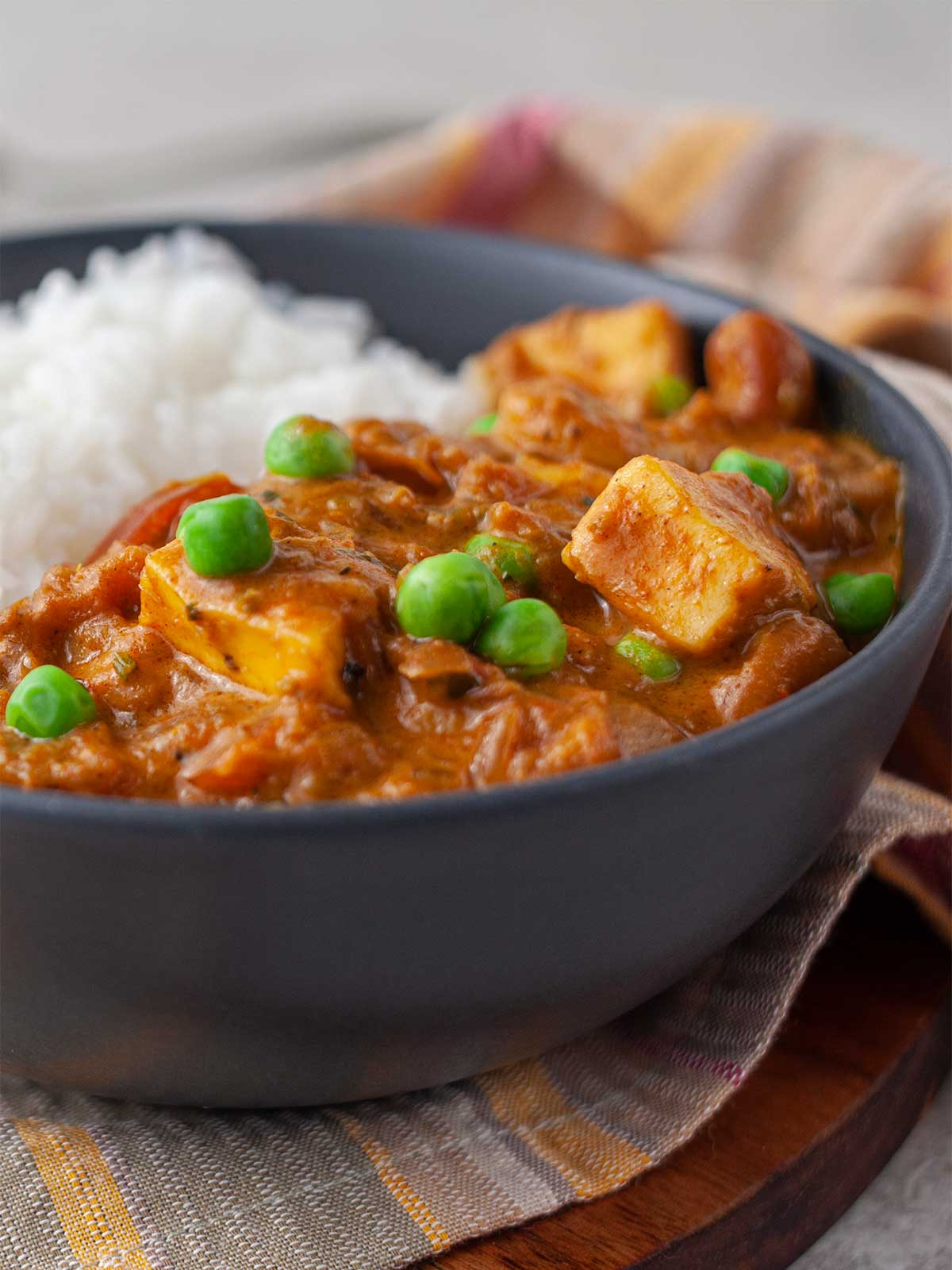
Two things make or break the roux. First, keep stirring so the flour toasts evenly and never scorches. Second, do not rush the color: that golden-brown stage is what gives the curry its rich, roasted flavor and its glossy body. Once it goes into the pot, the sauce will thicken and turn creamy as it finishes cooking.
Ingredient notes and easy swaps
A few ingredients pull extra weight in this recipe. Grated apple melts into the sauce and gives that classic Japanese-curry sweetness that balances the spices. A spoonful of miso paste adds savory, umami depth in place of meaty stock. Potatoes and carrots make it hearty, and a handful of frozen peas stirred in at the end keeps everything fresh and colorful.
I used tofu here, but there are other protein sources you can choose from, such as tempeh, textured soy protein, or seitan. Any of them will soak up the sauce beautifully. If you want a fully gluten-free bowl, swap the white flour in the roux for rice flour or a gluten-free blend and cook it the same way.
What to serve with vegetarian Japanese curry
Japanese curry is almost always served with a mound of fluffy white rice, which is exactly how I like it. The plain rice is the perfect canvas for that thick, spiced sauce. If you want to build a bigger Japanese-inspired spread, a plate of crisp vegetable tempura on the side is a lovely contrast to the soft, saucy curry.
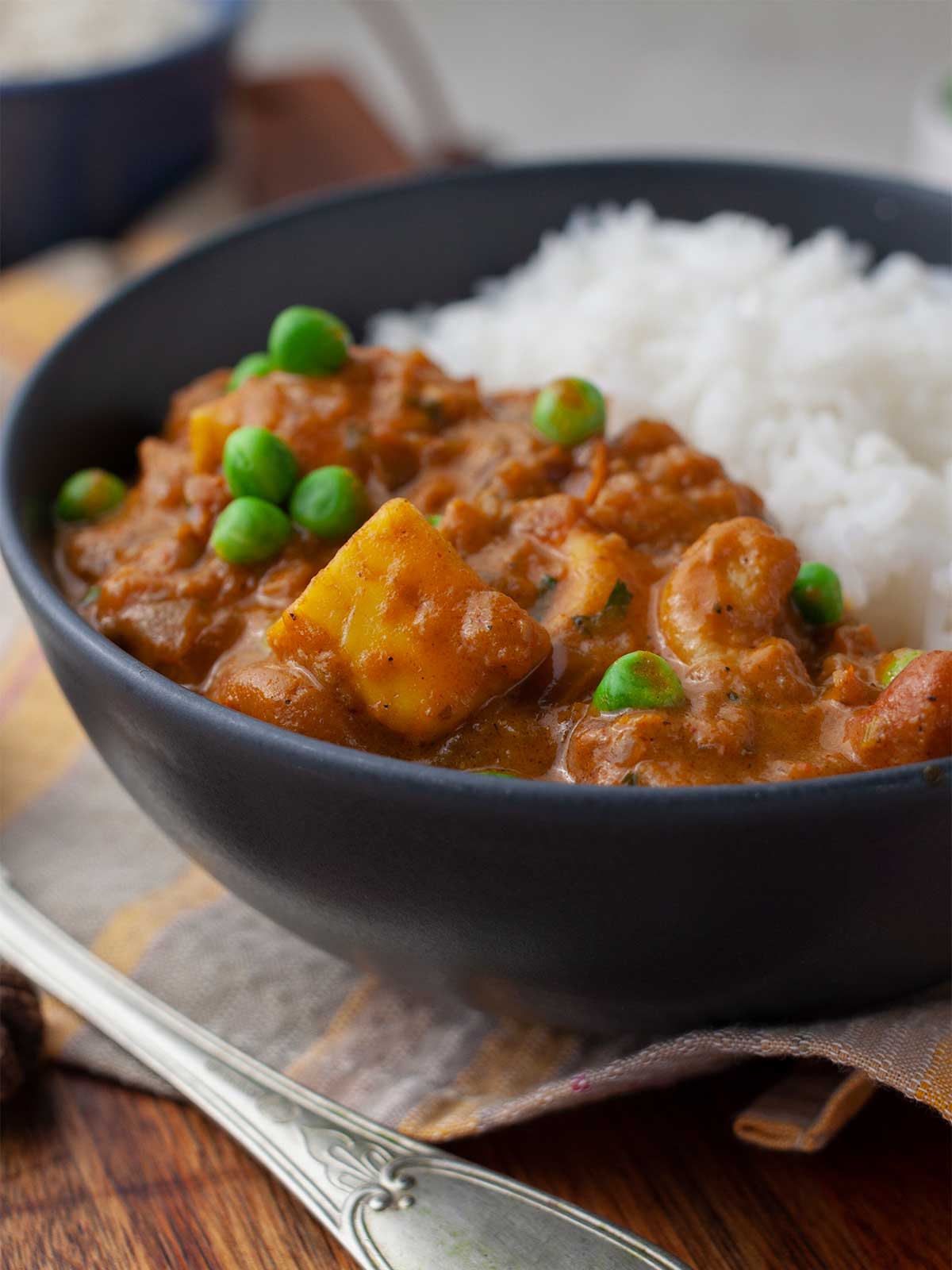
If you fall for this style of cozy, saucy comfort food, you might also like my coconut Thai curry rice for a different, coconut-rich take on curry night.
How to store and reheat leftovers
Japanese curry is one of those dishes that tastes even better the next day, once the spices have had time to settle in. Let it cool, then keep it in an airtight container in the fridge for up to 4 days. Reheat gently on the stovetop over low heat, adding a splash of water or stock if the sauce has thickened too much as it sat. It also freezes well, so it is a smart one to make in a big batch and stash for busy weeks. Store the rice separately and cook or reheat it fresh for the best texture.
I hope you give this vegetarian Japanese curry a try and enjoy its comforting flavors as much as I do. If you make it, please come back to rate the recipe and leave a comment letting me know how your spice blend turned out and what protein you reached for.
Japanese Curry
Ingredients
Spice mix step 1:
- 2 tablespoons coriander seeds
- 1 tablespoon cumin seeds
- 1 tablespoon fenugreek seeds
- 2 ½ teaspoons cardamom seeds
- 2 teaspoons black peppercorns
- ½ teaspoon fennel seeds
Spice mix step 2:
- 1 cinnamon stick
- 3 cloves
- ½ pod star anise
- ½ teaspoon orange peel dehydrated
- 2 tablespoons ground turmeric
- ¼ teaspoon ground chili powder
- ground nutmeg a sprinkle
For the Stew:
- 400 g smoked tofu cut into cubes
- 2 tablespoons coconut oil
- 1 large onion chopped
- 3 medium carrots chopped
- 2 liters vegetable stock or water
- 1 tablespoon miso paste
- 400 g potatoes cut into cubes
- 1 medium apple finely grated
- 1 tomato sliced
- ½ cup vegan butter
- ½ cup white flour
- ½ tablespoon fresh ginger grated
- 1 cup frozen peas
- salt and pepper to taste
- white rice for serving
Instructions
Prepare the spice mix:
- Heat a dry pan over medium heat and add all the seeds and spices from the first group.
- Toast the spices, stirring, until fragrant and the aromas become strong.
- Transfer the toasted spices to a mortar or spice grinder.
- Add the spices from the second group and grind everything to a fine powder.
- When ready, transfer the finished spice mix to a storage jar.
Prepare the stew:
- Heat the coconut oil in a pan and add the tofu cubes. Fry until browned on all sides, then transfer the tofu to a bowl and set aside.
- In a heavy-bottomed pot over medium-low heat, add a spoonful of coconut oil and the chopped onion. Saute the onion until soft, about 7 minutes, then add the carrots and saute for another 5 minutes.
- Pour the vegetable stock or water over the onion and carrot, then add the sliced tomato.
- Increase the heat until it comes to a boil, then reduce to low and let it cook.
- Add the tofu, potatoes and grated apple. Simmer for about 15 minutes, until the potatoes are soft.
- Meanwhile, melt the vegan butter in a small pot over medium heat. Once fully melted, whisk in the flour and cook, stirring continuously, for about 15 minutes, until the roux turns golden-brown. Stir in the grated ginger and 3 tablespoons of the curry spice mix, cook for about a minute, then remove from the heat and stir the roux into the pot with the stew.
- Stir the roux mixture into the stew and continue cooking until the liquid thickens and turns creamy. Dissolve the miso paste in a ladle of the hot stock and stir it in. Season with salt and pepper to taste, add the peas, stir until incorporated, and serve over white rice.
Notes
Frequently Asked Questions
Japanese curry is much milder and sweeter than Indian or Thai curry. It is thick, savory and gently spiced rather than hot, with grated apple rounding out the flavor. You control the heat yourself through the ¼ teaspoon of ground chili powder in the spice blend, so add more or less to taste.
Grated apple is a classic Japanese-curry touch that melts into the sauce as it simmers. It adds a natural sweetness and a little body that balances the warm spices and the savory miso. You barely notice it as fruit in the finished dish; it just makes the curry taste rounded and comforting.
Yes. The only wheat in the recipe is the white flour used to make the roux. Swap it for rice flour or a gluten-free all-purpose blend and cook it with the vegan butter the same way, until it turns golden-brown. Also double-check that your miso paste and stock are gluten-free.
This recipe uses smoked tofu, but tempeh, textured soy protein or seitan all work well in its place. Each one soaks up the thick curry sauce nicely and adds a hearty, meaty bite. Brown your chosen protein first, just as you would the tofu, before adding it to the stew.
The signature thickness comes from a roux, not cornstarch. You cook vegan butter and white flour together over medium heat for about 15 minutes until golden-brown, stir in ginger and curry spice mix, then fold it into the pot. As the stew keeps cooking, the sauce turns thick and creamy.
You can, but this recipe makes the spice blend and roux from scratch so you know exactly what goes in. Many packaged Japanese curry cubes contain dairy or animal fats, so if you want to keep it vegan, check the label carefully or stick with the homemade roux in this recipe.