
Rainbow Buddha Bowl | How to make a buddha bowl
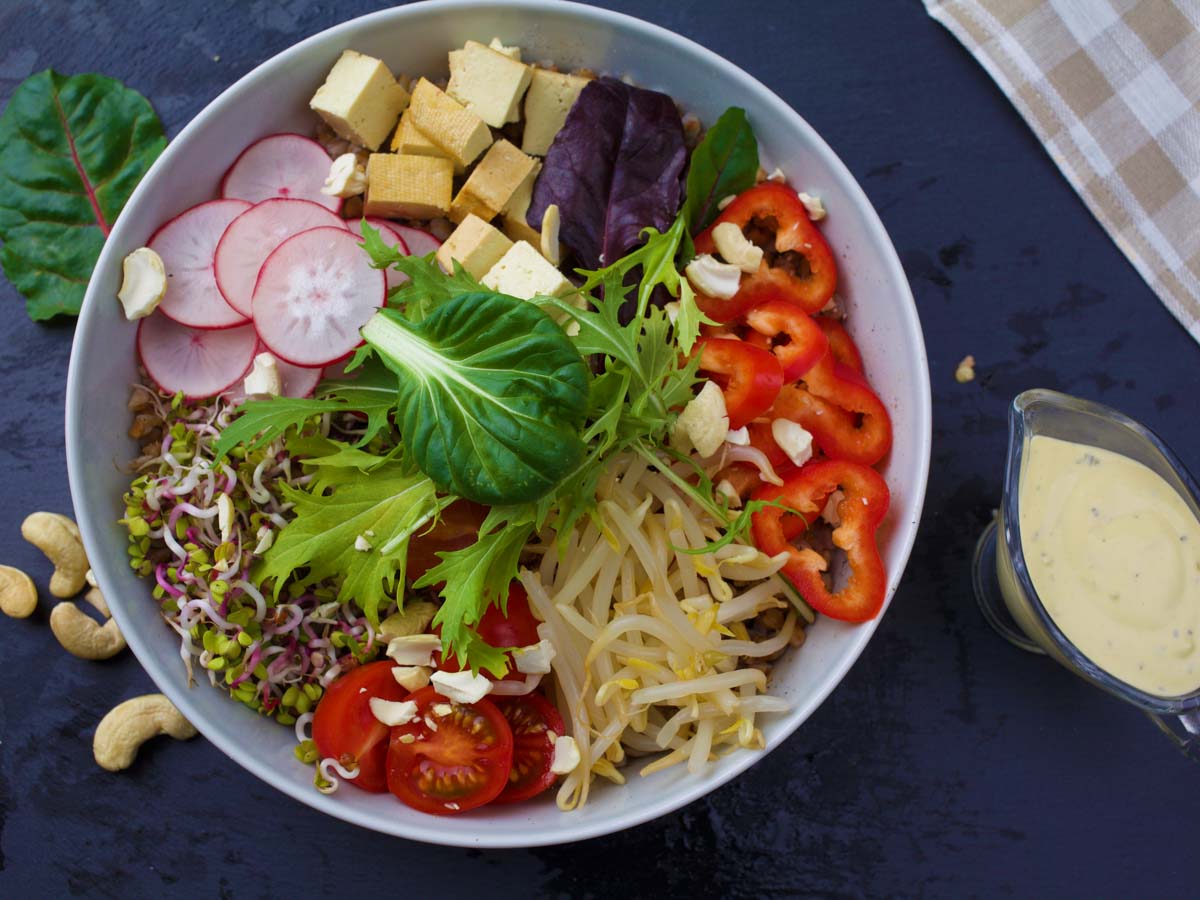
A rainbow Buddha bowl is a whole-meal bowl built from a grain base, a generous spread of colorful raw and cooked vegetables, a plant protein, and a creamy dressing that ties everything together. This version uses soaked buckwheat, smoked tofu, and a blended cashew dressing, so it comes together with almost no cooking and delivers a full spectrum of textures and colors in one plate. Make it when you want something nourishing and diverse for lunch or dinner without following the rigid main-dish-plus-side formula.
What Is a Buddha Bowl, Really?
Traditional cuisine can get formulaic. Eating the same things every day isn’t good for anybody, and the classic combination of a main dish, a side, and a salad rarely covers the full food-group spectrum. A Buddha bowl solves that with a “bit of everything” mentality: a single bowl that lets you eat freely and diversely while still keeping portions sensible. Food bowls are nothing new, since many cultures have always eaten their meals mixed together in one dish, but Buddha bowls carried that idea into the modern kitchen and became one of the internet’s biggest food trends, especially in vegan cooking.
The Ingredients That Build the Rainbow
The magic of this bowl is in the layering, so every component earns its place. Here is what each one brings and how to pick the best version of it:
- Buckwheat — despite the name, it is naturally gluten-free and seed-based. Soaking it overnight softens it enough to eat without boiling and keeps its nutty bite. Rinse it well after soaking, since it releases a slightly gelatinous starch.
- Smoked tofu — the plant protein here. Smoked tofu is firmer and more seasoned than plain, so it adds savory depth straight from the block. Cube it small so it distributes through every forkful.
- Radish, cherry tomatoes, red bell pepper — the crunch and the color. Choose firm radishes and ripe, sweet tomatoes, and slice the pepper thin so it stays crisp.
- Soy sprouts and radish sprouts — fresh, peppery lift and extra texture. Use them the day you buy them, when they are at their crispest.
- Beetroot leaves and mixed salad leaves — the leafy base that fills the bowl and adds an earthy note. Wash and dry them well so the dressing clings instead of sliding off.
- Cashews, nutritional yeast, mustard, garlic — the dressing team. Soaked cashews blend into silk, nutritional yeast brings a cheesy savoriness, and mustard and garlic sharpen it. For more on why plant proteins like tofu and cashews carry these bowls, this guide to proteins in the vegan diet is a useful read.
How to Assemble Your Rainbow Buddha Bowl
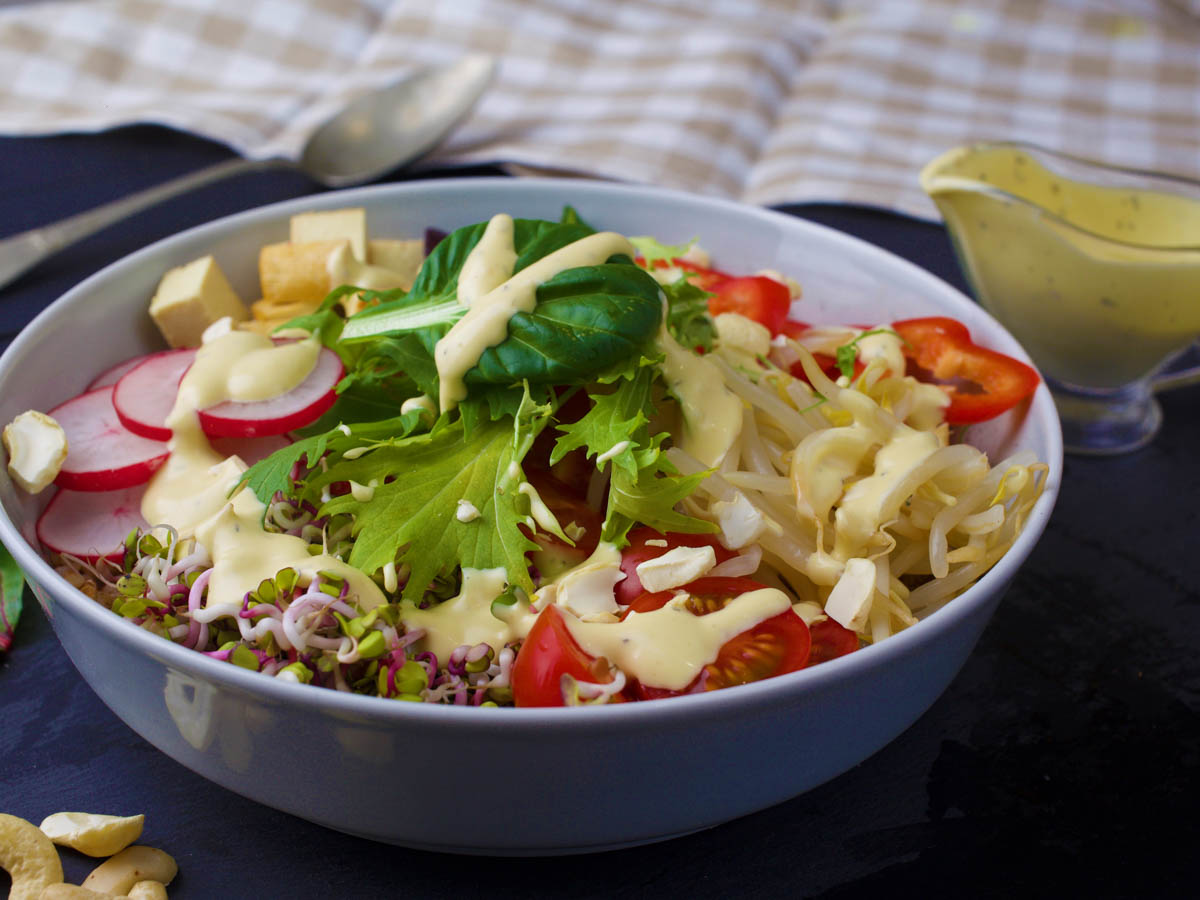
Start the night before by covering the buckwheat with about two cups of filtered water and letting it soak overnight, which is what makes it tender enough to eat without cooking. When you are ready to eat, blend all the dressing ingredients (soaked cashews, nutritional yeast, mustard, garlic, salt, pepper, and vegetable broth) until smooth, adding more or less broth to reach the consistency you want. Divide the drained buckwheat between two wide plates or shallow bowls, then arrange the toppings in separate sections rather than tossing them, so each color stays distinct and the bowl actually looks like a rainbow. Spoon the dressing over each portion just before serving.
Why This Method Works
Soaking does the heavy lifting here. Overnight hydration softens the buckwheat and pre-soaks the cashews at the same time, and well-soaked cashews are the reason a dairy-free dressing turns out this creamy, since blending swollen cashews breaks them into a smooth emulsion the way cream would. Keeping the toppings arranged in sections instead of mixed also matters: it preserves each vegetable’s texture and lets you taste them individually, and the wide range of colors is a practical shortcut to variety, because different-colored vegetables tend to bring different nutrients to the plate.
Tips for Getting It Right
- Don’t skip the soak. Under-soaked buckwheat stays chalky and hard. If you forgot to start it the night before, a long soak in warm water for a few hours will get you closer, though overnight is best.
- Taste and adjust the dressing. Cashew dressings mellow as they sit, so season a touch bolder than feels right and add broth gradually. It is easier to loosen a thick dressing than to fix a watery one.
- Dry your greens. Wet beetroot and salad leaves dilute the dressing and make the bowl soggy. A quick spin or pat with a towel keeps everything crisp.
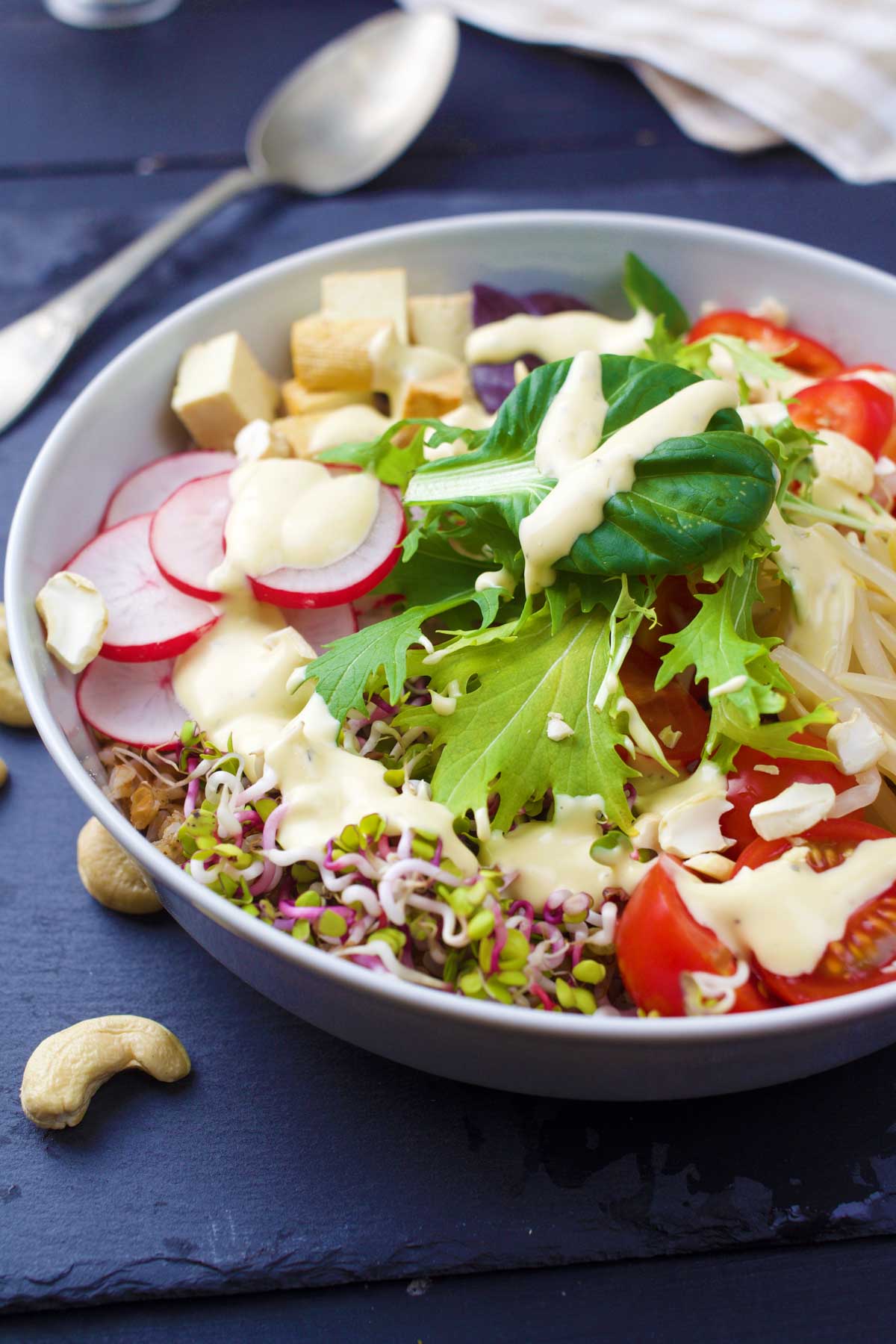
- Dress at the last minute. Add the dressing right before eating so the sprouts and leaves stay lively rather than wilting.
Make-Ahead and Storage
This bowl is built for prep-ahead eating. Soak the buckwheat and cashews overnight, and you can blend the cashew dressing up to three or four days in advance, storing it in a sealed jar in the fridge; stir or add a splash of water to loosen it before using. Keep the chopped vegetables and drained buckwheat in separate airtight containers so nothing goes soft, then assemble fresh when you are ready to eat. Wash and dry the sprouts and leaves only when you plan to use them, since pre-washed greens spoil faster. The same batching logic works for a whole week of lunches, much like it does for a make-ahead chickpea salad. If you love this blended-cashew style, you will find plenty more ideas in this roundup of vegan salad dressings.
Swaps and Ways to Make It Yours
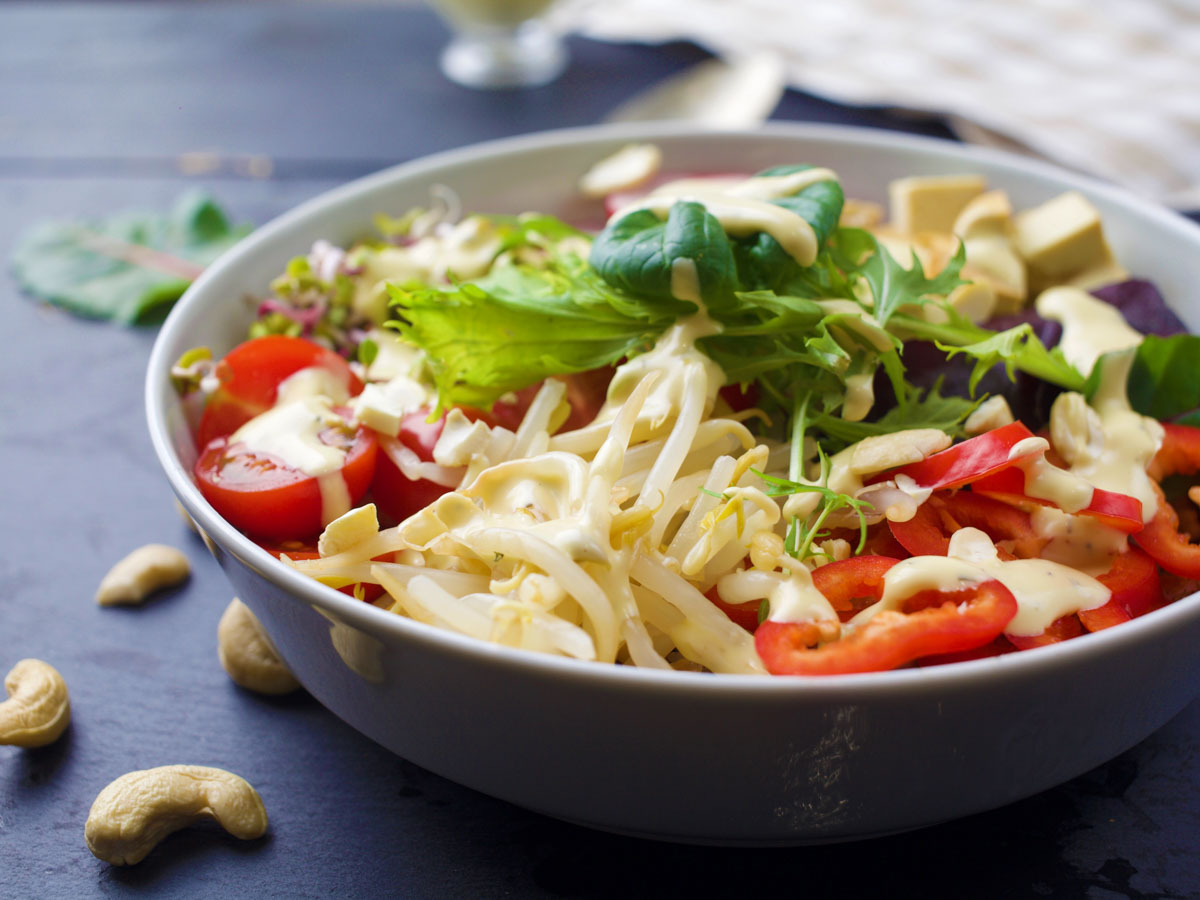
The beauty of a Buddha bowl is that the formula stays the same while the parts flex. Swap the buckwheat for quinoa, brown rice, or millet if that is what you have. If smoked tofu isn’t available, plain firm tofu, tempeh, or cooked chickpeas all slot in as the protein. Trade any vegetable for whatever is in season and colorful, and if you want a richer bowl, a few slices of avocado work beautifully; there are more ideas in these savory avocado recipes. Once you have the assembly down, it is an easy leap to a sweet, blended version like a smoothie bowl for breakfast.
I hope you’ll enjoy this Rainbow Buddha Bowl. If you make it, please rate the recipe below and leave a comment telling me which color combo landed on your plate and whether you tweaked the cashew dressing — and, as always, share it with your friends and tell me how it went. Don’t quote me on it, try it for yourself!
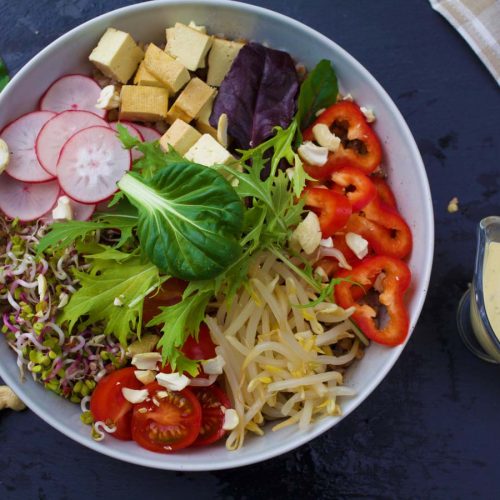
Rainbow Buddha Bowl | How to make a buddha bowl
Ingredients
- ⅔ cup buckwheat soaked overnight
For the topping:
- ½ cup tofu smoked, cubed
- 1 radish sliced
- 4 Tbsp soy sprouts
- 8 plum cherry tomatoes halved
- 1 red bell pepper
- ½ cup radish sprouts
- ¼ cup beetroot leaves
- 1 handful mixed salad leaves
For the dressing:
- ½ cup vegetable broth or water
- 1 cup cashews soaked overnight
- 1 Tbsp nutritional yeast
- 1 tsp mustard
- 1 clove garlic
- salt and pepper to taste
Instructions
- Add the buckwheat to a bowl, cover with 2 cups of filtered water, and let it soak overnight.
- Add all the dressing ingredients to a food processor and blend until smooth. Adjust the consistency by adding more or less broth.
- Assemble your Buddha bowl: divide the soaked buckwheat between two wide plates, then arrange the toppings over both portions.
- Spoon the desired amount of dressing over each bowl.
- Serve and enjoy!
Notes
Frequently Asked Questions
A rainbow Buddha bowl is a whole-meal bowl with four parts: a grain or seed base, a colorful mix of raw and cooked vegetables, a plant protein, and a creamy dressing. This version uses soaked buckwheat as the base, smoked tofu for protein, radish, cherry tomatoes, bell pepper, sprouts, and leafy greens for color, and a blended cashew dressing to bring it together.
Yes, every ingredient in this bowl is plant-based, so it is fully vegan. It is also naturally gluten-free, since buckwheat is a seed rather than a wheat grain despite its name. Always double-check that your smoked tofu and mustard are certified gluten-free if you are highly sensitive, as processing varies by brand.
Soaking overnight softens the buckwheat enough to eat raw and gives it a pleasant nutty bite, which is the method this recipe uses. If you prefer, you can also cook buckwheat briefly in water until tender and cool it before assembling. Either way, rinse it well, since buckwheat releases a slightly gelatinous starch.
The key is soaking the cashews overnight so they swell and soften, then blending them with nutritional yeast, mustard, garlic, salt, pepper, and vegetable broth until completely smooth. Well-soaked cashews break down into a silky emulsion that mimics cream without any dairy. Add the broth gradually to control the thickness.
Yes, it is ideal for meal prep. Soak the buckwheat and cashews overnight, blend the dressing up to three or four days ahead, and store the chopped vegetables and drained buckwheat in separate airtight containers. Assemble and dress the bowl fresh right before eating so the sprouts and leaves stay crisp.
For the protein, plain firm tofu, tempeh, or cooked chickpeas all work in place of smoked tofu. For the base, quinoa, brown rice, or millet substitute easily for buckwheat. The Buddha bowl formula stays the same, so you can swap components freely based on what you have and what is in season.


Awesome info, Ruxandra! I was always curious if there’s a proper “philosophy” behind the Buddha Bowls. Now I understand the entire phenomenon better, and your recipe is just great! Thank you!
Glad you liked it! 😀