
Vegan Charcuterie Board (Vegan Appetizer Platter)
A vegan charcuterie board is a party platter that swaps the cured meats of a classic charcuterie spread for plant-based dips, cheeses, fresh fruit and vegetables, pickles, and something sweet. To build one, you group a few spreads (hummus, bean paste, olive tapenade), add a couple of vegan cheeses, then fill the gaps with colorful produce, crackers, and baguette slices until the board looks generous and full. It takes about twenty minutes to assemble and works for any gathering, from a casual night in to a bigger celebration.
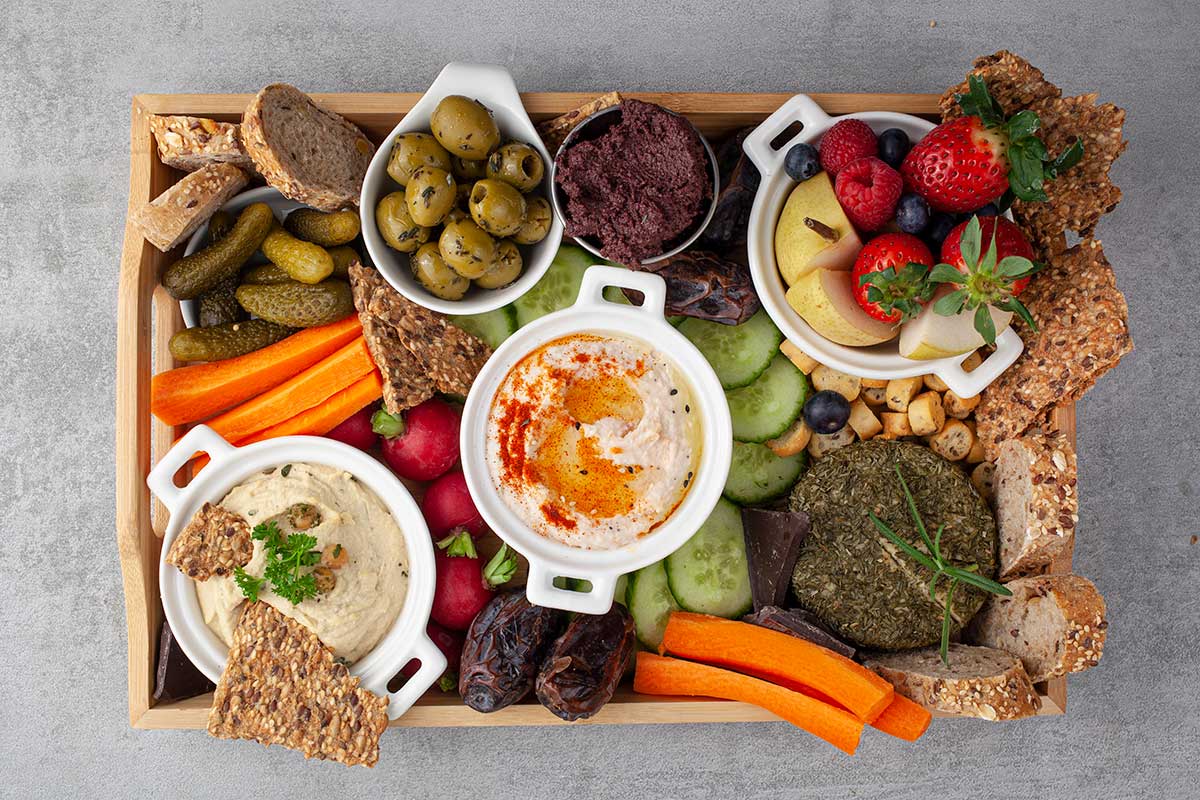
The word “charcuterie” comes from the French culinary tradition of preparing and serving cured meats. A vegan version keeps everything that makes those boards fun to eat, the variety, the textures, the grazing, and leaves out the animal products. The result is a platter that is just as impressive to set down in front of guests, and one that everyone at the table can actually eat.
What Goes on a Vegan Charcuterie Board
The trick to a good board is variety. You want a mix of creamy, crunchy, sweet, salty, and fresh, so every bite can be a little different. Here is how the components break down for this platter:
- Dips and spreads: hummus, a bean paste, and a homemade olive tapenade give the board its savory anchor. If you like a quick base, this 5-minute hummus is all you need.
- Vegan cheese: one or two kinds add richness. You can use a store-bought block or make your own from my vegan cheese recipes.
- Fresh fruit: a sliced pear, strawberries, raspberries, and blueberries bring color and natural sweetness.
- Fresh vegetables: carrot sticks, cucumber slices, and radishes for crunch and dipping.
- Pickles and olives: cornichons and marinated Kalamata olives cut through the richer bites.
- Something sweet: dates and a little dark chocolate round things off.
- Crackers and bread: vegan seed crackers and baguette slices to carry the dips.
None of these amounts are strict. Use what looks good and what you have on hand, and lean into whatever is in season for the fruit and vegetables.
Two Little Extras Worth Making from Scratch
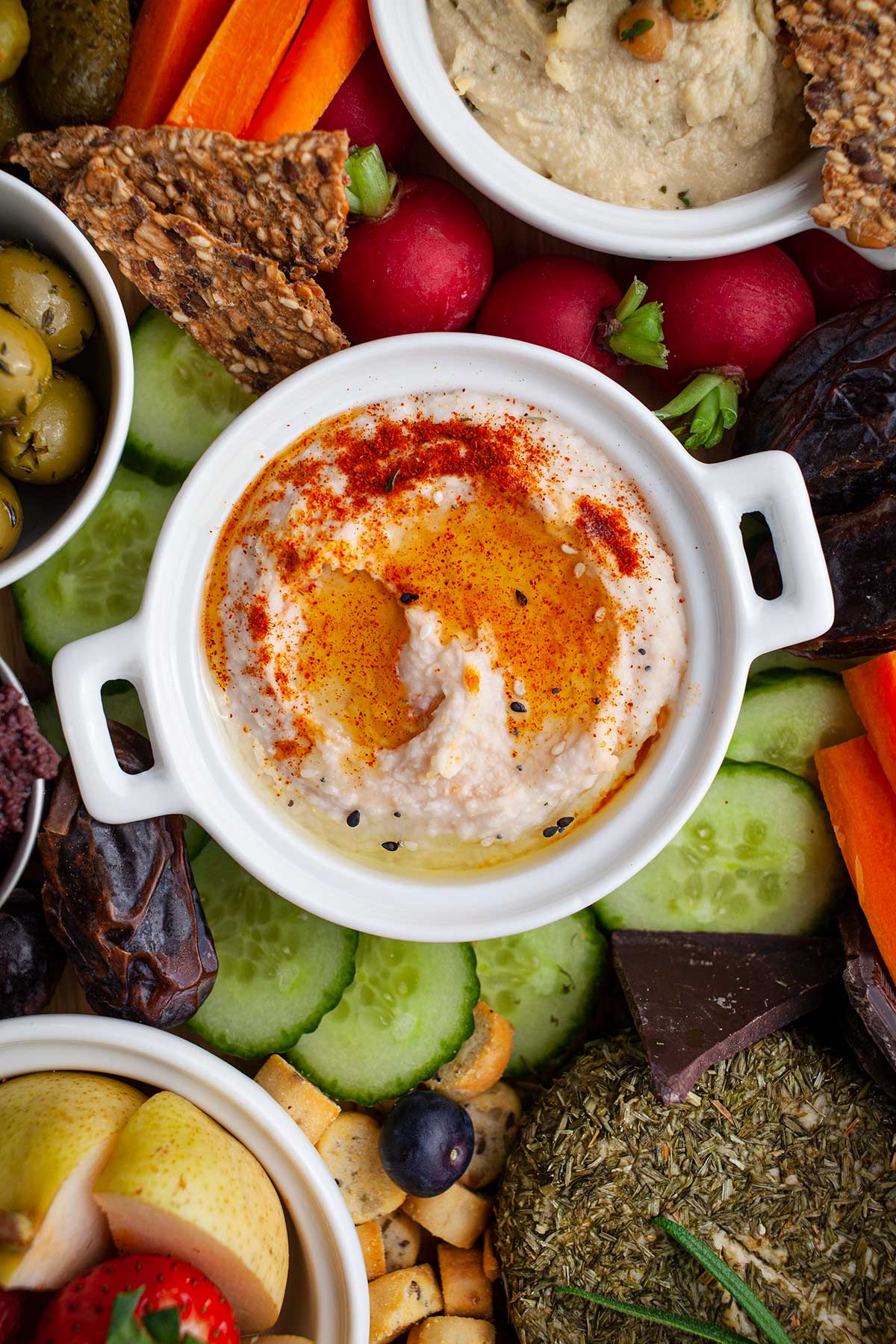
Most of the board is assembly, but two elements come together in minutes and make it taste far more considered than a store-bought platter.
Olive tapenade. Add 200 g of pitted Kalamata olives, one clove of garlic, half a bunch of parsley, the juice of a quarter lemon, a quarter teaspoon of pepper, and a tablespoon of extra virgin olive oil to a blender. Pulse for a few seconds until you reach the consistency you like, chunky or smooth. That is the whole recipe.
Marinated olives. In a bowl, combine half a cup of olives with a finely chopped quarter lemon, 4 tablespoons of oil, a quarter of a hot pepper cut into slices, and a quarter teaspoon each of oregano and tarragon. Mix, cover with foil, and refrigerate. Let them marinate for at least 3 hours, and up to 3 days, so the flavors have time to soak in. This is the one thing worth starting ahead.
How to Assemble the Board
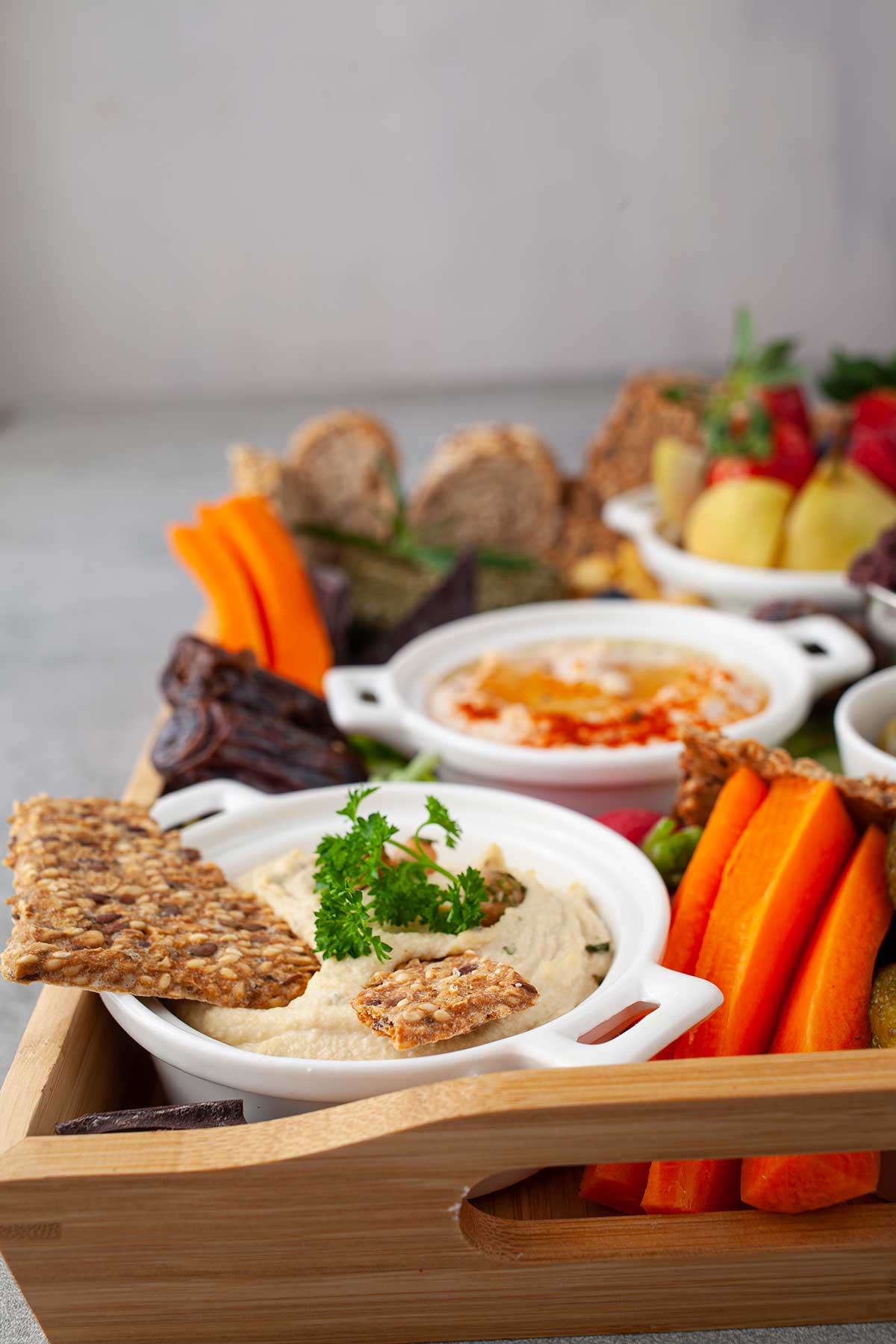
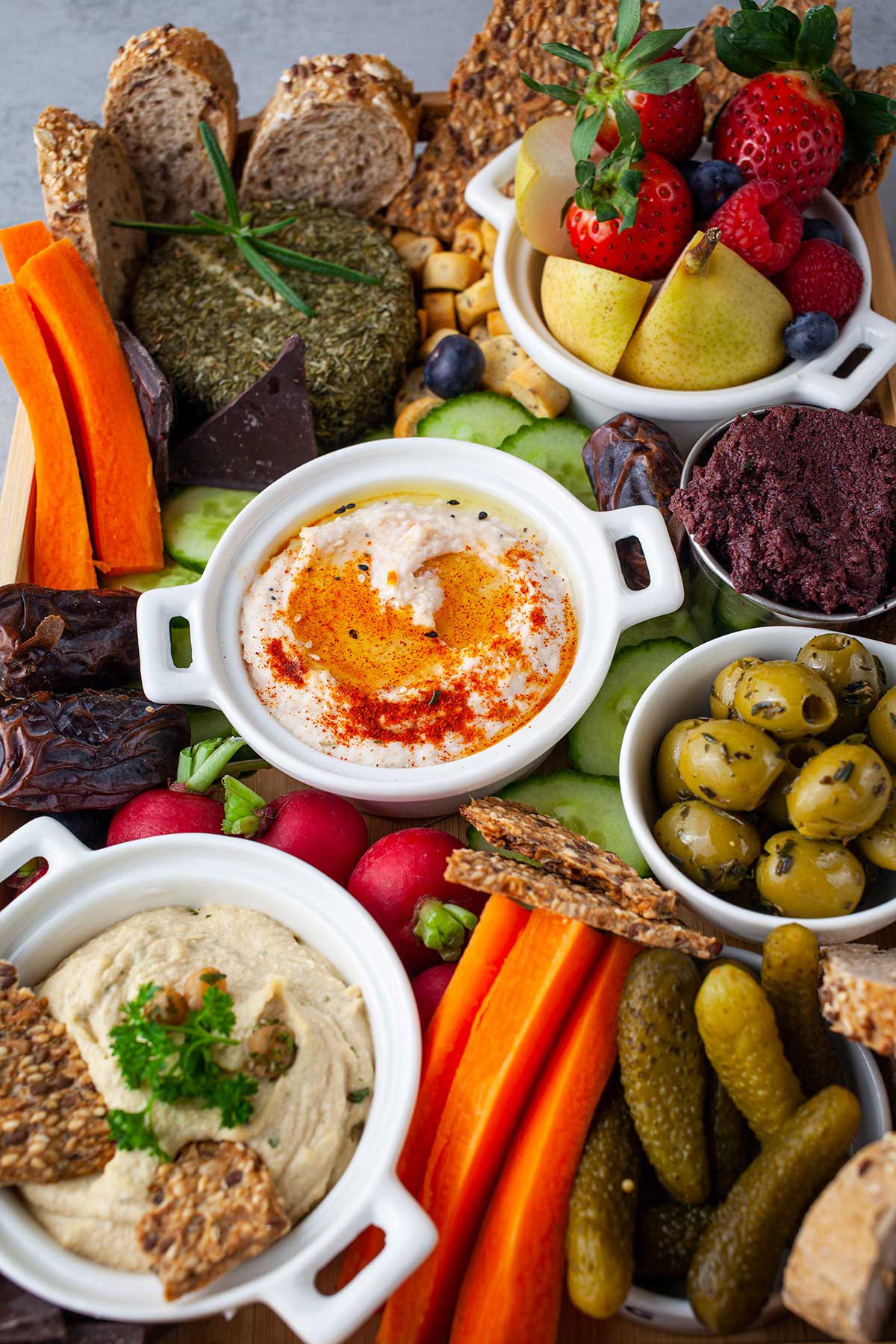
Arranging the platter is easier when you start with the biggest pieces and fill in around them. Place the bowls first, the fruit, the hummus, the bean paste, the vegan cheese, the dish of tapenade, and the dish of marinated olives. Begin at the top corner of the board and work your way toward the middle.
Once the bowls are set, tuck the fresh vegetables and pickles into the open spaces. Add the chocolate and dates wherever there is a gap. Finally, line the edge of the board with the baguette slices and the vegan seed crackers so guests have something to scoop and spread with. The goal is a board that looks full, with very little empty surface showing.
Tips for a Board That Looks as Good as It Tastes
- Use small bowls for anything loose. Dips, olives, and tapenade stay tidy in little ramekins and give the board structure to build around.
- Group by color and texture. Keep the berries near the pear, the vegetables in their own cluster, so the eye reads the board as organized rather than crowded.
- Cut vegetables into sticks and slices ahead of time. Carrots, cucumber, and radishes are easier to grab when they are already prepped.
- Fill every gap. A generous, overflowing board always looks more inviting than a sparse one. Extra crackers and fruit are the easiest way to fill space.
- Offer more than one cheese. A soft spread plus a firmer block gives people a choice and adds contrast.
Make-Ahead, Storage, and What to Serve Alongside
You can prep most of this board in advance. Make the tapenade and start the marinated olives up to three days ahead, and store them covered in the fridge. Cut the vegetables and keep them in airtight containers with a splash of water so they stay crisp. Then all that is left on the day is arranging everything, which takes minutes.
Once assembled, a charcuterie board is best served fresh, but leftovers keep well when stored separately. Move the dips and cheeses into their own containers in the fridge, and eat the cut fruit and vegetables within a day or two.
To round out the spread, add a couple of homemade dips to the lineup. My vegan nacho cheese sauce and a bowl of guacamole both work beautifully next to the crackers, and a vegan cream cheese gives you a milder spread for the fruit. If you are building a whole vegan table, this platter pairs naturally with a warm bowl of red lentil soup to start.
If you put this board together for a party, I would love to know how it turned out. Leave a star rating and tell me in the comments which combination disappeared first, so other readers know what to pile on next time.
Summarise & Save This Recipe
★ Add us as a trusted Google source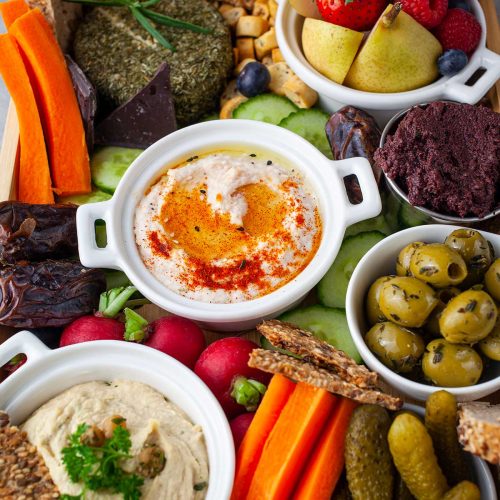
Vegan Charcuterie Board (Vegan Appetizer Platter)
Ingredients
Dips & Spreads:
- hummus
- bean paste
- olive tapenade
For Tapenade:
- 200 g Kalamata olives pitted
- 1 clove garlic
- ½ bunch parsley
- ¼ lemon juice only
- ¼ teaspoon pepper
- 1 tablespoon extra virgin olive oil
For marinated olives:
- ½ cup olives to marinate
- ¼ lemon finely chopped
- 4 tablespoons olive oil
- ¼ hot pepper cut into slices
- ¼ teaspoon oregano
- ¼ teaspoon tarragon
Fresh fruits:
- 1 pear
- ½ cup strawberries
- ⅓ cup raspberries
- ⅓ cup blueberries
Fresh vegetables:
- 1 carrot cut into sticks
- ½ cucumber sliced
- 1 cup radishes
Sweets:
- 4 dates
- 50 g vegan dark chocolate
Other:
- 1 cup cornichons
- vegan cheese
- vegan crackers with seeds
- baguette sliced
Instructions
- For the olive tapenade: add all the ingredients to a blender and pulse for a few seconds, until you reach the desired consistency.
- For the marinated olives: in a bowl, combine the olives with all the marinade ingredients, mix well, cover and refrigerate. Let them marinate for at least 3 hours and up to 3 days.
- To assemble the vegan platter, place the bowls of fruit, hummus, bean paste and vegan cheese, along with the bowls of tapenade and marinated olives, onto the board. Start from the top corner and work towards the middle. Then add the fresh vegetables and cornichons. Fill in the gaps with the chocolate and dates. Along the edge, arrange the baguette slices and the vegan seed crackers.
Notes
Frequently Asked Questions
It is a grazing platter modeled on the classic charcuterie spread, but with every animal product left out. Instead of cured meats, it features plant-based dips like hummus and olive tapenade, vegan cheese, fresh fruit and vegetables, pickles, dates, chocolate, crackers, and baguette slices. The idea is variety, so every bite offers a different texture and flavor.
For this board you use hummus, bean paste, homemade olive tapenade, marinated Kalamata olives, vegan cheese, cornichons, and a mix of fresh fruit (pear, strawberries, raspberries, blueberries) and vegetables (carrot sticks, cucumber, radishes). Dates and a little dark chocolate add sweetness, while vegan seed crackers and baguette slices give guests something to scoop and spread with.
Start with the biggest items first. Place the bowls of dips, cheese, tapenade, and olives on the board, working from the top corner toward the middle. Then tuck the fresh vegetables, pickles, chocolate, and dates into the open spaces, and line the edge with crackers and baguette slices. Filling every gap so almost no empty surface shows is what makes a board look generous and inviting.
Yes, most of it can be prepped in advance. Make the olive tapenade and start the marinated olives up to three days ahead and keep them covered in the fridge. Cut the vegetables early and store them in airtight containers so they stay crisp. On the day, you only need to arrange everything, which takes about twenty minutes.
Combine the olives with the lemon, oil, sliced hot pepper, oregano, and tarragon, then cover and refrigerate. Let them marinate for at least 3 hours so the flavors soak in, and up to 3 days for a deeper taste. This is the one element worth starting well before the party.
Offer a mix so guests have a choice, ideally one soft spreadable cheese and one firmer block for contrast. You can use store-bought vegan cheese or make your own, such as a stretchy vegan mozzarella or a vegan cream cheese. A softer spread pairs nicely with the fruit, while a firmer cheese holds up well on crackers.




Great presentation!