Types of Tofu: Silken, Soft, Firm, Extra Firm and How to Use Each
There are two main types of tofu: silken tofu, which is set right in its box and never pressed, and regular (block) tofu, which is pressed into soft, firm, extra-firm or super-firm blocks. The firmer the tofu, the less water and the more protein it has. Silken and soft tofu are for blending, soups and desserts; firm and extra-firm tofu are for frying, baking and grilling; and smoked tofu is ready to eat. Below is how each type looks, cooks and compares, plus what tofu is made of and which one to buy for what.
Tofu shows up in more than 80 recipes on this blog, and the one I reach for most is smoked tofu: I slice it into “bacon”, crumble it into fillings or blend it into sauces. Plain firm tofu I press for 15-20 minutes and crisp up in the pan. Knowing which block to pick is half the work, so here is the cheat sheet I wish I’d had at the start.
Tofu types at a glance
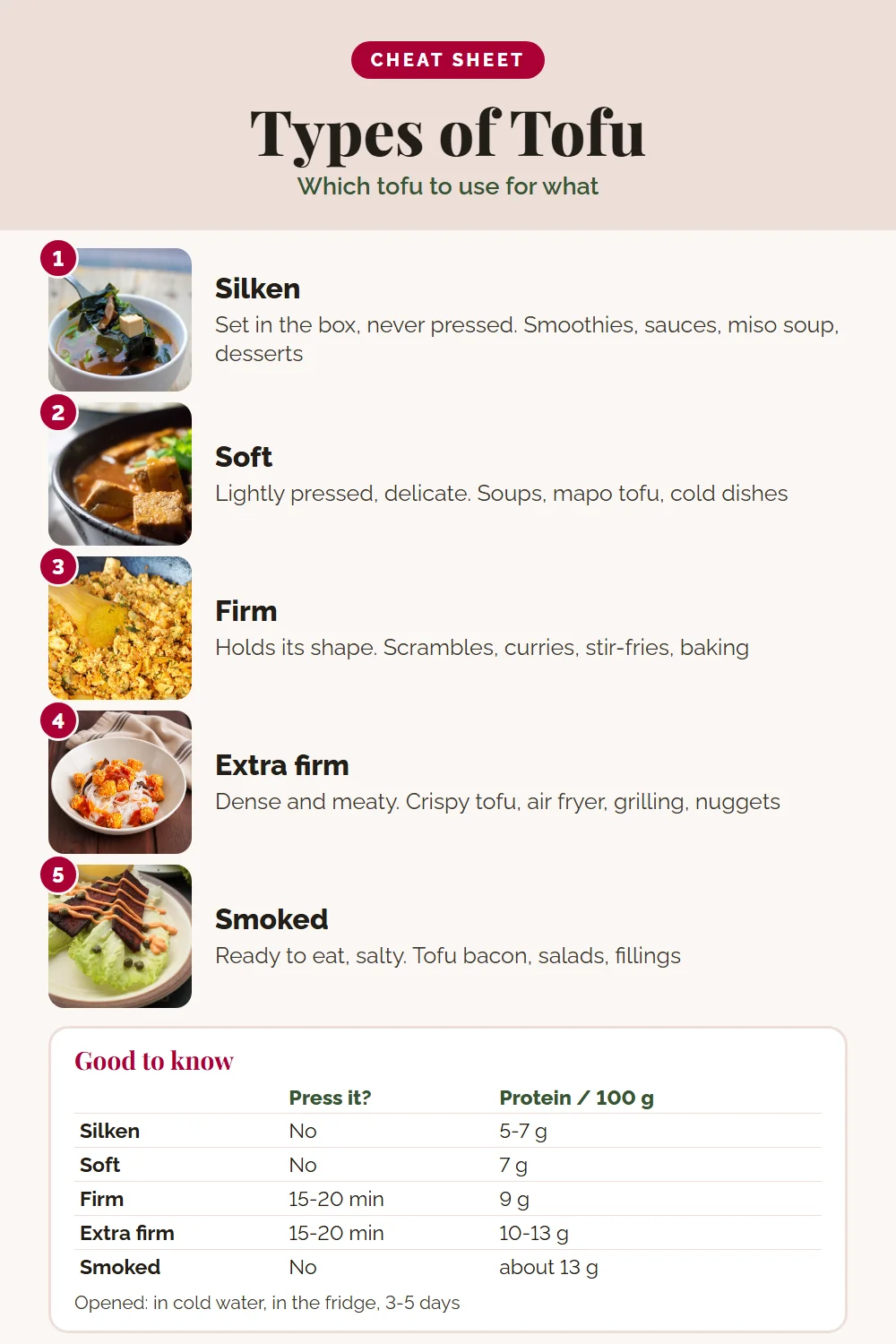
- Silken: custardy, set in the box, not pressed; for smoothies, sauces, dressings and desserts.
- Soft: delicate and wobbly; for soups, mapo tofu and cold dishes.
- Firm: holds its shape; for stir-fries, scrambles and baking.
- Extra firm and super firm: dense and meaty; for crispy tofu, grilling, “bacon” and cubes that never crumble.
- Smoked: firm tofu that has been smoked; ready to eat, salty, no pressing needed.
Table of Contents
- What Is Tofu Made Of?
- The Main Types of Tofu
- Firm vs Extra Firm Tofu: What’s the Difference?
- Silken vs Firm Tofu
- Other Types of Tofu
- Tofu Recipes for Each Type
- Tofu Nutrition by Type
- Which Tofu to Use for What
- How to Store Tofu
- Frequently Asked Questions
- Sources
What Is Tofu Made Of?
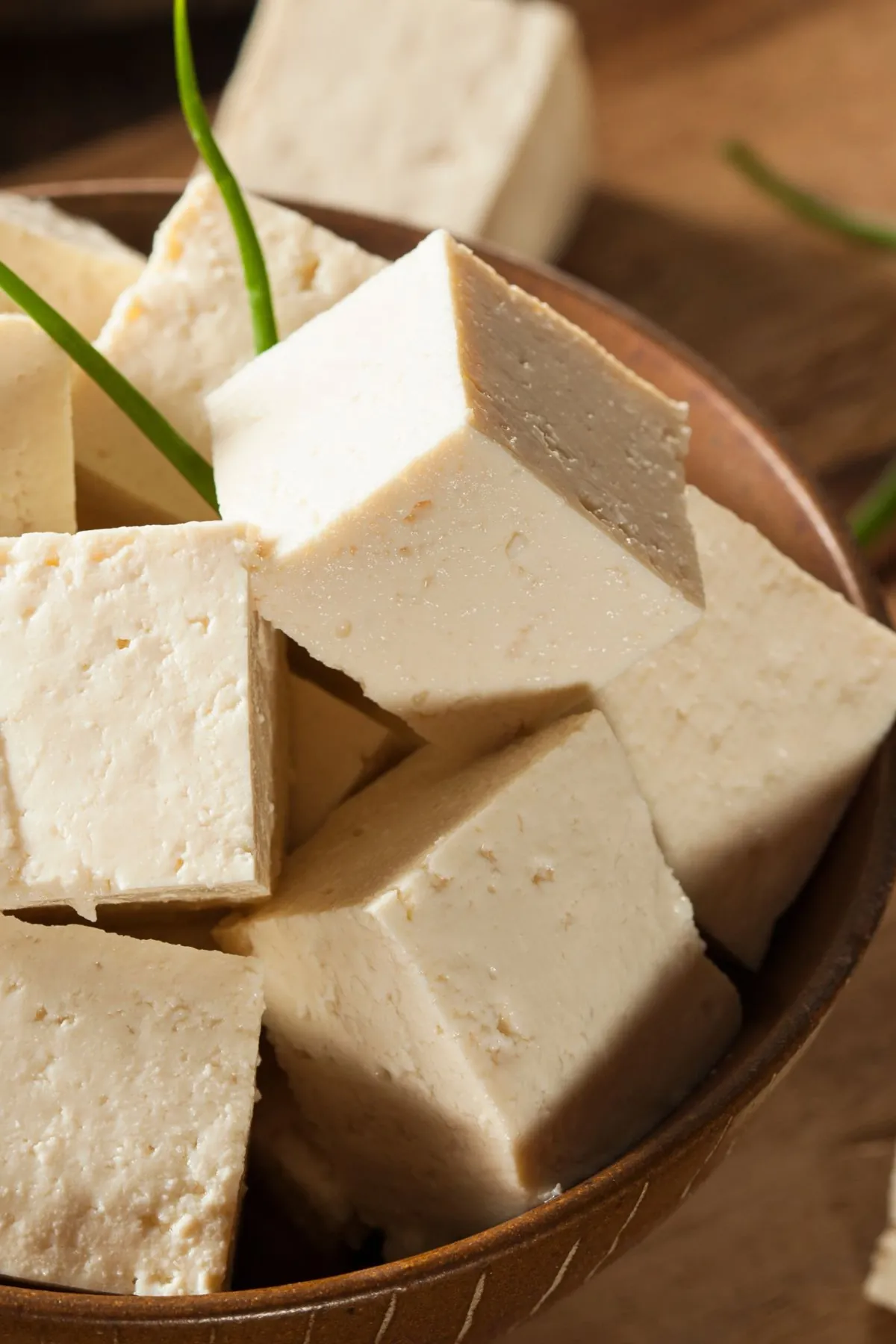
Tofu is made of just three things: soybeans, water and a coagulant. The soybeans are soaked, ground with water and cooked into soy milk, which is then curdled, just like milk is curdled for cheese. For block tofu, the curds are pressed into molds; for silken tofu, the soy milk sets directly in the package. Regular tofu is not fermented.
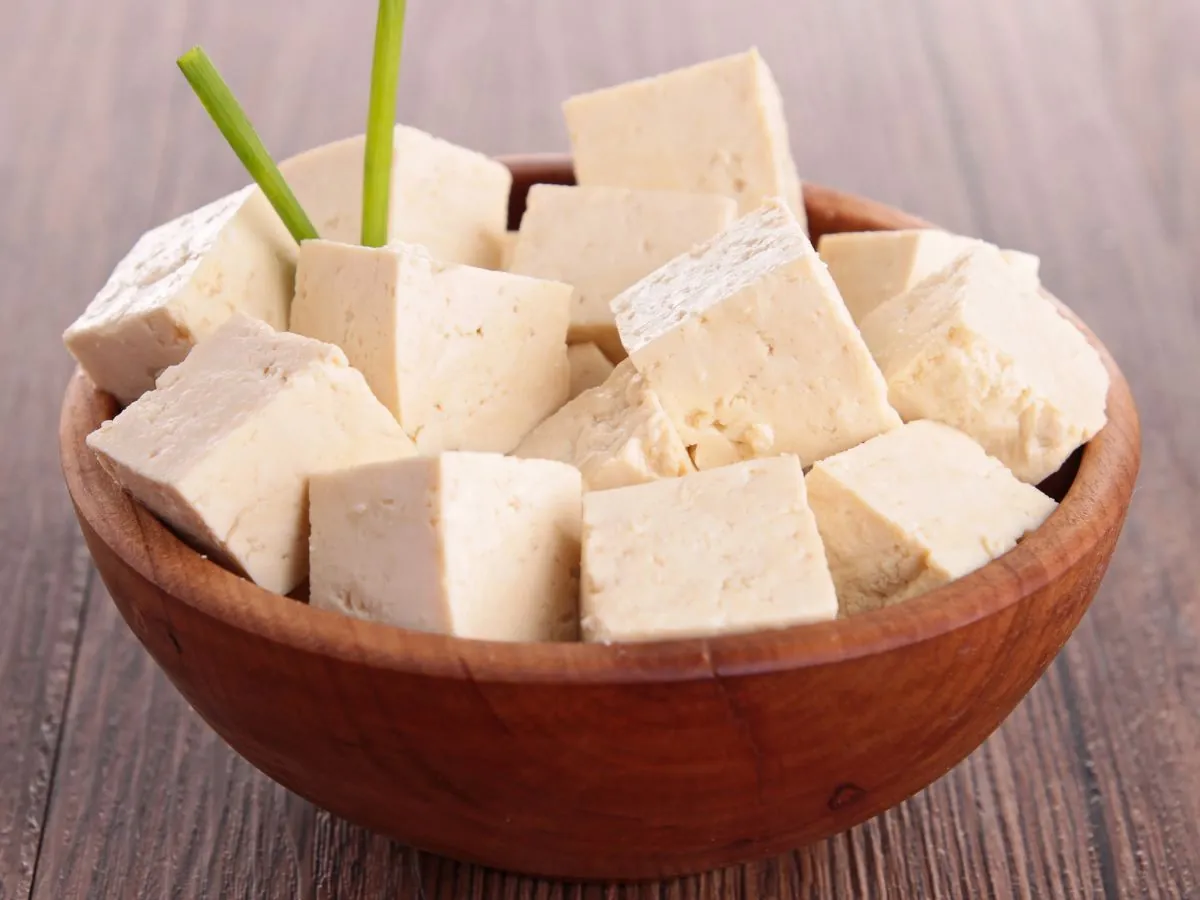
The coagulant changes both the texture and the nutrition:
- Nigari (magnesium chloride), the traditional Japanese coagulant, gives a springy, slightly sweet tofu.
- Calcium sulfate (gypsum) and calcium chloride give a firmer tofu and add a lot of calcium.
- Glucono delta-lactone (GDL) is used mostly for silken tofu and gives the smoothest texture.
Tofu was first made in China more than 2,000 years ago and reached Japan with Buddhist monks.
The Main Types of Tofu
Silken tofu
Silken tofu (kinugoshi in Japan) is made by letting soy milk set right in its container, without stirring or pressing. It is 87-90% water and has the texture of a soft custard. It falls apart if you try to fry it, but it blends into perfectly smooth sauces, dressings, puddings and cheesecakes. Silken tofu comes in soft, firm and extra-firm versions too, but even “extra-firm silken” is much softer than regular firm tofu. Shelf-stable boxes, like Mori-Nu, don’t need the fridge until opened. For ideas, see my silken tofu recipes.
Soft tofu
Soft tofu is regular tofu that has been pressed only a little. It’s delicate and a bit wobbly, holds together in a pot but not in a hot pan. Use it in soups, in vegan mapo tofu, or cubed into cold dishes.
Firm tofu
Firm tofu (momen, or “cotton” tofu, in Japan) is the all-rounder. It holds its shape when cubed, browns well and crumbles nicely, so it works for stir-fries, curries, baking and tofu scramble. Press it for 15-20 minutes before frying for better browning.
Extra-firm and super-firm tofu
Extra-firm tofu has even less water (around 82%), and super-firm (or “high-protein”) tofu less still. They are dense, meaty and almost impossible to break, which makes them the best choice for crispy tofu, grilling, kebabs and tofu “bacon”. Super-firm tofu needs little or no pressing. My crispy sesame breaded tofu and chick’n tofu nuggets both start with extra-firm tofu.
Firm vs Extra Firm Tofu: What’s the Difference?
The difference is how much water was pressed out. Extra-firm tofu is drier, denser and a little higher in protein and calories than firm tofu, so it stays in neat cubes and gets crispier. Firm tofu is a bit softer and more tender inside.
| Firm tofu | Extra-firm tofu | |
|---|---|---|
| Texture | tender, holds its shape | dense, chewy, almost meaty |
| Water | about 83% | about 82% (super firm: about 71%) |
| Protein per 100 g | about 9 g | about 10 g (super firm: about 13 g) |
| Pressing | 15-20 minutes helps a lot | 15-20 minutes for the crispiest result |
| Best for | scrambles, curries, baking, stir-fries | crispy tofu, grilling, kebabs, “bacon” |
They can be swapped in most recipes. If a recipe asks for extra firm and you only have firm, press it a little longer.
Silken vs Firm Tofu
Silken and firm tofu are not interchangeable. Silken tofu is unpressed, creamy and fragile, made for blending; firm tofu is pressed, sliceable and made for cooking in pieces. Using silken tofu in a stir-fry gives you mush, and using firm tofu in a smoothie gives you grit. The one overlap: both work in a scramble, silken for a soft, eggy one and firm for a chunkier one.
Other Types of Tofu
- Smoked tofu: firm tofu smoked over wood. It tastes smoky and savory, is fairly salty and is ready to eat, so you never press it. I use it sliced and seared for tofu bacon, cubed in salads and crumbled into fillings.
- Marinated or baked tofu: firm tofu sold already seasoned, usually in soy sauce and spices; ready to heat.
- Fried tofu (aburaage, tofu puffs): thin slices or cubes that are deep-fried until puffy, used in soups and for stuffed inari pockets.
- Fermented tofu (furu, fuyu): cubes fermented in brine, very salty and pungent, used as a condiment in small amounts. Stinky tofu is a fermented street food.
- Tofu skin (yuba): the film that forms on top of heated soy milk, sold fresh or dried, used for wraps and in soups.
- Freeze-dried tofu (koya-dofu): a Japanese dried tofu that you rehydrate and simmer in broth.
Tofu Recipes for Each Type
Here are three of my recipes for each of the types I cook with most, so you can see each tofu doing what it does best.
Silken tofu
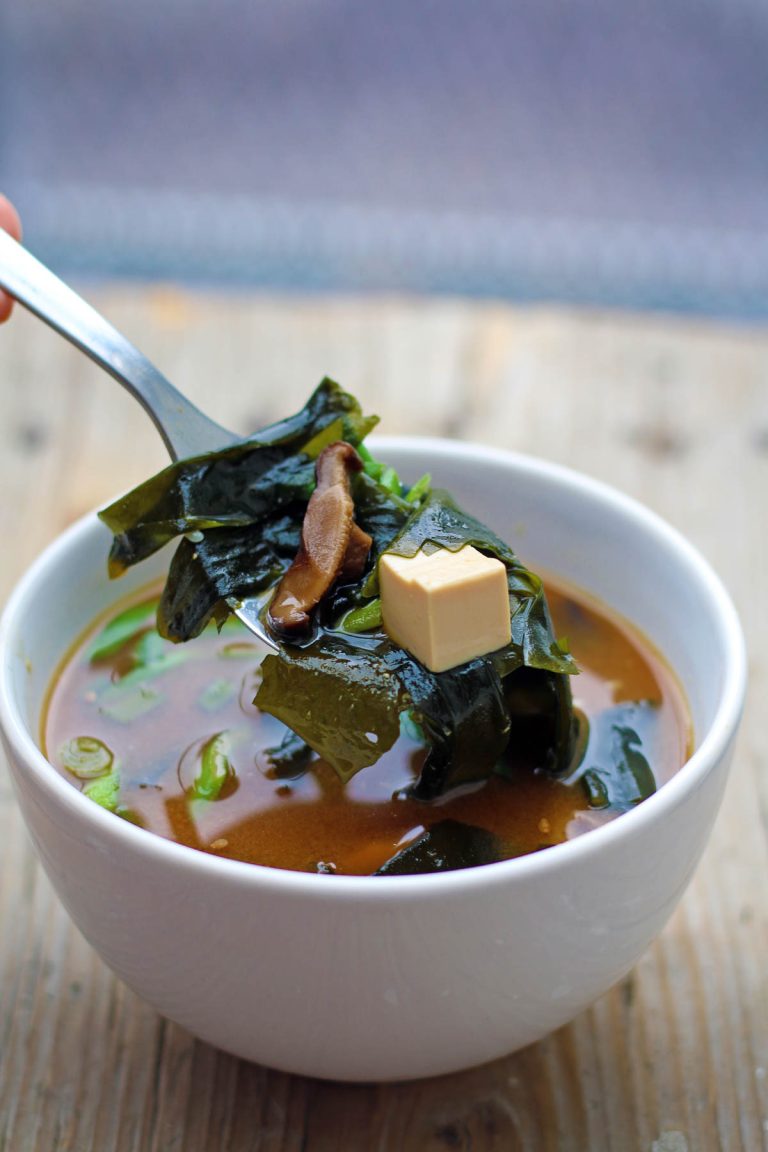
Small cubes of silken tofu go in at the very end, so they stay soft in the hot broth.
Get the recipe
Blended silken tofu replaces the eggs and gives a soft, custardy batter.
Get the recipe
Vegan Crème Brûlée Cheesecake Bars
Silken tofu makes the creamy filling under the caramelized sugar top.
Get the recipeFirm and extra-firm tofu
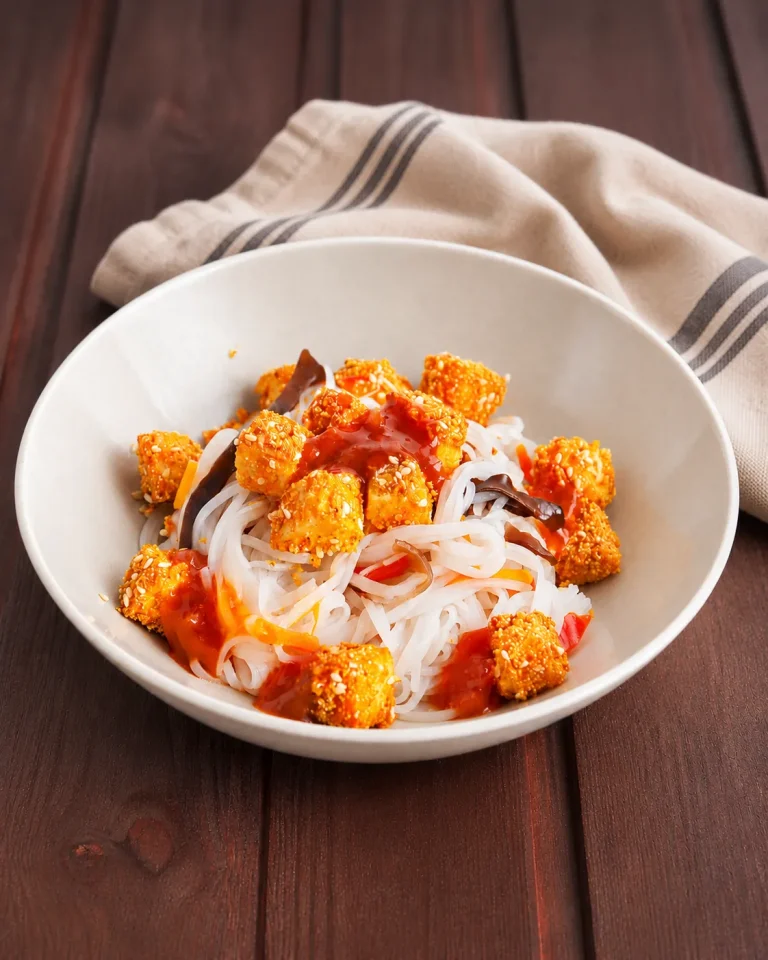
Pressed extra-firm tofu in a cornstarch, panko and sesame crust, fried or baked.
Get the recipe
Firm tofu cubes browned in the pan, then glazed in a garlicky soy sauce.
Get the recipe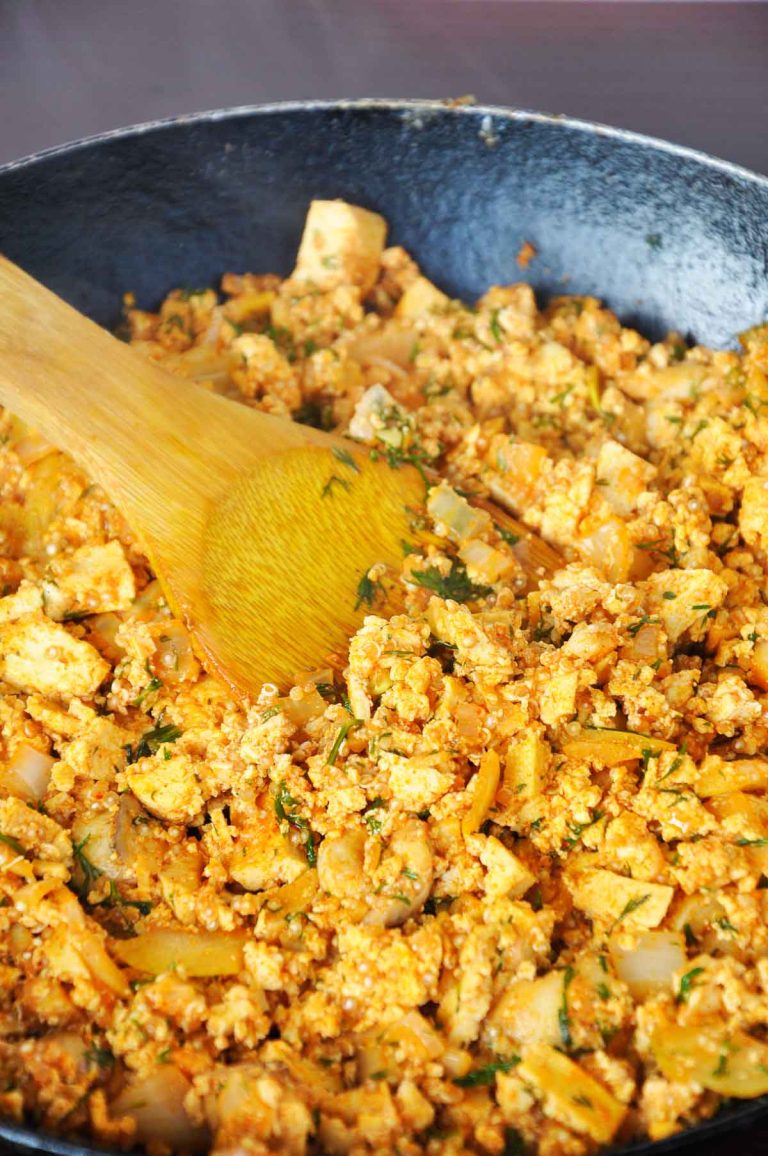
Smoky Tofu Scramble with Mushrooms
Firm tofu crumbled with a fork and cooked with mushrooms and smoked paprika.
Get the recipeSmoked tofu

Thin slices of smoked tofu, marinated briefly and seared for 1-2 minutes per side.
Get the recipe

Baked Pasta Tart with Smoked Tofu
Smoked tofu and mushrooms baked into a gluten-free pasta tart.
Get the recipeTofu Nutrition by Type
Nutrition depends mostly on how much water the tofu holds. Here are typical values per 100 g from the USDA database:
| Type (100 g) | Calories | Protein | Fat | Calcium |
|---|---|---|---|---|
| Silken | 55-62 | 5-7 g | 2-3 g | about 30 mg |
| Soft | 61 | 7 g | 4 g | 111 mg |
| Firm (calcium sulfate + nigari) | 78 | 9 g | 4 g | 201 mg |
| Extra firm (nigari) | 83 | 10 g | 5 g | 282 mg |
| Super firm / hard (nigari) | 145 | 13 g | 10 g | 345 mg |
A few things worth knowing:
- Protein: all tofu is a complete protein, with all the essential amino acids, and protein makes up roughly a third or more of its calories. Brands vary a lot, so check the label: in a 2024 test of 15 tofus sold in Romania, protein ranged from 9 to 24 g per 100 g.
- Calcium: it comes mostly from the coagulant. Calcium-set tofu (look for calcium sulfate or calcium chloride on the label) can be an excellent source; silken tofu has very little.
- No cholesterol, little saturated fat and almost no fiber.
Soy also raises questions about estrogen, breast cancer and testosterone. In short, studies in people have not found harm from eating soy foods like tofu, but that topic deserves its own article.
Which Tofu to Use for What
| You want to make | Use |
|---|---|
| Smoothies, dressings, creamy sauces, cheesecake, chocolate mousse | silken |
| Miso soup, hot pot, mapo tofu | soft or silken |
| Scrambles, curries, stir-fries, baked tofu | firm |
| Crispy tofu, air fryer tofu, grilling, kebabs, nuggets | extra firm or super firm |
| Sandwiches, salads, quick snacks, “bacon” | smoked |
Once you’ve picked the block, my guide on how to cook tofu walks through pan-frying, baking, the air fryer and more, with times and temperatures.
How to Store Tofu
- Unopened: in the fridge, until the date on the package; shelf-stable silken tofu can stay in the pantry until opened.
- Opened: cover it with cold water in a container, keep it in the fridge, change the water daily and use it within 3-5 days. Smoked and marinated tofu just need to be well wrapped.
- Frozen: up to 5 months. Thawed tofu turns spongy and chewier, and squeezed dry it soaks up sauce like a sponge. Don’t freeze silken tofu.
- Raw: packaged tofu is cooked during production, so you can eat it straight from the pack. If you’re pregnant, cook it or heat it until steaming.
Frequently Asked Questions
The main types of tofu are silken, soft, firm, extra firm and super firm. Silken tofu is set in its box and never pressed; the others are pressed more and more, so they get firmer and lower in water. Smoked, marinated, fried and fermented tofu are made from these.
Tofu is made of soybeans, water and a coagulant such as nigari (magnesium chloride), calcium sulfate or glucono delta-lactone. Soy milk is curdled with the coagulant and the curds are pressed into blocks.
Extra-firm tofu has more water pressed out, so it is denser, slightly higher in protein and gets crispier. Firm tofu is a little softer inside. They can be swapped in most recipes.
Extra-firm or super-firm tofu is best for frying, because it holds its shape and gets the crispiest. Press it, cut it into cubes and coat it lightly in cornstarch before frying.
Not in recipes where the tofu has to keep its shape, like stir-fries or baked tofu, because silken tofu falls apart. It works well in smoothies, sauces, dressings, desserts and soft scrambles.
No. Smoked tofu is already firm and dry, so you can slice it and eat it or sear it straight away.
Sources
- USDA FoodData Central (silken, soft, firm, extra firm, hard tofu; FDC 174292, 172449, 172448, 174290, 174291): fdc.nal.usda.gov
- America’s Test Kitchen, All About Tofu: americastestkitchen.com
- Just One Cookbook, Japanese tofu guide: justonecookbook.com
- Colorado State University Extension, Food Source Information: Tofu: fsi.colostate.edu
- Reed K.E. et al., 2021, Reproductive Toxicology (soy and male hormones, 41 studies): doi.org/10.1016/j.reprotox.2020.12.019