
Vegan Laksa
Vegan laksa is a spicy, coconut-based Southeast Asian noodle soup, built here with a fragrant laksa paste, creamy coconut milk, rice noodles, tofu, and textured soy protein instead of the shrimp or fish found in traditional versions. The result is a big, warming bowl with layers of chili, ginger, lemongrass, and lime — all of it completely plant-based.
If you love a noodle bowl with real depth, this one delivers. Each spoonful carries heat from the chili, sweetness from the coconut milk, and a savory backbone from the laksa paste and tamari. Grab a deep bowl and a spoon, and get ready for one of the most flavor-packed soups in the vegan noodle repertoire.
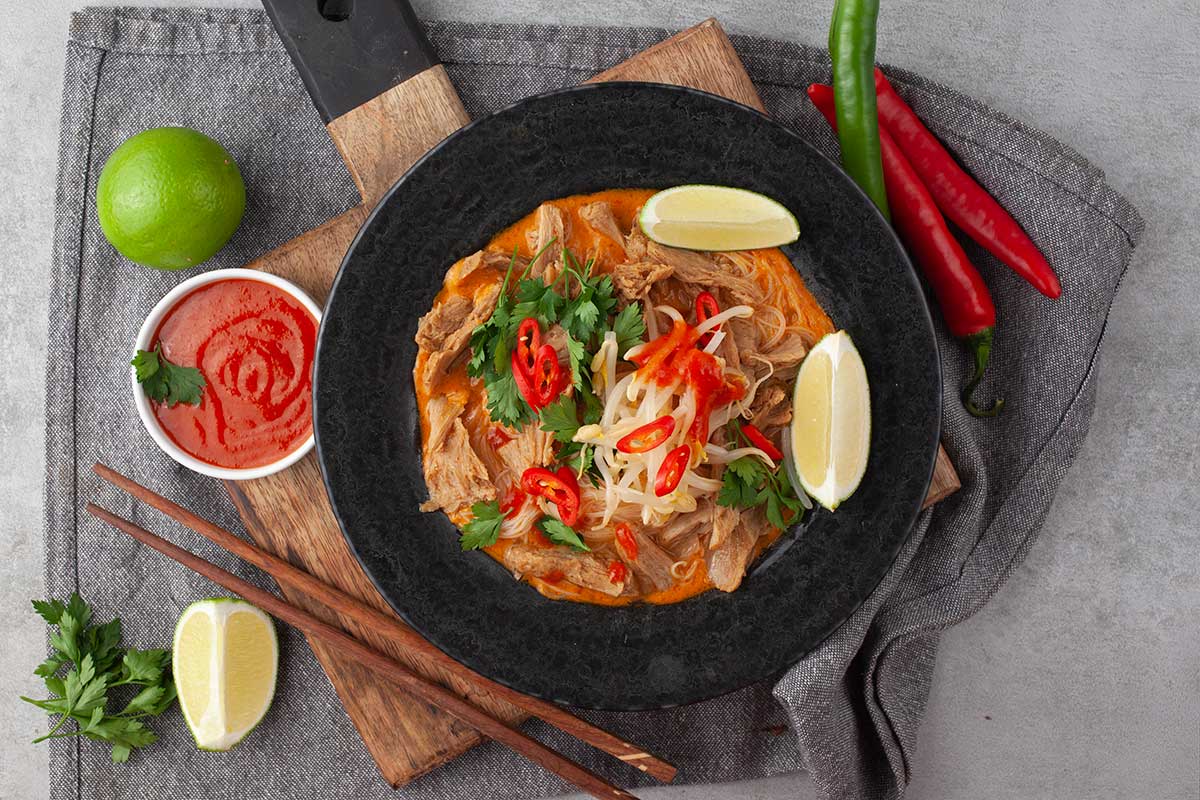
What is laksa, and what makes this version vegan?
Laksa is a rich, spicy noodle soup popular across Malaysia, Singapore, and Indonesia. The curry-style version leans on a coconut milk broth and a spice paste built from chili, lemongrass, ginger, and aromatics. Traditional laksa usually gets its savory depth from shrimp paste, dried shrimp, or fish, which is what keeps most restaurant bowls off the table for anyone eating plant-based.
This recipe keeps all the warmth and complexity but swaps the animal ingredients for plant-based ones. Vegetable stock forms the base, tamari brings the salty-umami note, and crumbled tofu plus strips of textured soy protein stand in for the usual seafood or chicken. The one thing to check is your laksa paste: many store-bought jars contain shrimp paste, so read the label and pick a version marked vegan or vegetarian.
The ingredients that build the flavor
This bowl comes together from a handful of components, each doing a specific job. Here is what to know before you start:
- Laksa paste is the heart of the soup. It carries the chili, aromatics, and spice blend, so the quality of your paste sets the tone for the whole bowl. Use a vegan-friendly one and adjust the amount to your heat tolerance.
- Coconut milk gives the broth its silky body and mellows the chili. A full-fat can works best for that creamy texture. If you cook with it often, you will find plenty of uses in these coconut milk recipes.
- Textured soy protein and tofu are the protein anchors. The soy protein is simmered in a spiced broth, drained, and cut into strips so it soaks up flavor, while crumbled tofu adds soft texture. Both are dependable plant proteins, and if you want yours to taste its best, these tofu tips help.
- Aromatics — garlic, crushed ginger, chopped lemongrass (white part only), and fresh chili — are sauteed first to bloom their fragrance before the paste goes in.
- Rice noodles are cooked separately and added at serving so they stay springy instead of turning soft in the broth.
- Garnishes like pea sprouts, fresh coriander, lime, and sliced chili are what make each bowl feel fresh and finished.
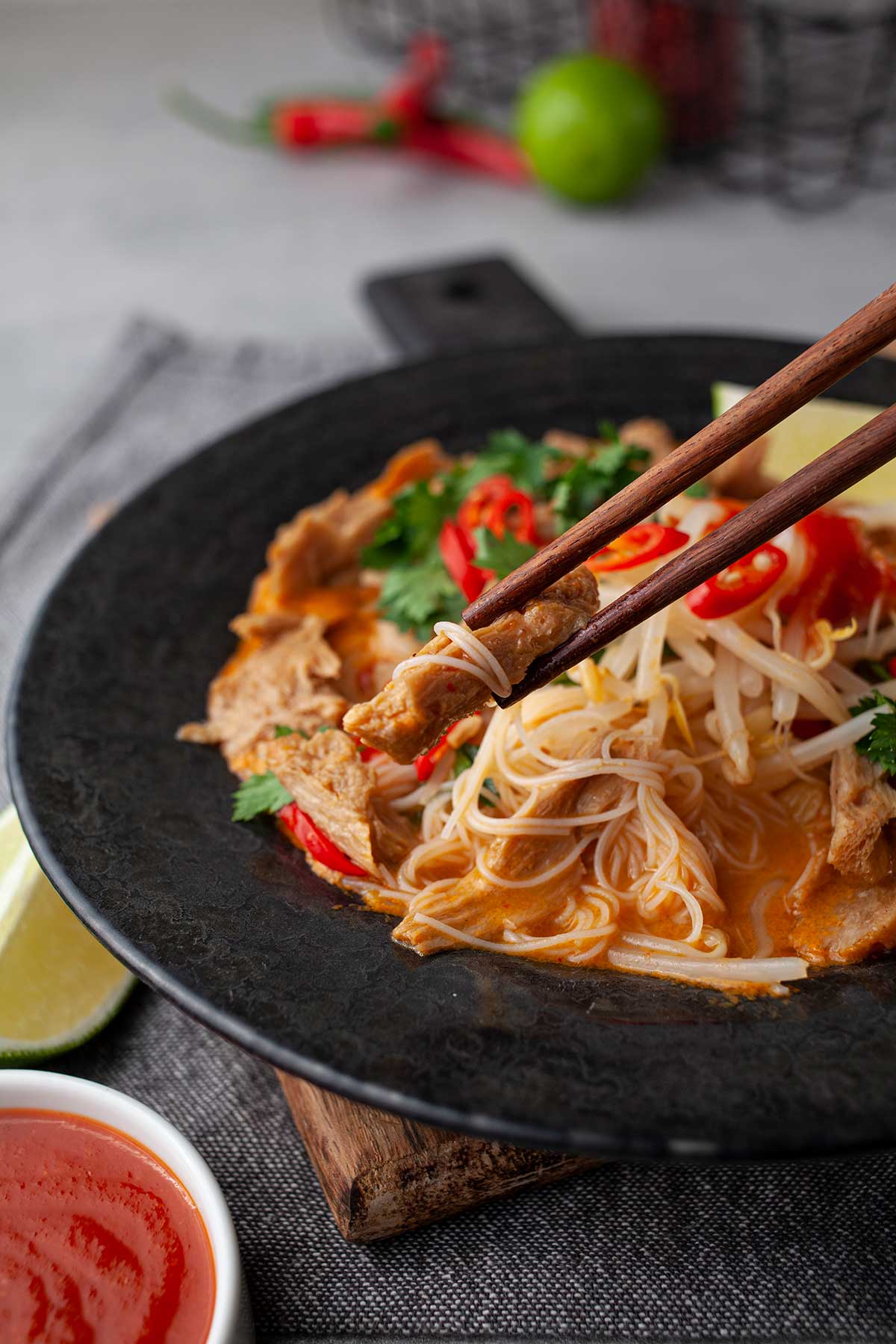
How to get a restaurant-worthy bowl at home
The recipe is not complicated, but a few technique points make the difference between a flat broth and one with real depth:
- Bloom the paste. After sauteing the garlic, ginger, lemongrass, and chili, stir in the laksa paste and cook it for a couple of minutes before adding any liquid. Frying the paste briefly wakes up the spices and deepens the flavor.
- Season the soy protein. Simmering the textured soy protein in the spiced broth for 10 to 15 minutes, then draining it, gives those strips flavor from the inside out rather than leaving them bland.
- Keep the noodles separate. Cook the rice noodles on their own and portion them into bowls at the end. This keeps them from swelling and soaking up all your broth.
- Simmer gently. Once the coconut milk goes in, keep the heat low. A hard boil can cause coconut milk to split and dulls its creaminess.
- Balance at the end. Taste before serving and adjust with tamari for salt, lime for brightness, and extra chili for heat.
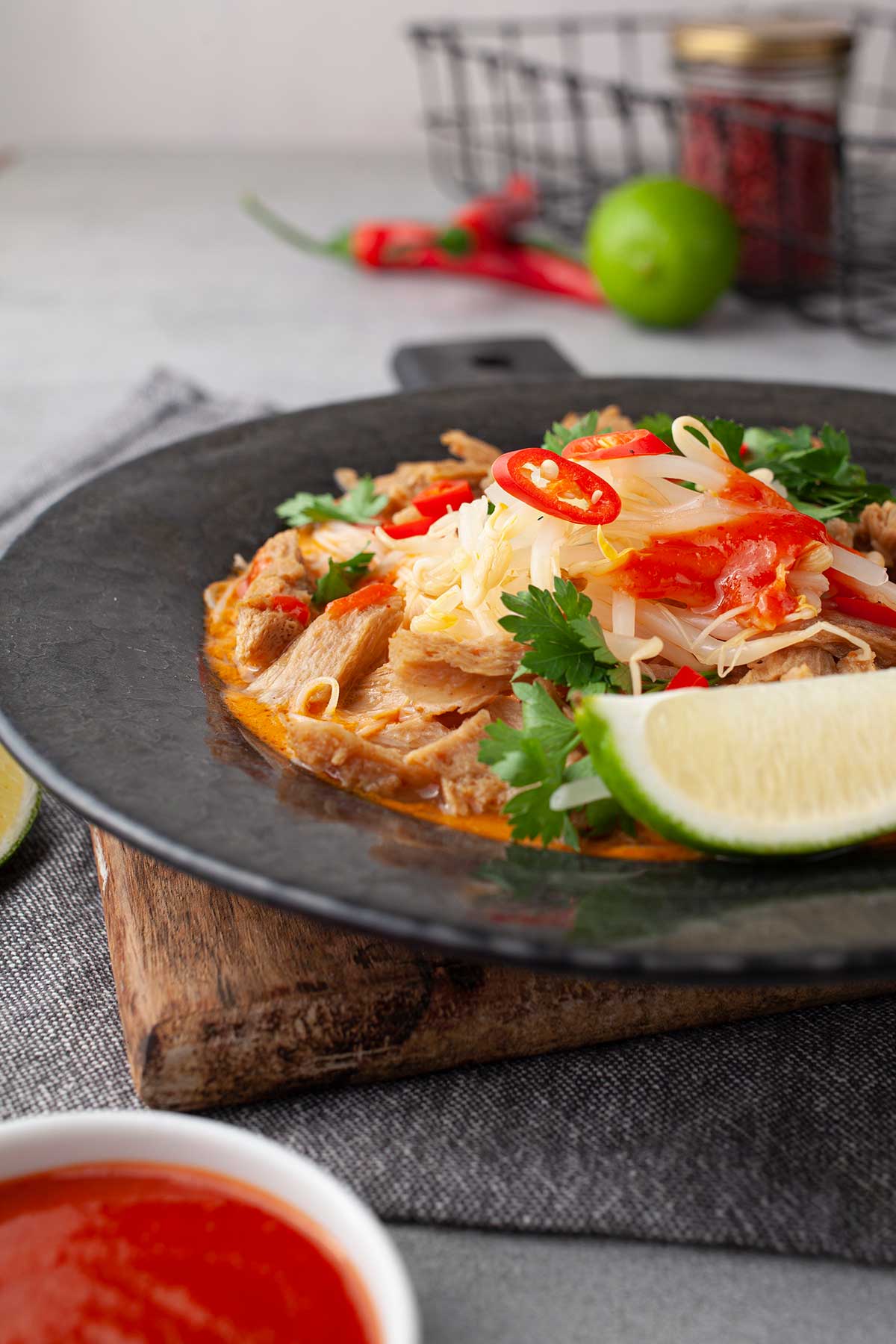
Easy swaps and variations
This laksa is flexible once you have the broth right. A few ways to adapt it:
- Dial the heat up or down. Use less laksa paste and fresh chili for a milder bowl, or add more of both if you like it fiery. Chili also brings its own perks, as covered in these notes on eating chili.
- Change the protein. If textured soy protein is hard to find, lean on extra tofu, or add tempeh or edamame for variety.
- Swap the noodles. Rice noodles are classic here, but the broth works with other Asian noodles too if that is what you have on hand.
- Add vegetables. Bok choy, mushrooms, or bean sprouts fold in nicely and add texture without competing with the broth.
What to serve with vegan laksa
Laksa is a full meal in a bowl, so it does not need much alongside it. A plate of fresh herbs, extra lime wedges, and a little chili oil on the table lets everyone tune their own bowl. If you are building a larger spread or planning a run of Asian-inspired dinners, it sits well next to other noodle favorites like vegan pho, peanut noodles, or garlic noodles. For more background on the flavors at play, this Asian cuisine guide is a helpful read.
Storing and making it ahead
For the best texture, store the broth and noodles separately. Keep the coconut broth with the tofu and soy strips in an airtight container in the fridge for up to 3 days, and cook or store the rice noodles on their own so they do not turn mushy. When you are ready to eat, reheat the broth gently over low heat, portion fresh noodles into your bowl, and add the garnishes just before serving.
The broth also reheats well and, like many spiced soups, often tastes even better the next day once the flavors settle. I would not freeze it, though, since coconut milk broths can separate and the noodles suffer.
If you make this vegan laksa, I would love to know how spicy you took it and which garnishes made the cut. Leave a star rating and a comment below to tell me how your bowl turned out.
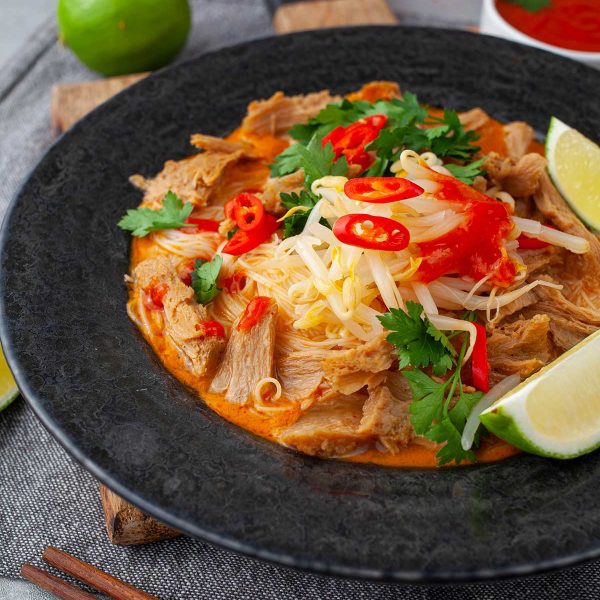
Vegan Laksa
Ingredients
For the vegan “meat”:
- 1 tablespoon Chinese spice mix
- 100 g textured soy protein
Laksa soup:
- 4-6 cups vegetable stock or water
- 1 ½ tablespoons olive oil
- 2 cloves garlic
- 1 teaspoon ginger crushed
- 1 lemongrass white part only, chopped
- 1 chili pepper chopped
- ½ cup laksa paste use a vegan or vegetarian laksa paste
- 1 can coconut milk
- 2 teaspoons tamari
- ½ cup tofu crumbled
- 300 g rice noodles
- 80 g pea sprouts
Toppings:
- ½ cup fresh coriander
- 1 lime sliced
- 1 chili sliced
Instructions
- In a small saucepan, combine hot water and the Chinese spice mix, then heat until it boils. Add the textured soy protein and let it simmer in this spiced broth for 10-15 minutes. Remove the soy protein, drain the excess liquid on paper towels, and cut it into strips. Set aside.
- In a pot over low heat, heat the oil. Once hot, add the garlic and ginger and sauté for 20 seconds. Add the lemongrass and chili pepper and continue to cook, stirring, for another minute. Stir in the laksa paste and cook for an additional 2 minutes.
- Pour in the vegetable stock, coconut milk, and tamari. Cover with a lid and let it simmer over low heat for 10 minutes.
- Add the crumbled tofu and the soy strips, and mix well.
- Cook the rice noodles separately, drain, and set aside.
- To serve, distribute the cooked noodles among 4-6 bowls, then ladle the soup, tofu, and soy strips over the noodles. Add the pea sprouts and garnish with fresh coriander, lime, and chili. Enjoy!
Notes
Frequently Asked Questions
Traditional laksa usually is not, because it gets its savory depth from shrimp paste, dried shrimp, or fish. This version is fully plant-based: it uses vegetable stock, tamari, crumbled tofu, and textured soy protein instead. The one ingredient to check is the laksa paste itself, since many jarred pastes contain shrimp paste, so choose one labeled vegan or vegetarian.
It is spicy, creamy, and deeply aromatic. The coconut milk gives it a smooth, slightly sweet body, while the laksa paste, chili, ginger, and lemongrass bring heat and fragrance. A squeeze of lime and fresh coriander at the end keep each bowl bright and balanced.
This recipe uses rice noodles, which are cooked separately and added to each bowl at serving time. Keeping them out of the broth until the end stops them from swelling and soaking up all the soup. If you do not have rice noodles, other Asian noodles work with the same broth.
Heat comes mainly from the laksa paste and the fresh chili, so use less of both for a milder bowl. You can always add more coconut milk to soften the spice, then adjust with extra tamari and lime once it is toned down. Taste as you go and build the heat gradually.
Laksa paste is a blend of chili, lemongrass, ginger, garlic, and other aromatics that forms the flavor base of the soup. Store-bought versions save time but often include shrimp paste, so read the label if you want to keep the dish vegan. Frying the paste briefly before adding liquid deepens its flavor.
Yes. Store the coconut broth with the tofu and soy strips in an airtight container in the fridge for up to 3 days, and keep the rice noodles separate so they stay springy. Reheat the broth gently over low heat and add fresh noodles and garnishes just before serving. Avoid freezing, since coconut milk broths tend to separate.




Creative!