Soba Noodles with Mushrooms and Miso-Lime Sauce
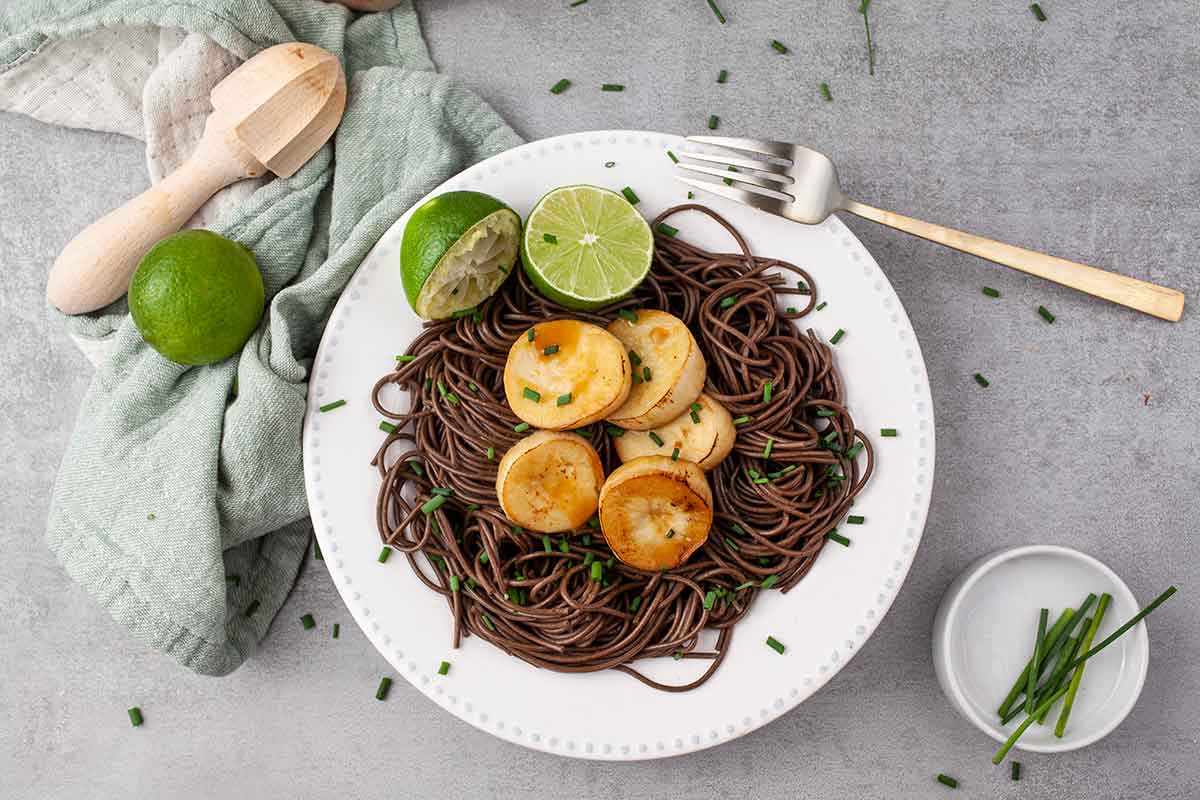
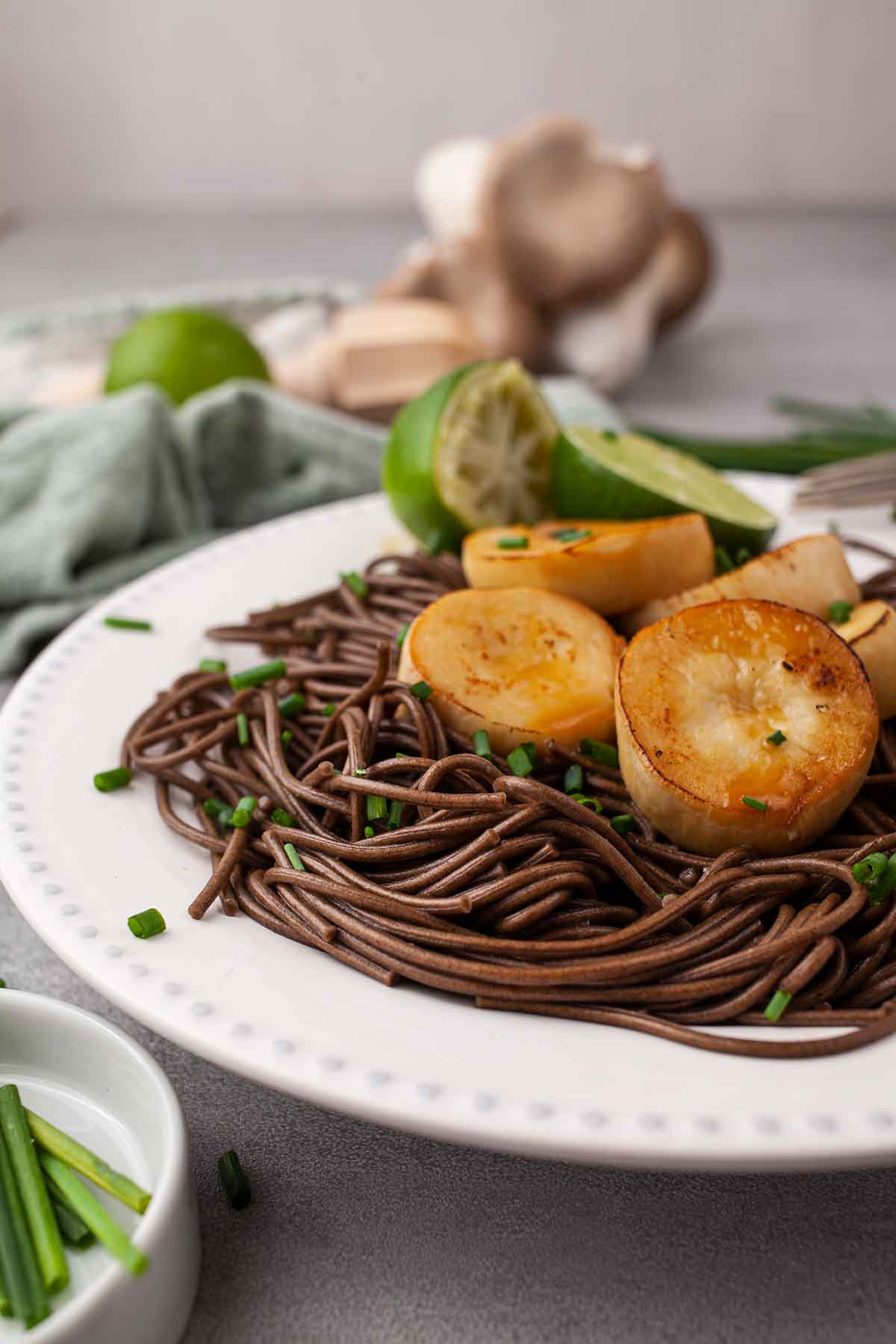
Soba noodles with mushrooms and miso-lime sauce is a quick Asian-inspired dinner you can put together in about 20 minutes: nutty buckwheat noodles topped with seared King Oyster mushrooms and a bright, savory miso-lime glaze. It hits salty, tangy, and lightly sweet notes all at once, which is exactly what makes it so hard to stop eating.
If you’re craving Asian-inspired pasta, I recommend you try my recipe for soba noodles with King Oyster mushrooms. Both the pasta sauce and the combination of ingredients will surprise you, and this bowl usually ends up on people’s list of favorites after the first try. Miso paste is one of those pantry staples I love and use very often, so building a whole dish around it felt natural.
What are soba noodles?
Soba noodles are a traditional Japanese pasta made from a blend of buckwheat flour and wheat flour, which gives them their distinctive brownish color and slightly nutty flavor. They cook quickly and have a pleasant, springy bite that holds up well under a bold sauce like this one. One thing worth knowing: because most soba blends contain wheat, this dish is not gluten-free unless you use 100% buckwheat soba, and it’s always smart to check the miso label too, since some misos are made with barley or wheat.
The key ingredients
This is a short ingredient list, so each element pulls its weight. Here is what to look for and why it matters:
- Miso paste — the backbone of the sauce. It brings deep, savory umami and a touch of salt. I use it very often in various recipes, and if you’re new to it, my guide on how to cook with miso paste walks through the different types.
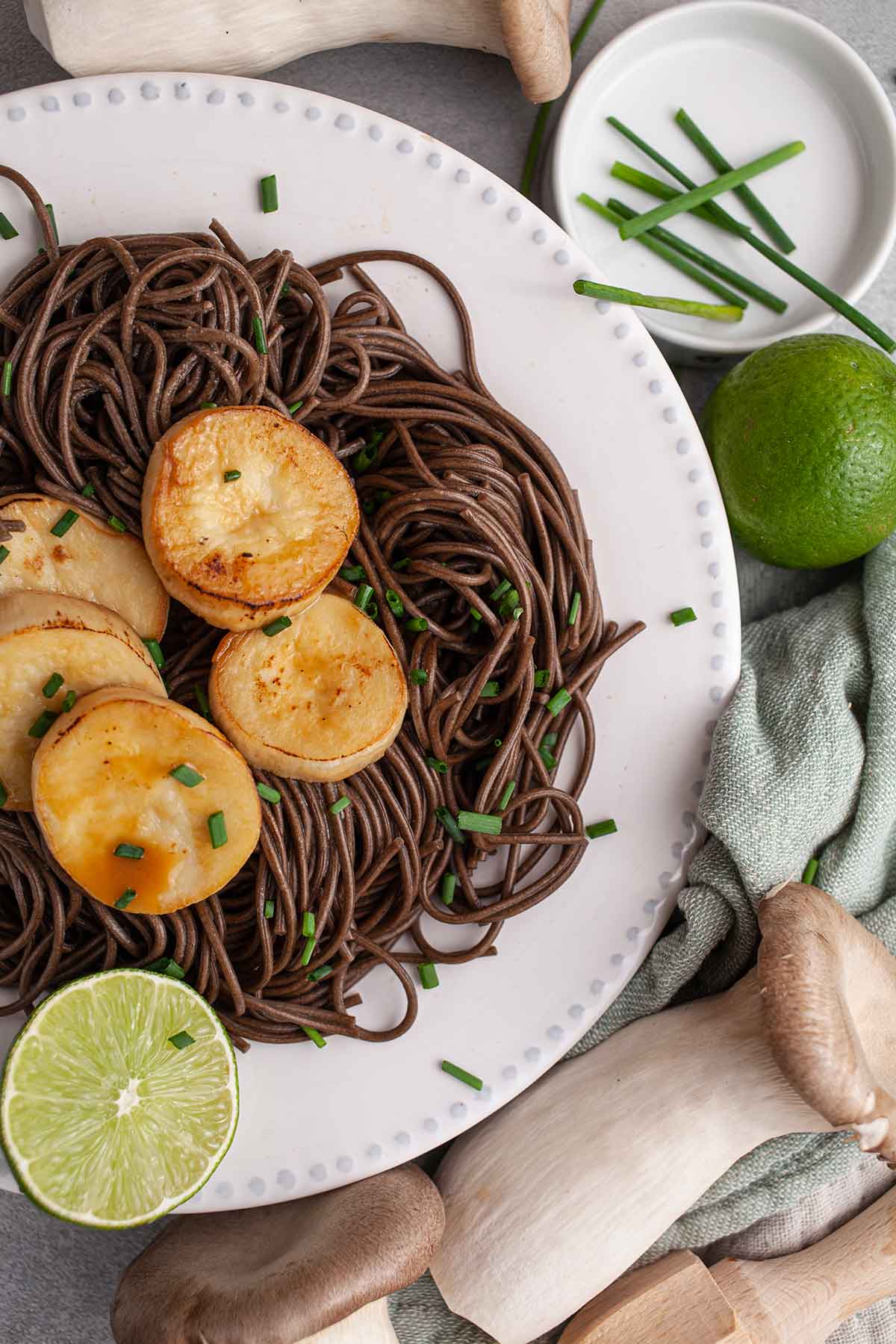
- King Oyster mushrooms — I recommend this type because they are firm, with a texture similar to Saint Jacques scallops. Sliced thick and seared, they turn meaty and golden (the same trick I use for my vegan scallops).
- Lime juice — the acidity cuts through the salty miso and keeps the whole bowl feeling fresh.
- Honey or maple syrup — just a teaspoon to round out the sauce. Use maple syrup to keep the dish fully plant-based.
- Olive oil — I recommend it to keep the recipe vegan, but if you want extra flavor, 85% butter is ideal for searing the mushrooms.
- Garlic powder — garlic is indispensable in my dishes with mushrooms. It intensifies the overall taste and completes the recipe with a delicious flavor.
How to sear the mushrooms and build the sauce
The dish comes together fast, so a little technique goes a long way. Keep these points in mind:
- Slice the mushrooms thick. Cutting the King Oyster mushrooms into 2-3 cm slices gives them enough body to develop a proper sear instead of shriveling.
- Give them room in the pan. Lay the slices in a single layer and don’t crowd them. Crowding traps steam and you’ll end up boiling the mushrooms rather than browning them.
- Be patient with the color. Fry 2-3 minutes per side, seasoning with salt, pepper, and garlic powder, and let them turn a deep golden brown before you touch the sauce.
- Mix the sauce ahead. Stir the miso, lime juice, and sweetener together in a small bowl first, so it goes in smoothly. Add it to the pan and cook just 30 seconds, until it thickens and coats the mushrooms. Any longer and it can turn gummy.
- Don’t oversalt. Miso is already salty, so taste before adding extra salt to the noodles.
Boil the soba according to the package, drain, and pile the mushrooms and sauce on top. A sprinkle of fresh chives at the end adds color and a mild oniony bite that balances the rich miso.
What to serve with miso soba noodles
This bowl is satisfying on its own, but it plays beautifully alongside other Asian-inspired dishes. If you love miso as much as I do, try my most popular miso recipes: miso pasta, vegan miso soup, and Asian mushroom soup. For a bigger noodle spread, it pairs well with peanut noodles, and you’ll find plenty more ideas in my collection of vegan noodle recipes.
Storage and make-ahead
Soba noodles are at their best fresh, while the sauce still clings to the mushrooms and the noodles have some bounce. If you need to store leftovers, keep them in an airtight container in the fridge for up to 2 days. The noodles will soften and soak up sauce as they sit, so it helps to store the noodles and the mushroom topping separately when you can. To reheat, warm the mushrooms gently in a pan and toss with the noodles, adding a splash of water or a little extra lime to loosen everything up. You can also cook and sauce the mushrooms just before serving and boil the soba fresh, which keeps the texture closest to the original.
If you make this soba bowl, I’d love to know how the miso-lime sauce turned out for you. Leave a star rating and drop a comment below to tell me whether you kept it vegan with maple syrup or went for that extra hit of butter with the mushrooms.
Summarise & Save This Recipe
★ Add us as a trusted Google source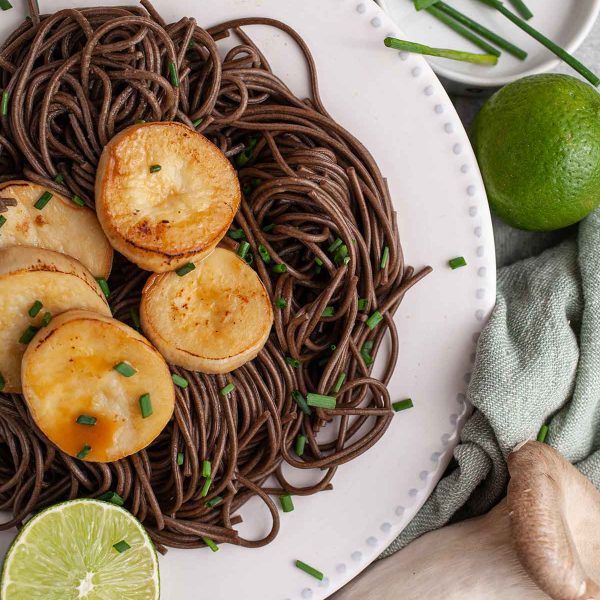
Soba Noodles with Mushrooms and Miso-Lime Sauce
Ingredients
- 200 g soba noodles
- 70 g miso paste
- 1 lime juice only
- 1 teaspoon honey or maple syrup
- 3 king oyster mushrooms sliced 2-3 cm thick
- 2 tablespoons olive oil
- ½ teaspoon garlic powder
- ½ teaspoon salt
- ½ teaspoon pepper
Instructions
- Boil the soba noodles according to the instructions on the package. Drain them, rinse under cold water to prevent sticking, and set aside.
- In a small bowl, add the miso paste, lime juice and honey or maple syrup, and mix well.
- In a pan, heat 1 tablespoon of olive oil, arrange the mushroom slices in a single layer, and sprinkle with a little salt, pepper and garlic powder.
- Fry for 2-3 minutes, then turn them over, drizzle with the remaining oil and continue cooking until the mushrooms turn golden brown.
- Add the miso sauce and cook for another 30 seconds, until the sauce thickens.
- Serve the soba noodles topped with the mushrooms and sauce. Sprinkle with fresh chives.
Notes
Frequently Asked Questions
Not usually. Traditional soba is made from a blend of buckwheat and wheat flour, so this dish contains gluten as written. If you need it gluten-free, look for soba labeled 100% buckwheat and double-check your miso paste, since some misos are fermented with barley or wheat.
The card offers honey or maple syrup, so simply choose maple syrup instead of honey. Keep the olive oil rather than butter for searing, and every other ingredient is already plant-based, giving you a completely vegan bowl.
They are mild and savory with a firm, meaty bite. When sliced thick and seared, their texture becomes similar to Saint Jacques scallops, which is why they hold up so well as a topping. You can swap in oyster, shiitake, or cremini mushrooms if needed, adjusting the cooking time to how they brown.
Boil them just until tender according to the package, then drain right away. Rinsing under cold water and tossing with a little oil stops them clumping, and adding the mushrooms and sauce close to serving keeps the noodles from getting gummy.
It is deeply savory and umami-rich from the miso, brightened by fresh lime juice, with just a teaspoon of sweetener to round it out. Because miso is already salty, the sauce needs very little added salt. Cook it only about 30 seconds so it thickens without turning pasty.
It is best fresh, but you can prep components in advance. Store cooked noodles and the mushroom topping separately in airtight containers in the fridge for up to 2 days, then reheat the mushrooms gently and toss with the noodles, loosening with a splash of water or lime.