Raw Vegan Diet for Beginners: What I Eat, How to Start, and What to Watch
A raw vegan diet means eating only uncooked plant foods: fruit, vegetables, nuts, seeds, sprouts, cold-pressed oils, and foods that are fermented or dried at low temperatures. In research, “raw” usually means anywhere from 70% to 100% of your food uncooked. Below I’ll show you what actually goes on the plate, how to start without losing too much weight, which nutrients to watch (B12 above all), and how to sprout, soak and dehydrate without making yourself sick.
I ate almost entirely raw one summer a few years ago, back when I wrote my raw vegan meal plan. I loved the kitchen side of it: cashew sauces, zucchini noodles, date truffles, all without turning on the stove. But I quickly learned two things nobody mentions on Instagram: it’s hard to feel full unless you add enough nuts and avocado, and vitamin B12 doesn’t come from salads, however green they are. These days I eat “high raw” in summer and cook more in winter, and that feels like the most honest balance.
The short version
- What you eat: fruit, vegetables, leafy greens, nuts, seeds, sprouts, avocado, cold-pressed oils, fermented foods.
- There is no reliable plant source of vitamin B12, not seaweed and not spirulina. On any vegan diet you need a supplement.
- Watch your calories: raw food is bulky and low in energy, and in the largest study a quarter of the women were underweight.
- Raw sprouts have caused serious outbreaks, and red kidney beans should never be eaten raw or sprouted.
- It is not a diet for children, pregnant or breastfeeding women.
Table of Contents
- What a Raw Vegan Diet Is (and Isn’t)
- What Do Raw Vegans Eat?
- How to Start a Raw Vegan Diet
- Nutrients to Watch on a Raw Vegan Diet
- Food Safety: Sprouts, Raw Legumes and Dehydrating
- Is a Raw Vegan Diet Healthy? What Studies Show
- Who Shouldn’t Follow a Strict Raw Diet
- My Free Raw Vegan Meal Plan
- Raw Vegan Recipes on the Blog
- The Studies and Sources Behind This Guide
- FAQ
What a Raw Vegan Diet Is (and Isn’t)
Raw vegan means vegan and uncooked: no animal products and nothing boiled, baked or fried. In the raw food community, “raw” means not heated above 40-48°C (104-118°F), depending on who you ask, to preserve “living enzymes”. It’s worth knowing that this rule comes from the raw food movement, not from nutrition science: no study backs the threshold, and food enzymes aren’t what digests your meal, because your body makes its own digestive enzymes.
In real life, few people eat 100% raw for long. In one study of guests at a raw vegan center, only 28% were eating at least 80% raw after 12 weeks. That’s why I prefer “high raw”: lots of raw food, plus a few cooked foods that keep the diet balanced (cooked legumes, sweet potatoes, quinoa).
What Do Raw Vegans Eat?
The base is fruit and vegetables, but the staying power comes from nuts, seeds and avocado. Here’s my raw vegan food list:
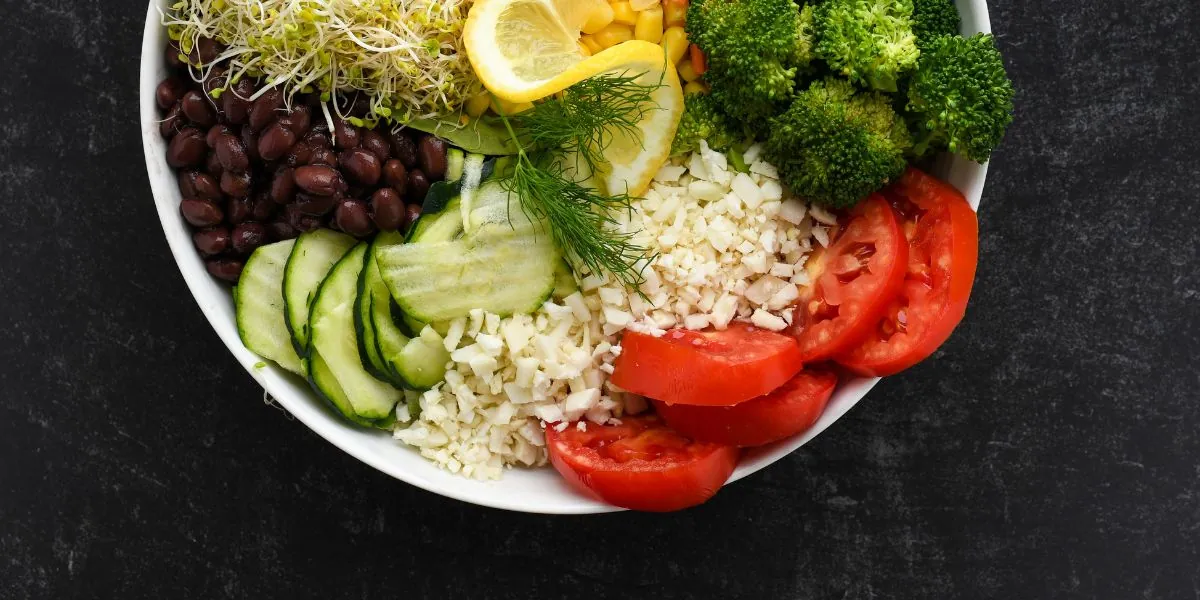
- Vegetables and greens: lettuce, spinach, kale, cabbage, arugula, cucumbers, tomatoes, peppers, zucchini (for noodles), carrots, beets, celery root, marinated mushrooms.
- Fruit: whatever is in season, plus ripe bananas for smoothies and dates for desserts and sauces.
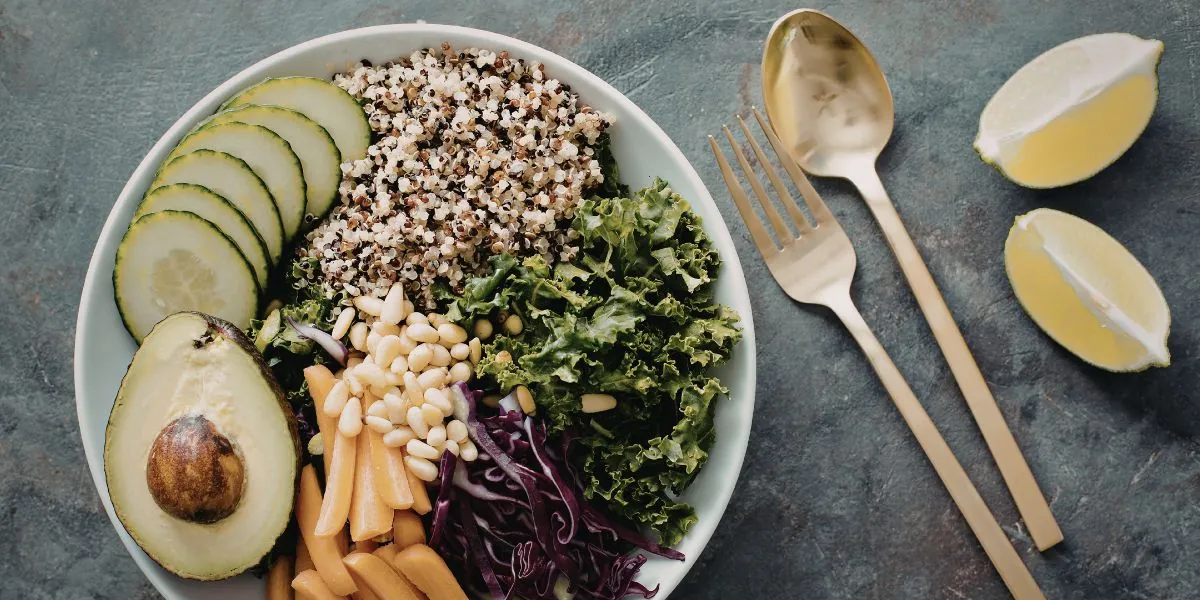
- Healthy fats: avocado, walnuts, almonds, cashews, sunflower and pumpkin seeds, hemp hearts, ground flax, chia, tahini, cold-pressed olive oil.
- Sprouts: lentils, mung beans, alfalfa, broccoli, radish (see below for how to sprout safely).
- Fermented foods: sauerkraut made without vinegar, vegan kimchi, unpasteurized miso (in small amounts).
- Dried foods: unsweetened dried fruit, dehydrated tomatoes, seed crackers, seaweed.
A raw day, the way I eat it
- Breakfast: a green juice or a tropical green smoothie with a spoonful of ground flax or hemp hearts.
- Lunch: a big salad, like celeriac noodle salad with avocado mayo or zucchini salad with mint, topped with sprouted lentils and pumpkin seeds.
- Snack: a handful of nuts or a few raw chocolate truffles.
- Dinner: gazpacho with guacamole and seed crackers, or zucchini noodles with fresh salsa.
- Dessert, when I feel like it: raw halva or raw cashew chocolate.
How to Start a Raw Vegan Diet
Start with one raw meal a day, not 100% raw on Monday morning. The steps that worked for me:
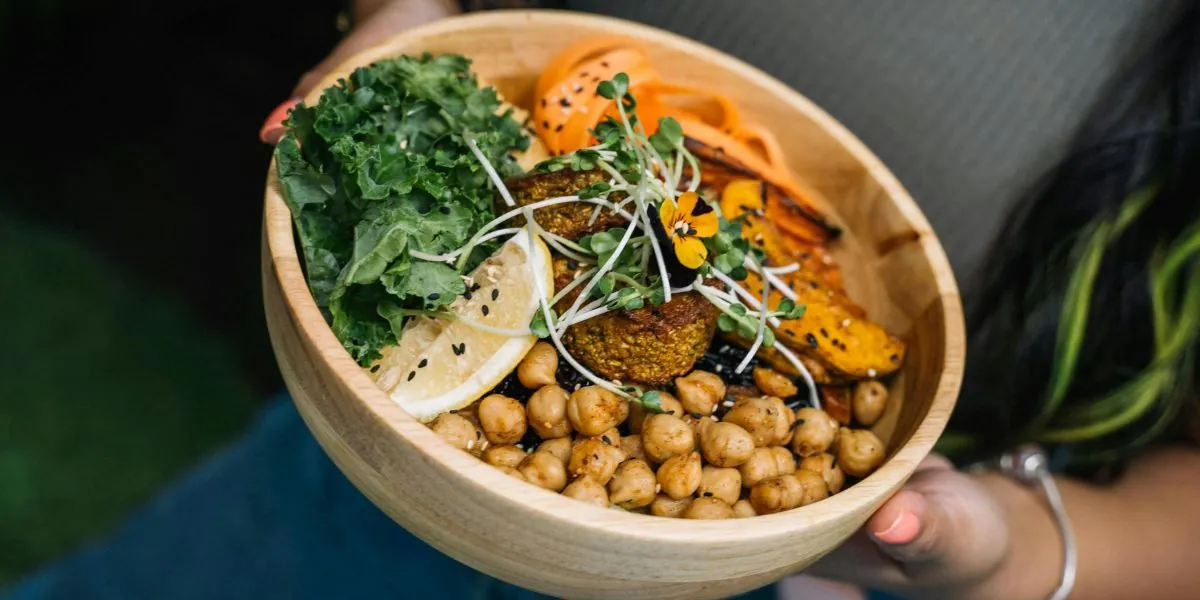
- Add, don’t remove: first a smoothie in the morning, then a big salad at lunch. Only after a few weeks move to more raw meals.
- Put fat and protein in every meal: nuts, seeds, avocado, sprouted lentils. Otherwise you’ll be hungry an hour later and lose weight without meaning to.
- Take B12 from day one, not “when you run low”.
- Keep some cooked foods if you’re losing weight or it’s cold out: cooked legumes, grains, sweet potatoes.
- Invest in two good tools: a powerful blender (mine is part of the Philips Avance food processor I’ve used for over six years, for smoothies, sauces and cashew creams) and a dehydrator. I’ve had my Hendi dehydrator for years and dry everything from the garden in it: vegetables, fruit and herbs. A spiralizer and a sprouting jar are nice extras.
- Get blood work after a few months: B12, vitamin D, iron (ferritin), calcium. Better to check than to guess.
Nutrients to Watch on a Raw Vegan Diet
On a raw vegan diet B12 is definitely missing, and vitamin D, iodine, calcium, iron, zinc, omega-3s and calories all need attention. Here’s the overview:
| Nutrient (adult daily need) | Why it matters on raw | Raw sources | Supplement? |
|---|---|---|---|
| Vitamin B12 (4 µg) | 38% of raw foodists were deficient in a German study | none reliable | Yes, always |
| Vitamin D (15 µg) | vegans tend to have lower levels | sunshine, in summer | usually yes in winter |
| Iodine (150 µg) | vegans often get too little; seaweed is unpredictable | seaweed, in moderation | iodized salt or a supplement |
| Calcium (950-1000 mg) | raw foodists had lower bone density | kale, cabbage, almonds, tahini | ask your doctor |
| Iron (11 mg; 16 mg for women before menopause) | plant iron is absorbed less well | sprouted lentils, seeds, greens, with vitamin C | only if tests show a deficiency |
| Zinc (7.5-16 mg) | phytates block its absorption | pumpkin and hemp seeds, soaked or sprouted | usually not |
| Omega-3 (EPA+DHA 250 mg) | vegans have low EPA and DHA | ground flax, chia, walnuts (ALA only) | algae oil is worth considering |
| Protein (0.83 g/kg) | legumes are eaten only sprouted, in small amounts | sprouted lentils and mung beans, nuts, hemp | no, if you eat enough and vary your food |
| Calories | raw food is bulky | nuts, seeds, avocado, dried fruit | no |
Daily needs: EFSA reference values (2017) for adults. Data on raw foodists: the Giessen studies (Koebnick 1999 and 2005) and Fontana 2005; vegan recommendations: German Nutrition Society (DGE, 2024).
How raw vegans get B12
There is no reliable plant source of B12. Spirulina contains mostly a form that is inactive in humans, and studies disagree about nori. In a study of people eating mostly raw, probiotics did not fix their B12 deficiency, but B12 tablets did. I’d take a B12 supplement on any vegan diet, raw or not, and discuss the dose with your doctor.
Calories, the part nobody talks about
Raw food is bulky and low in calories. In the largest study of raw foodists, from Germany, people had lost 10-12 kg on average since starting the diet, a quarter of the women were underweight, and nearly a third of women under 45 had irregular or absent periods, especially those eating more than 90% raw. If you try it, keep an eye on your weight and don’t skip the nuts, seeds and avocado.
Food Safety: Sprouts, Raw Legumes and Dehydrating
This is the part almost every raw food guide skips, and it’s the most important one.
Sprouts
Raw sprouts are delicious, but they’ve caused some of the worst food poisoning outbreaks in Europe. In 2011 in Germany, fenugreek sprouts contaminated with E. coli (EHEC O104:H4) made more than 3,800 people ill and 53 died. Since then the EU has had strict rules for sprout producers. The catch is that bacteria usually come from the seeds, and the warmth and moisture in the jar help them multiply, so the risk is there for home-grown sprouts too, even when you work cleanly.
How I sprout:
- I buy seeds sold specifically for sprouting, not garden seeds for planting (those can be chemically treated).
- I rinse twice a day with cold water, drain well and keep the jar out of the sun.
- I keep finished sprouts in the fridge and eat them within 2-3 days. If they smell off or feel slimy, they go in the bin.
- Children, older adults, pregnant women and anyone with a weakened immune system should only eat sprouts cooked, home-grown ones included (that’s the advice of both the FDA and Germany’s BfR).
Raw legumes
Never eat red kidney beans raw or just sprouted: as few as four or five raw beans can make you ill. They contain a lectin (phytohaemagglutinin) that is only destroyed by boiling at 100°C for at least 10 minutes. Sprouting reduces it but doesn’t remove it. Raw soybeans (including soy sprouts) also need heat treatment. On a raw diet, the legumes people usually eat sprouted are lentils and mung beans, in small amounts.
Soaked nuts and dehydrating
Raw dehydrating at 40-42°C (104-108°F) does not kill bacteria. In a study on raw buckwheat crackers, bacteria only dropped when drying at 50 and 60°C, not at 40°C. And nuts left to soak for 24 hours at room temperature multiplied Salmonella dozens of times over. In practice:
- I soak nuts and seeds in the fridge, not overnight on the counter, and rinse them well.
- I use clean ingredients and washed equipment, because low-temperature drying won’t “fix” a contaminated batch.
- When the “raw” label doesn’t matter to me, I dry at a higher temperature: dehydrators are designed to dry at 60°C (140°F).
Other traps
- Bitter apricot kernels: they turn into cyanide in the body. According to EFSA, an adult shouldn’t eat more than 3 small kernels at once, and a toddler not even one.
- Raw flour (raw cookie dough or “raw” bars made with flour): flour isn’t treated to kill bacteria and has caused E. coli outbreaks.
- “Raw” cashews: store-bought ones are heat-treated during shelling, so “raw” only means unroasted.
- Raw elderberries: the leaves, stems and raw berries can cause nausea; elderberries should be cooked.
- Wash fruit and vegetables under running water, without soap or detergent.
Is a Raw Vegan Diet Healthy? What Studies Show
Studies of raw foodists are few, small and observational: they show associations, not causes. Here’s what they found:
| The claim | What the research shows |
|---|---|
| “You lose weight the healthy way” | In the Giessen study, an average loss of 10-12 kg; 25% of women underweight, ~30% of women under 45 with menstrual problems. |
| “Better heart health” | Lower total cholesterol and triglycerides, but 46% also had low HDL (“good” cholesterol) (Koebnick 2005). |
| “Healthier bones and teeth” | Lower bone density (Fontana 2005); severe dental erosion in 60.5% vs 31.6% (Ganss 1999), probably from acidic fruit. |
| “Cooking destroys nutrients” | Some are lost to heat (vitamin C, folate when boiled), but others are absorbed better cooked: tomato paste delivered almost 4 times more lycopene than raw tomatoes (Gärtner 1997), and 77% of raw foodists had low lycopene. |
| “Living enzymes help digestion” | No studies show this; your body makes its own digestive enzymes. |
| “A raw diet detoxes you” | There’s no evidence for it; your liver and kidneys don’t need a special diet to do their job. |
My take: lots of raw food is a great idea, and a mix of raw and cooked is what the evidence supports. 100% raw long-term, without supplements and without watching calories, is not.
Who Shouldn’t Follow a Strict Raw Diet
- Children and teenagers, who need plenty of energy and calcium to grow.
- Pregnant and breastfeeding women (also because of raw sprouts).
- Older adults and anyone with a weakened immune system.
- Anyone with anemia, osteoporosis, a history of eating disorders, or who is already underweight.
- Anyone with dental problems (erosion, sensitivity).
If you want to eat raw long-term, talk to a doctor or a registered dietitian first.
My Free Raw Vegan Meal Plan
If you want to try it without planning every meal, I made a 7-day raw vegan meal plan: 21 simple recipes for breakfast, lunch and dinner. Treat it as a trial week, and remember the B12 and calories I wrote about above.
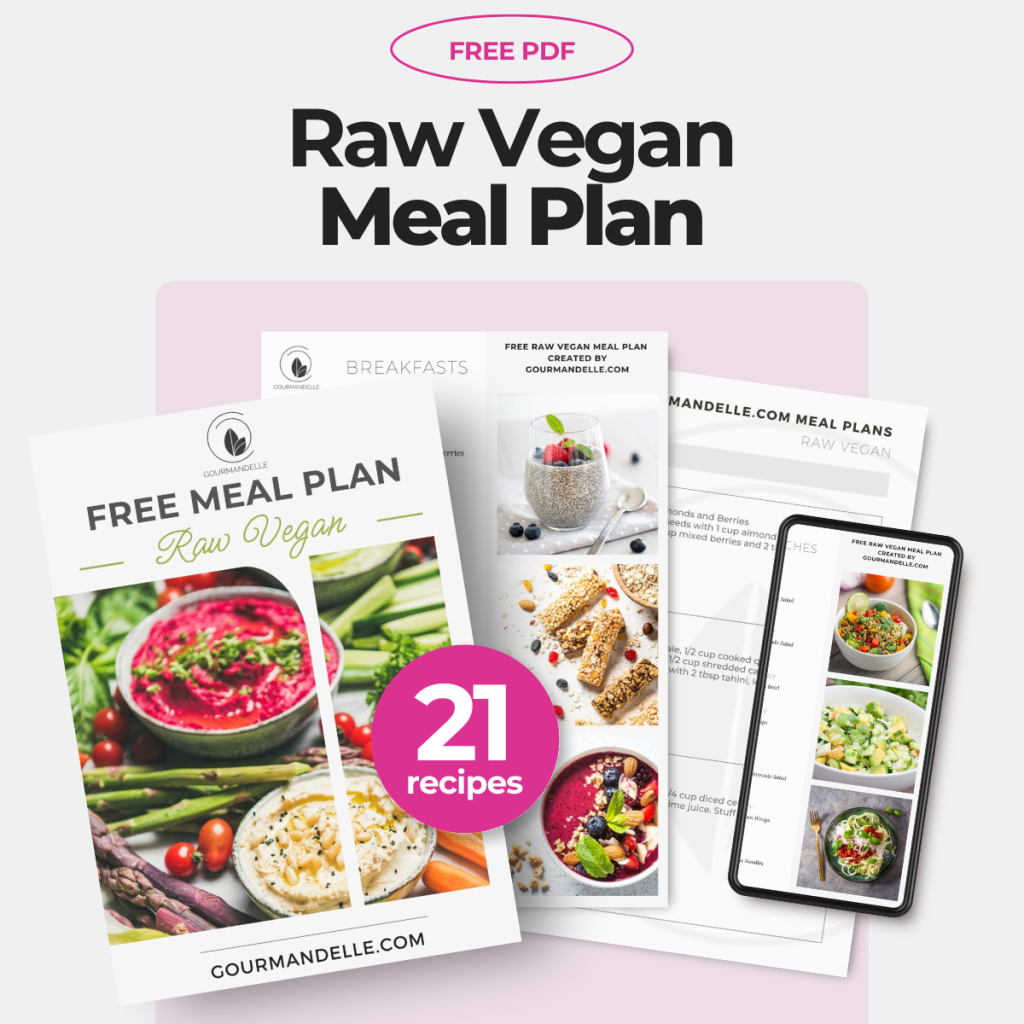
You can find more about the plan on the raw vegan meal plan page.
Raw Vegan Recipes on the Blog
- Desserts: raw vegan ice cream cake, raw pear chocolate tart, raw vegan Easter cheesecake, raw coconut balls, witch finger cookies, vegan biscuit salami.
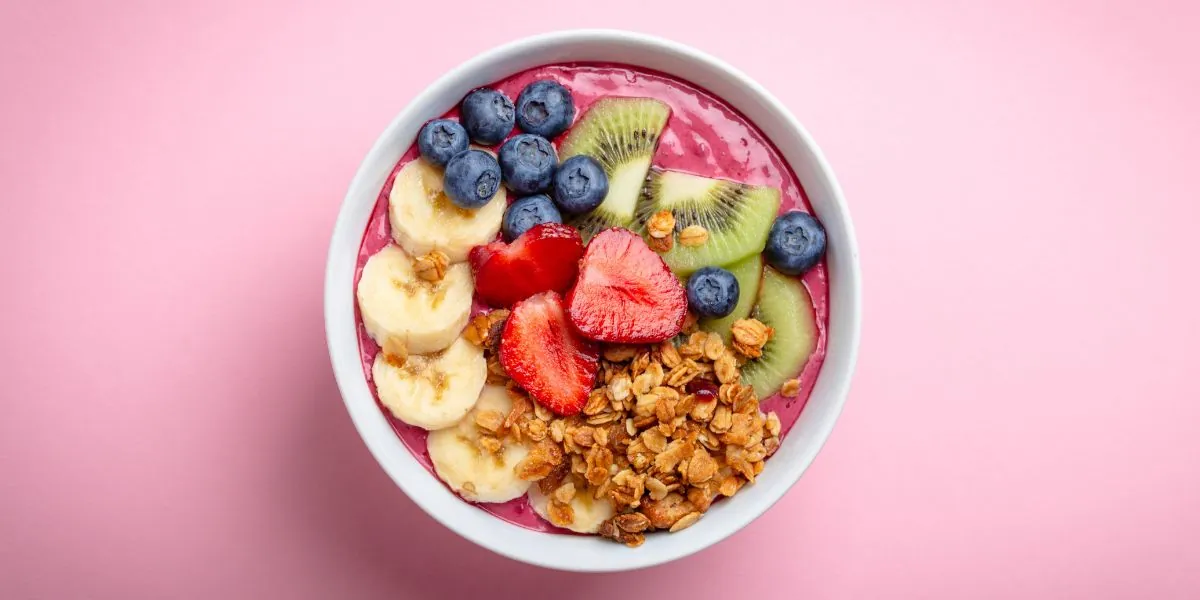
- Savory: zucchini salad with mint, celeriac noodle salad, gazpacho, guacamole, smoothie bowls.
- All raw recipes: the raw recipes category.
- If you’d rather eat vegan with cooked food too, read my vegan diet guide.
The Studies and Sources Behind This Guide
I read the studies below before writing this guide. Most are small and observational, so they show associations, not causes.
- Koebnick et al., 1999: weight and menstruation in 513 raw foodists (the Giessen study) (Annals of Nutrition and Metabolism).
- Koebnick et al., 2005: vitamin B12, homocysteine and blood lipids in raw foodists (Journal of Nutrition).
- Garcia et al., 2008: vitamin A, beta-carotene and lycopene in raw foodists (British Journal of Nutrition).
- Fontana et al., 2005: bone mass in people on a raw vegetarian diet (Archives of Internal Medicine).
- Ganss et al., 1999: dental erosion in raw foodists (Caries Research).
- Donaldson, 2000: vitamin B12 on a mostly raw diet and the effect of supplements (Annals of Nutrition and Metabolism).
- Link și Jacobson, 2008: how often people manage to eat mostly raw (Public Health Nutrition).
- Gärtner et al., 1997: lycopene from tomato paste versus fresh tomatoes (American Journal of Clinical Nutrition).
- Buchholz et al., 2011: the German E. coli O104:H4 outbreak traced to sprouts (New England Journal of Medicine).
- Brožková et al., 2016: bacteria in raw crackers dried at 40, 50 and 60°C (Journal of Food Protection).
- Lieberman et al., 2023: Salmonella in soaked and dehydrated nuts (Journal of Food Protection).
- EFSA (2017), dietary reference values for adults.
- German Nutrition Society (DGE, 2024), position on the vegan diet.
- EFSA (2011), microbiological risks of sprouts and seeds for sprouting.
- EFSA (2016), cyanide in apricot kernels.
- FDA, Bad Bug Book: phytohaemagglutinin in raw kidney beans.
FAQ
It’s a vegan diet built on uncooked foods: fruit, vegetables, nuts, seeds, sprouts, cold-pressed oils, and foods that are fermented or dried at low temperatures. In research it usually means 70% to 100% raw.
Typically a smoothie or juice in the morning, a big salad with sprouts and seeds at lunch, nuts or raw truffles as a snack, and something like gazpacho, zucchini noodles or a raw wrap for dinner. Nuts, seeds and avocado provide most of the staying power.
From a supplement or fortified foods. There is no reliable plant source of B12: spirulina contains mostly an inactive form, and studies disagree about nori.
From sprouted lentils and mung beans, nuts, hemp seeds and pumpkin seeds. If you eat a varied diet with enough calories, protein is usually covered; problems start when the diet is monotonous or too low in calories.
Sprouted lentils and mung beans are commonly eaten raw, in small amounts. Red kidney beans should never be eaten raw or sprouted, because as few as four or five raw beans can make you ill and sprouting doesn’t remove the toxin.
Eating more fruit and vegetables is a good idea, but studies of raw foodists also found B12 deficiency, low body weight, menstrual problems and lower bone density. A mix of raw and cooked food, with a B12 supplement, is the safer approach.
Not automatically. Low-temperature drying doesn’t kill bacteria; they only drop at 50-60°C. Soak nuts in the fridge and use clean ingredients.
Children, pregnant and breastfeeding women, older adults, people with weakened immunity, and anyone with anemia, osteoporosis, an eating disorder or low body weight. For a long-term raw diet, talk to a doctor or dietitian first.