
Vegan Cabbage Rolls with Mushroom Stuffing (Romanian Sarmale)
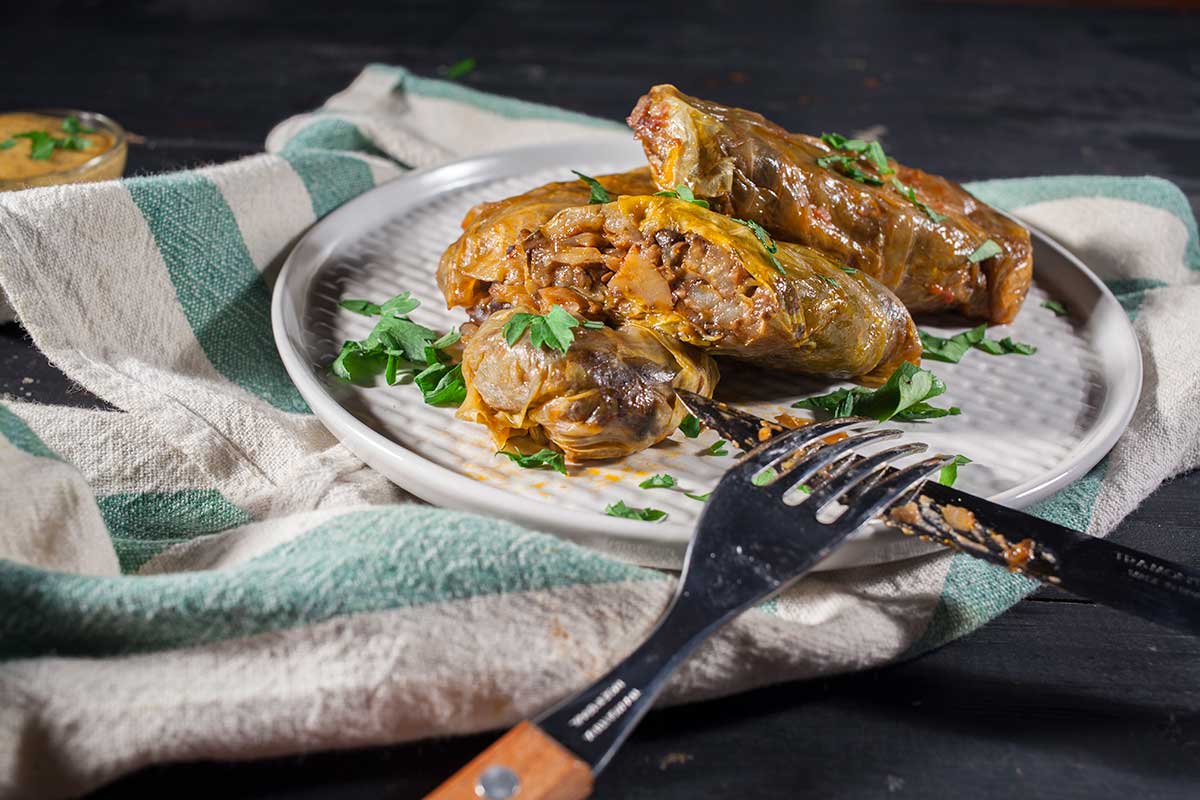
Vegan cabbage rolls are a plant-based take on Romanian sarmale, where pickled cabbage leaves are wrapped around a savory filling of minced mushrooms, rice, grated carrots, onion and dill, then slow-baked until tender. They deliver all the comfort of the traditional dish with no meat, ready for your next family dinner.
If you have never had the pleasure of trying vegan cabbage rolls, you are in for a delightful treat. Cabbage rolls, known as sarmale, are a beloved dish in Eastern European cuisine, often gracing special occasions and holiday feasts. Traditionally they are prepared in winter and made with a rich, meaty filling of pork and beef wrapped in cabbage or vine leaves.
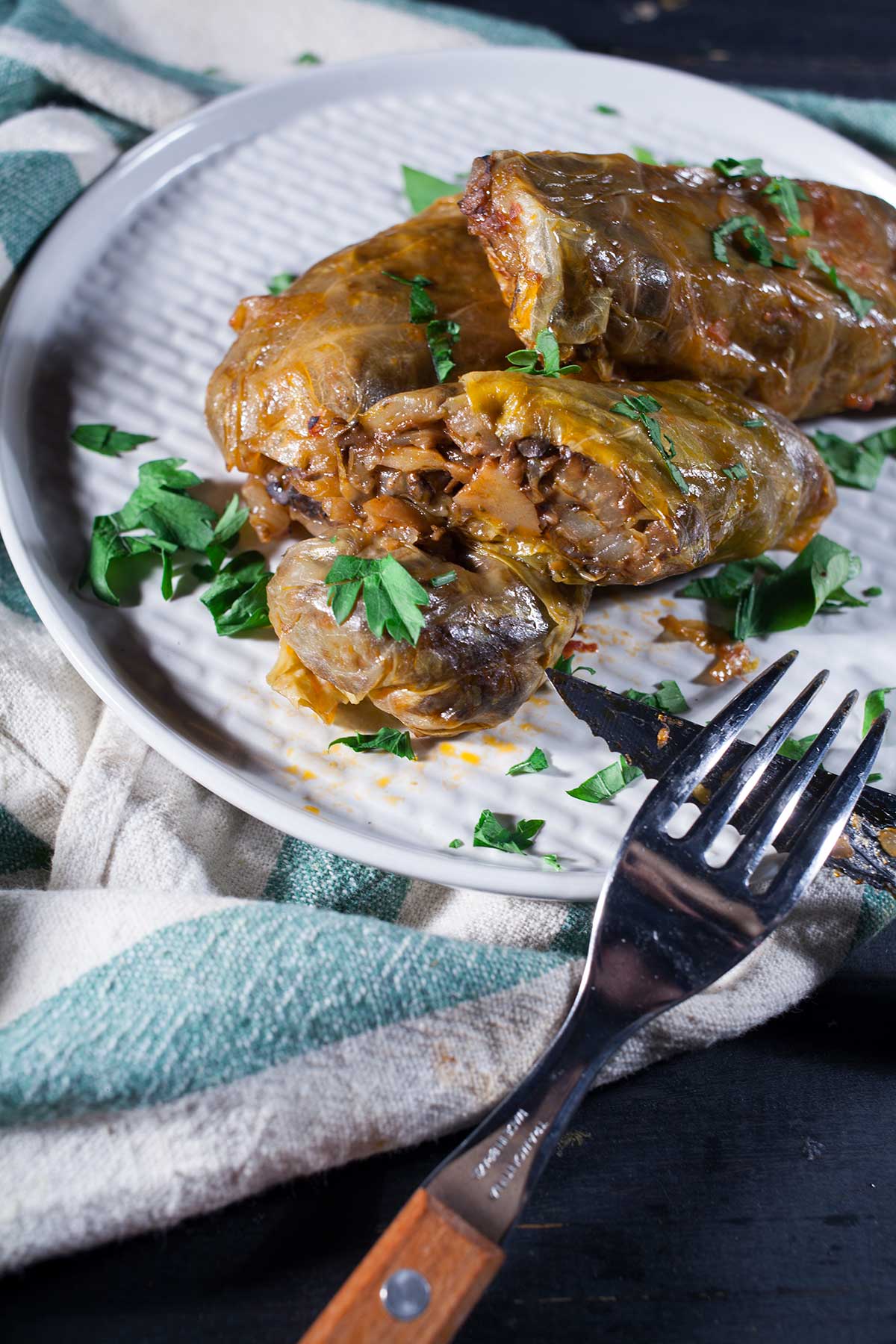
This version keeps everything that makes sarmale special, the sour cabbage, the warm spices, the long slow bake, and swaps the meat for finely minced Champignon mushrooms and carrots. The mushrooms give the filling a deep, savory bite, while the round-grain rice soaks up the cooking liquid and turns plump and silky. It is the kind of dish that fills the whole kitchen with the smell of bay leaf and paprika.
This Recipe Works If You Need
- A meat-free centerpiece for a holiday table or Sunday family dinner that still tastes traditional.
- A make-ahead dish you can assemble one day and bake the next, since the flavor only improves overnight.
- A naturally vegan version of sarmale for guests who are fasting, plant-based, or avoiding meat and dairy.
- A budget-friendly meal that turns a head of pickled cabbage, a pack of mushrooms and a cup of rice into a full pot of food.
- A freezer-friendly batch cook, since cabbage rolls hold their shape and flavor extremely well after freezing.
Why You’ll Love This Recipe
- Deeply savory without meat. Finely minced Champignon mushrooms bring natural umami, so the filling tastes rich and rounded rather than flat.
- Authentic sour tang. Pickled cabbage gives that unmistakable sarmale sourness you cannot fake with fresh cabbage.
- Comforting and filling. Round-grain rice expands as it bakes, soaking up the paprika and tomato to make each roll plump and satisfying.
- Naturally plant-based. No meat, no dairy, no eggs, just vegetables, rice, herbs and olive oil.
- Better the next day. Like all good sarmale, the flavor deepens after a night in the fridge, so leftovers are a reward.
- Crowd-pleasing. Even confirmed meat-eaters tend to reach for seconds, which makes this a safe dish to serve a mixed table.
Ingredient Notes
Pickled cabbage is the heart of this dish and the reason it tastes like real sarmale. Look for a firm, large head of whole pickled (fermented) cabbage rather than shredded sauerkraut, because you need intact leaves to roll. The best heads have leaves that peel away cleanly and are pliable, not brittle. If the leaves feel very salty or sharp, give them a quick rinse before filling, since the cabbage keeps releasing salt as it bakes.
Champignon button mushrooms do the work that meat does in the traditional recipe. Choose firm, dry caps with closed gills and no slimy spots, as fresher mushrooms hold more structure when minced. Pulsing them in a food processor with the carrots until finely minced gives a texture close to ground meat, and their natural glutamates are what make the filling taste savory rather than bland.
Round-grain rice is the right choice here, not long-grain. Its higher starch content makes it cling together and turn creamy as it bakes, which holds the filling inside each roll. Soaking it for about 15 minutes and adding it without draining means it starts cooking with the mushroom paste and finishes in the oven. Leave it slightly underdone in the skillet, because it keeps expanding while the rolls bake.
Tomato paste adds color, gentle acidity and body. Adding it only in the last half hour of baking, as the recipe directs, keeps it from scorching on top and lets it glaze the rolls rather than turning bitter. A good concentrated paste will give a richer color than watery passata.
Sweet paprika, thyme, ground coriander and bay leaves are the spice backbone. Sweet paprika brings warmth and color without heat, thyme and coriander add an earthy lift, and the bay leaves perfume the whole pot as it bakes. Use fresh, fragrant paprika, since old paprika loses both color and aroma quickly.
Fresh dill, onion and carrots round out the filling. A full bunch of chopped dill is not optional in sarmale, it is the herb that ties the dish to its tradition. The onion is sauteed first to take off its raw edge, and the grated carrots add a touch of natural sweetness that balances the sour cabbage.
Tips
- Do not fully cook the rice. Stop simmering once the excess liquid is absorbed but the grains still have a bite. The rice keeps swelling in the oven, and overcooked rice in the skillet leads to mushy, burst rolls.
- Cut out the tough core from each leaf. The thick central rib does not soften and makes the roll hard to fold. Shaving it flat lets you roll tightly and gives a neater, more tender result.
- Line the pot with the scrap leaves. Torn leaves and tough trimmings placed at the bottom act as a cushion, protecting the rolls from direct heat so the underside does not scorch. Never throw those scraps away.
- Pack the rolls tightly in a circle. Arranging them snugly from the outer edge to the center stops them from unrolling and floating apart while they bake.
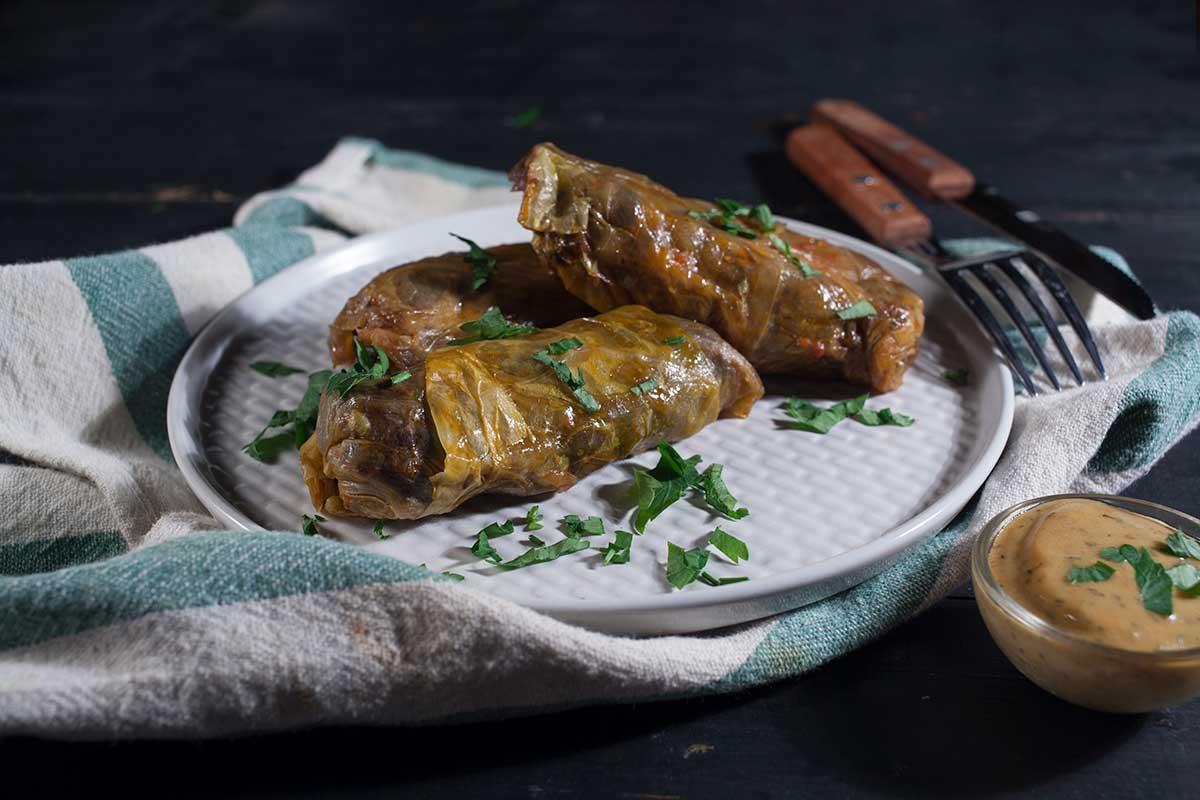
- Check the water every half hour. The pot should never run dry. You know the rolls are ready when the cabbage is fully tender and the rice inside is soft and plump, after about an hour and a half at 200°C (392°F).
Substitutions and Variations
- Mushroom mix. Swap part of the Champignon for cremini or a handful of rehydrated dried mushrooms to deepen the savory, woodsy flavor of the filling.
- Vine or fresh leaves. If you cannot find pickled cabbage, you can use blanched fresh cabbage leaves or vine leaves, though you will lose the signature sour tang and may want to add a splash of lemon or sauerkraut brine.
- Grain swap. Round-grain rice gives the creamiest result, but you can use a short-grain rice or stir in some buckwheat for a heartier, more rustic filling.
- Spice it up. Add a pinch of smoked paprika or a little chili for a smokier, warmer version while keeping the dish entirely plant-based.
Storage and Make Ahead
Cabbage rolls are a famously good make-ahead dish, and many cooks insist they taste even better the next day once the flavors have settled. Store cooled rolls in an airtight container in the fridge for up to four or five days, and simply reheat them gently in the oven or on the stovetop with a little of their cooking liquid. They also freeze beautifully: arrange them in a single layer, freeze, then transfer to a container, and they will keep for a couple of months. You can also assemble the rolls a day ahead and bake them fresh when you need them.
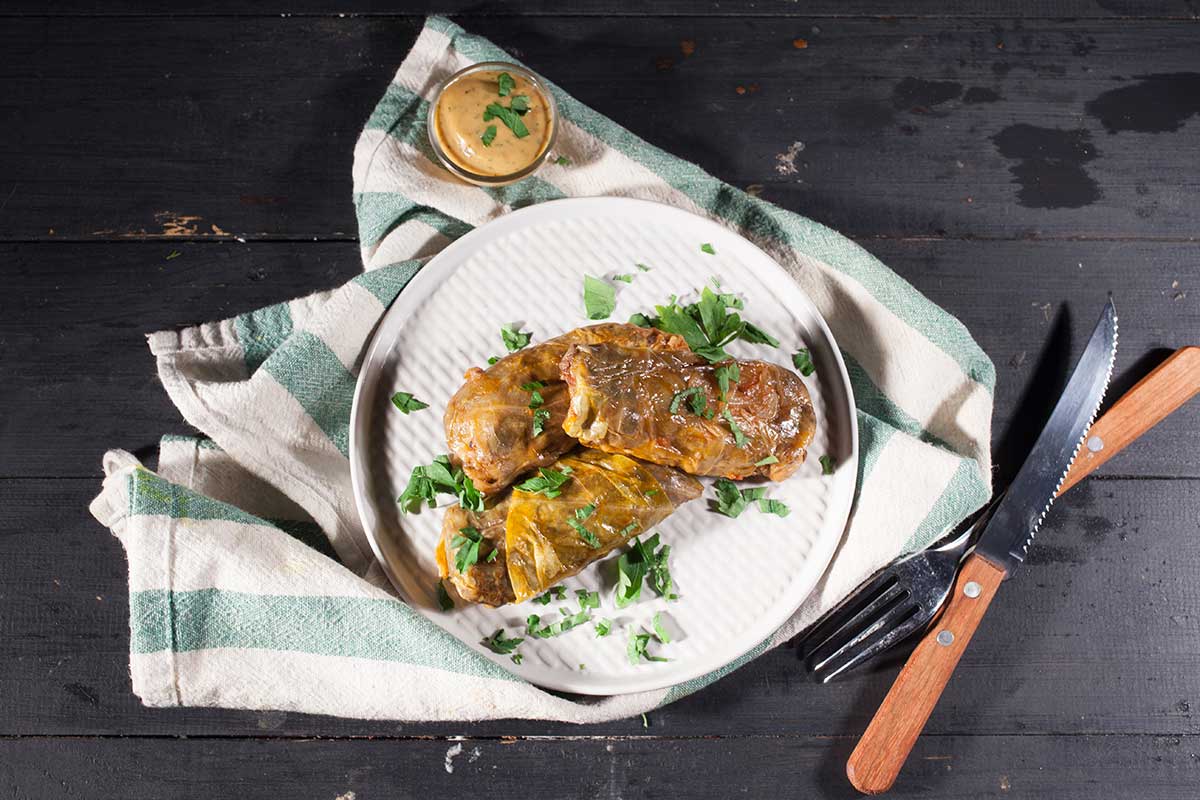
Sarmale are traditionally served with a dollop of something creamy and a side of polenta. Try them with this traditional Romanian polenta and a spoonful of vegan sour cream to keep the meal fully plant-based. If you love this dish, you may also enjoy these stuffed red cabbage rolls for another twist on the classic.
Summarise & Save This Recipe
★ Add us as a trusted Google source
Vegan Cabbage Rolls
Ingredients
- 1 pickled cabbage large head
- 3 bay leaves
- 1 tablespoon sweet paprika
- 110 g tomato paste
Filling:
- 500 g Champignon button mushrooms
- 1 onion finely chopped
- 200 g round-grain rice soaked in water for about 15 minutes
- 1 teaspoon salt or more to taste
- ½ teaspoon ground pepper
- 1 teaspoon thyme
- 1 teaspoon ground coriander
- 1 bunch dill chopped
- 2 carrots small, grated
- 2 tablespoons olive oil
Instructions
For the filling:
- Place the sliced mushrooms and grated carrots in a food processor and process them until finely minced. If you have a grinder, you can put them through the grinder whole.
- Soak the rice in 1/2 cup of water for 15 minutes.
- Heat the oil in a large skillet over medium heat.
- Add the onion and sauté for 5 minutes.
- Add the mushroom paste and carrots, and sauté for an additional 10 minutes.
- Add the rice, without draining it, and another half cup of water.
- Stir and let it simmer for 10 minutes, or until the excess liquid has been absorbed by the rice. The rice shouldn't be fully cooked as it will continue to expand in the oven.
- Remove from heat and add the chopped dill, salt, and spices.
- Allow the mixture to cool slightly.
Assembly:
- Separate the leaves of the pickled cabbage. Cut out the tough core from each leaf.
- Place 1 tablespoon of the filling in each cabbage roll and fold them into rolls as shown in the picture above.
- The cabbage leaves with holes or the tough parts should not be discarded. Place them at the bottom of the pot where you'll cook the cabbage rolls.
- If any cabbage rolls have holes, cut a small piece from another cabbage leaf and wrap it around to cover the hole.
- Place the cabbage rolls in the pot. Arrange them in a circle, from the outer edge to the center, filling the pot tightly.
- Add the bay leaves on top and sprinkle sweet paprika over them.
- Cover them with pickled cabbage leaves.
- Add enough water to cover them.
- Place the pot in the oven at 200°C (392°F) for an hour and a half. Check every half an hour to see if there's enough water in the pot to prevent the cabbage rolls from burning.
- Half an hour before removing them from the oven, add the tomato paste on top.
Frequently Asked Questions
Yes, these vegan cabbage rolls are a wholesome choice. The filling is built from mushrooms, rice, carrots, onion and dill with just two tablespoons of olive oil, so they are low in fat and free of meat, dairy and eggs. The pickled cabbage adds fiber and the gut-friendly benefits of fermented vegetables.
Finely minced Champignon button mushrooms are the best meat replacement for cabbage rolls. Processed with grated carrots until very fine, they give a texture close to ground meat and add natural umami, so the filling tastes savory and satisfying. Round-grain rice bulks out the mixture and holds everything together.
Cabbage rolls usually fall apart for two reasons: the rice was overcooked before baking, or the rolls were packed too loosely. Stop simmering the rice while it still has a bite, cut the tough core out of each leaf so it folds neatly, and pack the rolls tightly in a circle in the pot so they hold their shape.
Pickled cabbage gives the traditional sour tang that defines sarmale, so it is strongly recommended. If you cannot find it, you can use blanched fresh cabbage leaves or vine leaves instead, but you will lose the signature sourness. Adding a splash of lemon juice or sauerkraut brine helps bring back some of that tang.
Yes, cabbage rolls freeze very well. Let them cool completely, arrange them in a single layer to freeze, then transfer them to an airtight container where they will keep for a couple of months. Reheat them gently in the oven or on the stovetop with a little cooking liquid, and they taste almost as good as fresh.
Bake the cabbage rolls at 200°C (392°F) for about an hour and a half. Check the pot every half hour to make sure there is enough water so they do not burn, and add the tomato paste over the top in the final half hour. They are done when the cabbage is fully tender and the rice inside is soft and plump.



Even though this recipe requires some time to prepare, the end result is sooo delicious and special! Never tried these before but I’m so glad I made your recipe, thank you! 🙂
So happy you liked it, Nina! 😀