
Spring Ricotta Tart with Edible Weeds
This spring ricotta tart with edible weeds is a savory vegetarian tart built on a buttery two-flour crust and a creamy ricotta filling loaded with spinach and four foraged garden weeds. It is my favorite way to turn a basket of tender spring greens into a proper meal, coming together with a quick food-processor dough and a filling you simply blend and pour. If you have ever wondered whether the “weeds” taking over your garden each spring are worth eating, this tart is the delicious answer.
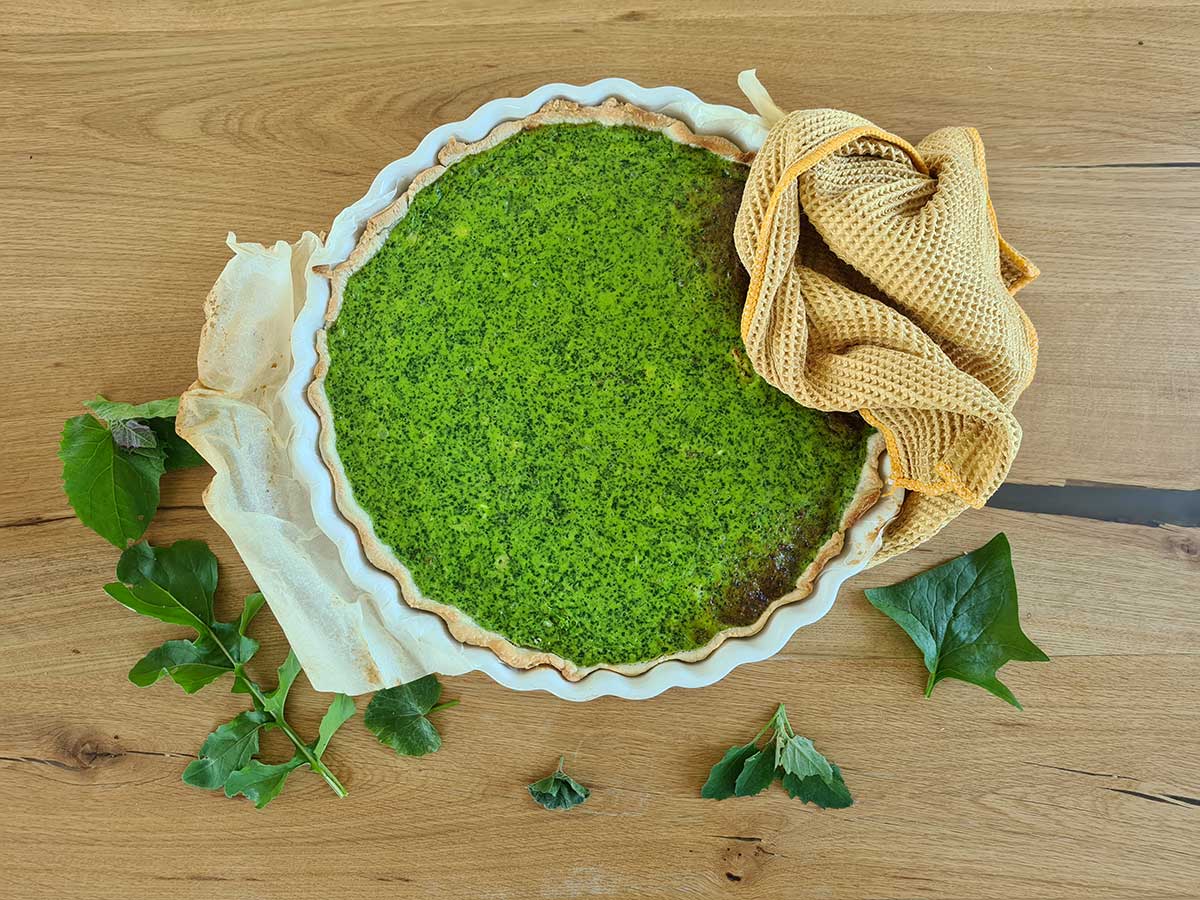
Spring is here, which means my garden is starting to bloom and come back to life. Because I love spending time outside, I always watch for the new plants and weeds popping up here and there, and I try to come up with recipes that can put them to use. Since I started gardening, I have discovered so many edible weeds, and now my garden is full of them.
Here is the reassuring part: not all weeds are toxic. A surprising number are edible, and most people simply overlook them. For this tart I used spinach plus four common weeds, and the result surprised me. It is delicious and easy to make, even though a few of the ingredients have complicated names.
Meet the Edible Weeds Behind This Tart
The filling is roughly 80% spinach and 20% wild greens. Below are the four weeds I foraged straight from my garden, each one growing there on its own. One important rule before you start: only pick weeds you can positively identify.
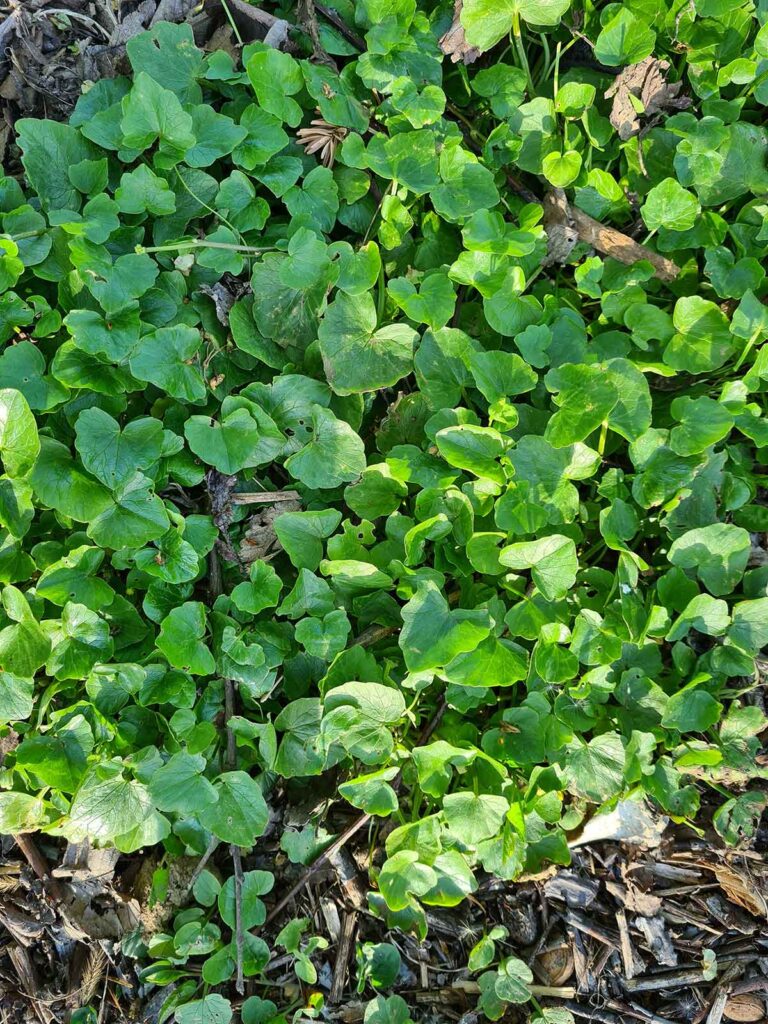
Watercress is probably the most popular edible weed I used in this tart, so I am starting with it. It brings a fresh, peppery bite to the filling. If you want another way to enjoy it, try my spring watercress salad.
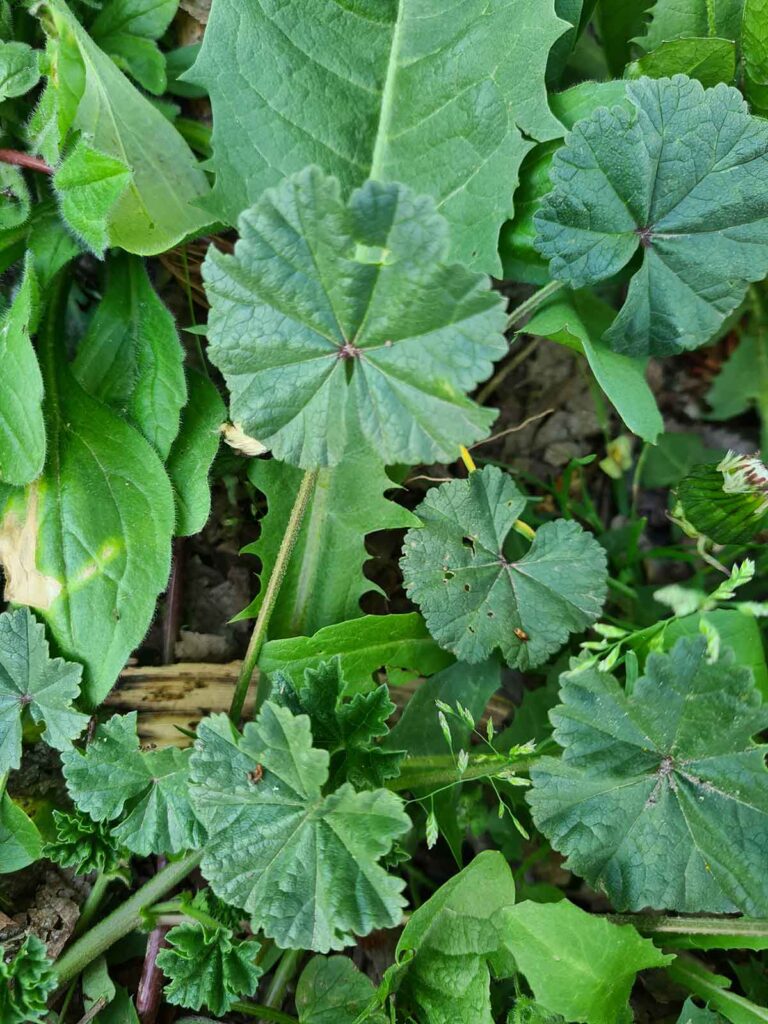
Cheeseweed, or dwarf mallow (Malva neglecta, known here as nalba comuna), has soft, mild leaves that blend easily into the mixture without taking over the flavor.
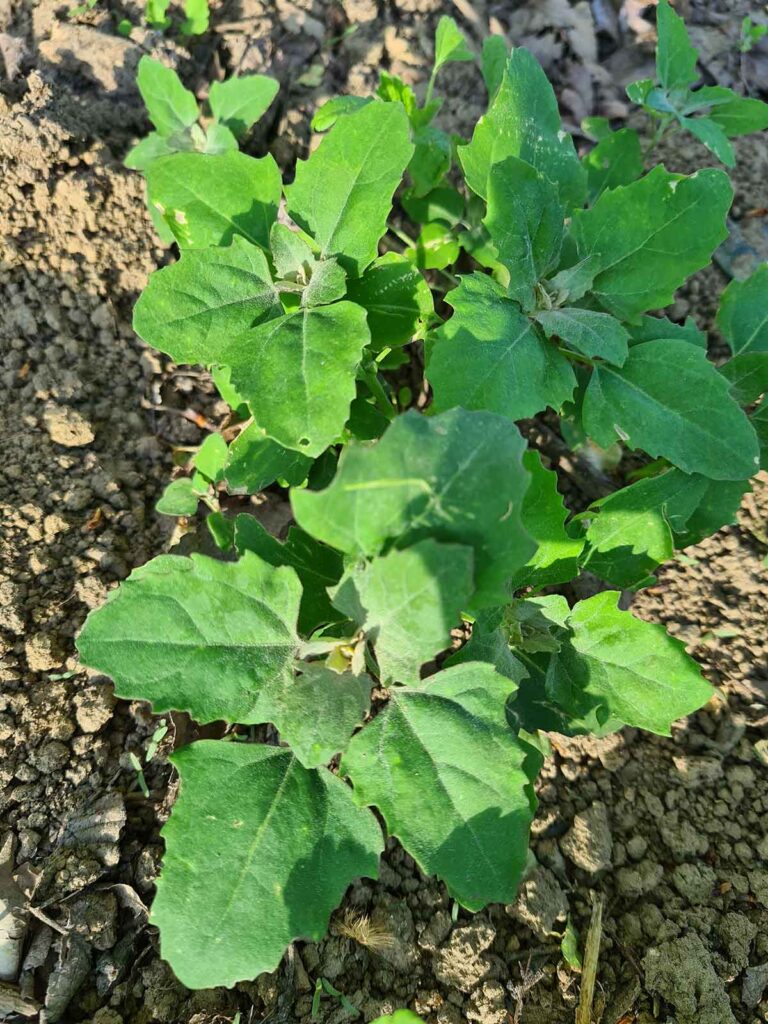
White goosefoot (Chenopodium album), also known as wild spinach, is treated as a plain weed in some places, but in my country it is valued for its nutrients: vitamins A and C, plus minerals such as iron and magnesium. Its flavor is close to spinach, which makes it a natural fit here.
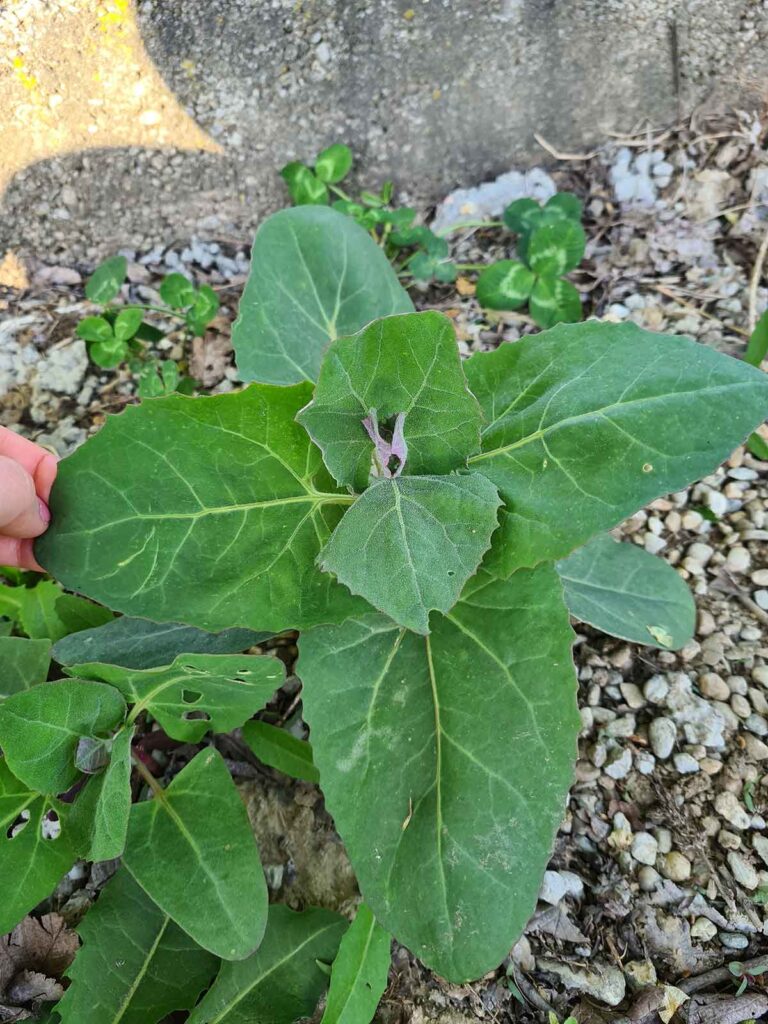
Garden orache (Atriplex hortensis, loboda verde) is a close relative of spinach with a similarly mild, leafy taste. It rounds out the wild-green portion of the filling nicely.
What Goes Into the Ricotta Filling
The base is 500 g of ricotta for creaminess, plus 150 g of crumbled old cow’s cheese for a salty, aged note. The greens are the star: 300 g of spinach (I use the Matador variety I planted in my garden last autumn) alongside the handful of edible weeds. A couple of spring onions and spring garlic add freshness, and a handful of parsley and dill bring an herby lift. Three eggs bind it all, and you can find more ideas in my spinach recipes if you have extra greens on hand. Everything goes into the blender until you reach a creamy mixture.
The one ingredient that looks unusual is protein powder. Because Costin, my husband, is working out and his meals have to be a bit higher in protein, I replaced the flour or starch I would normally use with whey protein to help the composition “coagulate” and stick together. It thickens the filling much like flour would. If you do not want a high-protein tart, simply swap it back for the same amount of flour. And if the spring onions caught your eye, here is a quick guide on how to cook with scallions.
Making the Buttery Two-Flour Crust
The dough is a simple mix of 180 g all-purpose flour, 80 g whole grain flour, 80 g cold butter, half a teaspoon of salt, and 80 ml of ice-cold water. Blitz everything except the water in a food processor, then add the water gradually until the dough compacts. Knead it for about a minute on a lightly floured surface until smooth, wrap it in plastic, and chill for 30 to 45 minutes before using.
Two details make or break the crust. First, keep the butter cold: those small pockets of solid fat turn to steam in the oven and give you a tender, short texture. Second, do not skip the rest in the fridge, because chilling relaxes the gluten so the dough presses into the pan without shrinking back on you.
Tips for a Tart That Sets and Slices Cleanly
- Press the dough evenly into a large tart pan (about 35 cm across) and gently lift it to coat the walls. If you made the dough from scratch, line the pan with a baking sheet first; store-bought dough usually comes with one.
- Wash the spinach and weeds well and pat them dry before blending, so the filling does not turn watery.
- Bake at 200C for about 20 minutes, until the center is set and the edges look lightly golden. If your oven runs cool or the filling sits deep in the pan, give it a few extra minutes until the middle no longer jiggles.
- Let the tart cool before serving. The filling firms up as it rests, and that short wait is what gives you clean, tidy slices.
Swaps and Variations to Try
- No protein powder? Use the same amount of flour to help the filling set. Both work the same way here.
- Cannot forage weeds? Lean on more spinach or other tender spring greens you can identify with confidence.
- Want it dairy-free? Swap the ricotta and old cow’s cheese for a homemade vegan cheese. The eggs still bind it, so the tart stays vegetarian rather than fully vegan.
Serving, Pairing, and Keeping Leftovers
This tart is lovely warm or at room temperature. I like to serve it with a light clear soup or a crisp salad for a full spring meal. If you enjoy a savory bake like this one, you will find more in my French-inspired recipes.
Store leftovers covered in the fridge for three to four days and warm them gently before serving, or enjoy them cold straight from the pan. You can also make the dough a day ahead and keep it wrapped in the fridge until you are ready to assemble.
If you go foraging and bake this tart, I would love to know which weeds ended up in your filling. Leave a star rating and a comment below to tell me how your spring ricotta tart turned out.
Summarise & Save This Recipe
★ Add us as a trusted Google source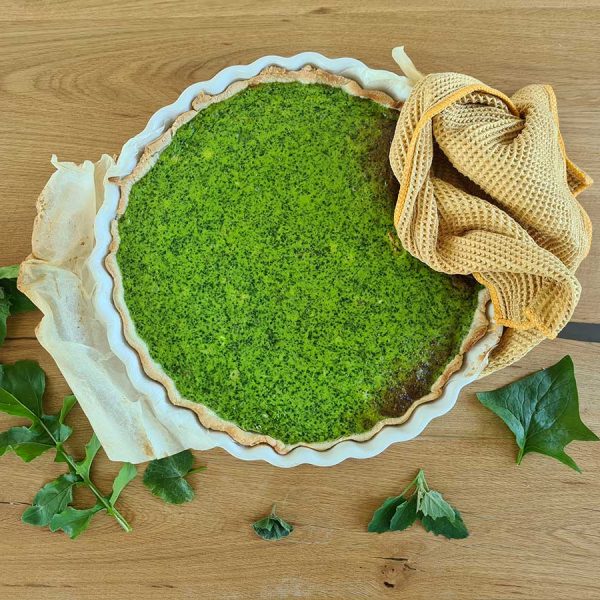
Spring Ricotta Tart with Edible Weeds
Ingredients
For the savory tart dough:
- 180 g all-purpose flour
- 80 g whole grain flour
- 80 g butter
- 80 ml water ice cold
- ½ tsp salt
For the filling:
- 500 g ricotta
- 300 g spinach
- edible weeds (watercress, cheeseweed, arugula, Chenopodium album, orache) a handful
- 150 g old cow’s cheese crumbled
- spring onions and spring garlic a couple of each
- parsley and dill a handful
- 3 eggs
- 120 g whey protein powder optional; swap for flour if you don’t want a high-protein tart
- salt and pepper to taste
Instructions
For the savory tart dough:
- Add all the savory tart dough ingredients, except for the ice-cold water, to a food processor and process on medium speed.
- Gradually add the ice-cold water and, once the dough has come together, turn off the food processor.
- Turn the dough out onto a work surface lightly dusted with flour and knead for about 1 minute, until smooth.
- Wrap the dough in plastic wrap and chill in the fridge for about 30-45 minutes before using.
For the tart:
- Add all the filling ingredients (except the dough) to a blender and blend until you have a creamy mixture.
- Press the dough into a large tart pan (approx. 35 cm diameter), gently lifting it to line the walls as well. If you’re using store-bought dough, it usually comes with a sheet of parchment paper you can leave on; if you made your own dough, line the pan with parchment paper first.
- Pour the filling into the dough-lined tart pan, then bake at 200°C (400°F) for about 20 minutes, until the center is set and the edges are golden.
- Let the tart cool before serving.
- Enjoy!
Notes
Frequently Asked Questions
It is vegetarian. The filling uses ricotta, crumbled old cow’s cheese, and eggs, and the crust is made with butter, so it is not vegan. To make it dairy-free you can swap the two cheeses for a homemade vegan cheese, though the eggs still keep it in the vegetarian category.
I used watercress, cheeseweed (dwarf mallow), white goosefoot (Chenopodium album), and garden orache, which grew on their own in my garden. They make up about 20% of the greens, with spinach filling the rest. Only forage weeds you can positively identify, and wash them well before blending.
Yes. The protein powder is there mainly to help the filling set and to raise the protein content for my husband’s meals. You can replace it with the same amount of flour, which thickens the mixture the same way. Skip it entirely only if you add flour or another starch so the filling still holds together.
The dough combines 180 g of all-purpose flour with 80 g of whole grain flour, plus cold butter, salt, and ice-cold water. The whole grain flour adds a slightly nutty flavor and a sturdier texture. Keep the butter cold and chill the dough for 30 to 45 minutes for the most tender result.
No. In this recipe the spinach, weeds, herbs, and aromatics all go into the blender raw with the ricotta and eggs, then cook through as the tart bakes. Just wash the greens thoroughly and pat them dry so the filling does not become watery.
Cool the tart, then keep it covered in the fridge for three to four days and reheat gently, or eat it cold. You can also prepare the dough a day in advance and keep it wrapped and chilled until you are ready to press it into the pan and add the filling.




such a unique recipe, thank you for sharing it with us! 😍