
Vegetarian Lasagna – Traditional Italian Recipe made Veg!
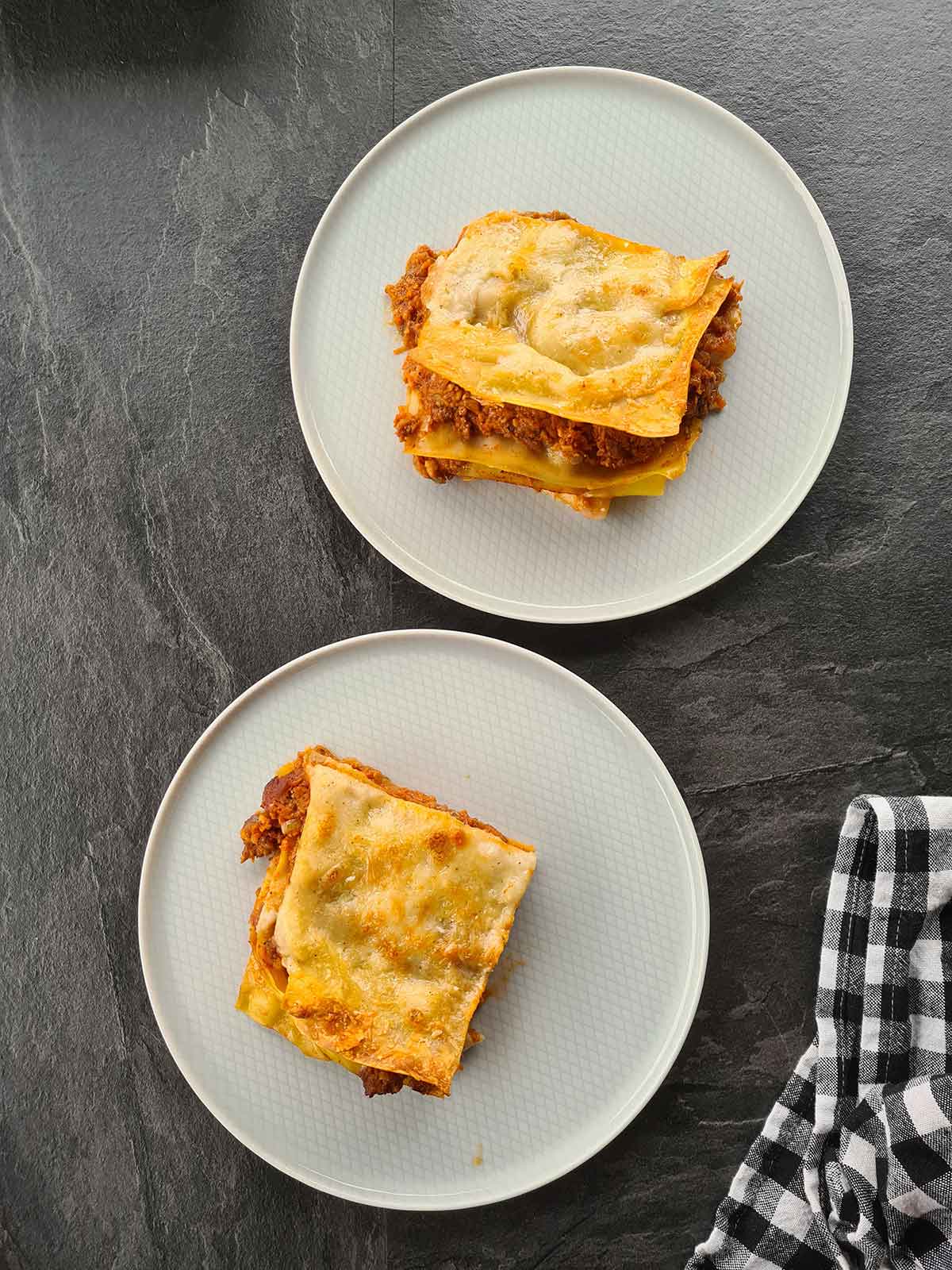
This vegetarian lasagna layers a slow-cooked ragu made with Naturli vegan minced meat, a silky goat-milk bechamel, and freshly grated Parmesan between sheets of pasta, then bakes at 180C for about 30 minutes until bubbling. It follows the classic Italian method step for step, swapping only the minced meat, so it tastes remarkably close to the traditional version.
If you’re a fan of Italian cuisine, I’m sure you know about lasagna. For this recipe I did my best to follow the classic method, but with vegetarian ingredients exclusively. The bechamel sauce was the easy part, since the traditional recipe is naturally vegetarian. The real challenge was the bolognese ragu, which is basically the heart and soul of lasagna. If I wanted my vegetarian lasagna to taste heavenly, I had to find the best veg-friendly replacement for the minced meat.
Luckily for me, and all the other vegetarians and vegans out there, nowadays you can find so many options for vegan meat in supermarkets and specialty stores, which wasn’t the case a few years ago. For this lasagna I reached for the vegan minced meat from Naturli, one of my favorite brands, the same one I use almost on a daily basis and have written about in my Creamy Orzo with Veggie Balls recipe and my What I Eat in a Day series. If you ask me, this traditional lasagna made 100% veg is one of the best vegetarian lasagna recipes I have tasted in my life, and trust me, I’ve tasted quite a lot of them in Italian restaurants, as this is one of the mains I always order.
This Recipe Works If You Need
- A meatless main that still feels like proper comfort food, close enough to traditional lasagna that meat-eaters at the table won’t feel shortchanged.
- A make-ahead dish for a Sunday lunch or a gathering, since the whole tray assembles in advance and bakes in one go.
- A way to use plant-based minced meat like Naturli in a recipe where it really shines instead of disappearing.
- A vegetarian centerpiece for an Italian-themed meal when you want something more impressive than pasta with sauce.
- Leftovers you’ll actually look forward to, because lasagna tastes even better the next day once the layers have set.
Why You’ll Love This Recipe
- It tastes close to the real thing. By following the classic method and changing only the minced meat, you keep the layered ragu-bechamel-Parmesan structure that makes traditional lasagna so satisfying.
- The ragu does the heavy lifting. A base of carrot, celery, onion, and garlic plus tomato sauce and a splash of dry wine gives the plant-based mince real depth, so it never tastes flat.
- The bechamel is foolproof. Goat butter, flour, goat milk, and a little nutmeg make a creamy white sauce that ties every layer together, and it comes together with nothing more than a whisk.
- No separate boiling step. Using lasagna sheets that cook in the sauce saves a pot and a good chunk of time.
- It feeds a crowd and reheats beautifully. One tray covers a family lunch with leftovers, and those leftovers are arguably better than the first slice.
Ingredient Notes
Lasagna noodles are the backbone of the dish, and I use roughly a 500g pack. My biggest time-saving tip: search for a brand that makes lasagna noodles that don’t require the pasta to be boiled separately. These oven-ready sheets soften by absorbing moisture from the sauces as they bake, which is exactly why you want your ragu and bechamel on the looser, saucier side rather than dry.
Naturli vegan minced meat stands in for the bolognese meat, and I use 500g. It’s one of my favorite brands of vegan meat, and I use it almost daily. When buying plant-based mince, look for one that browns and holds its texture rather than turning to mush, so the ragu keeps a meaty bite. Saute it together with the other ragu ingredients so it picks up flavor from the start.
Carrot, celery, onion, and garlic are the aromatic base of the ragu: one diced carrot, one diced celery stick, a minced medium onion, and four crushed garlic cloves. Dicing the carrot and celery finely and mincing the onion means they melt into the sauce as it cooks down, building the sweet, savory foundation that classic Italian ragu is known for. Don’t skip any of the four; together they’re what make the sauce taste layered rather than one-note.
Tomato sauce and dry wine carry the ragu. I use one 400g can of tomato sauce and about 100ml of dry wine (I used some leftover wine I already had). The wine adds acidity and depth as it cooks off, while the long simmer concentrates the tomato into something rich. Two teaspoons of dried basil and a teaspoon of oregano round it out.
Goat milk and goat butter are what I use for the bechamel, along with all-purpose flour for the roux and a little freshly ground nutmeg. Goat dairy gives the white sauce a slightly tangy character, but you can use regular cow’s milk and butter if that’s what you have. Heat the milk before adding it to the roux so the sauce thickens smoothly instead of seizing into lumps.
Parmesan cheese, freshly grated, goes between the layers and on top, about 50g in total. Grate it yourself from a block if you can, since pre-grated cheese is often coated to stop it clumping and doesn’t melt as cleanly. That final generous layer over the top bechamel is what gives the lasagna its golden, savory crust.
Tips
- Cook the ragu down properly. Saute on medium-high heat for about 20 minutes, then drop to low for another 15-20 minutes until most of the liquid evaporates. You’re looking for a thick, spoonable sauce; if it’s watery, the lasagna will be soupy.
- Add the milk to the roux slowly. The most common bechamel mistake is pouring in cold milk all at once, which causes lumps. Heat the milk separately, then pour it over the cooked roux in a steady stream while whisking constantly until smooth, and add the salt, white pepper, and nutmeg at the end.
- Keep the sauces loose for oven-ready sheets. Because the noodles cook by absorbing liquid, make sure every layer is well coated. A pasta sheet left dry on the edges will stay hard after baking.
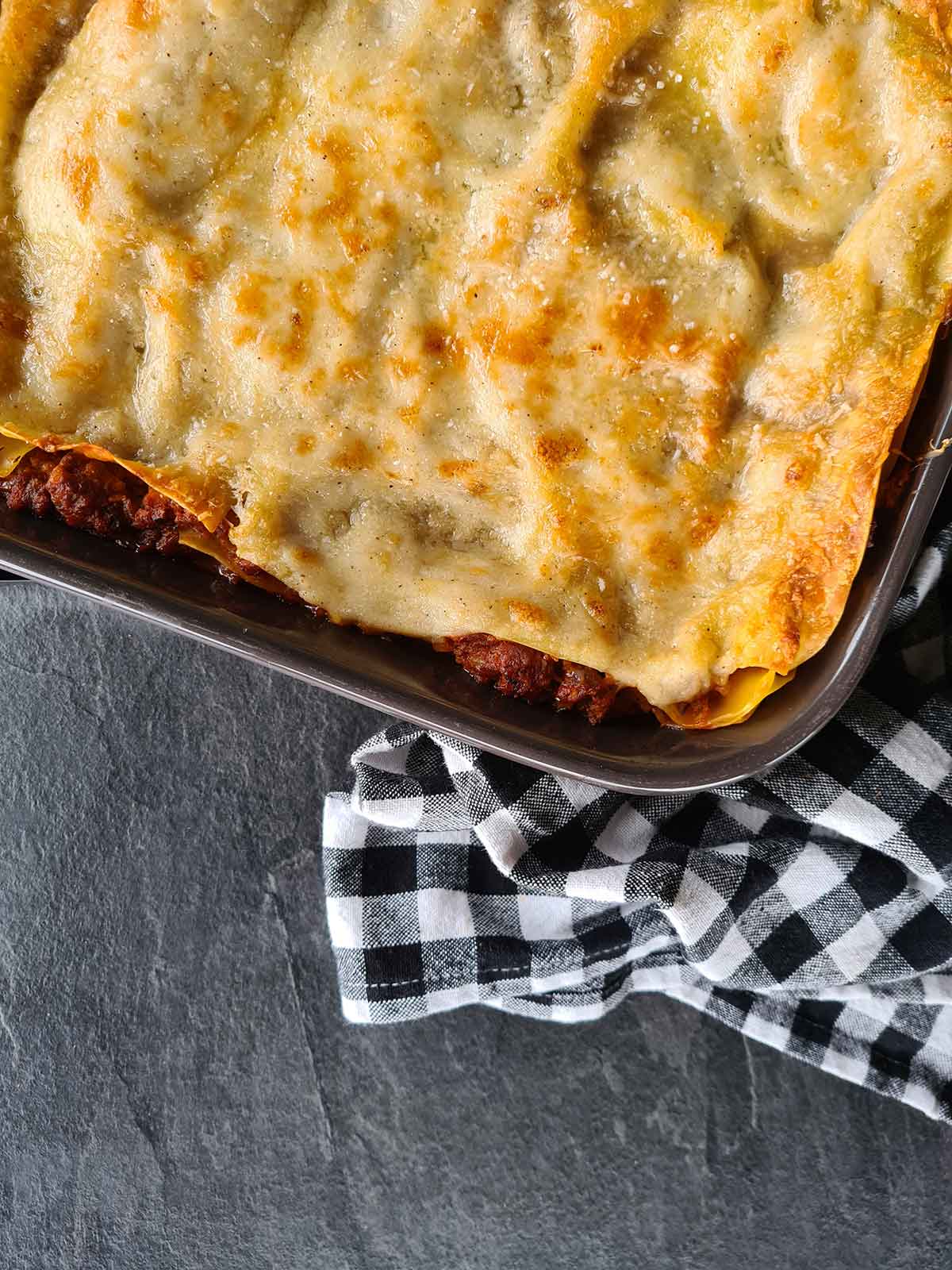
- Finish the top with bechamel, not ragu. The final pasta layer should be covered only in a generous layer of bechamel and topped with plenty of Parmesan. That’s what browns into a golden crust instead of drying out.
- Let it rest before cutting. Give the lasagna 15 minutes out of the oven so the layers set. Cut too soon and the slices slide apart; rest it and you get clean, structured portions.
Substitutions and Variations
- Swap the plant-based mince. Naturli is my go-to, but any good vegan minced meat that holds its texture will work in the ragu. Use the same 500g amount.
- Use cow’s dairy. If you can’t find goat milk and goat butter, regular milk and butter make a perfectly good bechamel; you’ll just lose the slight tang.
- Adjust the herbs. The recipe leans on dried basil and oregano, but a little fresh basil stirred into the ragu at the end brightens everything up.
- Skip the wine. The 100ml of dry wine adds depth, but if you’d rather leave it out, replace it with a splash of water or extra tomato sauce and a small squeeze of lemon for acidity.
Storage and Make Ahead
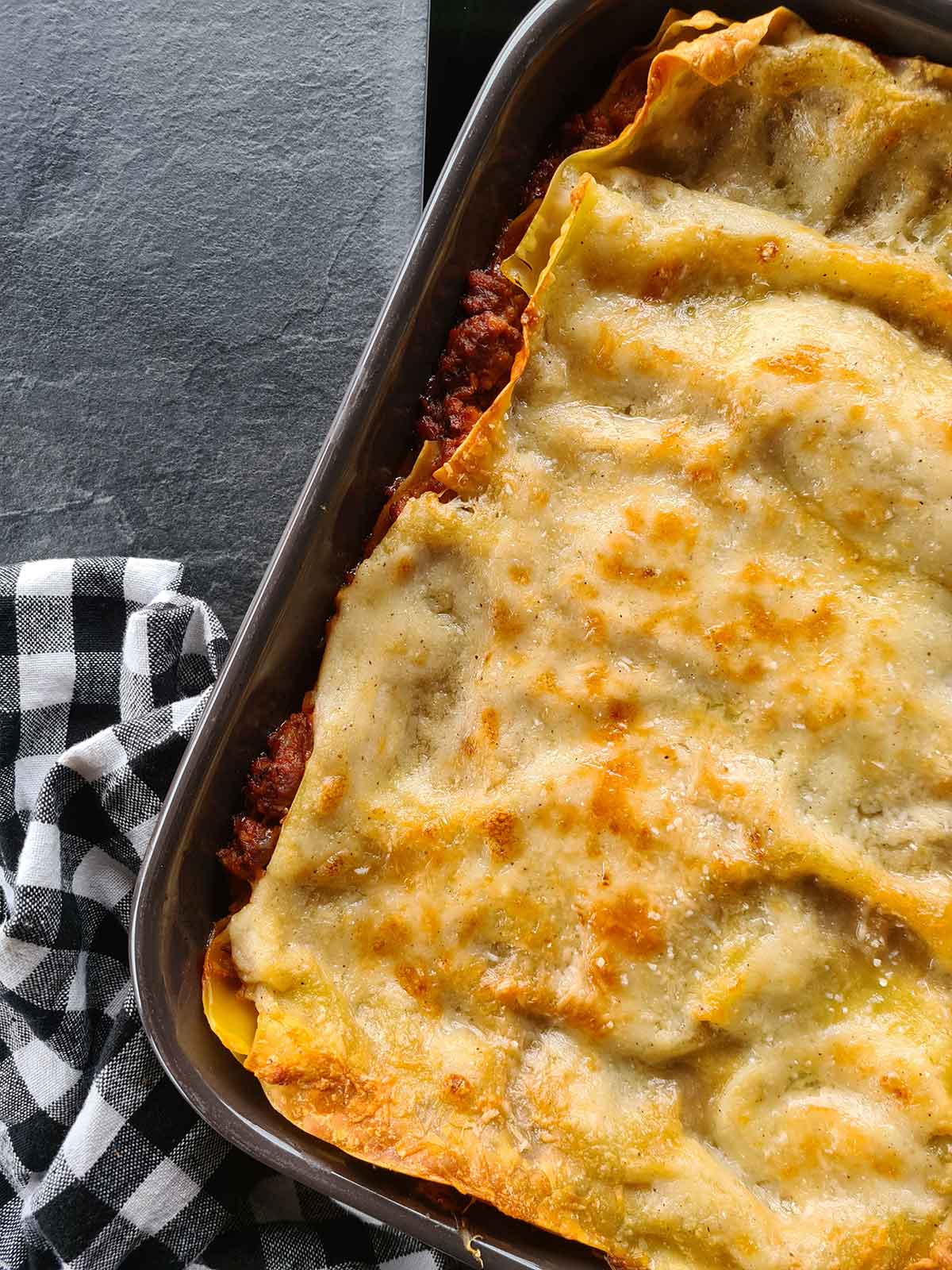
Lasagna is one of the best make-ahead dishes there is. You can assemble the whole tray a day in advance, keep it covered in the fridge, and bake it straight from cold (add a few extra minutes to the 30-minute bake). Once baked, leftovers keep in an airtight container in the fridge for 3 to 4 days, and many people, myself included, think the flavor is even better the next day once the layers have fully set. Reheat individual portions in the oven or microwave until piping hot through the middle.
You can also freeze it, either fully baked and cooled or assembled but unbaked, for up to 2 to 3 months; thaw overnight in the fridge before reheating or baking. It’s a great candidate for batch cooking, so it fits nicely into your healthy dinner meal prep rotation. If you love this kind of layered comfort food, try the same ragu approach in my vegan bolognese pasta, or for a different take on the dish itself, take a look at my vegan lasagna with mushrooms.
Summarise & Save This Recipe
★ Add us as a trusted Google source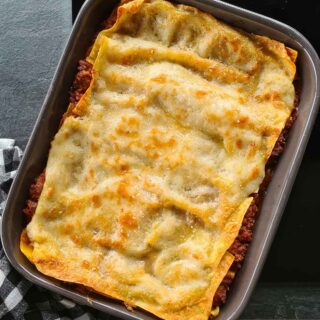
Vegetarian Lasagna – Traditional Italian Recipe made Veg!
Ingredients
- a pack of lasagna noodles approx. 500g | 17.5oz – choose a brand that doesn’t require the pasta to be boiled separately
- 50 g ½ cup grated Parmesan cheese
For the vegetarian bolognese ragu:
- 500 g 17.5 oz Naturli Minced
- 1 carrot diced
- 1 celery stick diced
- 1 medium onion minced
- 4 garlic cloves crushed
- 1 can 400g | 14 oz tomato sauce
- 100 ml dry wine – I used some leftover wine that I had already
- 2 tsp dried basil leaves
- 1 tsp oregano
- salt and pepper to taste
- 1 Tbsp olive oil
For the bechamel sauce:
- 500 ml 2 ¼ cups goat milk
- 50 g 1.7oz goat butter
- 50 g ¼ cup all-purpose flour
- salt and white pepper
- a little bit of freshly ground nutmeg
Instructions
- Add all the ingredients for the ragu sauce to a large non-stick pan. Add 2 cups of water.
- Saute on medium-high heat for 20 minutes, then on low heat for another 15-20 minutes, or until most of the liquid evaporates.
Prepare the bechamel sauce:
- In a large saucepan, melt the butter and add the flour. Whisk well and cook this roux on medium heat.
- Heat the milk in a separate pot and slowly pour it over the roux, while continuously whisking.
- Whisk until smooth and add the spices at the end.
Now the assembly part (I used a 40x32cm pan):
- Add some parchment paper at the bottom.
- Pour and spread 2-3 tablespoons of bechamel sauce on the bottom, then add the first layer of lasagna sheets (2-3 sheets).
- Pour about one ladle with the bechamel sauce and spread it evenly on top of the first layer.
- It is followed by the ragu sauce and then a handful of freshly grated Parmesan cheese.
- Top with another layer of lasagna noodles and repeat the process until you finish the sauces and the pasta.
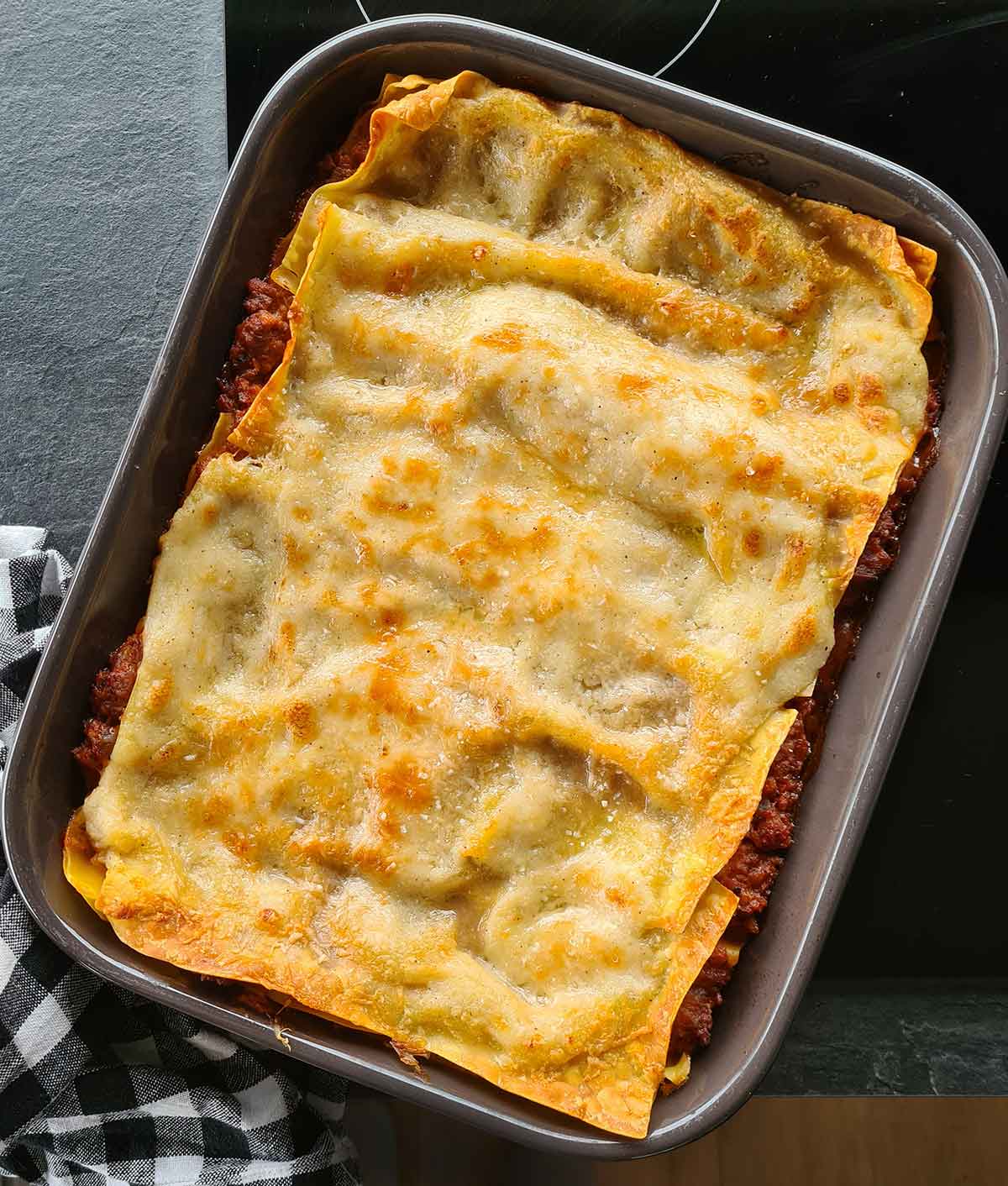
- The final layer should be with the pasta sheets covered only in a generous layer of bechamel sauce and topped with a generous amount of Parmesan cheese.
- Bake in the oven at 180C for 30 minutes.
- Let it rest for 15 minutes before serving.
Frequently Asked Questions
It is vegetarian. The bolognese ragu uses Naturli vegan minced meat, but the bechamel is made with goat milk and goat butter and the dish is finished with Parmesan, so it is not vegan as written. To make it vegan, swap the dairy bechamel for a plant-based one and skip the Parmesan or use a plant-based version.
Use a good vegan minced meat for the ragu. I make this version with Naturli, which I use almost daily, but any plant-based mince that browns and holds its texture works. Saute it with carrot, celery, onion, garlic, tomato sauce, and a splash of dry wine so it builds the same depth as a classic meat ragu.
Not if you choose the right pack. Look for a brand of lasagna noodles that does not require the pasta to be boiled separately, so you can lay the dry sheets straight into the tray. They soften in the oven by absorbing moisture from the ragu and bechamel, which also saves you a pot and a step.
Cook the roux of butter and flour first, then heat the milk in a separate pot and pour it over the roux slowly while whisking continuously. Adding hot milk gradually instead of all at once is what keeps the sauce silky. Whisk until smooth, then season with salt, white pepper, and a little nutmeg at the end.
Bake it at 180C for about 30 minutes, until the top is golden and the sauce bubbles at the edges. Then let it rest for 15 minutes before serving so the layers set. Cutting too soon makes the slices slide apart, while resting gives you clean, structured portions.
Yes. You can assemble the whole tray a day ahead and keep it covered in the fridge, or freeze it (baked or unbaked) for 2 to 3 months. Thaw overnight in the fridge before baking or reheating. Baked leftovers keep 3 to 4 days in the fridge and often taste even better the next day.




Perfect recipe! ❤️